English
 Türkçe


When you buy a motor for a coastal pumping station, a port crane system or a pump set at a seaside plant, the problem is not the motor power; it is how quickly salt-laden moisture will destroy that motor. A standard IP55 cast iron motor runs for years indoors without issue, but the chloride-rich moisture carried by sea air can corrode the same motor body, terminal box and shaft exit within a few seasons. This article is written for businesses that supply motors to marine and coastal facilities: we clarify which protection level is required for which corrosion category, what cataphoresis and special coating add, when tropicalization and stainless fasteners become mandatory, and which information you should provide in your quote request to procure the right motor in a single order. The goal is to get the correctly protected motor on the first order, without early field failures.
Why Does a Salty Environment Wear a Motor So Fast?
The biggest threat in sea air is chloride ions. Chloride seeps in through the smallest scratch or porous spot in the paint film on the motor body and starts electrochemical corrosion on the cast iron surface. In coastal areas the relative humidity in the air is usually high; the day-night temperature difference causes condensation on the motor body. When the condensed moisture combines with salt crystals, it forms a far more aggressive corrosive film.
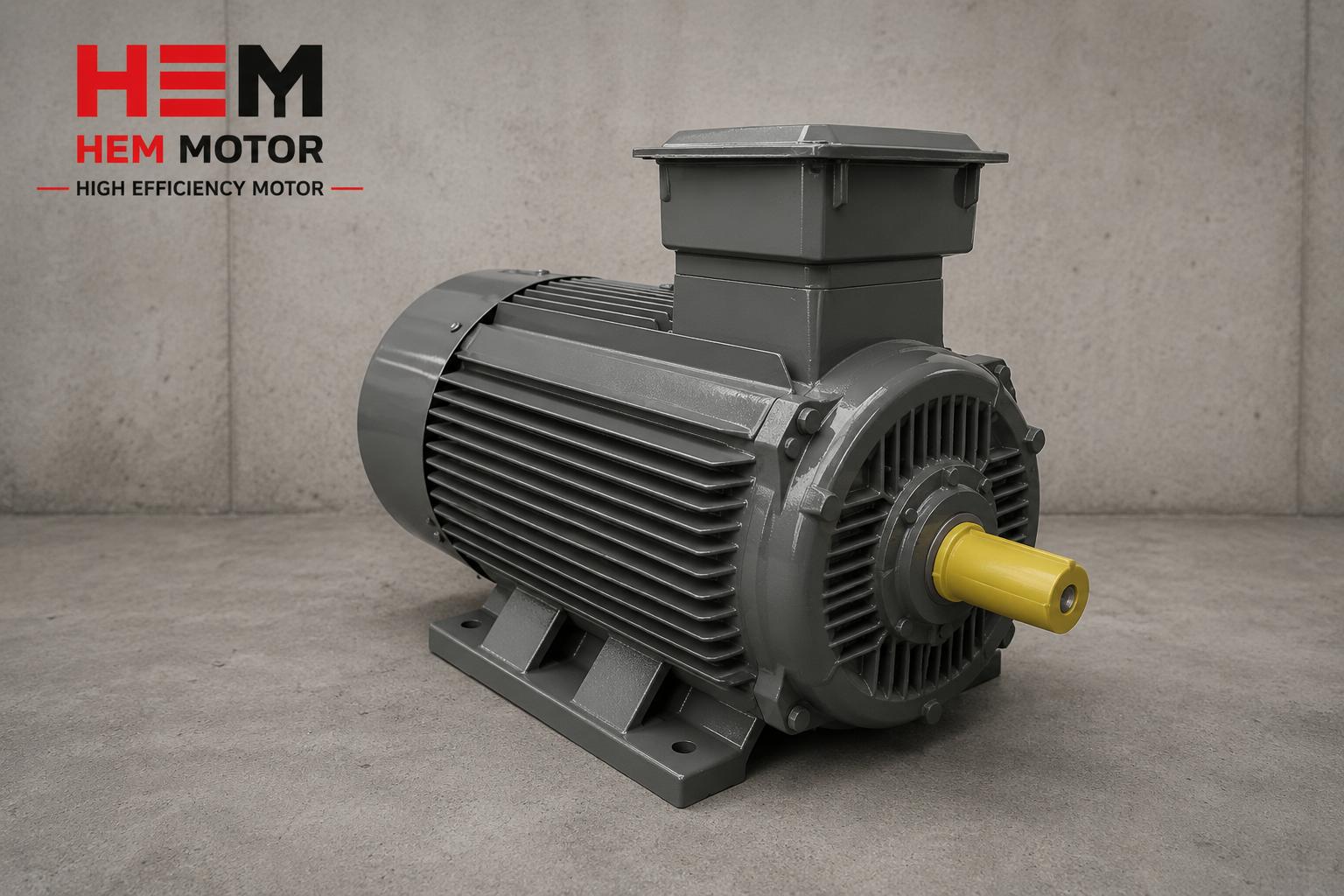
That is why what determines the lifespan of a coastal motor is not its rated power or efficiency class but the protection of the body and details. The cast iron body is mechanically far stronger than aluminium and, when properly painted, lasts a long time in a marine environment; however, bare cast iron is open to corrosion, so the protective layer is at the centre of procurement. We covered the basic logic of body material choice in detail in our Cast Iron or Aluminium Body? article.
The critical points corrosion attacks
The first places sea air hits in the field are clear: the shaft exit and oil seal area, the cover gasket and gland entries of the terminal box, the mating surfaces of body and end shields, the foot and flange bolts, the lifting eyes. Each of these needs a separate protective measure; painting the body alone is not enough. We examined the importance of shaft-exit sealing in a marine environment in our oil seal and sealing article.
Typical Points Where Motors Are Used at the Sea and Coast
Knowing in which applications motors run at marine and coastal facilities makes it easier to determine the right protection package. The exposure of each application is different:
- Lifting and seawater pumps: Pumps that draw seawater or lift wastewater at ports, marinas and coastal facilities; they run under constant humidity and splashing, so IP protection and sealing come to the fore.
- Port crane and rope systems: Crane drive motors at the quayside are directly exposed to the marine atmosphere; C5-M paint and stainless fasteners are a priority.
- Fishing and aquaculture facilities: Saltwater circulation pumps, aeration and feeding motors; exposed to washdown and heavy humidity.
- Coastal treatment and discharge plants: Blower, mixer and pump motors; both salty humidity and a chemical environment combine.
- Ship and shipyard auxiliary facilities: Fixed machine sets, fan and compressor motors; vibration and sea air come together.
In each of these applications the corrosion protection, IP class and duty type of the motor are evaluated separately. For example, S1 duty and good cooling for a continuously running circulation pump; high protection and an anti-condensation measure for an intermittently running crane motor. To determine the right package, it is necessary to define clearly in which application, how close to the sea and with what exposure the motor will run.
ISO 12944 Corrosion Category: What Do C4 and C5-M Mean?
The most reliable way to select the right motor for marine and coastal projects is to determine the corrosion category of the site according to the ISO 12944 standard. This standard classifies the corrosion severity of the environment and lets you specify the motor paint/coating system accordingly:
- C3 (medium): Urban and light industrial atmosphere, medium humidity. Humid facilities away from the shore.
- C4 (high): Heavy industrial atmosphere and areas near the coast. A large share of coastal facilities falls into this category.
- C5-M (very high, marine): Marine atmosphere with high salinity; ports, jetties, areas near open sea and points directly exposed to sea spray.
In practice: if your facility is a few hundred metres inland and inside an enclosed building, C4 protection is usually sufficient. If the motor is directly on the quay, in the open or at a point that gets sea spray, you should request C5-M protection. Clarifying this distinction at the quote stage helps you avoid both unnecessary cost and inadequate protection. You can also find the corrosion behaviour of cast iron motors in the open field in our corrosion protection and open-field use article.
Cataphoresis and Special Coating: The Foundation of Protection
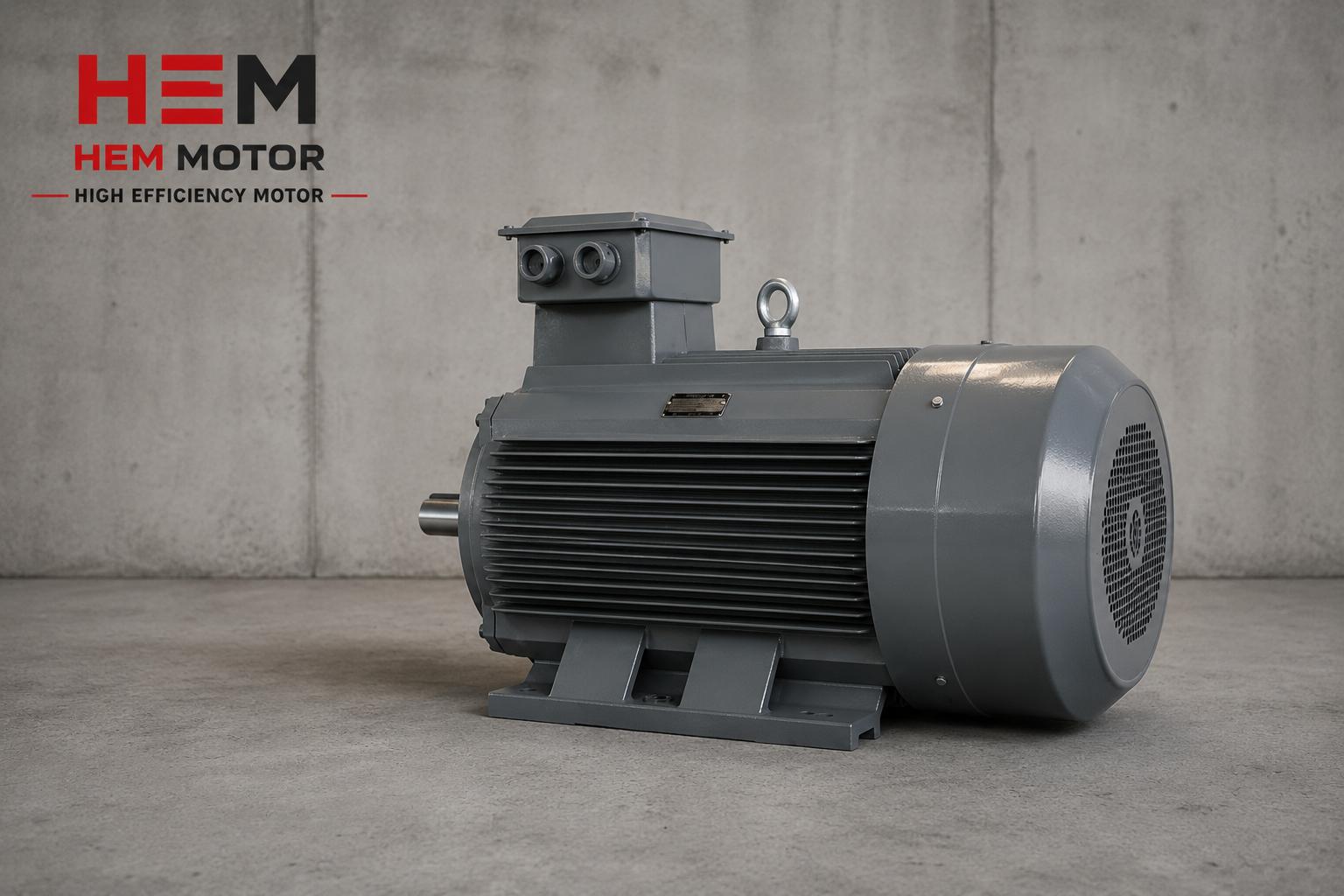
For a marine environment the body protection should be thought of in two layers. The first layer is cataphoresis (CED) coating: the body is coated in an electrophoretic bath with a homogeneous, pore-free primer layer. Because cataphoresis penetrates the inner corners and recesses that brush or spray paint cannot reach, it forms a base far more resistant to chloride ingress. The second layer is a high-adhesion topcoat suitable for the C4/C5-M category (typically epoxy primer + polyurethane topcoat).
We explained the contribution of cataphoresis coating to corrosion protection, and when standard paint is sufficient, in depth in our painting and cataphoresis coating article. For marine projects our preference is clear: a cataphoresis base + C5-M topcoat system is the safest combination.
IP56 and IP65: Internal Protection Against Water
Paint protects the body from the outside; the IP protection class prevents salty moisture and spray water from entering the motor. Standard motors come with IP55 protection. At points exposed to sea spray, washdown or heavy humidity, IP56 (resistance to powerful water jets) or IP65 (total dust ingress protection + water jet resistance) should be preferred. We compared which class suits which environment in our IP protection class selection article. In marine projects, setting the IP class according to the real exposure of the environment protects the winding and bearing inside the motor.
Tropicalization and Stainless Fasteners
Two more critical details complete the protection. The first is tropicalization: applying additional protection to the enamel and varnish system of the winding to withstand high humidity and a salty environment. A tropicalized winding delays the moisture condensing inside the body when the motor stops from degrading the winding insulation. Tropicalization is recommended for marine motors that will operate under constant high humidity; we covered the effect of winding and insulation class on lifespan in our insulation class (F/H) and cast iron body article.
The second is stainless (inox) fasteners. Standard galvanised bolts rust quickly in sea air and become impossible to remove; this makes future maintenance and replacement of the motor difficult. In marine projects, the foot, flange and terminal cover bolts should be stainless steel and the lifting eyes corrosion-resistant.
Standstill heater against condensation
When the motor stops and the internal body temperature drops below the ambient temperature, condensation forms on the inner surface. To prevent this, an anti-condensation heater (standstill heater) can be added; it switches on when the motor stops and keeps the body interior above the ambient humidity point. On marine pumps that constantly start and stop or stay on standby overnight, this small device significantly extends winding life. The terminal box entry protection should not be forgotten either; we explained the correct gland selection in our terminal box and cable connection article.
Marine and Coastal Facility Motor Supply List
Defining a clear protection package when ordering a motor for a marine project prevents early field failure. For our cast iron high-efficiency motors, a typical supply package for coastal applications includes:
- Body: Cast iron, cataphoresis base + C4 or C5-M topcoat.
- Protection class: IP56 or IP65 depending on exposure; insulation class F (H if required).
- Winding: Tropicalized, high-humidity resistant.
- Connection: Stainless steel bolts and lifting elements, protected terminal glands.
- Option: Anti-condensation heater, PTC/PT100 thermal protection.
- Efficiency and power: IE3/IE4, power and speed by application (pump, fan, crane drive).
When selecting these motors for your pump, fan and crane applications you can use our high-efficiency electric motors and IE4 electric motor range, and for your marine plant pumps you can review our centrifugal pump motor selection article. You can reach the full cast iron body range from our IE3 electric motor page and all products from our home page.
Frequently Asked Questions
Is a standard IP55 motor sufficient for my seaside facility?
For most marine/coastal applications a standard IP55 paint system is not sufficient. If your motor is at a point near the sea that gets spray or high salty humidity, we recommend requesting at least a C4, and in a direct marine atmosphere a C5-M, cataphoresis + special paint system and IP56/IP65 protection. If you share the exposure level with us, we determine the right protection package together.
Are cataphoresis coating and tropicalization the same thing?
No. Cataphoresis is a pore-free primer coating that protects the outer surface of the motor body; it stops corrosion from the outside. Tropicalization is additional insulation protection applied so that the winding (the internal electrical part of the motor) withstands high humidity and salt. In marine projects both are requested together: cataphoresis protects the body, tropicalization protects the winding.
How long is the lead time for a motor for a salty environment?
Motors with a special protection package (C5-M paint, tropicalized winding, stainless fasteners, anti-condensation heater) generally require configuration rather than stock; the lead time varies by power, speed and protection level. There are also protection levels that can be met from stock. For a precise schedule it is best to request a quote together with the corrosion category and technical requirements of your project.
Get a Quote
Let us plan together the supply of a salt-resistant cast iron motor with the right protection package for your marine or coastal facility. Share your application, corrosion category (C4/C5-M) and required power-speed information; we will provide a fast quote with suitable IP protection, paint and winding protection. You can call us at +90 (532) 345 49 86 or reach us via our contact page.