English
 Türkçe


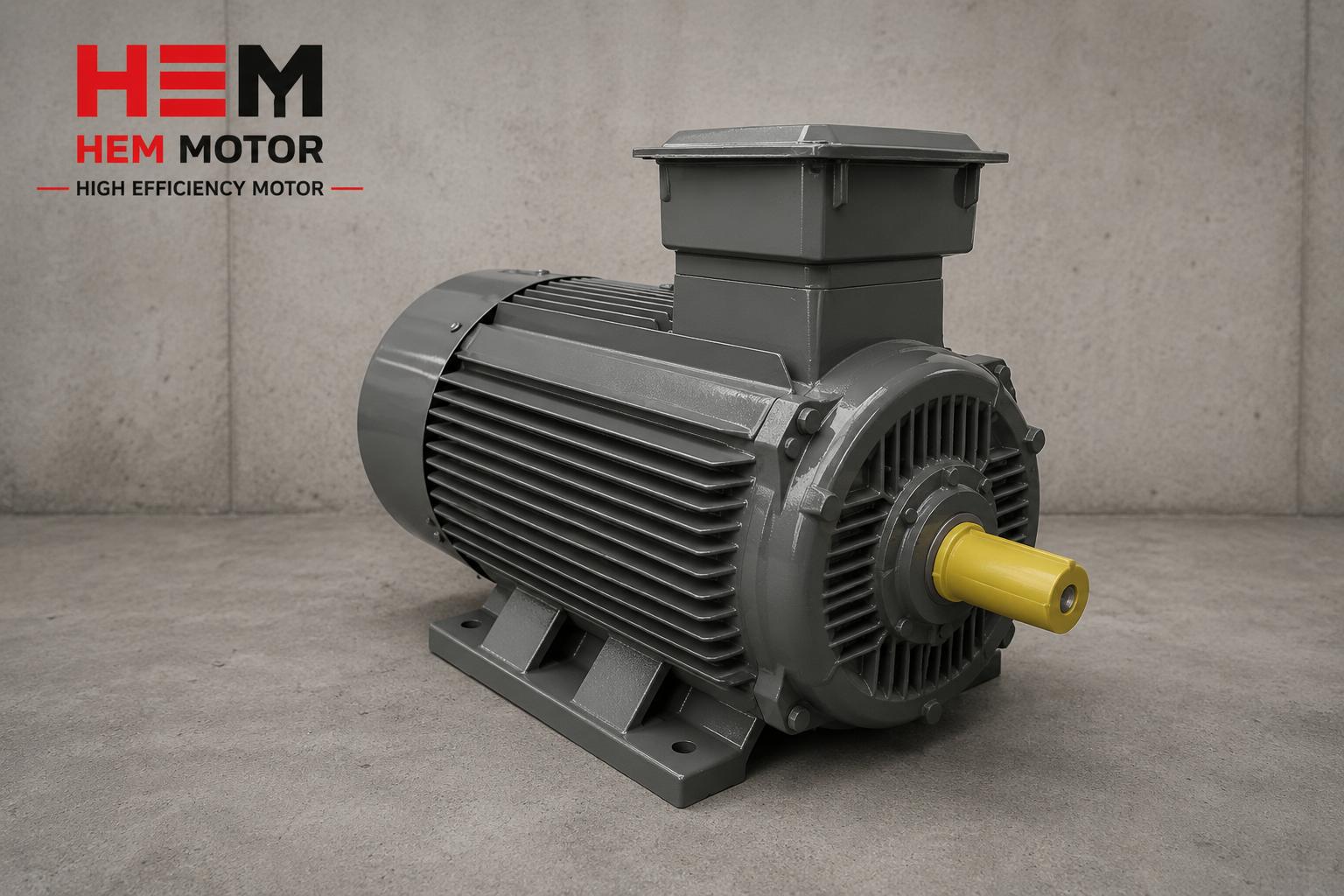

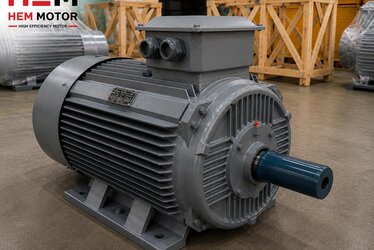
If you are about to buy an electric motor for hot and dusty environments such as cement, stone crushing, foundry, mill, boiler room or open field, the right decision has two pillars: insulation class (F/H) and body material. These two choices directly determine how many years the motor will last in those harsh conditions and how often it will fail. A wrongly chosen motor may be cheap, but it ends up far more expensive through early winding burnout, bearing failure and downtime cost. In this article we address the cast iron body motor and the right insulation class for hot and dusty environments from a purchasing angle. As HEM Motor, a manufacturer and supplier since 1979, we recommend the motor suited to your environmental conditions with the right specification.
Why Is Insulation Class (F/H) Critical at Purchase?
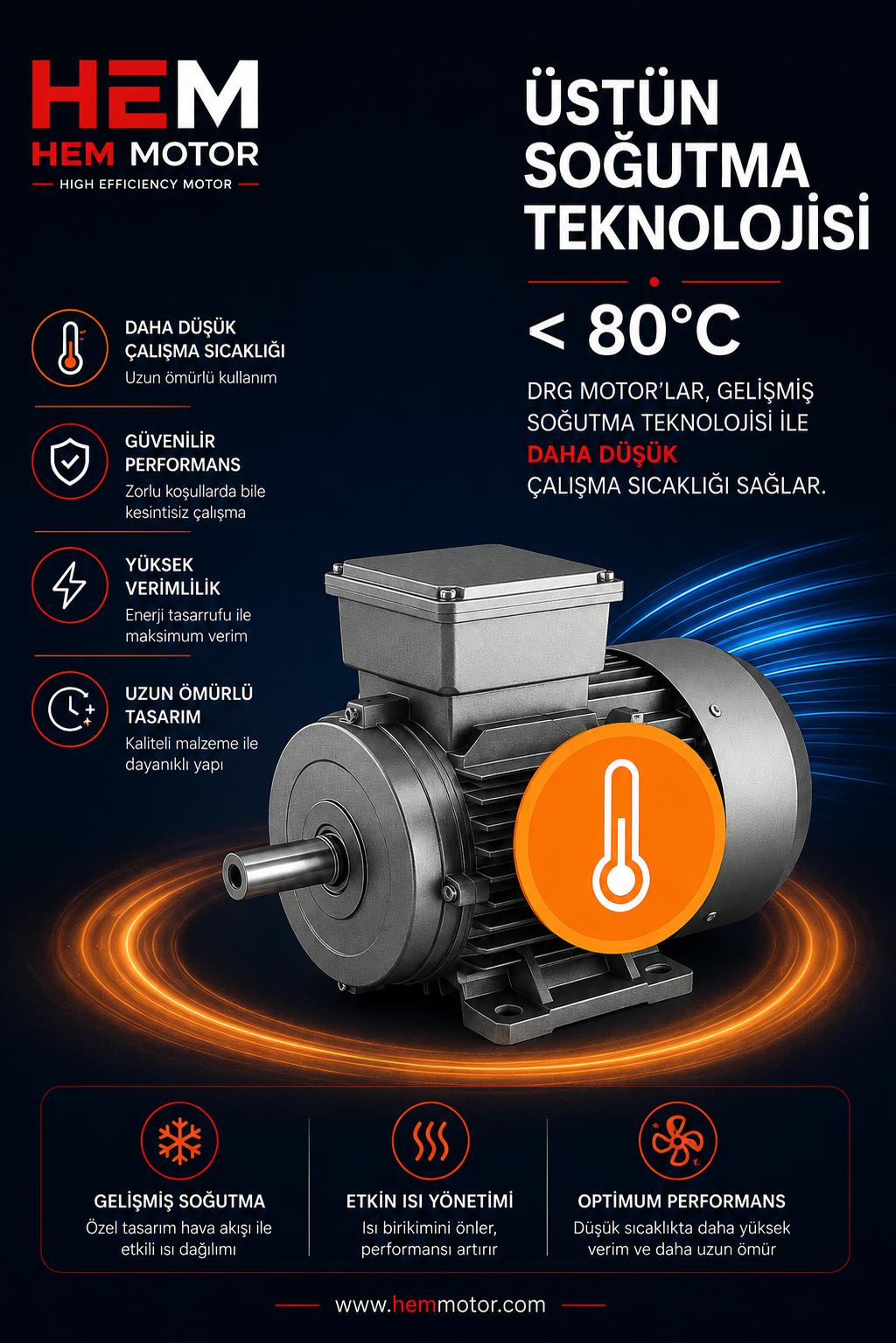
The insulation class states the maximum temperature the insulation material in the motor winding can withstand. The two most common classes are F and H: F class withstands a limit of about 155 °C, and H class about 180 °C. As temperature rises, the winding insulation ages; as a practical rule, each certain rise in operating temperature can roughly halve motor life. So in a hot environment, a higher insulation class means directly longer life.
Motors in the HEM Motor range come standard with F class insulation, which provides a sufficient safety margin for most industrial environments. If a very high ambient temperature, heavy duty type or continuous full-load operation is involved, H class insulation can be preferred. An important point for the buyer here is this: the insulation class determines not only the temperature the motor can "withstand" but also how long it will withstand it. A motor running continuously close to the limit temperature, although technically running, uses up its life quickly. So the right approach in a hot environment is not to "reach" the limit temperature but to leave a safe margin. We covered the effect of insulation and winding class on life and durability in detail in our winding and insulation class (F/H) article; it is a good start to deepen the selection logic.
Temperature Rise and Service Factor
The insulation class alone is not enough; the motor's design temperature rise also matters. A motor may have F class insulation, but if it is designed for a lower (e.g. B class) temperature rise, the winding operating temperature stays below the insulation limit and thus an extra life margin is created. This margin is very valuable in hot environments. Similarly, the service factor (SF) shows the motor's tolerance margin for short-term overloads. In hot and variable-load environments, observing these margins keeps the motor in the safe operating zone. We recommend clarifying these items at the quotation stage when evaluating continuous duty type (S1) and the effect of temperature resistance on life.
Why Is a Cast Iron Body Advantageous in Hot and Dusty Environments?
The body material is the second critical factor that determines motor durability in hot and dusty environments. A cast iron body offers much higher mechanical strength than aluminum; it resists impact, vibration and mechanical stress. This means a direct life gain in vibrating and impact-prone environments such as stone crushing, crushers and mills. A cast iron body also helps limit overheating of the winding by dissipating heat more stably.
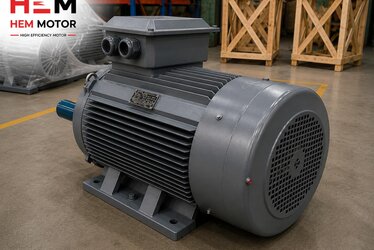
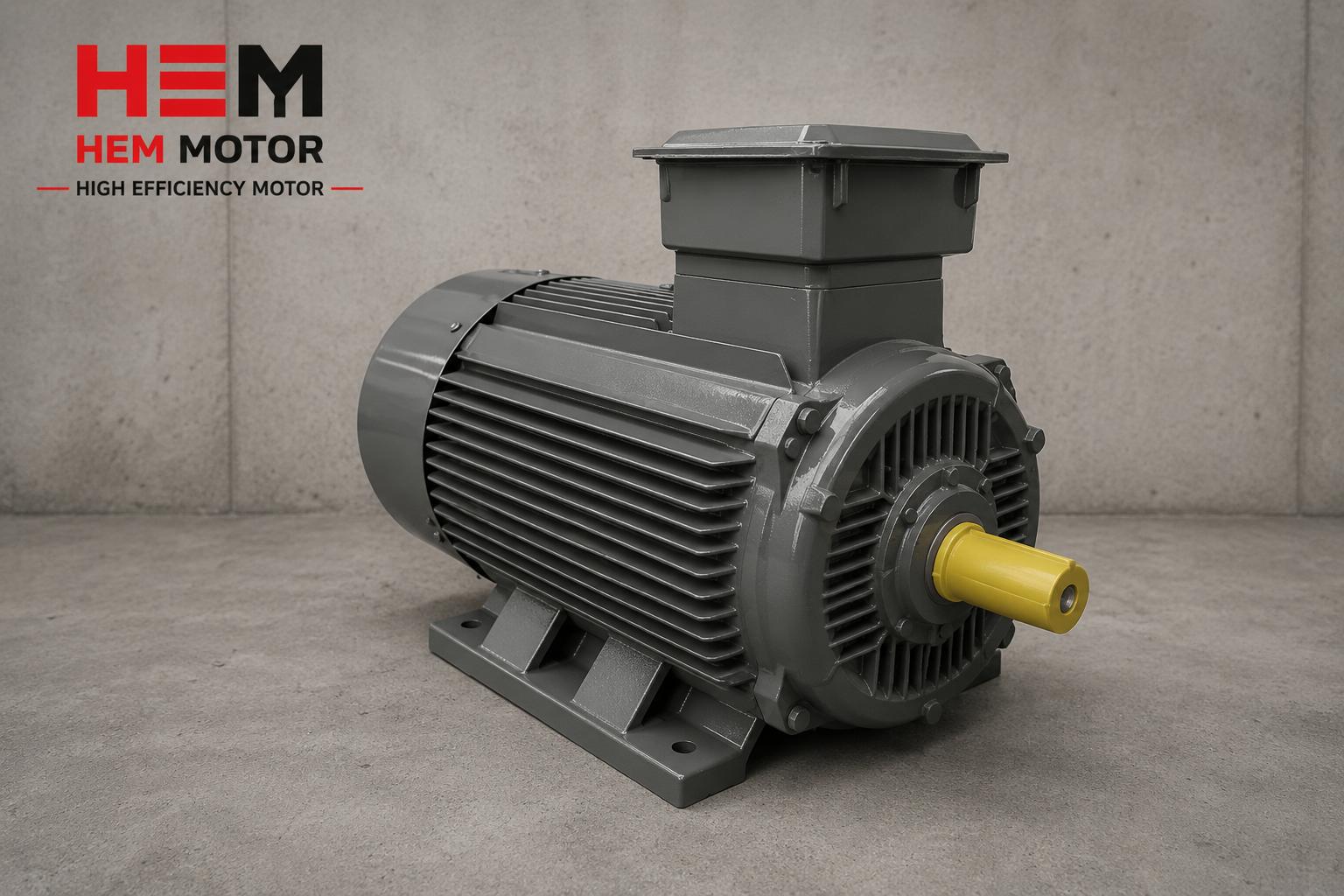
In the HEM Motor range, IE3 and IE4 motors are offered with cast iron body, IP55 protection and F class insulation from 0.55 kW to 355 kW. Against dusty and damp environments, IP55 protection largely prevents dust ingress and low-pressure water jets. We covered the choice between cast iron and aluminum body through environmental conditions in our cast iron or aluminum body article; this comparison is a guide for hot and dusty sites. Let us stress one point: the initial purchase cost of a cast iron body may be slightly higher than aluminum; but the long life and reduced downtime it provides in harsh environments offset that difference quickly. So if the environment is harsh, the body material is not a saving item but an assurance item. The right body is one of the most important decisions that lowers total cost on a hot-dusty site.
The Damage Dust Causes to Motors and IP Protection Choice
Dust is one of a motor's most insidious enemies. Dust accumulating on the cooling fan blades and body surface heats the motor by blocking heat dissipation; dust seeping in through the terminal box weakens the insulation. So in dusty environments, the IP protection class choice becomes critical. While IP55 is sufficient for many dusty environments, higher protection (e.g. IP65) may be needed in very heavy dust or wash-down environments. We explained how the terminal box, cable entry and the right gland choice affect IP protection in our terminal box and cable connection article.
Since dust accumulation also weakens cooling, cooling design has a separate importance in hot and dusty environments. We covered the effect of fan and cooling design on efficiency and temperature in our cooling and fan design article. Periodic cleaning and maintenance noticeably extend motor life in these environments; we compiled the maintenance schedule in our maintenance and periodic check schedule article.
Power Derating in Hot Environments and Correct Sizing
One of the critical, often overlooked issues in hot environments is power derating. Motors are usually rated for a 40 °C ambient; when the ambient rises above this or operation is at high altitude, the safe power the motor can deliver drops. So in a boiler room well above 40 °C, a motor selected by its nameplate power may actually fall short and overheat. The same applies to facilities high above sea level: as altitude rises, air density falls, cooling weakens and the power the motor can deliver drops. When these two effects combine, derating must be taken into account; otherwise the motor runs constantly at the edge and its life shortens. In this case, either a higher power should be selected or H class insulation preferred. We explained the derating calculation for high altitude and hot environments step by step in our derating calculation article.
Correct sizing is decisive in hot environments for both safety and efficiency. Running the motor continuously at very low load lowers efficiency; running it at very high load increases heating. We covered at which load ratio the motor should run in our load ratio and correct sizing article. This calculation also feeds the right power choice in a hot environment.
Open Field and Corrosion: Is Extra Protection Needed?
Hot and dusty environments often come with open field, adding the risk of moisture, rain and corrosion. For motors running in the open field, in addition to the strength of the cast iron body, paint/coating protection against corrosion and the right mounting orientation gain importance. We covered corrosion protection in open-field use in our corrosion protection and open field article. We compiled motor protection strategies in environments that are both dusty, damp and impact-prone, such as quarries and mine sites, in our quarry and mine motor protection article.
Bearing life is also a critical quality marker in these environments. Dust and vibration are the main factors that shorten bearing life; quality bearings and correct lubrication reduce downtime on hot-dusty sites. We covered bearing life in cast iron motors and what to look for at purchase in our bearing life article.
Sector Examples: What Is Needed in Which Environment?
A hot and dusty environment is not a single profile; each sector has its own challenges. In cement plants, high temperature and heavy dust come together; in these environments a cast iron body and careful IP protection are essential. We covered cement plant motor selection in our cement factory electric motors article. In crushers and stone crushing plants, vibration and impact stand out; we compiled motor selection for these applications in our crusher motor selection article. In mills and feed factories, dust and continuous operation combine; our feed factory and mill motors article guides these environments. In mining sites, dust, moisture and heavy-duty conditions come together; in these environments high starting torque and a robust cast iron body stand out. We covered supply continuity and critical stock assurance at mine facilities in our mining motor supply contracts article. In environments where hygiene and wash-down stand out, such as food factories, IP protection and surface cleanliness require a different balance; we compiled this in our food factory electric motors article.
Frame Size and Power Matching
When selecting the right motor for hot and dusty environments, do not overlook the frame size and power matching. The same kW power can be produced in different frame sizes; a larger frame means more iron and better heat dissipation, which is an advantage in a hot environment. Standard IEC frame sizes (e.g. 80, 90, 100, 112, 132, 160, 180, 200, 225, 250, 280, 315, 355) are set by power. We covered frame size and power matching in cast iron motors, from the angle of the right choice from stock, in our frame size and power matching article. The right frame size is critical for both mechanical mounting and thermal behavior.
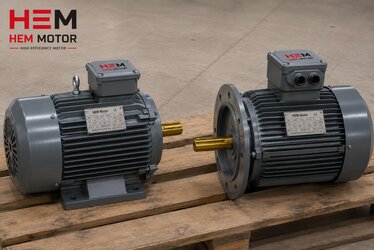
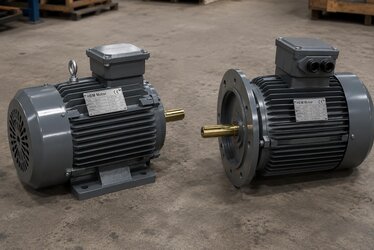
Mounting type is also part of the match: foot (B3), flanged (B5/B14) and combined (B35) motors are chosen by your machine. In hot environments, it is also a practical detail that the terminal box orientation and cable entry are on the side protected from dust. You can review mounting type options on our mounting types page. Clarifying these choices before ordering lets you get the right motor without field mismatch.
Renewal and Direct Replacement: Base It on the Existing Motor
If a motor running in a hot and dusty environment fails and will be replaced, the fastest and safest route is to base it on the existing motor's nameplate. The old motor's power, speed, frame size, mounting type and insulation class let us find the right equivalent. But beware: if the old motor was already failing early in that environment, it may be smarter to raise the insulation class or body material rather than repeat the exact same specification. So replacement is also an opportunity to improve. We explained the method of directly replacing an old-brand motor in our direct replacement of an old-brand motor article.
Recognizing the symptoms a motor shows before failing reduces unplanned downtime on hot-dusty sites: overheating, abnormal vibration, sound change and bearing noise are early warnings. We compiled the symptoms and causes of electric motor failures and when replacement is needed in our failure symptoms and causes article. We covered using PT100 and PTC thermistors to monitor winding temperature in our temperature monitoring article; in hot environments, these protection devices save the motor from early burnout.
Harsh-Environment Motor Supply from HEM Motor
As HEM Motor, we supply cast iron body, F class insulation (H class on request), IP55 protected IE3 and IE4 motors with 100% copper winding for hot, dusty and harsh environments. Share your ambient temperature, dust/moisture conditions and duty type; let us recommend the right insulation class and body choice. You can review our full product range from our home page.
Frequently Asked Questions
Is F class insulation enough in a hot environment, or is H class essential?
For most industrial environments, F class insulation provides a sufficient safety margin. But if the ambient temperature is very high, the motor runs continuously at full load, or the duty type is heavy, H class insulation is a safer choice. For a clear decision, share your ambient temperature and operating profile with us.
Can I use an aluminum body motor in a dusty environment?
An aluminum body is light and compact but lags behind cast iron in mechanical strength and resistance to harsh conditions. In hot, dusty, vibrating and impact-prone environments, a cast iron body lasts noticeably longer. Aluminum can be preferred in light, low-stress applications.
Does it make sense to buy a higher-power motor in a hot environment?
If the ambient temperature is noticeably above 40 °C or you operate at high altitude, a higher power or H class insulation may be needed due to derating. This keeps the motor running in the safe zone without overheating. For a derating calculation, share your ambient data.
Get a Quote
HEM Motor is at your side in selecting the right insulation class and cast iron body motor for hot and dusty environments. Share the ambient temperature, dust/moisture condition, power and duty type; let us recommend the most suitable motor. Call now: +90 (532) 345 49 86 or reach us via our contact page. For our full range, visit the HEM Motor home page.