English
 Türkçe


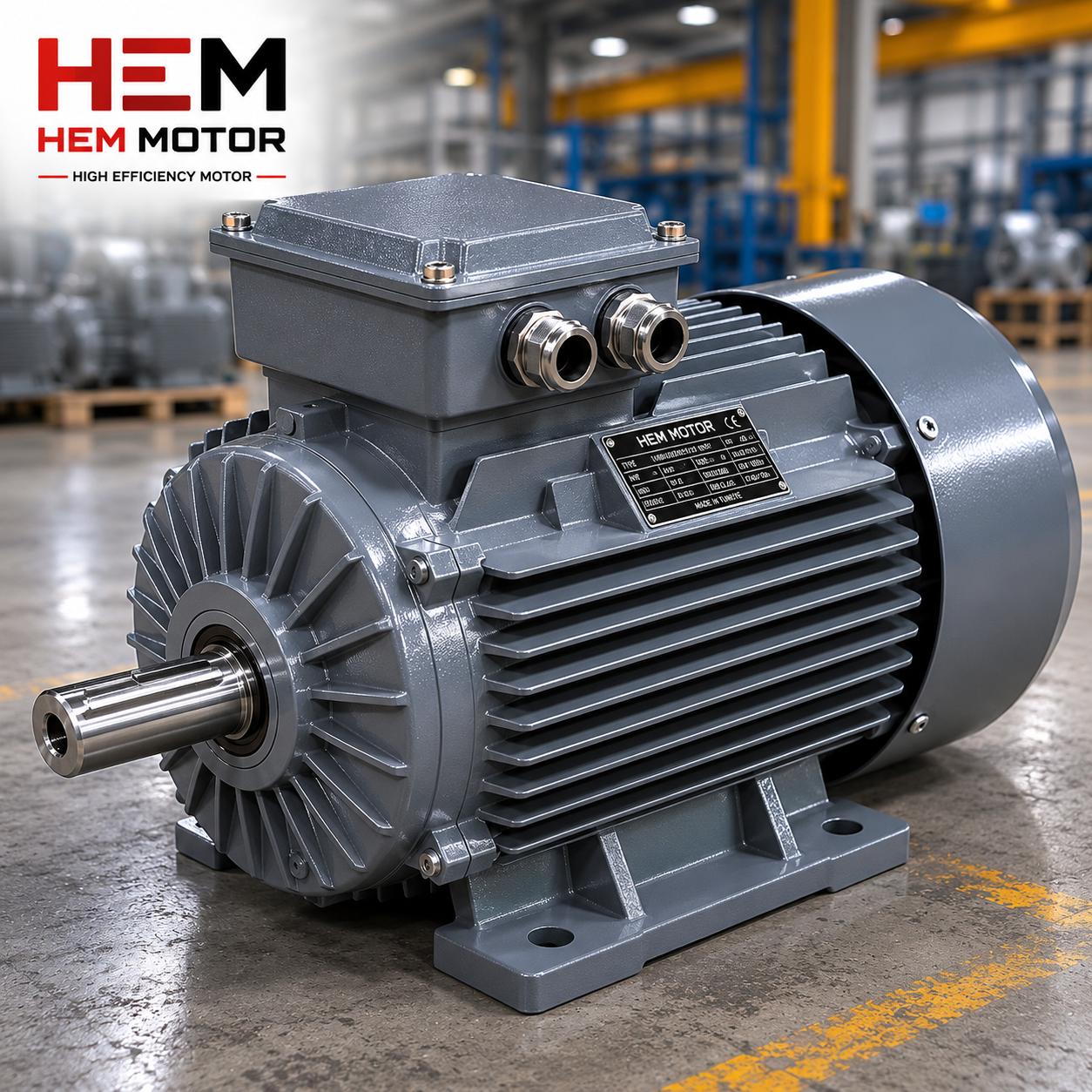

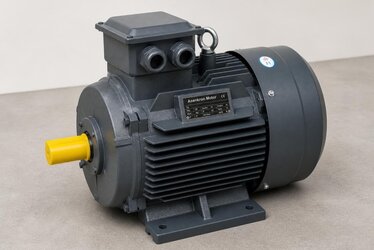
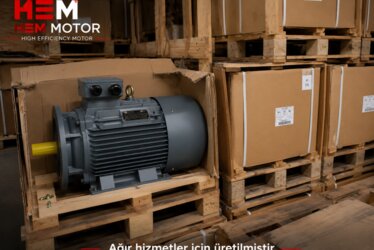
Every watt of loss in an electric motor eventually turns into heat. IE4 motors produce physically less heat inside because they perform the same mechanical work with fewer losses. This translates into a chain of direct user benefits: lower winding temperature, quieter operation, longer bearing and insulation life, and ultimately a lower energy bill. However, fully exploiting this advantage in the field depends on correctly understanding the motor's cooling design and fan geometry.
Most facilities look only at the efficiency class printed on the nameplate. Yet the critical factor that determines real-world performance is how effectively a motor rejects the heat it generates. An IE4-class motor produces noticeably fewer losses than its IE2 or IE3 counterpart, but this reduction only becomes meaningful when the cooling fins are clean, the fan cowl is undamaged and the ambient temperature stays within design values. Otherwise, even an efficient motor can overheat because of a clogged cooling surface and lose a significant portion of its lifespan.
In this article we examine, from an engineering perspective, how cooling works in IE4 motors, how fan design affects efficiency and noise, why ambient temperature matters, and which field maintenance practices keep the advantage alive. Our goal is to turn the catalogue efficiency figure into real performance on site.
Where Does Heat Come From in an IE4 Motor and Why Does It Matter?
In an asynchronous motor, losses fall under four main headings: copper losses (I²R losses from stator and rotor winding resistance), iron losses (hysteresis and eddy current), mechanical losses (bearing friction and the power consumed by the fan) and stray load losses. To reach IE4 level, the manufacturer reduces all four at once by using higher-grade silicon steel, lower-resistance conductors and optimized slot geometry.
Lower losses mean less heat must be rejected from the frame. At this point an important engineering trade-off appears: the larger and faster the fan, the more air it moves, but the fan itself also consumes power and generates noise. In IE4 motors the objective is to achieve sufficient cooling with minimal ventilation loss. That is why fan design in this class is calculated far more precisely than in older-generation motors.
- Winding temperature: Every 10 °C of overheating roughly halves insulation life. Lower loss means lower temperature and longer life.
- Bearing life: Excess heat degrades grease viscosity and accelerates bearing wear.
- Efficiency stability: A cool-running motor avoids the extra losses caused by rising copper resistance at high temperature, so cooling directly affects efficiency.
How Fan Design Affects Efficiency
The bidirectional radial fans used in standard industrial motors are designed symmetrically so they move equal air regardless of rotation direction. This is practical but not aerodynamically ideal, because a symmetric blade profile cannot move air as efficiently as a fan optimized for a single direction. In IE4 motors the manufacturer often recalculates fan diameter, blade count and blade profile to minimize ventilation loss.
Fan Diameter and Speed Relationship
The airflow a fan delivers rises in proportion to speed, while the power it consumes rises with the cube of speed. Consequently, fan loss in high-speed (2-pole, ~3000 rpm) motors is far more significant than in low-speed (6-8 pole) machines. In an IE4-class 2-pole motor, fan optimization is a measurable contributor to total efficiency. Therefore, when selecting the right motor, you should evaluate not only power but also speed and pole count from a cooling standpoint.
TEFC and TENV Designs
The most common frame type in industry is the TEFC (Totally Enclosed Fan Cooled) motor. Here the internal air circuit is isolated from the outside; the cooling fins on the frame are washed by the air driven by the rear fan to reject heat. For some small ratings, TENV (Totally Enclosed Non-Ventilated) designs are preferred. In dusty and aggressive environments the TEFC design is favoured because it prevents dirt ingress.
- Cooling fins: Enlarge the heat-rejecting surface area of the frame; their effectiveness drops sharply when coated with dust.
- Fan cowl: Directs air along the fins; a deformed or cracked cowl disrupts airflow.
- Air inlet grille: If clogged, the fan spins uselessly and the motor is starved of air.
In a TEFC motor the internal and external air circuits are separate from each other; this is an important design choice that prevents dust from entering the frame. However, this isolation means that heat can only be rejected from the frame surface. Therefore, a clean frame surface and an efficient fan are preconditions for the low loss gained in an IE4 motor to translate into the field. The surface area of the cooling fins directly determines the motor's heat-rejection capacity, which is why on high-power motors the fins are designed deeper and denser.
Ambient Temperature: The Overlooked Critical Parameter
Motor nameplates use a standard reference of 40 °C ambient temperature. If the motor operates in an environment above 40 °C (for example a boiler room, near a furnace, or inside a sun-exposed outdoor enclosure), it must be used at a lower than rated power, i.e. derating must be applied. Conversely, in cold environments a motor can comfortably operate slightly above its nameplate value.
The low heat generation of an IE4 motor provides a buffer when ambient temperature is high: under the same conditions an IE2 motor may trip thermal protection while the IE4 motor continues running at a lower internal temperature. But this buffer is not unlimited; a motor selection made without knowing the ambient temperature leads to unexpected overheating in the field. For a broader framework on selection, our content on quiet, low-vibration operation of IE4 motors is also instructive.
Altitude Effect
At altitudes above 1000 metres the air density drops, reducing cooling effectiveness. At high-altitude facilities the same motor runs hotter, which is a derating factor to consider during selection. Many industrial sites in Central and Eastern Anatolia in Turkey fall into this category.
Load Profile and Duty Cycle
How much a motor heats up depends not only on the environment but also on the duty cycle. A motor running continuously at full load (S1 duty) reaches thermal equilibrium and operates at a stable temperature. In frequently starting-stopping applications (such as S3, S4), high current is drawn at each start and the winding heats up repeatedly; in these regimes the importance of cooling grows even more. Because of its low loss, an IE4 motor keeps the winding at a lower peak temperature in frequent-start applications, providing a clear life advantage.
Cooling Types: IC Codes and Their Meanings
In industry, motor cooling methods are defined by international IC (International Cooling) codes. The most common code is IC411: this denotes the TEFC motor, totally enclosed and surface-cooled by the shaft-mounted fan. In more specialized applications different IC codes are encountered, and knowing the correct code allows you to anticipate how the motor will behave in a given environment. When selecting an IE4-class motor, you should look not only at the efficiency class but also at the suitability of the cooling method to the application.
- IC411: Standard TEFC; the shaft fan cools the frame surface. The most common industrial solution.
- IC416: External independent fan (forced cooling); ideal for variable-speed drive applications.
- IC418: Cooling by the airflow of the driven machine; special applications.
For an IE4 motor that will operate over a wide speed range with a frequency drive, preferring IC416 with an independent fan instead of shaft-fan IC411 is important to guarantee cooling at low speeds. This choice directly affects the motor's life in the field and reduces unplanned downtime.
Insulation Class and Temperature Relationship
The temperature a motor can withstand is determined by the insulation class. The most common classes are Class F (155 °C) and Class H (180 °C) insulation. The low heat generation of IE4 motors often allows Class F insulation to be used with a Class B temperature rise (i.e. at a temperature below the class limit), which means a serious safety margin for insulation life. A low operating temperature points to a service life far exceeding the motor's nominal rating. Our content on winding insulation class F and H offers a detailed framework on this.
Noise and Cooling Relationship
A frequently emphasized advantage of IE4 motors is also their low noise level, and much of this comes from fan design. A significant part of the sound heard from a motor is the aerodynamic noise the fan produces while moving air. An optimized fan moves enough air without creating unnecessary turbulence, so it both consumes less energy and runs more quietly. Noise is therefore often an indirect indicator of cooling efficiency: an excessively noisy motor is usually one with high ventilation loss.
Quiet operation matters not only for comfort but also for occupational health and regulation. Noisy environments lower operator productivity, and most facilities observe certain noise limits. The low fan noise of IE4 motors provides an advantage in this respect too. Low vibration and low noise usually go together; a well-balanced rotor and the right fan improve the motor's life and operating comfort together.
Preserving Cooling: Field Maintenance Practices
Even the most efficient motor loses its advantage if left unmaintained. Preserving cooling performance is not expensive; it is achieved with regular, simple checks. Building a periodic maintenance schedule keeps these checks from being forgotten.
- Fin cleaning: The dust and oil film between cooling fins should be cleaned regularly with compressed air or a brush.
- Fan cowl check: The cowl must have no cracks, dents or missing screws, and airflow must be unobstructed.
- Temperature monitoring: Frame temperature should be periodically tracked with a thermal camera or surface temperature measurement.
- Mounting orientation: The fan inlet grille must not be mounted too close to a wall; leave at least one frame diameter of clearance for air intake.
Motors driven by a variable frequency drive raise an additional issue: at low speeds the fan also slows down and cooling weakens. In such cases external forced cooling (a separate cooling fan) or correct derating is required. Our content on driving asynchronous motors with a VFD offers practical guidance here.
The Impact of the Right Motor on Total Cost
An IE4 motor with correctly designed cooling does not only lower the energy bill; it also reduces breakdown downtime, the frequency of bearing replacement and rewinding costs. All of these items determine the motor's total cost of ownership (TCO). A motor's purchase price is usually small compared with the energy it consumes over its lifetime, so efficiency and cooling decisions should be treated as a long-term investment.
At HEM Motor we support you in selecting the right power, speed and frame type according to the ambient conditions of your site. You can learn more about our wide product range and technical support on our homepage.
Frequently Asked Questions
Does an IE4 motor really run cooler?
Yes. IE4 motors produce physically less heat inside because they perform the same mechanical work with fewer losses. As a result, winding and bearing temperatures fall and insulation life is extended. However, this advantage only fully materializes when the cooling fins are clean and the ambient temperature stays within design limits.
Does reducing fan noise affect efficiency?
Fan design is a balance between efficiency and noise. An optimized fan reduces both ventilation loss and noise, because moving more air than necessary wastes energy and generates sound. Because this balance is carefully calculated in IE4 motors, these machines generally run more quietly.
Will cooling be sufficient if I run the motor at low speed with a VFD?
Since a standard frame fan turns on the same shaft as the motor, it moves less air at low speeds and cooling weakens. Applications that run continuously at low speed require an external forced cooling fan or correct derating of the motor. Share your application with us and we can determine the right solution together.