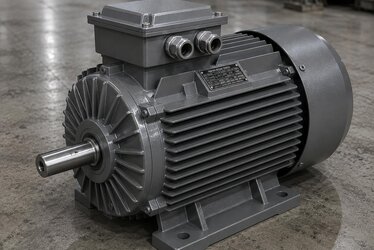
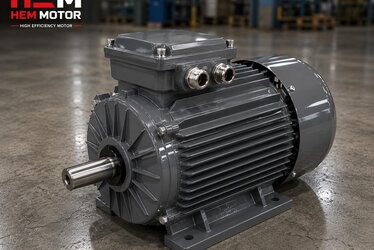
When ordering an electric motor, it is assumed that correctly determining the power, speed and mounting type is enough; but the motor's power is transmitted to the machine through its shaft, and a wrong shaft diameter or key dimension nullifies all the correct choices. The coupling does not seat, the pulley stays loose, the reducer does not connect. As HEM Motor, an electric motor manufacturer and seller, we know from the field that the most frequently skipped detail in orders is the shaft and key dimensions. In this article we cover the motor shaft diameter and key dimensions, coupling-pulley-reducer compatibility, and how to place the right order with concrete measurements.
Our aim is not a technical lecture; it is to ensure that the motor you receive connects to your machine smoothly the first time. Whether you are planning a single three-phase motor or a bulk purchase for a facility, the headings below will eliminate shaft- and key-sourced surprises.
Shaft and key dimensions look like small technical details at first glance; but the shaft is the only point where the motor physically connects to the machine. Even a motor with the right power, the right speed and the right mounting type becomes useless when its shaft does not fit the coupling or pulley. For this reason, shaft diameter and key dimension are a part of the ordering process that must not be skipped. Below, you will see step by step both how the standards work and how to place the right order.

Why Is Shaft Diameter Tied to Frame Size?
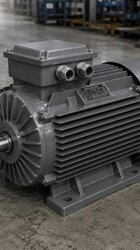
In electric motors, the shaft diameter is standardly related to the frame size. A specific shaft diameter is defined for each IEC frame size; for example, on an 80 frame the shaft diameter is generally around 19 mm, on a 90 frame 24 mm, on a 112 frame 28 mm and on a 132 frame around 38 mm. On the 355 frame, common at high powers in the Turkish market, the shaft diameter rises up to 100 mm. This standardisation makes it predictable that the motor will arrive with a shaft suitable for the machine and eases compatibility between products of different manufacturers.
This link between frame size and shaft diameter is the basis of the right order. When you know the frame size, you can largely estimate the shaft diameter; but it is always best to confirm. It is useful to think about the frame size and power matching together with the frame-size logic we addressed in our cast iron motor articles. For applications requiring high power and a large shaft diameter, you can review our cast iron frame electric motors. The cast iron frame IE4 motor and IE3 options stand out in heavy-duty applications with both durability and the right shaft structure.
The standard nature of the shaft diameter is a great advantage for the buyer. Because motors of different brands in the same frame size generally have a similar shaft diameter, it is often not necessary to change the connection elements when supplying an equivalent motor. This also speeds up spare motor and replacement processes.
Typical frame-shaft diameter matches
A motor's shaft diameter is decisive for the coupling, pulley or reducer to be fitted to it. On large frames such as the 355 frame, the 100 mm shaft transmits high torque safely. On smaller frames, the shaft diameter drops and a suitable coupling/pulley is chosen accordingly. For this reason, clearly specifying both the frame size and the shaft diameter before ordering ensures the correct selection of connection elements.
The shaft diameter increasing with the frame size is not a coincidence; more power and torque require a thicker shaft. A thin shaft cannot safely transmit high torque and carries the risk of bending and excessive strain. For this reason, motor manufacturers define a standard shaft diameter for each frame size that will safely carry that power range. The practical result of this for the buyer is: when you correctly select the power and frame size, the shaft diameter also largely falls into place. However, if a special coupling or pulley will be used, you must confirm that this standard shaft diameter is compatible with the connected element. In some applications, a non-standard, special shaft diameter or special shaft length may be requested; specifying such requests at the time of ordering is important for the lead time.
Key Dimensions and the DIN 6885 Standard
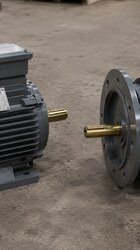
The key on the shaft is the critical part that transmits torque to the element connected to the shaft. Key dimensions are determined in proportion to the shaft diameter according to the international DIN 6885 standard. For example, in a certain shaft diameter range, the key width and height are fixed by the standard; this ensures that the keyway in the coupling or pulley hub is compatible with the motor.
A key compliant with the DIN 6885 standard guarantees that the keyway on the motor shaft and the keyway in the connected element coincide exactly. Without this compatibility, the key either does not seat at all or stays loose, creating play in the torque transmission. For the right order, the key dimension must be confirmed together with the shaft diameter. You can also evaluate the relationship of mounting-type selection with shaft-key compatibility in the B5 vs B14 mounting type guide.
Although the key is a small part, it is a critical connection element that carries all the power. Torque passes from the shaft through the key to the coupling or pulley; for this reason, the key must be suitable in both dimension and material. A non-standard or worn key can be crushed under load and nullify the connection. The standardisation provided by DIN 6885 makes it possible for couplings and pulleys of different manufacturers to seat smoothly onto motors of the same shaft diameter. This provides great convenience, especially in spare-part and equivalent-motor supply; because a standard-compliant motor is always compatible with a standard-compliant connection element.
Coupling, Pulley and Reducer Compatibility
The motor shaft transmits load in three basic ways: directly with a coupling, indirectly with a pulley-belt, or by connecting to a reducer input. In all three cases, the shaft diameter and key dimension must be exactly compatible with the connected element. In coupling selection, the motor shaft diameter and the diameter of the opposite shaft are determined together; in pulley selection, a hub bore suitable for the shaft diameter is required.
These three connection types offer different advantages. A coupled connection provides the most direct, lossless transmission; when shaft alignment is done correctly, it runs efficiently and quietly. The pulley-belt system gives the flexibility to change the speed ratio and allows the motor to be positioned somewhat separately from the machine. The reducer connection converts the high-speed motor motion into a low-speed, high-torque output; it is frequently preferred in conveyor, mixer and lifting systems. Whichever method you choose, the precondition of a successful connection is shaft diameter and key compatibility.
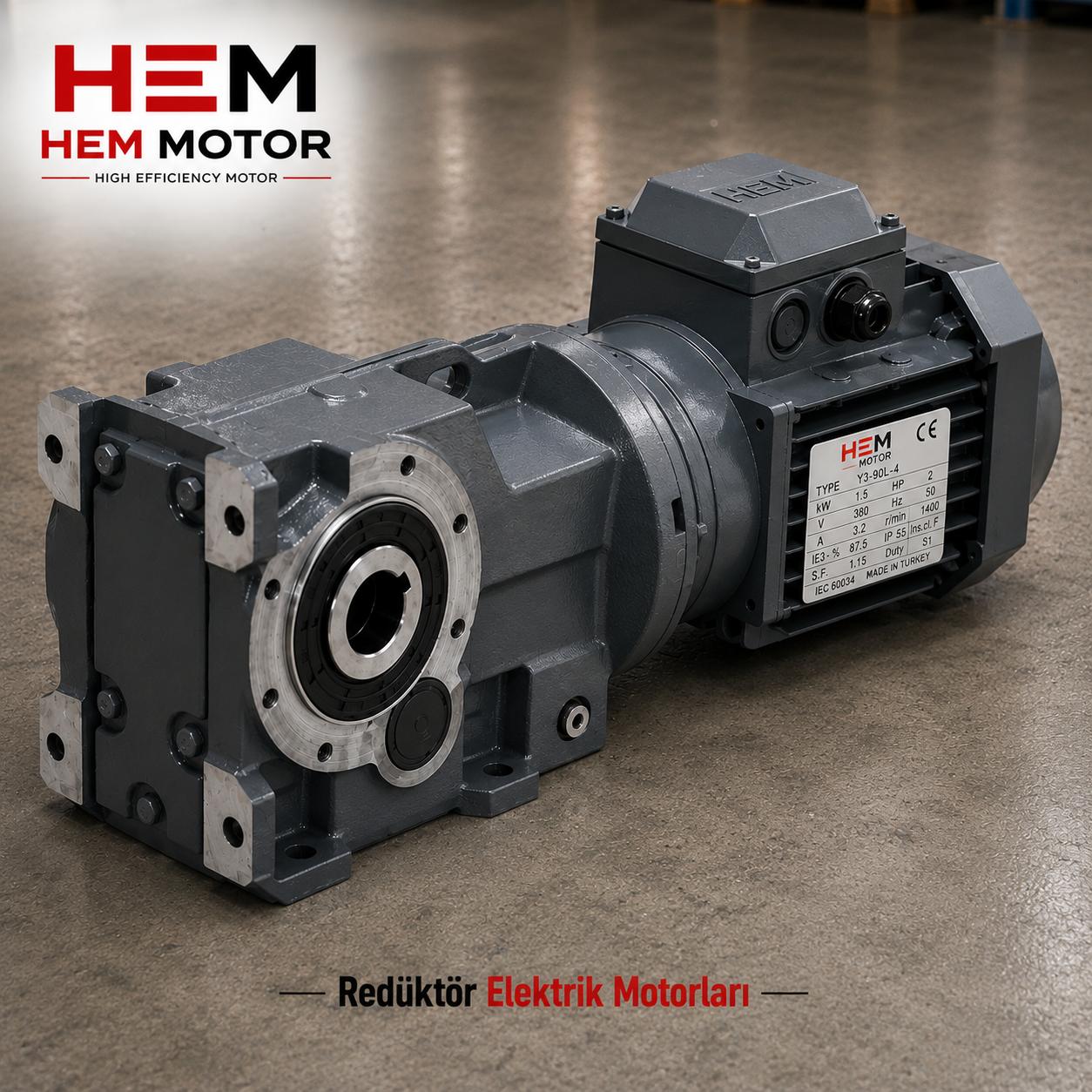
In a reducer connection, the work becomes a little finer. Worm gear reducers and bevel helical reducers accept motors according to certain IEC frame and flange dimensions. We explained in detail which motor fits which reducer through IEC frame and flange matching in our worm gear reducer motor matching article. We addressed the question of a geared solution versus a separate motor in our geared motor vs separate motor article.

Points to watch in a coupled connection
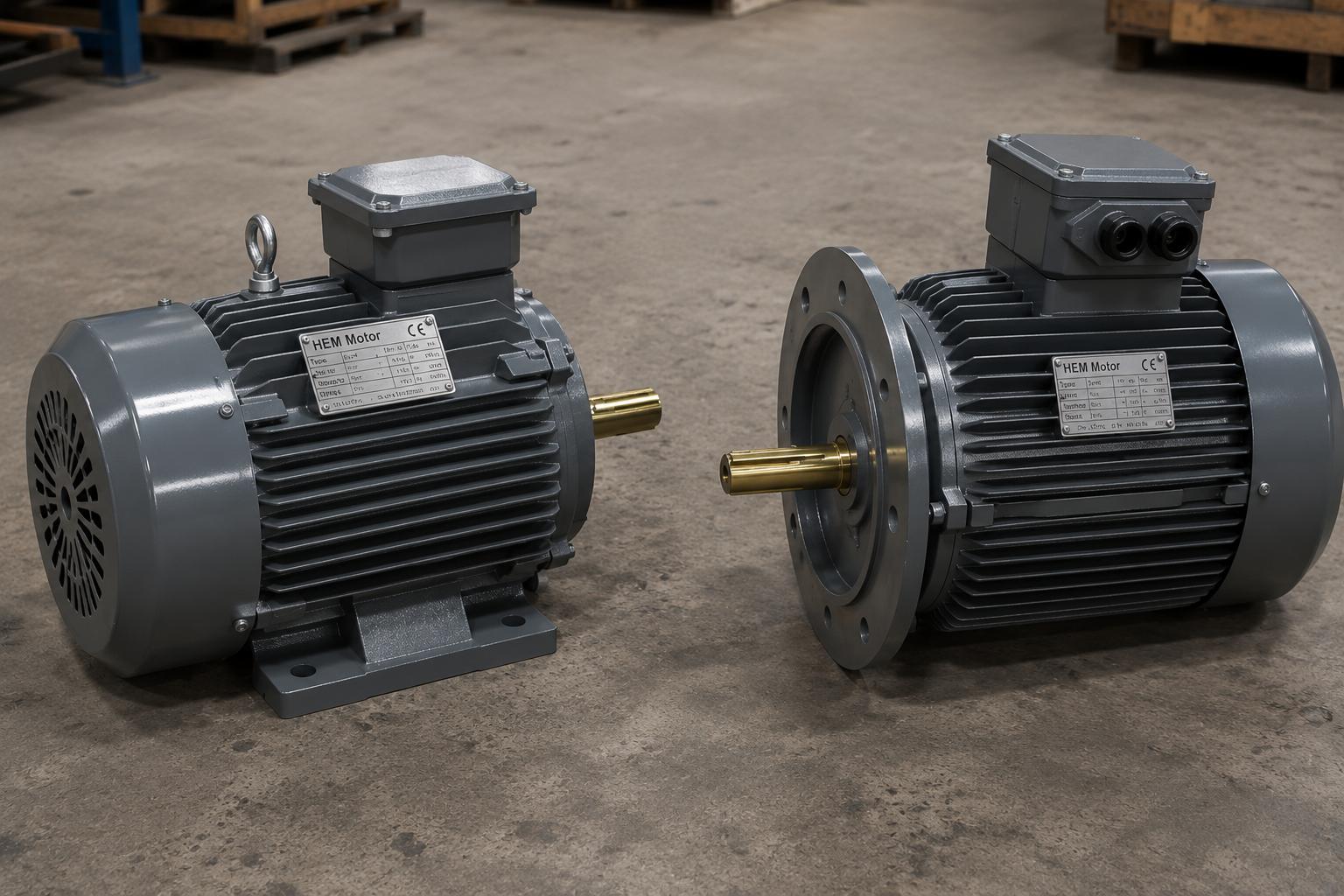
The coupling connects two shafts directly to each other and transmits torque. Here, the motor shaft diameter, key dimension and shaft length are critical. Although flexible couplings tolerate some misalignment, a safe connection cannot be established without the right shaft diameter and key compatibility. Foot-mounted (B3) motors are commonly used in coupled connections; for these applications, our B3 foot-mounted electric motors are produced with a suitable shaft and key structure.
Points to watch in pulley-belt and reducer connections
In pulley-belt systems, a hub bore suitable for the shaft diameter is essential; otherwise the pulley does not seat on the shaft or runs off-centre. Because belt tension applies a continuous load to the side surface of the shaft, shaft and bearing strength gain importance in these applications. In a reducer connection, the motor shaft usually enters the input sleeve of the reducer; here both the shaft diameter and the flange dimension must be exactly compatible with the reducer. Because worm gear and bevel helical reducers accept motors according to certain IEC frame and flange combinations, this matching must be clarified before ordering. When the shaft diameter and flange dimension of the motor to be fitted to the reducer are determined correctly, the coupled connection is play-free and balanced; this protects both efficiency and reducer life.
Problems Caused by the Wrong Shaft Selection
A wrong shaft diameter or key dimension leads to a series of problems in the field. Foremost among them is the impossibility of mounting: the coupling or pulley does not seat on the shaft, the order is returned and production is delayed. The second major problem is a loose connection; when the keyway does not fit, play forms in the torque transmission, which means vibration, noise and early wear.
The third and most insidious problem is misaligned or forced mounting. When a wrong shaft diameter is connected by force, additional load falls on the bearings, the motor heats and its life shortens. For this reason, the shaft and key dimension must be taken as seriously as power and speed in the order. You can find the general check steps to prevent the wrong product from arriving in our wrong motor delivery prevention guide.
All these problems have a common cost: time. A motor that arrives with the wrong shaft is sent back, the correct one is reordered, and this process sometimes takes days. The stoppage experienced while the production line waits can lead to a loss far higher than the price of the motor. Yet clarifying the shaft diameter and key dimension at the time of ordering completely eliminates this chain of delay. Especially in urgent replacement motor supply, correctly reporting the shaft dimensions of the existing motor ensures that the right product is supplied the first time and quickly. For this reason, shaft information is one of the information items that makes the most difference in emergencies.
Shaft Information to Provide for the Right Order
All shaft- and key-sourced problems can be prevented by clarifying a few measurements before ordering. For a correct motor order, prepare the following information:
- Frame size: For example 90, 112, 132, 160, 355; it is the main determinant of the shaft diameter.
- Shaft diameter (mm): Measure the shaft diameter to be fitted to the coupling, pulley or reducer, or confirm it from the frame size.
- Key dimension: The key width and height compliant with DIN 6885; it must be compatible with the keyway of the connected element.
- Shaft length and end type: Is the standard shaft length sufficient, or is a special length required?
- Connection type: Coupling, pulley-belt or reducer? The diameter and type of the connected element.
- Mounting type: B3, B5 or B35; it should be evaluated together with the shaft side.
A request that arrives with this information almost always results in the right product the first time. If you are replacing an existing motor, measuring and reporting the shaft diameter and key dimension of the old motor is the fastest method. You can reach our entire product range from our HEM Motor homepage and also send us your special requests on the shaft side.
A tip: when measuring the shaft with a caliper, taking the diameter from the flat region outside the keyway, rather than from the tip of the shaft, gives a more accurate result. When determining the key dimension, the width of the keyway and the height from the top surface of the shaft to the top surface of the key are taken into account. Sending these simple measurements together with a photo speeds up our confirmation of the right product. In bulk purchases, listing the frame size, shaft diameter and connection type on a separate line for each machine noticeably shortens both the quotation and the delivery process.
Frequently Asked Questions
How do I find out the motor shaft diameter?
The most precise way is to measure the shaft with a caliper. If you cannot take a measurement, you can confirm the shaft diameter starting from the motor's frame size; because a standard shaft diameter is defined for each IEC frame size. If you are replacing an existing motor, measuring and reporting the shaft diameter of the old motor is the safest method. Taking the measurement from the flat region of the shaft outside the keyway gives the most accurate result; if possible, sending a photo of the shaft and key region also makes confirmation easier.
Is the key dimension determined according to the shaft diameter?
Yes. Key dimensions are determined in proportion to the shaft diameter according to the DIN 6885 standard. For a certain shaft diameter range, the key width and height are fixed by the standard. Thanks to this, on standard-compliant motors, the keyway in the coupling or pulley hub is compatible with the motor shaft. If a non-standard key is required, specifying this at the time of ordering ensures the right product is prepared; otherwise incompatibility may be experienced in the field.
What happens if the shaft diameter arrives wrong?
A wrong shaft diameter causes the coupling or pulley not to seat on the shaft or to stay loose. A loose connection produces vibration, noise and early wear; forced mounting damages the bearings. For this reason, the shaft diameter and key dimension must definitely be confirmed before ordering. If you are unsure, send us the measurements and let us determine the right product together quickly.
Get a Quote
So that your motor connects smoothly to the coupling, pulley or reducer the first time, let us correctly determine the shaft diameter and key dimensions. The expert HEM Motor team clarifies the frame size, shaft and key compatibility together with you and delivers the right product quickly. Reach us now at +90 (532) 345 49 86 or send your quotation request via our contact us page.