English
 Türkçe


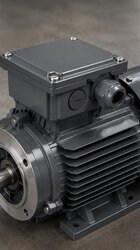
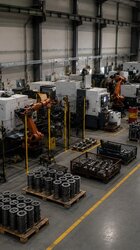
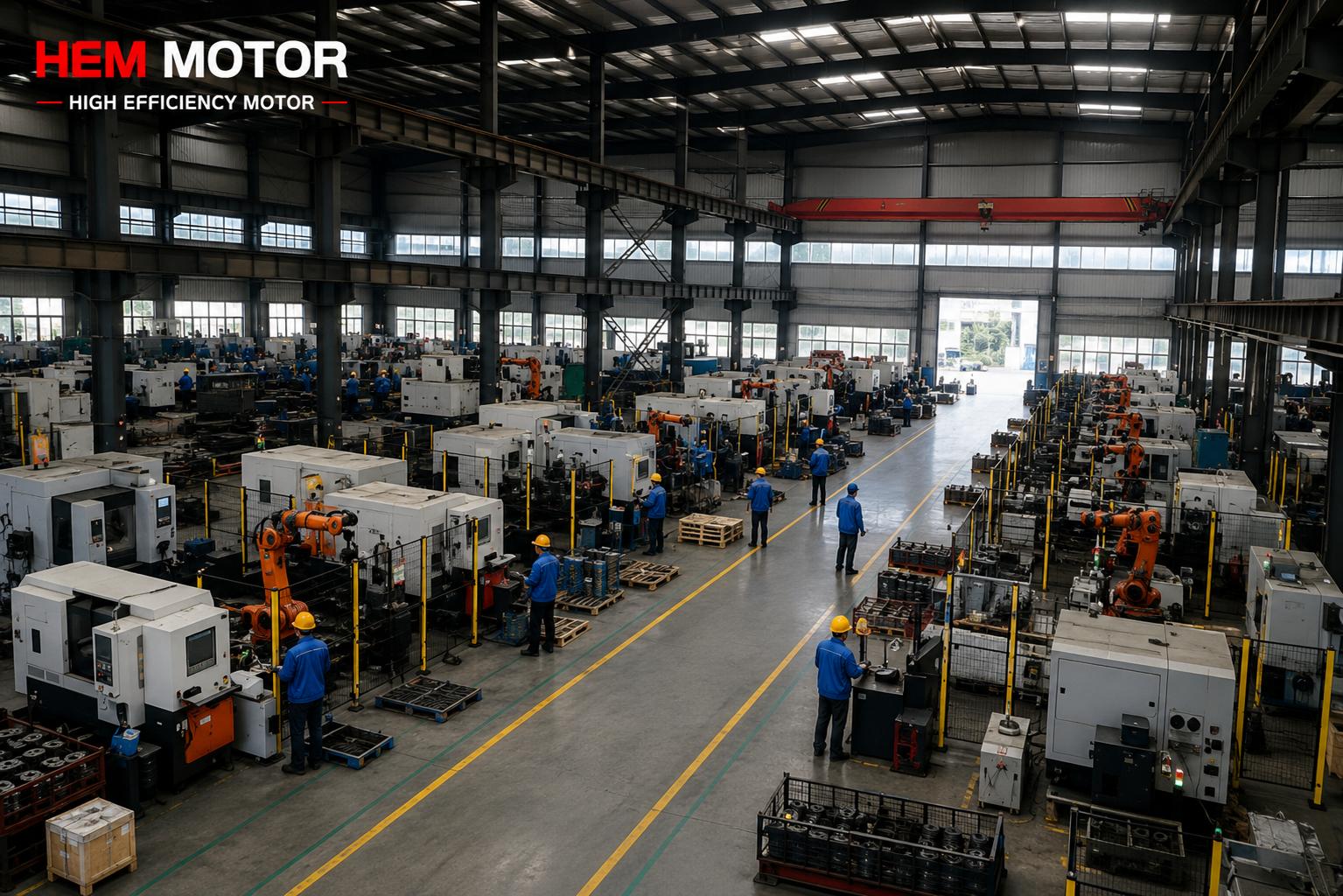

Paper and packaging factories are among the most demanding industrial sectors for electric motor selection. The corrugated board line, printing press, slitting-cutting unit and drying fans run all day, often across three uninterrupted shifts. Here, the stoppage of a single motor halts not just that machine but the entire continuous line, meaning scrap, delivery delays and customer loss. Therefore, motor selection for paper and packaging plants is not about "any motor that runs"; it is a supply decision built on continuous duty (S1), the correct torque characteristic and fast replaceability. As both a manufacturer and supplier, HEM Motor supplies IE4 industrial-type motors and IE3 three-phase motors from stock and on a project basis. In this article we cover, from a commercial buyer's perspective, which technical criteria to check, which torque to request and how to build your stock strategy when selecting motors for paper-packaging lines.
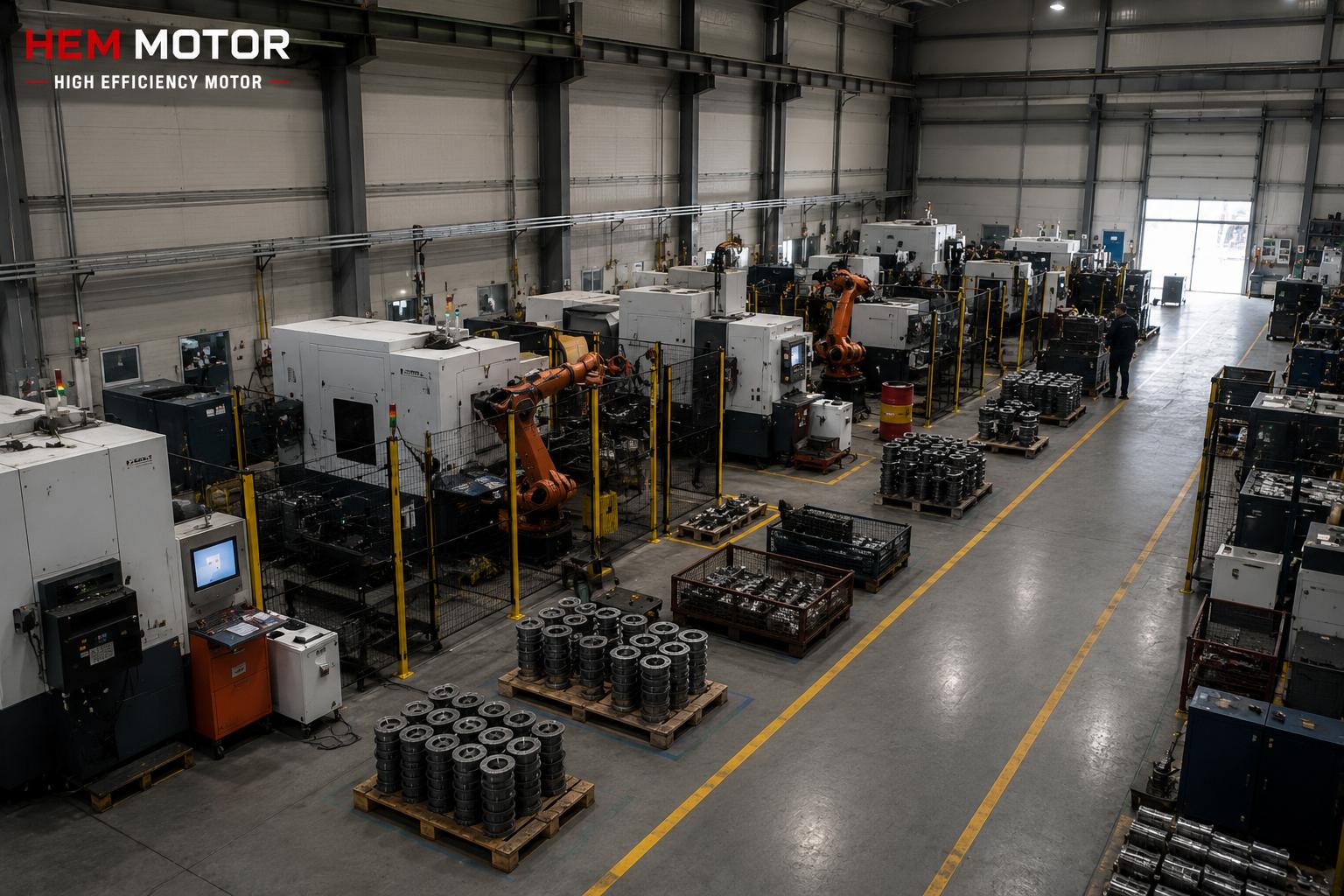
Continuous Line and S1 Duty Type: Why Is It Critical?
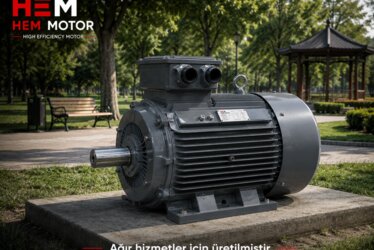
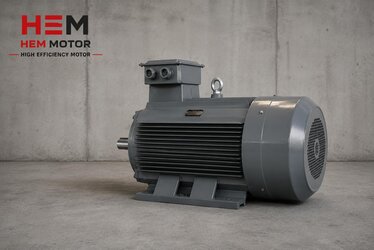
In paper and packaging production, the line is commissioned at the start and turns nonstop all day. This operating mode is called S1 (continuous duty) in motor terminology. A motor designed for S1 duty is dimensioned in terms of cooling and insulation to run indefinitely at rated load. The general-purpose industrial motors in the HEM Motor catalog are produced suitable for S1 continuous operation, with Class F insulation and IP55 protection; this meets the fundamental requirement of corrugated board and printing lines.
When a motor selected for a non-S1 duty (S2 short-time, S3 intermittent) or with insufficient cooling is placed on a continuous line, the winding temperature rises continuously, insulation ages and the motor fails prematurely. In three-shift facilities this is critically important; therefore the stock and replacement schedule logic in our motor fleet management in three-shift facilities article applies directly to paper-packaging factories.
The Need for High and Constant Torque
Paper and packaging machines move heavy rotating cylinders (rolls). To overcome the inertia of these cylinders, the motor must produce high torque at start-up and constant, balanced torque throughout operation. In particular, setting a full roll into motion from standstill requires high starting torque. A motor with insufficient starting torque lifts the line slowly, creates voltage fluctuation and draws excess current. For correct torque class selection, our asynchronous motor torque classes (Design N/H) and starting torque article guides selection by load. In paper-packaging lines, 4-pole (1500 rpm) motors are generally preferred; this speed provides both sufficient torque and balanced speed.
Corrugated Board, Printing and Slitting: Motors by Application
In a paper-packaging plant, each unit demands a different motor characteristic. Correct supply starts by handling the line unit by unit:
- Corrugated board line: Continuous, high-tonnage operation. Cast iron framed, S1 duty, high-torque motors. Continuous load on drying and heating cylinders.
- Printing (flexo/offset) machine: Precise speed control and balanced torque are essential. A frequency drive (VFD) with an asynchronous motor is generally used; print quality depends on constant speed.
- Slitting / cutting (slitter): Requires sudden stopping and precise positioning. Braking capability and fast response matter.
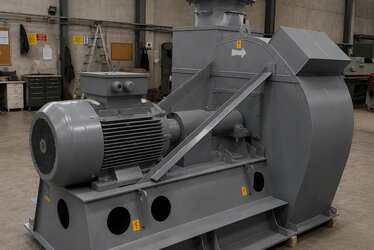
- Drying and aspiration fans: Continuous air circulation; the criteria in our aspirator and dust collection fan motor selection article apply here too.
Because HEM Motor can supply these different units from a single source with compatible IE3/IE4 motors, it simplifies stock management and spare parts planning.
Sudden Stopping and Braking
In slitting and cutting units, the motor must stop quickly and in a controlled way to ensure product savings and operator safety. For this, braked motors or drive solutions with braking resistors are preferred. A braked motor locks the shaft with a mechanical brake when power is cut; this increases safety on vertically positioned rolls and on cutting units that require sudden stops. The stopping time and braking method must be clarified at the ordering stage; otherwise the line cannot meet speed and precision expectations.
Efficiency and Energy Cost: IE3/IE4 Choice
Because paper and packaging factories run all day, electricity cost is the largest item in the total cost of ownership of the motors. For a motor turning thousands of hours a year, choosing IE4 over IE3 provides notable savings on the energy bill. Moreover, regulations also mandate high efficiency; in our IE3 and IE4 efficiency mandate article we explained in detail which power requires which class from which date. On continuously running paper-packaging lines, switching to high-efficiency electric motors is the fastest-amortizing motor investment in terms of payback. You can calculate the savings with the method in our total cost of ownership (TCO) article.
Correct Power-Speed Combination and Sizing
Sizing the motor to the real load profile of the line is critical for both energy and life. An oversized motor runs inefficiently at low load; an undersized one is constantly strained and overheats. You can calculate the power needed for line elements such as pumps, fans and conveyors with the method in our motor power calculation: required kW for pump, fan and conveyor article. In speed selection, 1500 rpm (4-pole) is generally preferred for corrugated board and printing; for fans, 1000-3000 rpm is chosen by application.
Replaceability and Stock Strategy
In paper-packaging factories, the greatest risk is that a critical line motor fails with no spare on site. Even one hour of downtime on a continuous line is high cost. Therefore spare motors should be kept in stock for critical units; for this we recommend the approach in our critical spare motor list and stock planning article. For fast one-to-one replacement during a failure, motor nameplate data should be recorded; the nameplate matching steps in our conveyor belt motor emergency replacement and swap checklist article should be applied to every motor on the paper-packaging line. Because HEM Motor produces with standard IEC frame dimensions, it can quickly supply a one-to-one replacement of your existing motor.
Frequently Asked Questions
Which duty type (S1/S2) motor should I buy for a paper and packaging line?
Because paper and packaging lines run all day, mostly across three uninterrupted shifts, an S1 (continuous duty) type motor is essential. An S1 motor is dimensioned in cooling and insulation to run indefinitely at rated load. Placing an S2 or S3 duty motor on a continuous line causes the winding to overheat and fail early. HEM Motor produces industrial-type motors suitable for S1 continuous operation with Class F insulation.
Why is high torque important for a corrugated board machine?
Corrugated board and printing machines rotate heavy cylinders (rolls). Setting a full roll into motion from standstill requires high starting torque; constant torque is also needed throughout operation. A motor with insufficient torque lifts the line slowly, draws excess current and creates voltage fluctuation. The correct torque class (Design N/H) for the load and proper pole selection ensure the line starts smoothly and runs in balance.
Should I choose IE3 or IE4 for a continuously running line?
On paper-packaging lines that run all day, thousands of hours a year, energy cost is the motor's largest expense; therefore an IE4 motor pays back the extra investment quickly. Regulations also mandate the high-efficiency class in certain power and pole ranges. For a continuous application, choosing IE4 is the most sensible decision for both energy savings and regulatory compliance; share your power and operating hours at the quote stage and we will recommend the right class.
Get a Quote
Supply continuous-duty (S1), correctly torqued and efficient electric motors for the corrugated board, printing, slitting and fan units of your paper and packaging factory from HEM Motor with a single supplier. Share your line's power, speed and duty type requirement; we will offer fast delivery from stock or a project-based solution. Call now: +90 (532) 345 49 86 or request a quote from our contact page.