English
 Türkçe



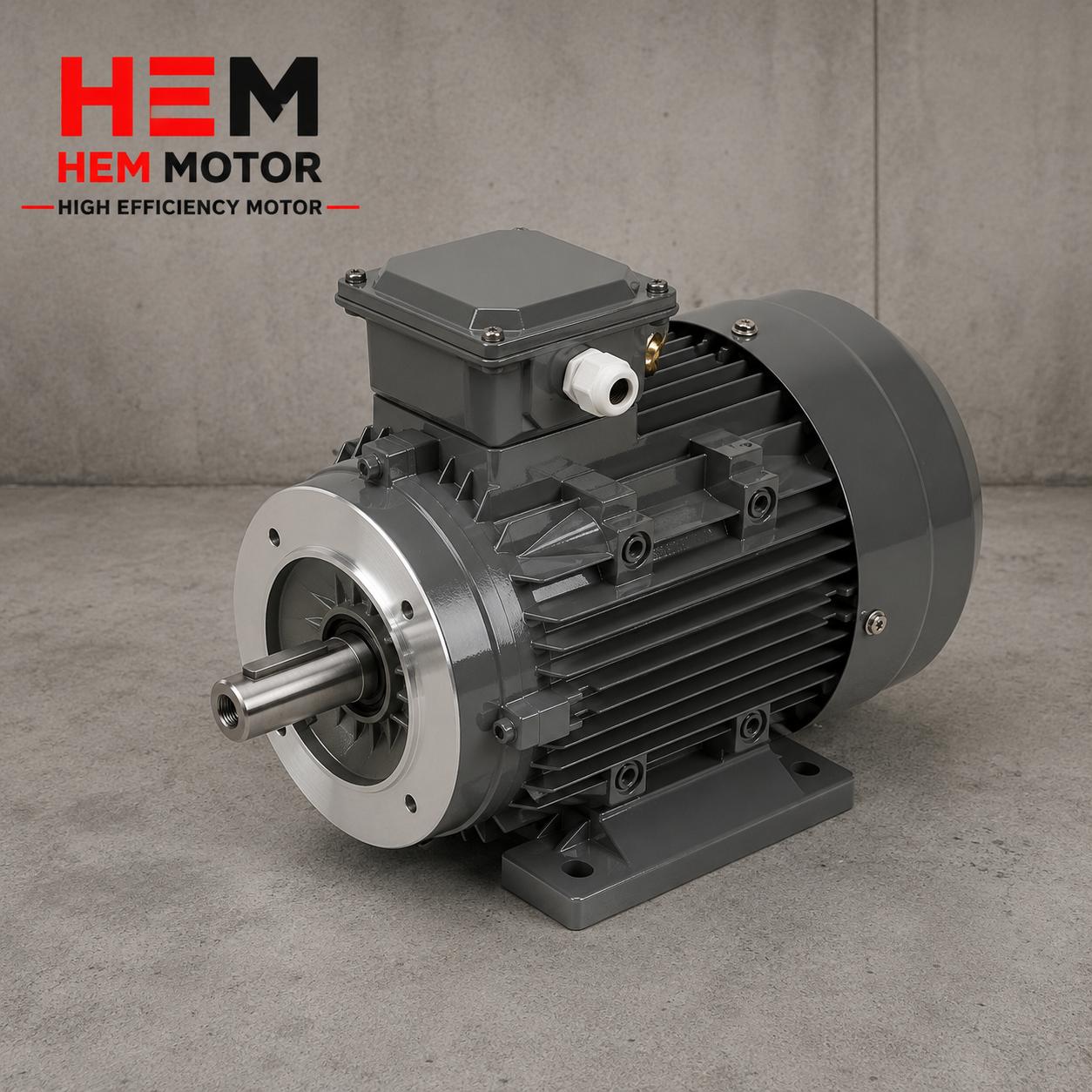

An electric motor nameplate stating IE3 or IE4 does not mean you will see that efficiency one-to-one in the field. The efficiency value on the nameplate is a reference measured under laboratory conditions, at full load and with ideal supply. In your real facility, the motor usually runs at partial load, under voltage fluctuation, phase imbalance, and harmonic distortion. This difference directly affects your investment decision and real energy savings. As HEM Motor, we always give the same warning to businesses purchasing high-efficiency motors: build the savings calculation not on nameplate efficiency but on the efficiency that will actually occur in the field. This guide was prepared to help you correctly understand the difference between nameplate efficiency and field efficiency, and calculate the real payback period without error when buying a high-efficiency motor.
What Is Rated (Nameplate) Efficiency and How Is It Measured?
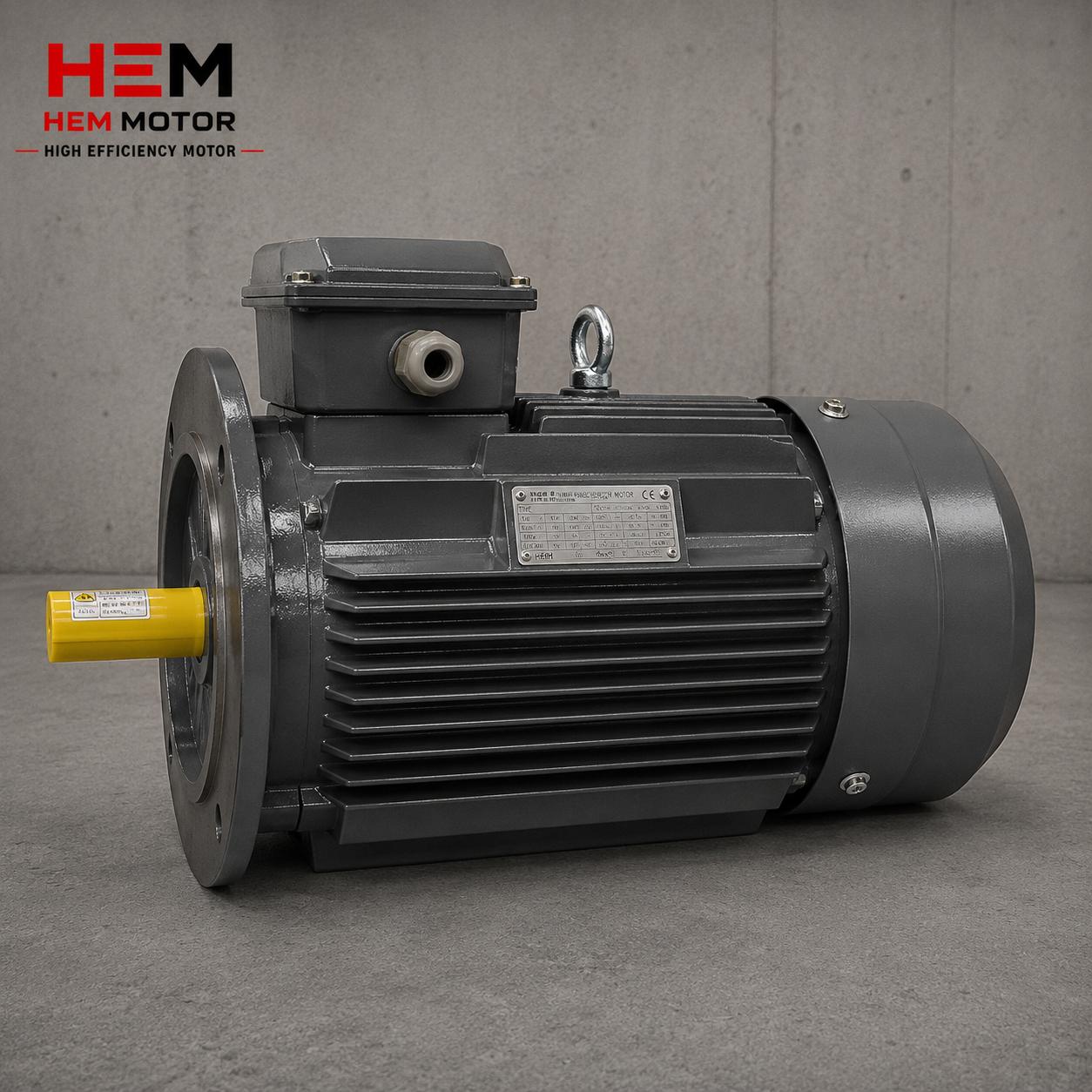
Rated efficiency is the ratio of the mechanical power a motor produces at full load (rated power), rated voltage, and rated frequency to the electrical power it draws. The IE3 and IE4 efficiency classes are defined over these full-load efficiency values per the IEC 60034-30-1 standard. For example, a 7.5 kW four-pole motor has an IE3 efficiency around 90 percent, while the IE4 version of the same motor rises to the 91-92 percent band. These values are clearly written on the nameplate and are guaranteed by the standard.
However, this efficiency belongs to the standard conditions under which the measurement was made: the motor runs at full load, balanced three-phase, harmonic-free, and with nominal voltage supply. In your facility all these conditions are rarely present together. We detailed which power requires which efficiency class from which date, and the regulatory counterpart of nameplate values, in our IE3 and IE4 efficiency mandate article. Nameplate efficiency is the starting point of choosing the right motor, but not the end point.
Partial Load Efficiency: The Motor Does Not Run at Full Load
The biggest factor moving field efficiency away from nameplate efficiency is that the motor rarely runs at full load. Most industrial motors actually operate in the 50-75 percent band of rated power, because engineers leave a safety margin and choose the motor one or two steps larger. This is a common practice but it affects efficiency.
In asynchronous motors the efficiency curve peaks at around 75 percent load and falls at both very low and very high loads. Especially at loads of 25 percent and below, efficiency drops rapidly. So if you run a 22 kW motor at 8 kW load, you cannot achieve the high efficiency written on the nameplate in the field, because the motor operates in the low region of the efficiency curve. Correct sizing is therefore the basis of savings. We explained at what load you should run your motor with calculation examples in our motor load ratio and correct sizing article.
IE4 Maintains Its Advantage at Partial Load
The good news is that IE4 super premium motors largely maintain their efficiency advantage over IE3 motors in the partial load region. The efficiency curve of IE4 motors is flatter; that is, efficiency changes very little in the 50-100 percent load range. This is the most important point creating a difference in favor of IE4 under real facility conditions. We evaluated the IE4 threshold in partial-load applications such as pumps, fans, and compressors in our IE4 threshold in pump, fan, and compressor article.
The Effect of Voltage, Imbalance, and Harmonics on Efficiency
The second major reason field efficiency comes out lower than nameplate efficiency is supply quality. The grid in your facility is not as clean as the laboratory.
Voltage Deviation
If the motor runs below or above nominal voltage, efficiency and power factor change. Low voltage increases current, heats the windings, and lowers efficiency; high voltage increases iron losses. Typically, a 10 percent deviation from the nominal value creates a noticeable deterioration in efficiency and temperature.
Phase Imbalance
Voltage imbalance between the three phases causes disproportionate current distribution in a three-phase asynchronous motor. Even just 3-4 percent voltage imbalance significantly raises winding temperature and lowers efficiency. Imbalance also shortens motor life; this is why temperature monitoring applications gain importance. Our protection with PT100 and PTC thermistor article guides you to get early warning by monitoring winding temperature.
Harmonic Distortion
Frequency drives (VFD), welding machines, and electronic loads inject harmonics into the grid. Harmonics create additional losses in the motor and lower the measured field efficiency. This effect is especially important in VFD-driven motors; for the correct drive selection you can review our frequency drive with asynchronous motor article.
How Do You Measure Real Efficiency in the Field?
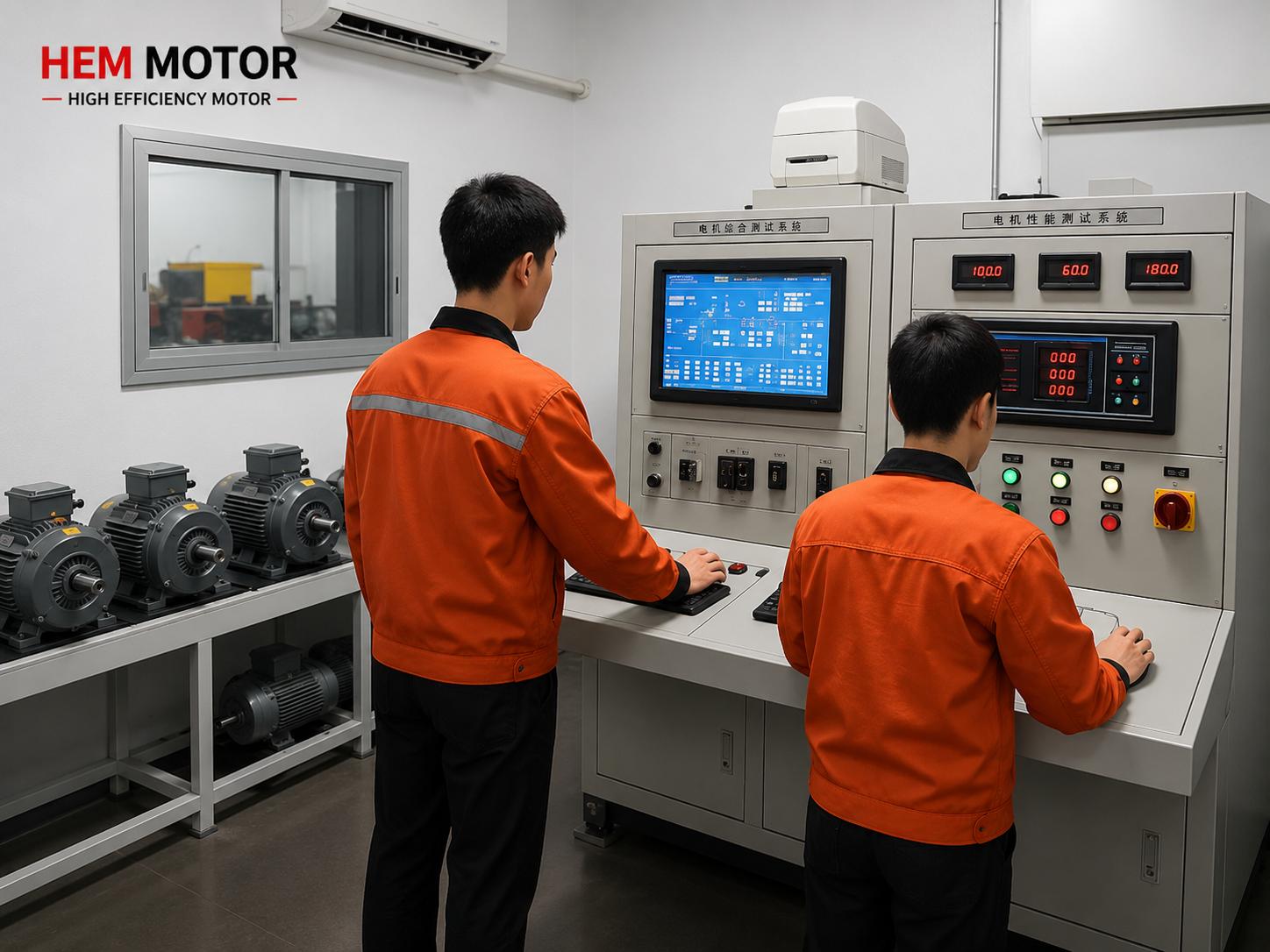
Instead of trusting your nameplate efficiency, measuring the real efficiency of your existing motors puts the savings calculation on a solid foundation. The methods applicable in the field are:
- Input power measurement with a power analyzer: By measuring the active power (kW) the motor draws, the power factor (cos φ), and the current, you determine the real load. This shows where on the efficiency curve the motor operates.
- Load ratio determination: By ratioing the measured active power to the rated power, you find what percentage load the motor runs at. If it is below 40 percent, the motor was probably chosen too large.
- Operating hours record: Real savings depend as much on operating hours as on the efficiency difference. In a motor running 8000 hours a year, even a small efficiency difference turns into a large gain.
When you have these three data points (real load, real efficiency, operating hours), you can realistically calculate the payback period of switching to an IE4 motor. Our preparing for an energy efficiency audit article guides you step by step to extract this inventory across the facility.
Calculating Real Savings Correctly
The key to building the savings calculation correctly is to use field efficiency, not nameplate efficiency. The logic is this: the difference between the real field efficiency of your old motor and the field efficiency of the new IE4 motor, multiplied by operating hours and real load, gives the annual energy gain.
Important points:
- If the old motor has been rewound, its efficiency is even below the nameplate, because each rewind brings efficiency loss. In this case the gap widens with IE4.
- In continuously running (S1 duty) applications the savings are highest; in intermittent applications the payback lengthens.
- Power factor improvement provides an additional gain by reducing the reactive penalty.
We explained the real payback period and calculation method of replacing an old standard motor with IE4 with examples in our replacing the old motor with IE4 and real consumption calculation and payback period articles. If you want a holistic view of total cost of ownership, our TCO calculation article is complementary.
The Hidden Effect of Power Factor (cos φ)
An item most businesses overlook when evaluating field efficiency is the power factor. In motors running at low load the power factor drops; this increases the reactive power drawn from the grid and returns as a reactive penalty on the electricity bill. High-efficiency motors generally offer a better power factor, but the real gain comes from correct sizing. To reduce the reactive penalty, the load ratio and power factor of the motors must be evaluated together. We addressed this topic in our power factor and reactive penalty article. Adding the power factor effect to your field efficiency calculation shows the real total savings more accurately.
IE3 or IE4? Deciding with Field Efficiency
Viewed from the nameplate, the difference between IE3 and IE4 may seem small. However, under field conditions, especially at partial load and long operating hours, the IE4 difference becomes pronounced. In motors running more than 4000 hours a year, at partial load and in continuous duty, the IE4 investment usually pays for itself quickly. In intermittent and low-hour applications, IE3 may be sufficient. For the decision, our IE3 or IE4 investment article guides you with an amortization calculation. Our IE4 super premium motors are available in the 0.25 kW - 355 kW range, and our IE3 premium motors can be supplied from stock with a wide range of power and speed options.
The Effect of Temperature and Cooling on Field Efficiency
Another factor that affects field efficiency but is skipped in most calculations is the motor operating temperature. As the winding temperature rises, the resistance of the copper winding increases; increased resistance enlarges the copper losses and lowers efficiency. So a hot-running motor gives lower field efficiency than the same motor running cool. This is why field efficiency falls below the nameplate value in motors with high ambient temperature, poor ventilation, or dust coating.
In IE4 super premium motors the cooling fan and body design are optimized to dissipate heat more effectively; this keeps the temperature low and preserves efficiency. We addressed the effect of cooling on efficiency in our cooling and fan design in IE4 motors article. The cast iron body also distributes heat better, keeping the winding temperature balanced in hot and dusty environments; we evaluated insulation class (F/H) and body selection by ambient conditions in our motor in hot and dusty environments article. Considering ambient temperature and ventilation when building your field efficiency calculation lets you estimate the real savings more accurately.
Efficiency Loss in Rewound Motors
One of the cases where field efficiency deviates most from the nameplate value is previously rewound motors. In each rewinding operation the lamination stack is thermally affected, the winding geometry moves away from the original, and efficiency drops somewhat. A motor rewound two or three times may be operating in the field at a much lower efficiency even if the nameplate says IE3. In this case switching to a new IE4 motor provides a larger saving than expected, because the comparison is not the nameplate value but the low real efficiency of the rewound motor.
The critical question for businesses is: is it more sensible to rewind the existing motor again or buy new? We detailed the cost and efficiency dimension of this decision in our rewind the motor or buy new article. Especially in small frame motors and continuously running applications, a new efficient motor is usually more economical than rewinding. Identifying low-field-efficiency, heavily rewound motors in your inventory lets you prioritize the replacements with the highest savings potential.
Frequently Asked Questions
Why can I not see the efficiency written on the nameplate in the field?
Because nameplate efficiency is measured in the laboratory at full load with a balanced, harmonic-free supply. In your facility the motor usually runs at partial load, under voltage deviation, phase imbalance, and harmonics. These conditions pull efficiency below the nameplate value. To learn the real efficiency you need to perform a field measurement with a power analyzer.
How does choosing my motor too large affect savings?
When you choose the motor larger than necessary, it operates in the low region of the efficiency curve (for example 30-40 percent load), and both efficiency and power factor drop. This causes you not to see the high efficiency written on the nameplate in the field. Correct sizing is the cheapest way to save, because it has no additional cost and only requires choosing the right power.
Can the field advantage of an IE4 motor really be proven?
Yes. Because IE4 motors have a flatter efficiency curve in the partial-load region, they offer a measurable advantage over IE3 and standard motors under real facility conditions. To prove this advantage, it is enough to measure the motor real load, field efficiency, and annual operating hours and make a payback calculation. At long operating hours the difference clearly comes out in its favor.
Get a Quote
Let us evaluate the real load and field efficiency of the motors in your facility and help you achieve measurable savings with correctly sized IE3 or IE4 motors. Share the power, speed, and operating hours information of your existing motors; let us present a realistic payback analysis and quote. Call us at +90 (532) 345 49 86 or reach us through our contact page; let us plan a motor supply that works in the field, beyond nameplate efficiency.