English
 Türkçe

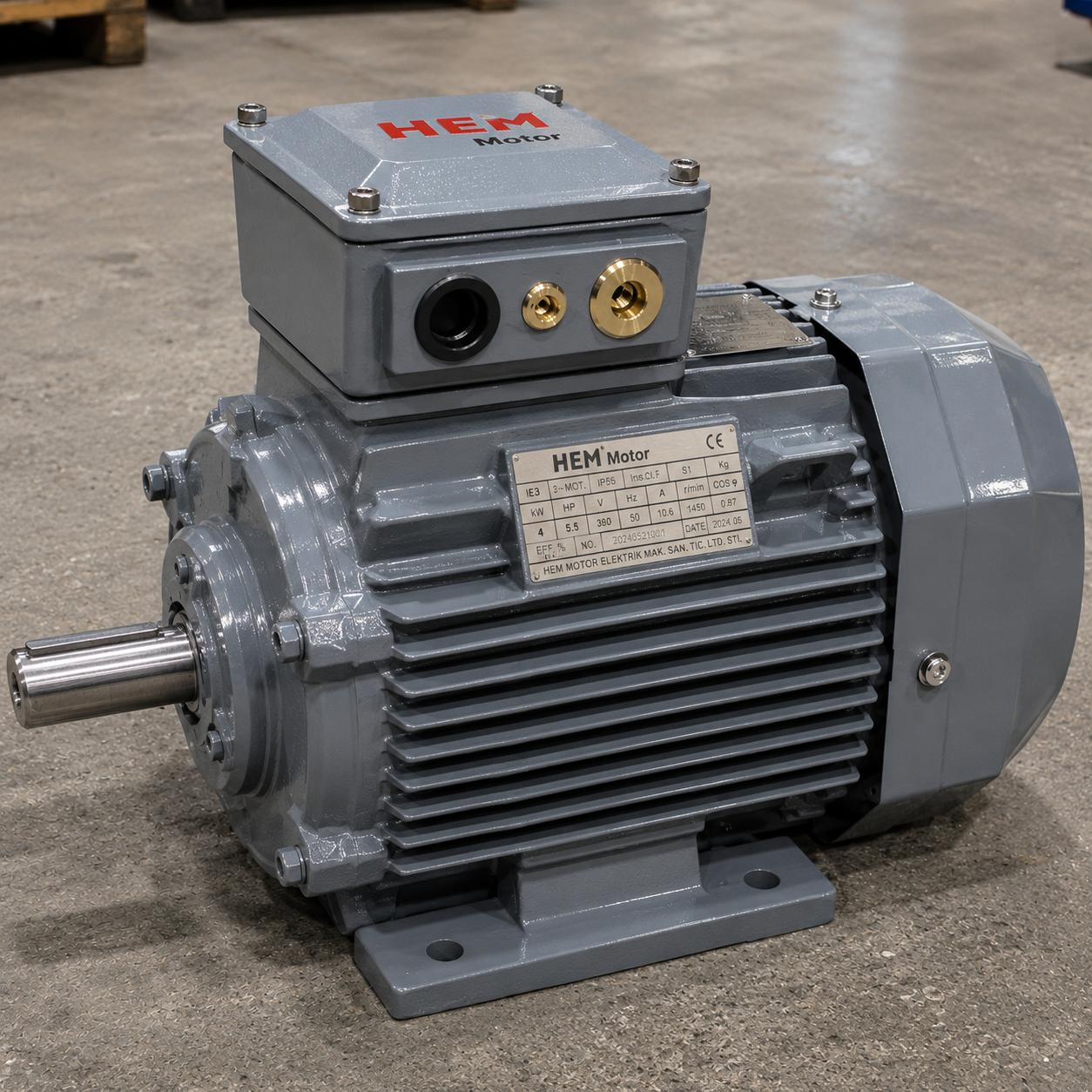

At the very moment an AC asynchronous motor first starts, it draws a current up to six times its rated current. This is a natural phenomenon that the motor creates by itself; however, when left unmanaged, it harms the motor, the grid, and the panel equipment alike. The starting method is precisely the way to control this high inrush current, and it is in fact as much a purchasing decision as it is an engineering decision. The right method determines the motor's lifespan, the panel cost, and the voltage fluctuation on the grid all together. In this article we compare the two most common methods, namely the star-delta and soft starter options, address the additional advantages that a VFD brings, and explain which is more appropriate for which application.
Why Is Direct Starting Often Not Sufficient?
In low-power motors, connecting the motor directly to the grid (direct-on-line starting, DOL) is simple and economical. However, as the power grows, the high current at the moment of starting creates a problem. This sudden current causes a voltage drop on the grid; it can affect other devices connected to the same line and even cause fuses to blow. In addition, a hard start applies a sudden torque shock to the mechanical components of the motor and the machine it drives; belts, couplings, and gears are worn out by this shock.
For this reason, in motors above a certain power, a starting method that softens the starting current and torque is preferred. The aim is to bring the motor into service without straining it, without shaking the grid, and without wearing out the mechanical components. As the installed power climbs, the gap between a controlled start and a brutal one only widens, which is why larger drives almost always justify the additional equipment needed to tame the inrush.
Star-Delta Starting: Cheap and Simple, But There Is a Price
The star-delta method is a classic and economical solution that has been used for decades. The motor is first brought into service in the star connection; in this way the starting current drops to approximately one third compared with direct starting. After the motor reaches a certain speed, the connection is switched to delta and the motor runs at full power.
The biggest advantage of this method is its low cost and simplicity. However, it has an important price: while reducing the starting current to one third, it also reduces the starting torque by the same ratio, that is, to approximately one third. This means the following: if the motor has to start under load, it may not be able to produce enough torque in the star connection, and the machine may not move from its place. This trade-off is the heart of the star-delta decision: the very feature that makes it gentle on the grid, namely the reduced voltage applied to each winding in star, is also what robs it of the torque needed to accelerate a heavily loaded shaft.
For Which Applications Is Star-Delta Suitable?
This method is ideal for applications where the load at start-up is low. For example, fans that start unloaded, pumps, or centrifugal loads come into service smoothly with star-delta. However, in machines that start under load such as conveyors, crushers, and compressors, the star connection may be insufficient, and a second current surge may occur at the moment of transition. For loaded starts, more advanced methods are therefore preferred. The transition surge deserves special attention: at the instant the contactors switch from star to delta, there is a brief moment during which the motor is briefly disconnected and then reconnected at full voltage, and if this happens while the motor is still well below speed, the resulting current spike can rival the inrush the method was meant to avoid.
Soft Starter: Smooth and Controlled Starting
A soft starter is a device that softens the start by electronically raising the voltage applied to the motor in stages. Unlike the two-step, hard-transition structure of star-delta, the soft starter provides a continuous and smooth ramp. The starting current can be adjusted; the starting time and the torque ramp can be programmed according to the application.
- Less mechanical shock: Belts, couplings, and gears are loaded with a gentle ramp instead of a sudden torque, so their lives are extended.
- Gentler on the grid: Because the starting current is kept under control, the voltage drop is reduced.
- Adjustable starting: The same soft starter can be re-adjusted for different loads.
- Soft stop capability: Most soft starters also provide a controlled stop that prevents water hammer, especially in pumps.
A soft starter is more expensive than star-delta but is much safer and more reliable in loaded starts. Because it protects the life of the motor and the machine, it pays for itself in the medium term. The ability to fine-tune the ramp to the exact behavior of the driven load is what makes the soft starter so versatile; the same hardware that gently spins up a lightly loaded fan can be reconfigured to deliver a longer, stronger ramp for a stubborn, high-inertia load, all without rewiring the power circuit.
VFD: Beyond Starting, Speed Control and Energy Saving
A frequency converter (VFD, drive) is in fact much more than a starting device. The VFD provides the smoothest possible start by adjusting the frequency and voltage applied to the motor together; however, its real strength is the ability to adjust the speed as you wish during operation. In a pump or fan, significant energy savings can be achieved by reducing the speed according to the load, because in such loads the power consumption varies with the cube of the speed.
With a VFD, the starting current can be kept far below the rated current, the torque can be controlled precisely, and the speed can be changed instantly according to process needs. In this respect, the VFD is both the most advanced starting solution and an energy management tool. For the right motor and a suitable drive combination, you can review the options on our electric motor prices page. The cube law is worth dwelling on, because it is the source of the dramatic savings VFDs deliver on variable-flow systems: trimming the speed of a fan or pump by even a modest percentage reduces its power draw far more than proportionally, so over a year of continuous operation the saved energy can repay the cost of the drive many times over.
Which Method to Choose? A Decision Framework
The right method does not depend on a single rule; it is determined according to the requirements of the application. In simple, cost-focused applications that start unloaded, star-delta still makes sense. In applications that start under load and where mechanical shock matters, the soft starter stands out. When speed adjustment, energy saving, or precise process control is required, the VFD is without question the right choice. The decision should be made by evaluating the motor's power, the starting load, the operating frequency, and the condition of the grid together. For a motor with the power and mounting type suitable for your need, you can request a quote through our electric motor prices page. It is also wise to think beyond the day of commissioning: a method that looks cheapest on paper can prove costly if it shortens the life of belts and bearings or if it forces a process to run at a single fixed speed when the work would clearly benefit from variable speed.
Frequently Asked Questions
If I use a soft starter instead of star-delta, will the motor's life be extended?
Yes, indirectly. Because the soft starter softens the start, the sudden torque and current shocks imposed on the motor windings and the mechanical components of the machine are reduced. In motors that start frequently, this difference leads to a noticeable extension in bearing and winding life. The benefit grows with the number of starts per hour: a machine that cycles on and off many times during a shift accumulates a great deal of cumulative stress from hard starts, so smoothing each one of those events adds up to a meaningful gain in service life over the years.
Does it make sense to fit a VFD to every motor?
No. A VFD is especially valuable in pumps, fans, and variable-load applications that require speed adjustment or energy saving. In simple applications that run at constant speed and do not require speed adjustment, the additional cost of a VFD may not always pay off; in that case a soft starter may be sufficient. The right question to ask is whether the process genuinely benefits from variable speed or from the energy management features of a drive; where it does not, the simpler and cheaper option is usually the more sensible engineering choice.
Does the starting method affect the motor selection?
Yes. For example, for star-delta the motor must have six leads (6 terminals) and the connection must be suitable. In motors that will run with a VFD, drive-compatible windings and, where necessary, the insulation class are important. For this reason, the starting method and the motor should be planned together at the order stage. Specifying the starting strategy up front avoids unpleasant surprises later, such as discovering that a delivered motor cannot be connected in star-delta or that a winding is not rated for the voltage stresses a drive can impose. Coordinating these details at the moment of purchase keeps the whole installation coherent and avoids costly rework.