English
 Türkçe


315 kW is one of the upper steps of the high-power class in industrial electric motors. A motor of this power is used in critical applications such as a heavy crusher drive, a large centrifugal pump, a high-flow fan, a compressor or a main line drive. Selecting a 315 kW motor is very different from ordering a small-power motor: the frame size, the starting method, lifting and handling, shipping and commissioning must all be planned from the start. In this article we cover 315 kW motor selection along the axes of 2/4 pole, starting, lifting eye-handling and project-based lead time-shipping. As HEM Motor, an electric motor factory manufacturing since 1979, we supply high-power motors from Türkiye stock and production together with a project lead time, shipping and commissioning plan.
Frame Size and Mechanical Structure in a 315 kW Motor
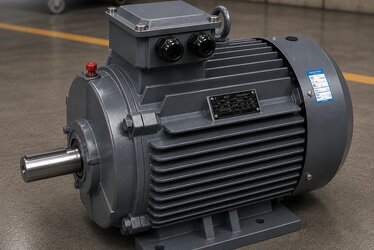
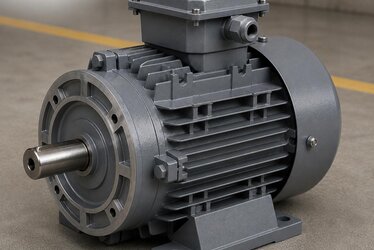
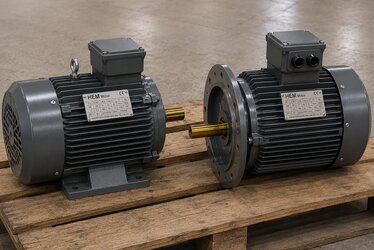
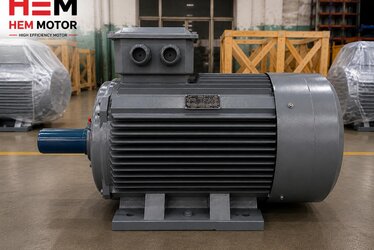
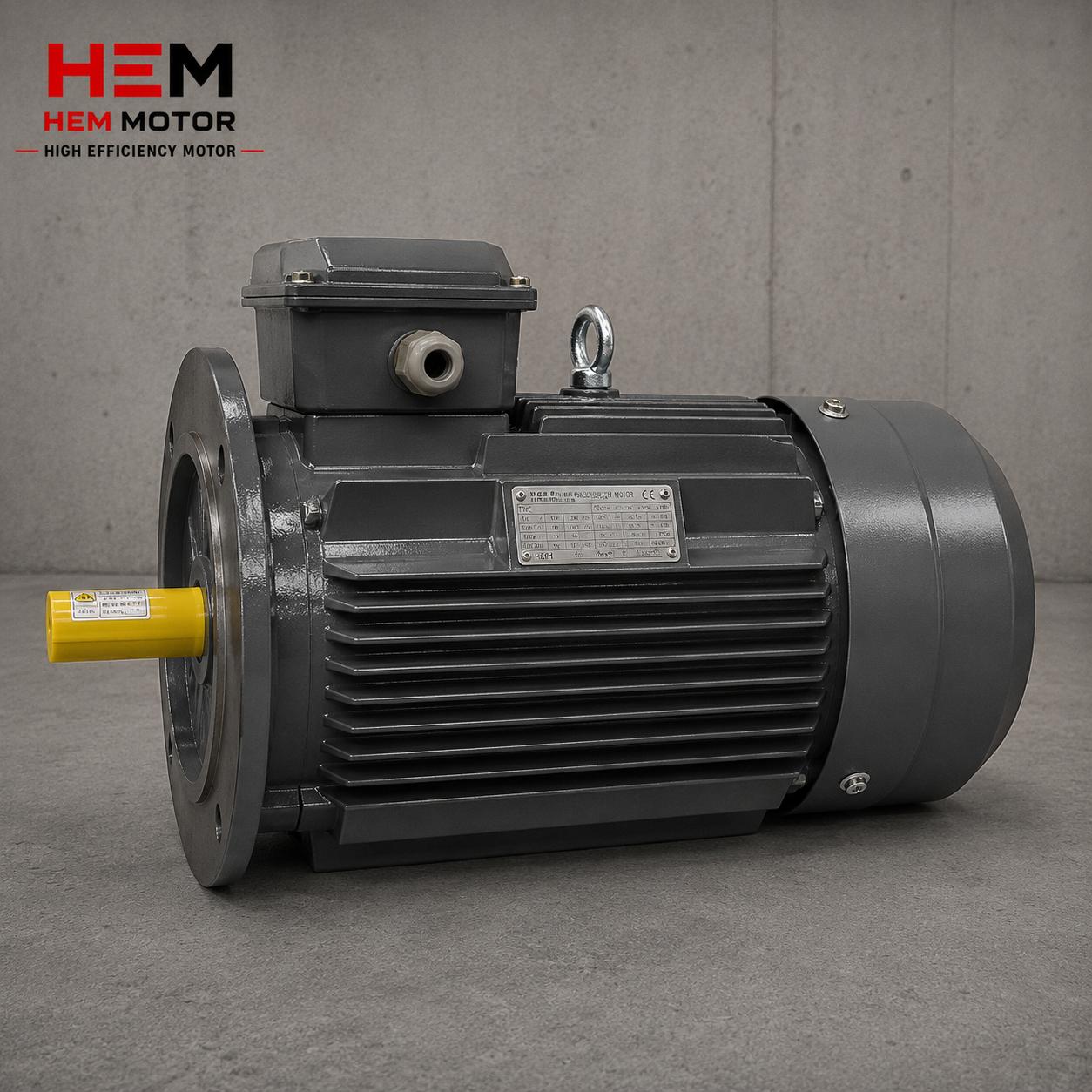
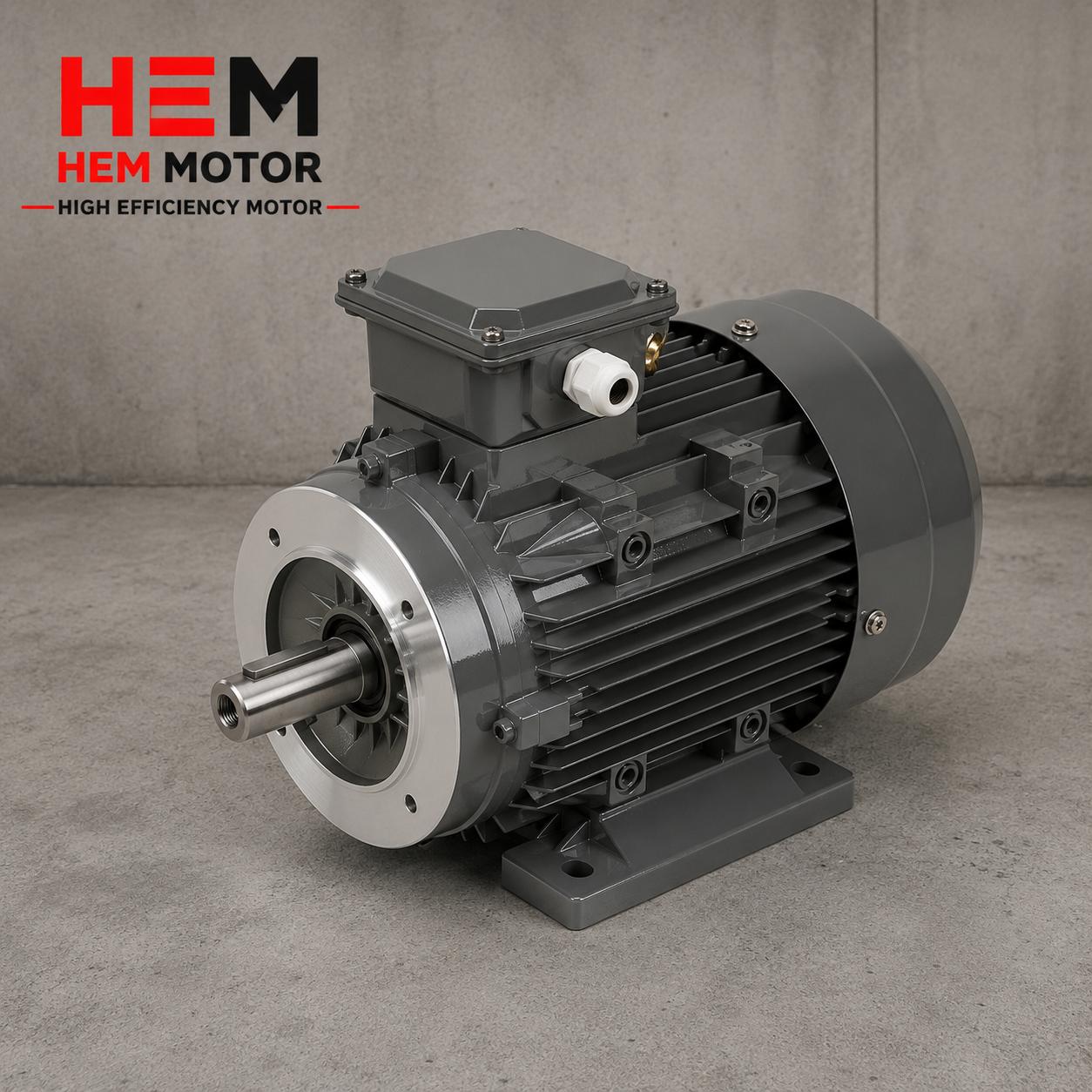
A motor of 315 kW power is generally produced in the 355 frame (IEC 355) class in the Turkish market. This frame is a structure whose weight reaches hundreds of kilograms, with a large shaft diameter and strong bearings. The frame material must be cast iron; an aluminium body is out of the question at this power. The cast iron body provides high mechanical strength, vibration damping and long life. We explained the frame-size to power matching and the weight-handling relationship in our cast iron motor frame sizes and weight-handling article.
In high-power motors, the shaft diameter, key dimension and mounting type are critical for the mechanical connection. 315 kW motors are mostly used with a B3 foot, belt-pulley or coupled connection. We clarified why the difference between cast iron and aluminium body is, at this power, indisputably in favour of cast iron in our cast iron or aluminium body article. You can review the entire cast iron range on our efficient electric motors page.
2 Pole or 4 Pole? Speed Selection
In 315 kW motors, the two most common options are 2 pole (3000 rpm) and 4 pole (1500 rpm). The selection is made according to the speed requirement of the application. 2 pole (3000 rpm) is preferred in high-speed compressor, large centrifugal pump and high-pressure fan applications. 4 pole (1500 rpm) is common in crusher, mill, conveyor and general heavy drive applications. We covered the effect of the pole count on speed, torque and efficiency in our asynchronous motor pole selection: 2, 4, 6 poles article.
At the same power, a 2-pole motor produces lower torque at a higher speed, and a 4-pole motor higher torque at a lower speed. For this reason the right pole selection is related not only to the speed but also to the torque demand of the application. We compared the relationship between efficiency and pole count for different poles in our efficiency and pole count in asynchronous motors article. You can find the 2/4 pole selection logic at lower power steps in our 45, 55 and 75 kW motor 2/4 pole selection article.
Starting: Soft Starter, Autotransformer and Star-Delta
Direct online (DOL) starting of a 315 kW motor means a very high starting current for the grid. This current causes both a serious voltage drop on the grid and a shock to the mechanical system. For this reason, soft starting is essential in high-power motors. The most common methods are soft starter, autotransformer and star-delta starting. We compared the difference between star-delta and soft starter and which is suitable when in our star-delta or soft starter article.
In high-inertia and impact-load applications such as crushers, the starting method gains additional importance; we covered this subject in our starting a crusher motor article. If the motor is fed by a generator, the starting current is the decisive factor in generator sizing; we explained how many kW of motor a generator of how many kVA handles in our generator kVA - motor kW matching article. At high power, a 690V connection eases the cable and switchgear by reducing the current; you can find 690V motor selection in our 690V asynchronous motor selection article.
Lifting Eye, Hoisting and Mechanical Handling
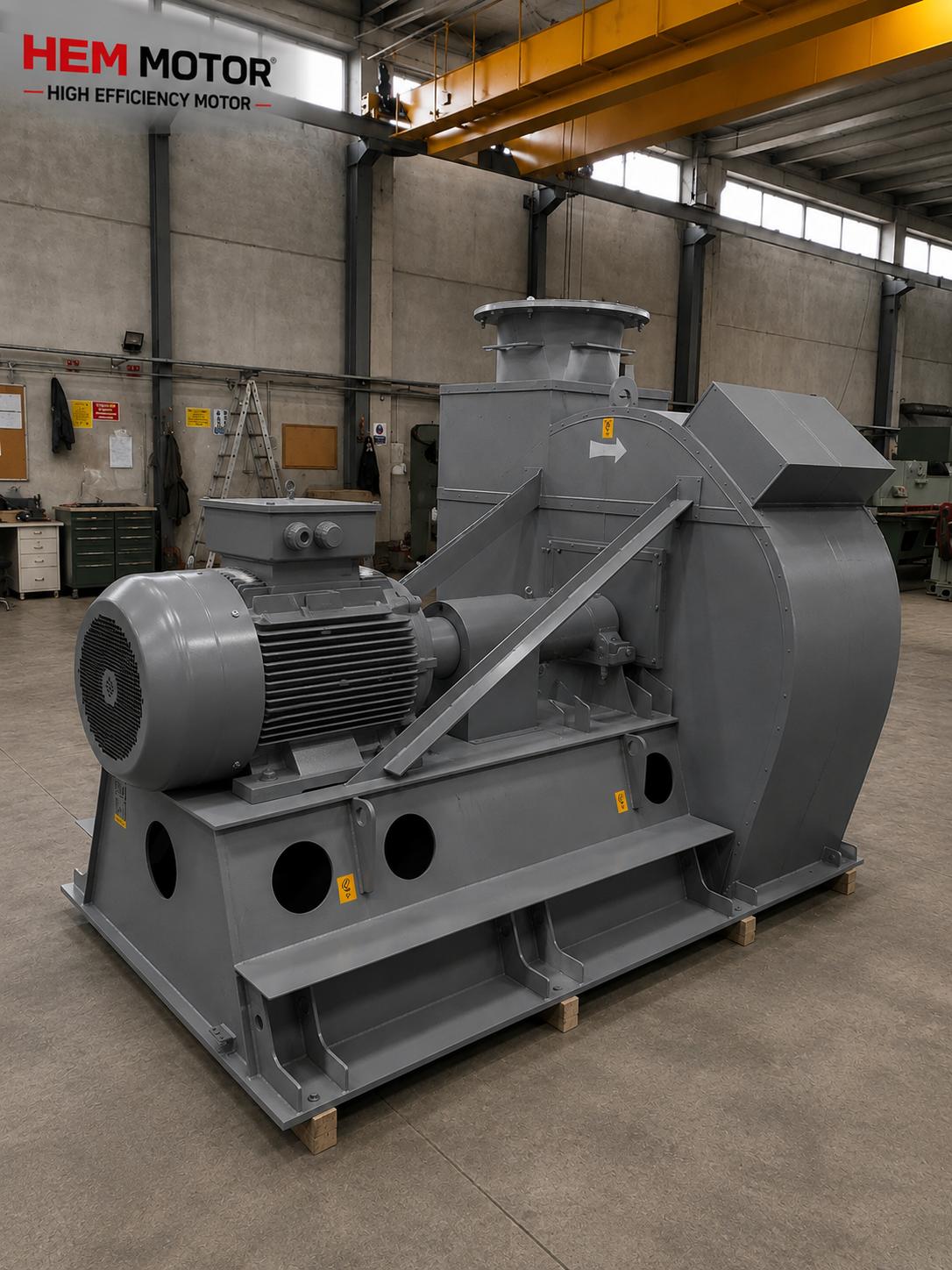
A 315 kW motor is a piece of equipment whose weight can exceed one ton. For this reason the motor has a lifting eye as standard, and handling is done only with a suitable crane, forklift and sling. Incorrect lifting carries both a work safety risk and the risk of damaging the shaft, fan or terminal box. We detailed the frame size, weight and handling method of high-power motors in our cast iron motor frame sizes and weight-handling article.
Getting the motor to the installation site requires checking the in-plant transport routes and door widths in advance. Site preparation, the base, alignment and connection are part of the commissioning process. We gathered the checks to be done at delivery in our electric motor shipping damage check list article.
Thermal Protection, Temperature Monitoring and Duty Type
315 kW motors usually work in continuous (S1) duty in critical processes. A failure of a motor of this power creates a large cost; that is why protection and monitoring are essential. PT100 and PTC thermistors are used to monitor the winding temperature, and additional sensors to monitor the bearing temperature. We explained the winding temperature monitoring methods in our motor winding temperature monitoring article.
We gathered the selection of the thermal relay, contactor and fuse that protect the motor against overload and phase failure in our electric motor protection article. The correct determination of the duty type (S1-S6) affects the heating behaviour and the selection of the motor; we covered this subject in our electric motor duty type selection article. The insulation class is class F standard at this power, and class H is preferred in harsh conditions.
Project-Based Lead Time, Shipping and Commissioning
High-power motors such as 315 kW are most often supplied within the scope of a project, tied to a specific lead time. If delivery from stock is possible, this is the fastest route; for special configurations not in stock, a production order comes into play. We explained the time difference between delivery from stock and a production order and in which case which applies in our delivery from stock or production order article.
In high-power motors above 90 kW, the lead time, shipping and commissioning plan must be handled as a whole; we gathered this subject in our high-power motor supply above 90 kW and, for higher steps, in our 250 kW high-power motor supply articles. You can find the 2/4 pole selection and shipping plan at the 160 and 200 kW steps in our 160 and 200 kW high-power motor selection article, and the 90-132 kW band in our 90-132 kW high-power motor 2/4 pole selection article.
In projects where continuity is critical, such as mining and OEM, the supply contract and redundancy assurance come to the fore. We covered motor supply contracts in mining in our motor supply contracts in mining article and continuity agreements for OEM machine manufacturers in our motor supply agreements for OEM machine manufacturers article. We listed the rotation direction, insulation resistance and connection checks at the first start in our motor commissioning checklist article.
In Which Applications Is a 315 kW Motor Used?
The 315 kW high-power motor addresses not a single sector but many heavy applications with a high power demand. In crusher and stone crushing plants, the main crusher drive can rise to this power band due to the high torque and impact load; high-power supply requires separate planning when evaluating crusher plant motor selection and downtime cost. In large centrifugal pumps and high-flow irrigation or process lines, 315 kW is used as 2 or 4 pole. In high-pressure fan and extraction systems, especially in cement, iron-steel and energy plants, this power is frequently encountered. We covered the high-power motor logic in hot, heavy-duty environments such as rolling mills and foundries in our rolling mill and foundry electric motors article.
The load profile of each application is different, and this determines both the pole selection and the starting method. In variable-torque applications such as pumps and fans, speed control with a VFD brings both process flexibility and energy savings; we explained when a VFD is needed and how it is selected at high power in our frequency inverter (VFD) with asynchronous motor article. In constant high-torque and impact-load applications such as crushers, starting and flywheel-inertia are more decisive. When selecting the right motor, evaluating the speed, torque and duty profile of the application together optimizes both the initial investment and the operating cost.
Efficiency and Operating Cost in a 315 kW Motor
In high-power motors, efficiency is directly reflected in the energy bill. When a motor such as 315 kW runs continuously (S1), the annual energy consumption is very high; for this reason even a small difference in the efficiency class creates a notable energy cost difference at the end of the year. The IE3 and IE4 efficiency classes accelerate the return on investment at this power. Evaluating the effect of the efficiency class on the energy cost in continuously running high-power motors can be far more important than the list price in the purchasing decision.
Another factor that determines the efficiency of the motor in the field is correct sizing. A motor selected too large runs at low efficiency at partial load and its power factor drops; a motor selected too small is continuously overloaded and its life shortens. For this reason, determining the power margin correctly is critical both for efficiency and for life. In a high-power investment, evaluating the total cost of ownership of the motor (energy + maintenance + downtime) together with the list price is the soundest purchasing approach. You can review our efficient motor range on our efficient electric motors page.
315 kW Motor Selection and Supply Checklist
- Frame: Usually 355 frame (IEC 355), cast iron; weight and handling planned in advance.
- Poles/Speed: 2 pole (3000 rpm) high-speed, 4 pole (1500 rpm) high-torque applications.
- Starting: Soft starter, autotransformer or star-delta - DOL not recommended.
- Connection: A 690V option reduces the current at high power.
- Lifting: Standard lifting eye; handling with crane, forklift and sling.
- Protection: PT100/PTC temperature monitoring, thermal and relay protection.
- Insulation: Class F standard, class H in harsh conditions.
- Supply: Delivery from stock or production order; project lead time, shipping and commissioning plan.
Frequently Asked Questions
What frame is a 315 kW motor and how much does it weigh?
A 315 kW motor is generally produced in the 355 frame (IEC 355) class in the Turkish market. The weight of a motor in this frame can exceed one ton, depending on the pole count and structure. For this reason a lifting eye is standard on the motor, and handling must be done only with a suitable crane, forklift and sling. Before ordering, the in-plant transport routes and access to the installation site should be checked.
Can a 315 kW motor be started directly online?
In practice it is not recommended. Direct online (DOL) starting of a 315 kW motor draws a starting current several times the rated current; this causes both a serious voltage drop on the grid and a mechanical shock. At this power, soft starter, autotransformer or star-delta starting is preferred. If the load profile is impact or high-inertia (such as a crusher), the starting method must be specially selected according to the application.
What is the lead time for a 315 kW motor?
The lead time depends on whether the motor is in stock and whether a special configuration is required. Fast delivery is possible for standard configurations in stock; for situations requiring a special speed, mounting type or voltage, a production order comes into play. The most correct approach is to share the project lead time from the start and plan it together with the supplier; thus shipping and commissioning are also tied to the schedule.
Get a Quote
Would you like to plan your 315 kW high-power motor with the right poles, starting method and project lead time? Send us your application (crusher, pump, fan, compressor), the required speed, the mounting type and the delivery lead time; let us present the cast iron body 315 kW motor, together with a soft starter/VFD and a shipping-commissioning plan if needed, in a single quote. As HEM Motor, we supply high-power motors from Türkiye stock and production with a project plan. Reach us right away at +90 (532) 345 49 86 or fill out the form on our contact us page; let our technical team prepare the most suitable motor and supply plan for your project together with you.