English
 Türkçe

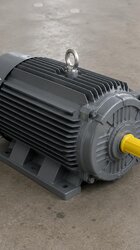
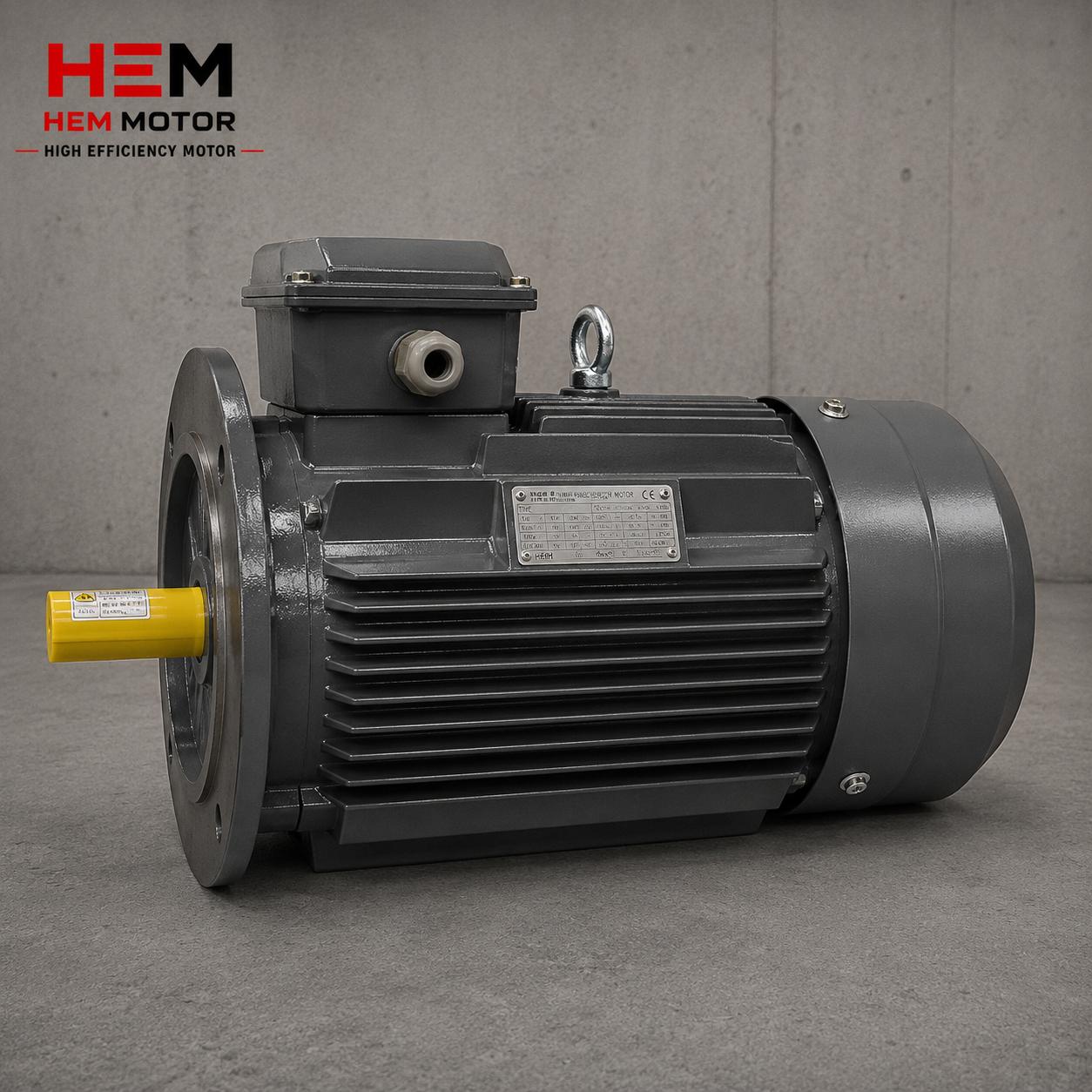

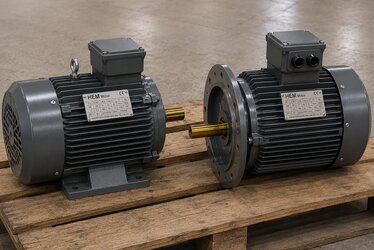
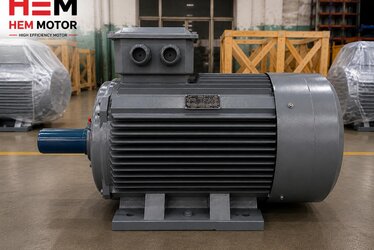
Motors between 90 and 132 kW make up a facility's most expensive and most critical drives; in this power band the right pole (speed) choice and the right supply plan directly affect both the investment cost and production continuity. A motor of this size is no longer a part picked off the shelf and fitted: whether it will be 2-pole or 4-pole must be determined by the application, the starting method must be planned, transport and lifting organised in advance, and commissioning carried out step by step. This article clarifies, for businesses that supply 90-132 kW high-power motors, the pole selection, starting, lead time-transport-lifting and commissioning plan; our aim is for you to procure this high-budget investment with the right specification, in a single order, without surprises.
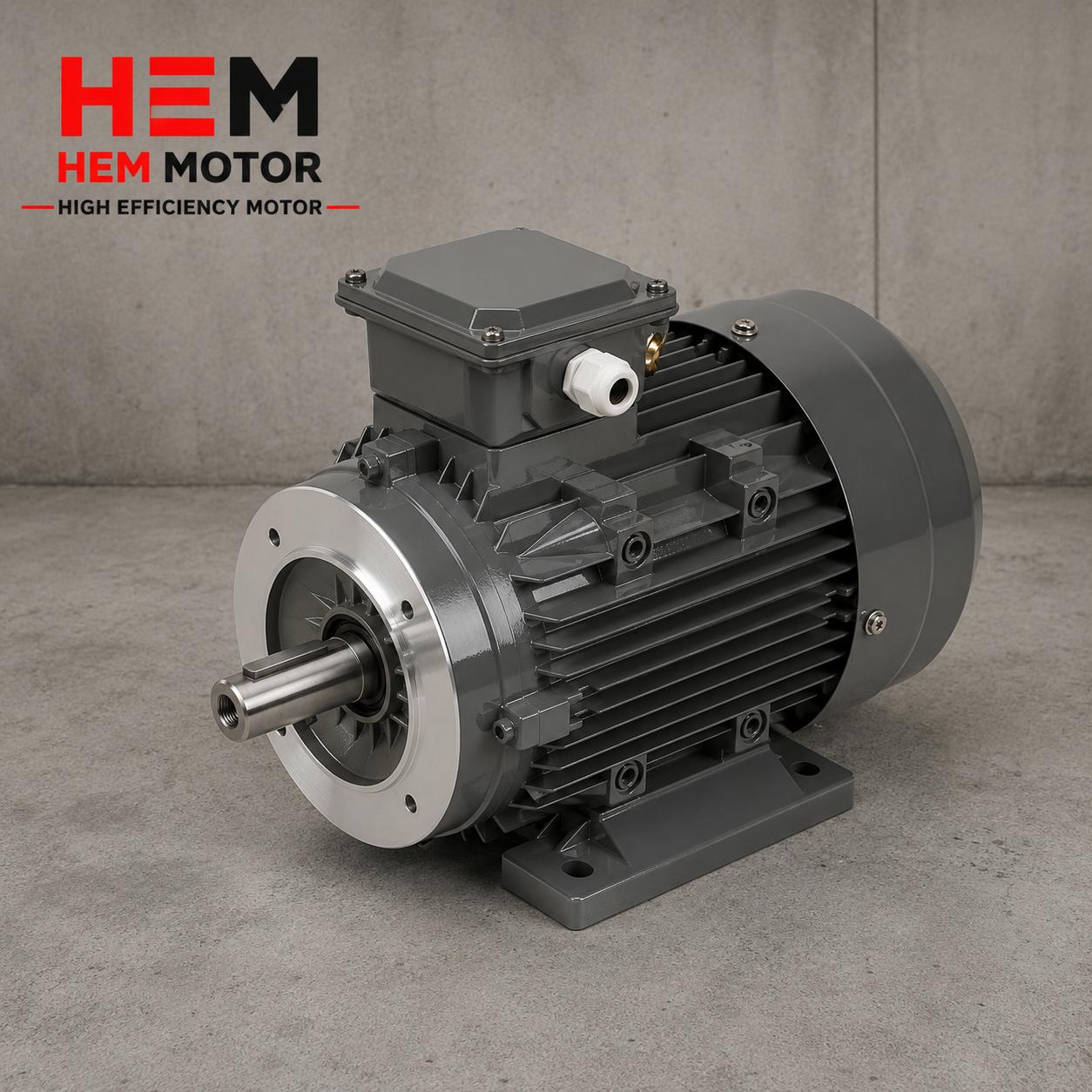
In the 90-132 kW Band: 2-Pole or 4-Pole?
In this power band the most basic decision is speed, that is, the pole count. The pole count determines the synchronous speed of the motor: 2-pole ~3000 rpm, 4-pole ~1500 rpm. The choice depends entirely on the driven machine:
- 2-pole (3000 rpm): Centrifugal pumps, high-pressure fans, compressors and some blowers requiring high speed. These applications gain efficiency from high speed.
- 4-pole (1500 rpm): The most common speed in this power band; conveyors, mills, medium-speed fans and pumps, general industrial drives. Provides higher torque and more balanced operation.
The important point: at the same kW power, a 2-pole motor produces lower torque and a 4-pole motor produces higher torque. If your machine demands high torque (conveyor, mill) 4-pole is sensible; if it demands high speed (centrifugal pump, compressor) 2-pole is sensible. We detailed the effect of pole count on the application in our 2, 4, 6 pole selection article, and the efficiency-pole relationship in our efficiency and pole count article.
The pole stays fixed when replacing an existing motor
When renewing a failed 90-132 kW motor, you should not change the pole count (speed); the machine was designed for that speed. The speed on the existing motor nameplate is the basis of the order. At the wrong speed the motor either cannot run the machine or overloads it; we explained the importance of exact nameplate matching in our exact nameplate matching article.
Starting: Above 90 kW, Direct-on-Line Is Usually Not Enough
In this power band, direct-on-line (DOL) starting draws very high starting current; it can cause voltage dips, blown fuses and mechanical shock on the grid. That is why the starting method must always be planned for 90-132 kW motors:
- Star-delta: Reduces the starting current to about one-third; an economical solution in low-inertia applications that are lightly loaded at start-up. The motor must be connected suitably for star-delta (6 terminals).
- Soft starter: Controls the starting current and torque with a ramp; preferred in high-inertia or loaded-start applications (conveyor, mill, compressor), it reduces mechanical shock.
- Frequency drive (VFD): Controlled start-up + speed adjustment; where variable load or energy saving is desired.
We compared the choice between star-delta and soft starter in our star-delta or soft starter article. In places fed by a generator, such as a site, starting current creates a separate constraint; our motor selection on a generator-fed site article covers this.
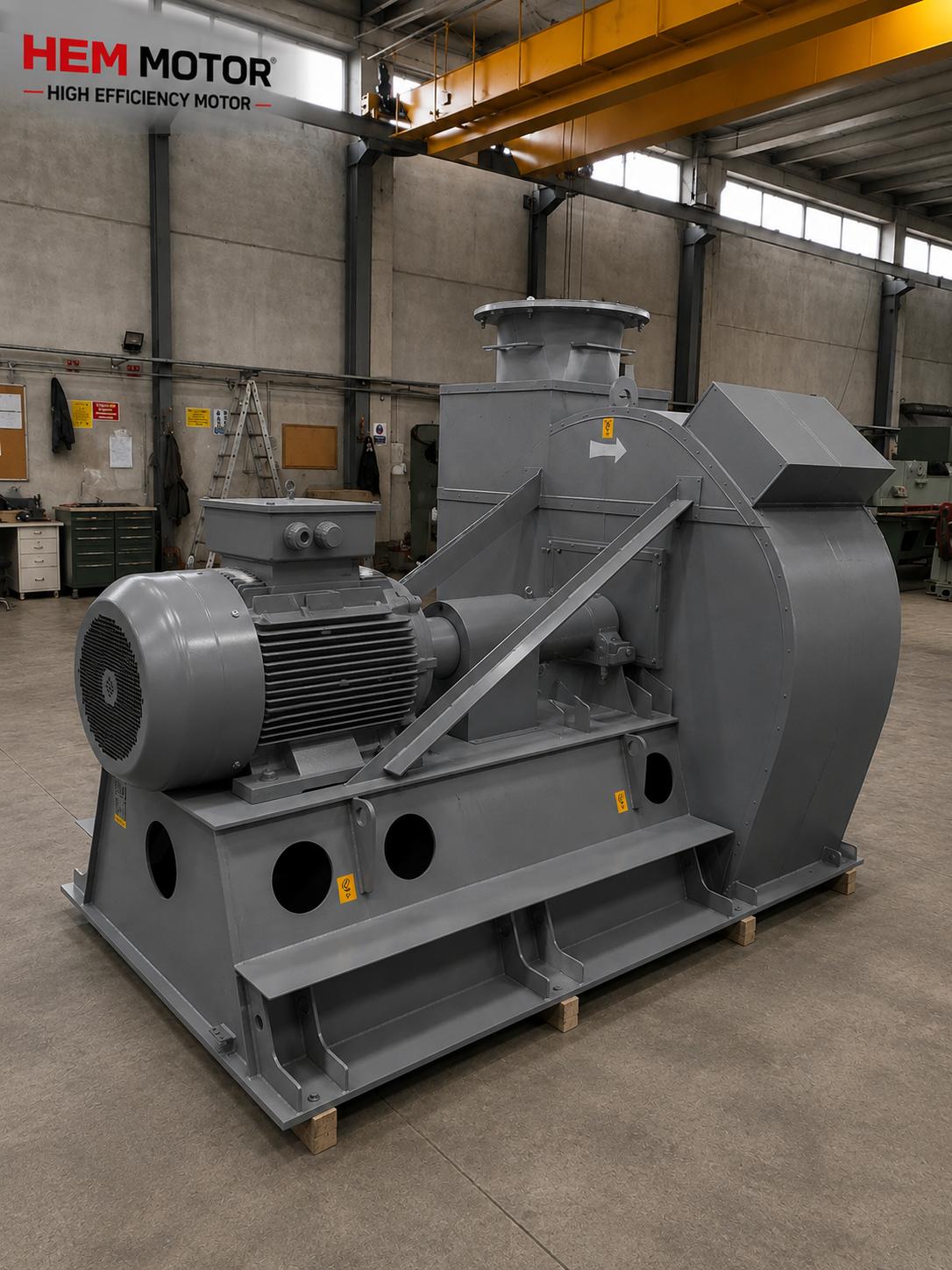
Lead Time, Transport and Lifting Plan
Motors in the 90-132 kW band are heavy; a motor of this power with a cast iron body can reach several hundred kilograms. That is why supply is not just procuring the motor but also planning the logistics:
- Lead time: Power-speed combinations that can be met from stock are delivered quickly; motors with special configuration (special paint, protection, shaft) require a lead time. We explained the difference between from-stock delivery and a production order in our from-stock delivery or production order article.
- Transport: A heavy motor must be carried with suitable packaging and securing; the shaft and bearings must be protected during transport. We listed the checks to make on receipt in our shipping damage check list article.
- Lifting: The motor must be lifted from its lifting eyes with the right equipment; the site crane/forklift capacity should be planned in advance.
We covered the supply process of this power band in general in our 90 kW and above high-power motor supply article; this article focuses on pole selection in the 90-132 kW band.
Which Pole for Which Application? Practical Examples
To make pole selection concrete in the 90-132 kW band, let us look at typical applications. This band houses the largest drives of a facility, and each application has a different speed need:
- Large centrifugal pumps: In water supply, lifting and process pumps high speed provides efficiency; so 2-pole (3000 rpm) motors are common. The pump operating point and NPSH values support the speed choice.
- Compressors: In screw and piston compressors 2 or 4 pole varies by application; 2-pole is often preferred in screw compressors.
- Conveyor and belt systems: Because high torque and low speed are required, 4-pole (1500 rpm) or geared solutions are generally used.
- Mills and crushers: Due to high starting torque and heavy load, 4-pole and a suitable torque class are preferred.
- Large fans: 4 or 6 pole according to the air flow; starting is planned due to high inertia.
These examples show that pole selection is a function not of power but of the function of the driven machine. The same 110 kW motor is selected as 2-pole in a centrifugal pump and 4-pole in a conveyor. That is why clarifying the application and the speed of the existing motor at the quote stage is the basis of the right choice.
Mechanical Compatibility: Frame, Foot and Shaft
When renewing a motor in this power band, mechanical compatibility is critical, because a mistake is expensive and hard to resolve in the field. The frame size (IEC frame size), foot hole dimensions, shaft diameter, key dimension and mounting type (B3/B5/B35) of the existing motor must match the new motor exactly; otherwise the foundation, coupling or machine connection will not fit and the installation is delayed for hours. On large motors the foot dimensions and shaft diameter are determined according to standard IEC tables, but on motors with a special shaft or special foot hole, providing this information in advance is essential. We covered mounting types in our mounting type selection article, and shaft-key-coupling compatibility in our shaft diameter and key dimensions article. When replacing an old-brand motor with an equivalent, the equivalent selection also requires care; we explained this in our direct replacement of an old-brand motor article.
Commissioning Plan
Commissioning a high-power motor is a far more meticulous process than a small motor. Insulation resistance measurement (megger), rotation direction check, correct setting of the starting device, checking the connection torques, and temperature-vibration monitoring under first load must be done step by step. We explained the commissioning checklist in our commissioning and first start-up article, and insulation measurement in our insulation resistance and megger test article. At this power, thermal protection (PTC/PT100) and correct fuse selection are also mandatory.
For supply, provide the following at the quote stage: driven machine, required kW and pole (speed), mounting (B3/B5/B35), shaft diameter, starting method, environment/protection class and lead time. For this power band we recommend our heavy-duty cast iron body high-efficiency electric motors and, to lower energy cost, our IE4 electric motor range; for standard drives the IE3 electric motor range is sufficient. For mounting type selection see our mounting types page, and you can reach the entire range from our home page.
Efficiency Class and Regulation: IE Requirement in the 90-132 kW Band
The 90-132 kW band is in the power range where efficiency regulation is most strictly applied. Under current regulations, three-phase motors of this power must be in a high efficiency class; for motors of this size fed directly from the grid (DOL) there is an IE3 requirement, and an IE4 requirement in certain power and pole ranges. That is why, when supplying a motor in this band, it is necessary to check not only the power but also the compliance of the motor's efficiency class with current regulation. Buying an old-stock low-efficiency motor, although it may look cheap in the short term, can both be non-compliant and prove expensive in the long term due to high energy cost.
In terms of energy cost, this power band is where the most savings are achieved. When a motor of 90-132 kW runs continuously, the annual energy consumption is very high; even a small difference in efficiency class turns into a large annual amount. That is why the IE4 efficiency class investment usually pays back quickly on continuously running large drives. When making the efficiency class decision, the motor's annual running hours and load ratio should be taken into account; IE4 for a main pump or fan motor that turns all day, and a standard choice may be sensible for a spare drive that rarely runs.
Frequently Asked Questions
At the same kW, is a 2-pole or 4-pole motor more powerful?
Their power (kW) is the same but their torque differs. Because a 4-pole motor turns at half the speed, at the same kW it produces about twice the torque of a 2-pole motor. So for a high-torque load (conveyor, mill) 4-pole is preferred; for a high-speed load (centrifugal pump, compressor) 2-pole. The choice is determined not by power but by the speed and torque need of the driven machine.
For a 90-132 kW motor, is star-delta enough or is a soft starter mandatory?
It depends on the character of the load. In low-inertia applications that are lightly loaded at start-up, star-delta can be economical and sufficient. In high-inertia or loaded-start applications (mill, large fan, compressor) a soft starter or VFD is recommended; it controls the mechanical shock and starting current better. If you share your load with us, we determine the suitable starting method together.
How are the lead time and transport of a motor at this power planned?
Standard power-speed combinations that can be met from stock are delivered quickly; motors requiring special paint, protection or shaft require a lead time. Because the motor is heavy, suitable packaging, securing and site lifting equipment must be planned in advance. For a precise lead time and transport plan, it is best to request a quote with the motor specification and delivery address.
Get a Quote
Let us determine your 90-132 kW high-power motor together with the right pole (speed), starting and supply plan. Share the driven machine, required kW and speed, mounting and environment information; we will quote the suitable motor with a starting recommendation, lead time and transport plan. You can call us at +90 (532) 345 49 86 or reach us via our contact page.