English
 Türkçe

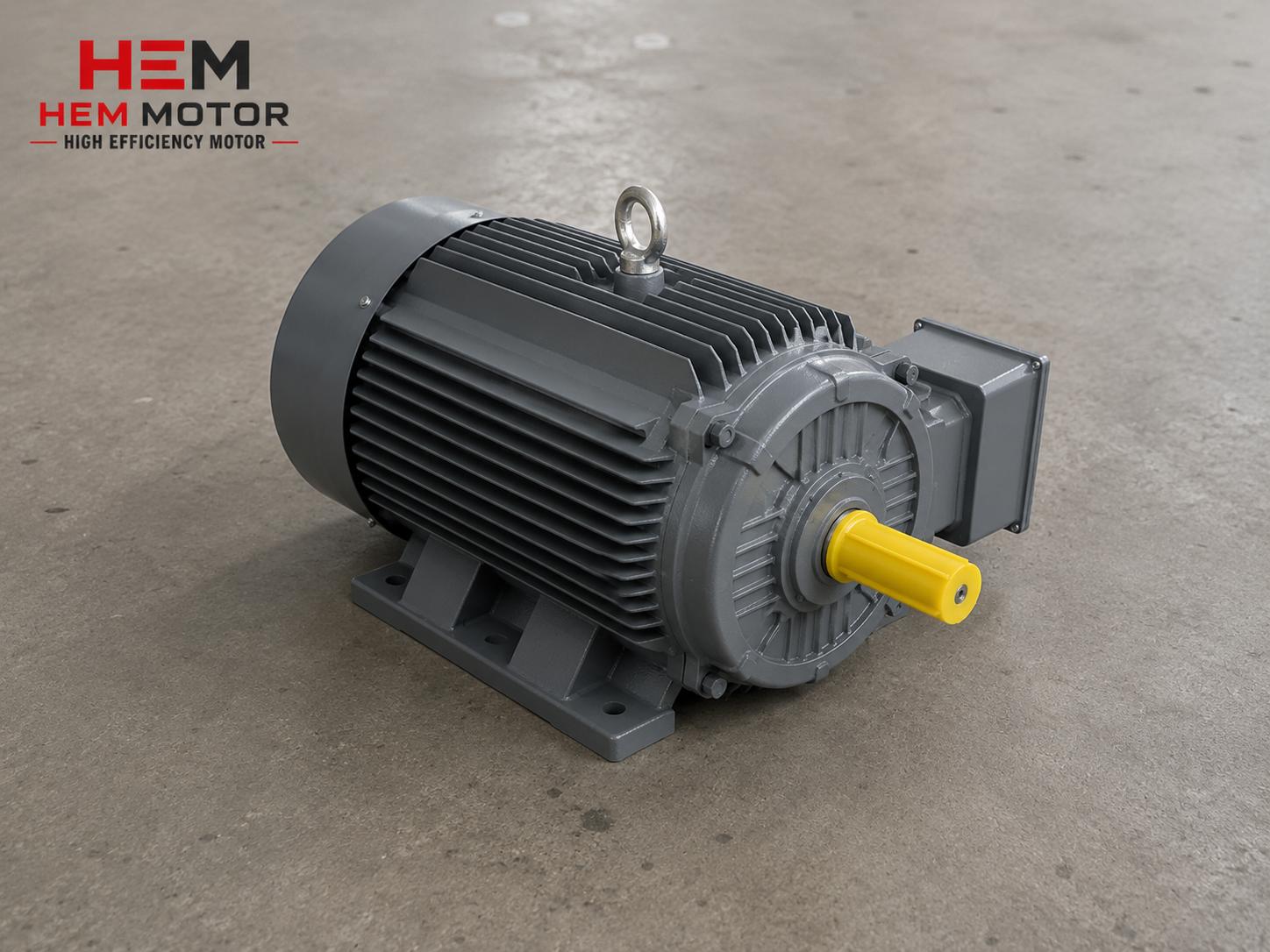

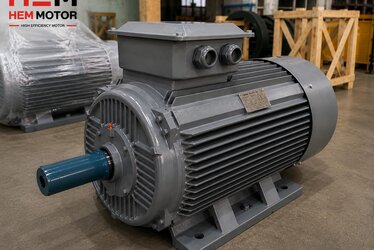
Two asynchronous motors of the same power, if their pole counts differ, turn at different speeds and often offer different efficiency and power factor values. So the question "how many poles should I buy?" sits at the centre of the purchasing decision just as much as "how many kW should I buy?" Correctly establishing the relationship between efficiency and pole count in asynchronous motors is the key to choosing the most suitable, most efficient and most economical motor for the application. Knowing the differences among the 2, 4, 6 and 8 pole options directly affects both the energy cost and the correct speed match. To source a motor with the pole count best suited to your application, you can contact us and review the product family on our high-efficiency electric motors page.
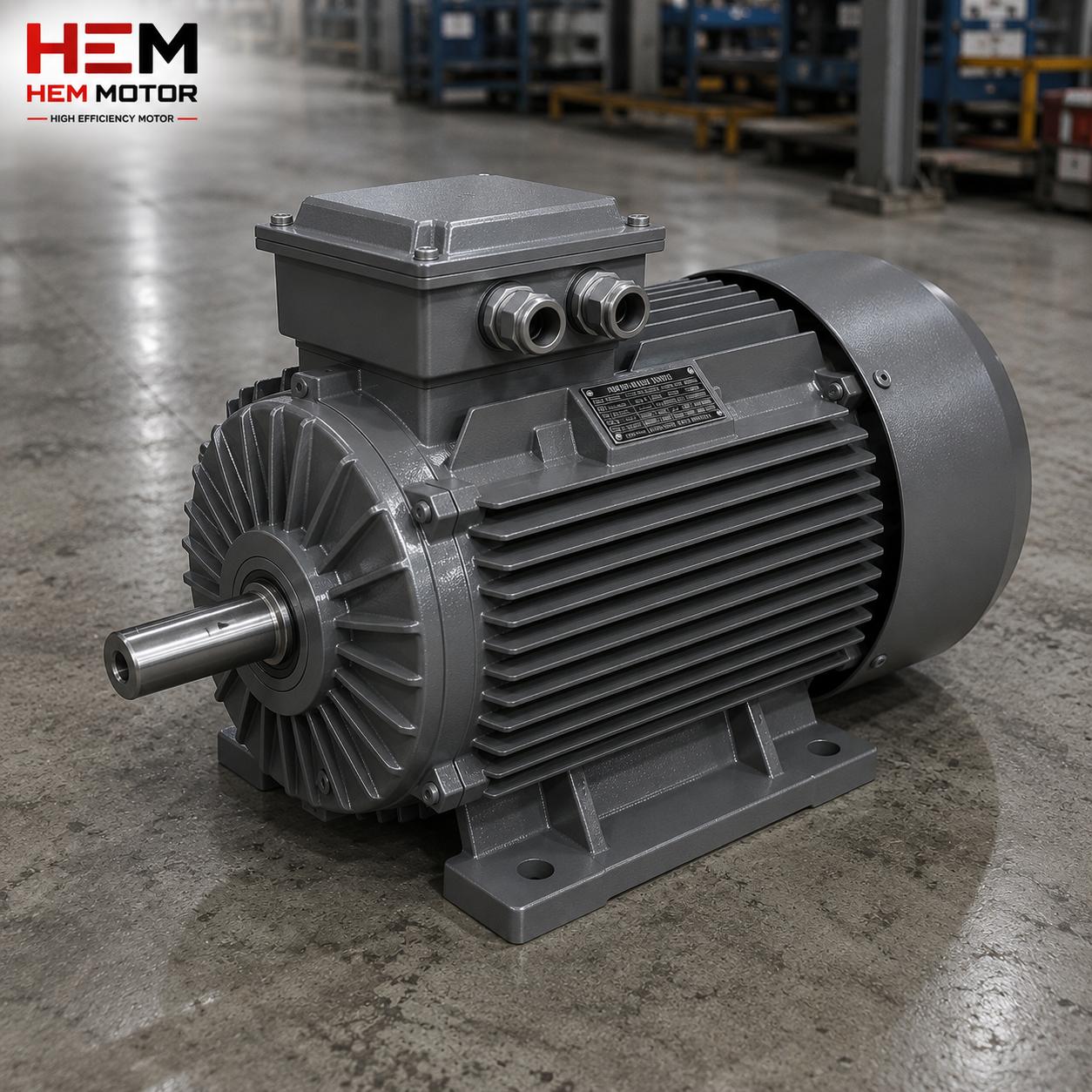
How Does Pole Count Determine the Speed?
The rotation speed of an asynchronous motor is determined by the pole count and the grid frequency. On Türkiye's 50 Hz grid, the synchronous speed falls as the pole count rises. In practice four basic options are used: the synchronous speed is 3000 rpm for 2 poles, 1500 rpm for 4 poles, 1000 rpm for 6 poles and 750 rpm for 8 poles. Because the motor is an asynchronous machine, the actual speed is slightly below this synchronous speed due to slip; for example, a 4-pole motor under load usually turns around 1440-1470 rpm.
To understand slip and actual speed more deeply, our article on slip and actual speed in asynchronous motors is a complementary resource. So the speed value on the nameplate is a direct result of the pole count and must be matched with the application's speed need.
Which Pole, Which Speed?
The speed need comes from the application. In compressor, some pump and high-speed fan applications requiring high speed, 2-pole (3000 rpm) motors are preferred. In general industrial drive, conveyor and most pump and fan applications, the most common choice is the 4-pole (1500 rpm) motor. In mixer, screw conveyor and heavy applications needing higher torque and lower speed, 6-pole (1000 rpm) motors are used, and in special applications needing very low speed and high torque, 8-pole (750 rpm) motors are used.
How Does Pole Count Affect Efficiency?
As a general tendency, efficiency is highest at medium pole counts (especially 4 poles); at very high speed (2 poles) and very low speed (8 poles) efficiency can be slightly lower. This is because different loss mechanisms become dominant at different speeds.
Efficiency and Losses in a 2-Pole Motor
Because the 2-pole motor runs at the highest speed, the aerodynamic (fan) loss and friction loss are relatively high. Magnetic losses also rise at high speed. On the other hand, 2-pole motors generally offer a high power factor. In high-speed applications 2 poles are unavoidable; but in terms of efficiency the fan and friction losses must be taken into account. We addressed in detail where efficiency losses occur in our article on efficiency losses in IE4 motors.
The Efficiency Balance in a 4-Pole Motor
The 4-pole motor is the most common pole choice in industry because it offers the most balanced profile among efficiency, torque and power factor. The 1500 rpm speed fits most pump, fan and general drive applications well; this speed is also most often used with a gearbox. If energy cost is critical and the application allows, a 4-pole high-efficiency motor is often the right choice.
Efficiency and Power Factor in 6- and 8-Pole Motors
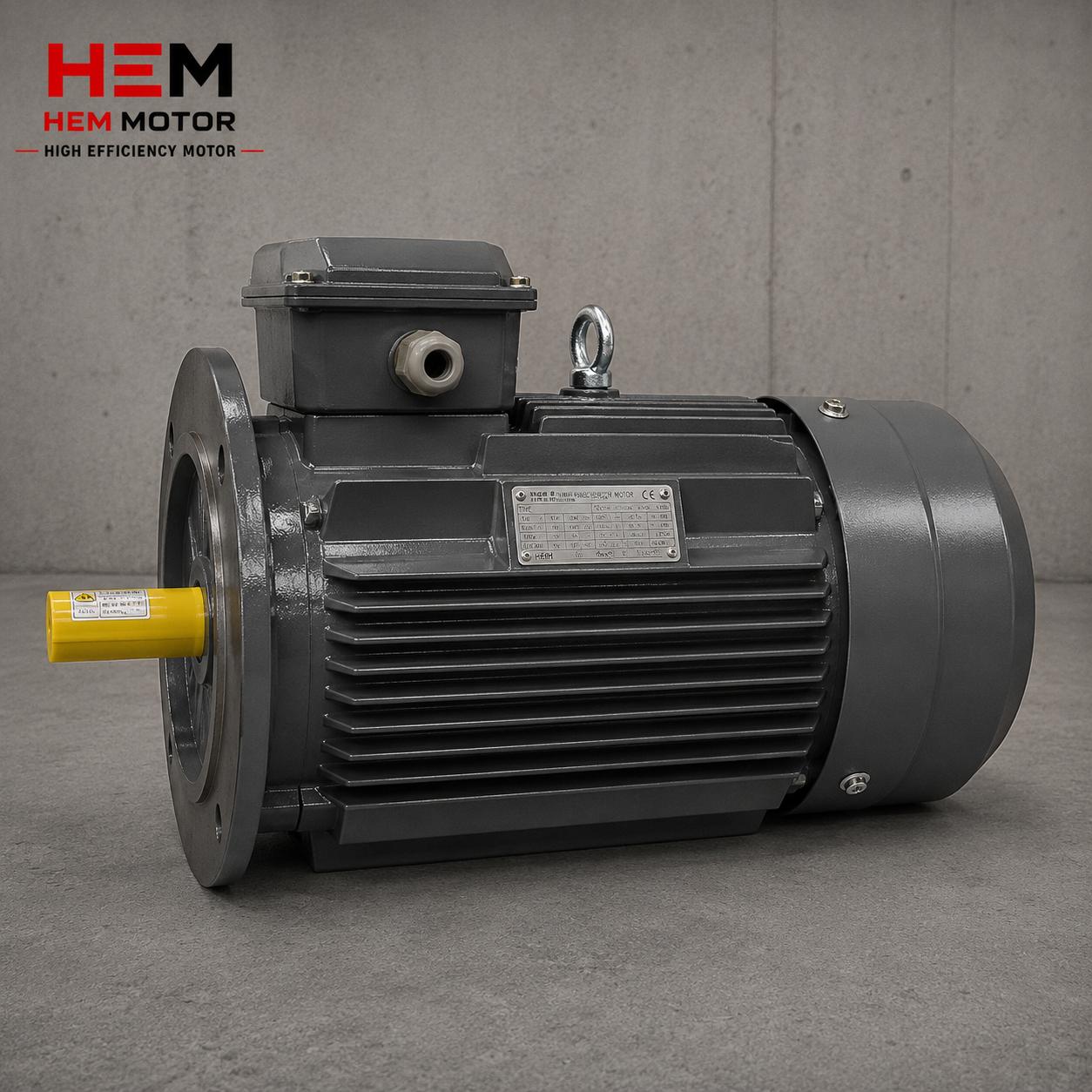
As the pole count rises (6 and 8 poles) the speed drops and the motor naturally produces higher torque; but the power factor (cos φ) generally tends to fall. A low power factor means more reactive current is drawn from the grid and can increase the risk of a reactive penalty. So in plants choosing multi-pole motors the power factor and reactive compensation should be assessed separately. We examined the effect of power factor on cost in our article on power factor and reactive penalty in high-efficiency motors.
The Relationship Between Power Factor and Pole Count
The power factor shows how much of the current the motor draws from the grid actually does real work. As a general tendency, high-speed (2-4 pole) motors have a higher power factor and low-speed (6-8 pole) motors a lower power factor. This does not mean low-speed motors are bad; because they produce low speed and high torque by the nature of their applications, this characteristic is accepted, but reactive management should be planned across the plant.
Correct motor selection requires assessing together not only efficiency but also the power factor, the starting torque and the application's load profile. For handling efficiency and correct sizing together, our article on what load to run a motor at offers guidance.
Pole Selection by Application: A Practical Guide
Pole selection always starts from the application's speed and torque need. First the output speed the machine needs is determined; then the most efficient pole count that can reach this speed directly or with a gearbox is chosen. In most applications there is more than one path: for example, a target speed can be reached with a high-pole motor directly or with a low-pole motor plus a gearbox.
Direct Drive or With a Gearbox?
In an application needing low output speed there are two options: running directly at low speed with a 6- or 8-pole motor, or using a 4-pole motor with a gearbox. Which is more efficient and economical depends on the required speed and torque. If very low speed is needed the geared solution is usually more suitable. We addressed this decision in detail in our article on geared motor or separate motor + gearbox?.
Speed Adjustment With Pulley and Belt
In some applications the speed is adjusted by the pulley-belt ratio; in this case the motor's pole count must be thought of together with the pulley ratio. For the correct power-speed combination, our article on motor speed and speed adjustment with pulley and belt offers a practical framework. From a buyer's guide perspective, pole selection is addressed in our article on asynchronous motor pole selection.
Dual-Speed Motors: Two Speeds With One Motor
Some applications require running at two different speeds rather than a single fixed speed; for example, a ventilation fan may run at high speed during the day and low speed at night. This need can be met with dual-speed (Dahlander) motors that offer two different pole counts (and therefore two speeds) with a single winding. Such a motor produces two separate synchronous speeds in the same body by changing the pole count, providing simple two-step speed control without requiring two separate motors or a complex drive.
The dual-speed solution can provide energy savings especially in variable-flow applications such as fans and pumps; running at low speed during low-demand periods reduces unnecessary energy consumption. We addressed in detail in which applications a dual-speed motor makes sense in our article on dual-speed (Dahlander) asynchronous motors. Still, if continuous and wide-range variable speed is needed, a single-speed motor with a variable frequency drive usually offers a more flexible solution.
Pole Count and Starting Torque
Besides efficiency and power factor, the third important property affecting pole selection is the starting torque. In machines with high inertia or that must start under load, the motor's starting torque must be sufficient. In general, high-pole, low-speed motors are inclined to produce higher torque; so in mixer, screw conveyor and some conveyor applications requiring a heavy start, 6-pole motors provide an advantage. But the starting torque depends not only on the pole count but also on the motor's torque class (Design N/H).
A motor can have different starting characteristics even at the same power; choosing the torque class suited to the load prevents both motor strain and starting problems. We addressed torque classes and starting torque in detail in our article on asynchronous motor torque classes (Design N/H). The starting method also affects this choice; for high-power or high-inertia loads a star-delta or soft starter may be needed. Our article on starting: star-delta or soft starter? offers guidance on this.
Pole Selection With Application Examples
To make pole selection concrete, let us look at a few typical applications. A high-pressure centrifugal pump or a screw compressor wants high speed; here the 2-pole (3000 rpm) motor is the natural choice. A conveyor belt, together with a gearbox, is usually driven by a 4-pole (1500 rpm) motor, because this speed is the most common and most balanced choice as a gearbox input speed. A concrete mixer or feed blender wants low speed and high torque; here a 6-pole motor or a high-ratio geared 4-pole motor is preferred.
In a large-diameter ventilation fan required to run quietly, a 6- or 8-pole low-speed motor both lowers the noise and suits the application. As can be seen, pole selection is made not on its own but together with the application's speed, torque, noise and efficiency needs. For examples of correct motor selection in specific sectors, our article on the sectors where IE3 motors are most used offers a practical view.
If the Speed Changes, Does the Power Need Change?
An important point: in variable-torque loads such as pumps and fans, the required power changes rapidly with speed. In a system doing the same job at a different speed, the power need can differ significantly. So when making the pole (speed) selection, not only the motor but also the driven machine's power-speed curve must be considered. We addressed motor power calculation for pumps, fans and conveyors in our article on motor power calculation.
The Effect of Correct Pole Selection on Cost
Wrong pole selection creates cost in both energy and mechanical terms. Slowing down a higher-speed-than-needed motor with a pulley creates extra loss; a motor with a lower-than-needed power factor increases the risk of a reactive penalty. The correct pole count means choosing the motor that runs closest to the application's speed and at the most efficient point. This determines the total cost over the operating life far more than the initial investment.
You can reach all our asynchronous motor topics from the asynchronous / AC motors category, mounting and connection options from our electric motor mounting types page, and our entire product range from our home page. To understand the power unit correctly, our article on HP or kW? understanding motor power correctly will be useful.
Frequently Asked Questions
For the same power, should I buy a 2-pole or 4-pole motor?
This depends on the application's speed need. In compressor and some high-speed pump/fan applications needing high speed (3000 rpm), 2 poles are required. In general drive, conveyor and most pump-fan applications, the 4-pole (1500 rpm) motor is the most common and usually offers the most balanced efficiency-power factor profile. First determine the speed your machine needs, and pole selection follows from that.
Does efficiency drop as the pole count rises?
Not exactly; efficiency is usually highest at medium pole counts (4 poles). At very high speed (2 poles) the fan and friction losses come to the fore, and at very low speed (8 poles) the falling power factor does. So each pole count has its own balance point; the right choice is made by assessing efficiency together with the application's speed need.
For low speed, a high-pole motor or a gearbox?
If very low output speed is needed, using a 4-pole motor with a gearbox is often more efficient and economical than 6-8 pole direct drive, because the power factor falls in low-speed motors. But for a moderate speed reduction a direct high-pole motor can also be suitable. Share the required speed and torque with us, and we will determine the most suitable solution together.
Get a Quote
Would you like support on supplying an efficient asynchronous electric motor with the right speed and the pole count best suited to your application? Send us your power, required output speed, application and load profile details, and we will quickly offer the most suitable solution. Call now on +90 (532) 345 49 86 or send your quote request via our contact page.