English
 Türkçe

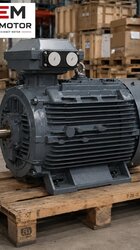
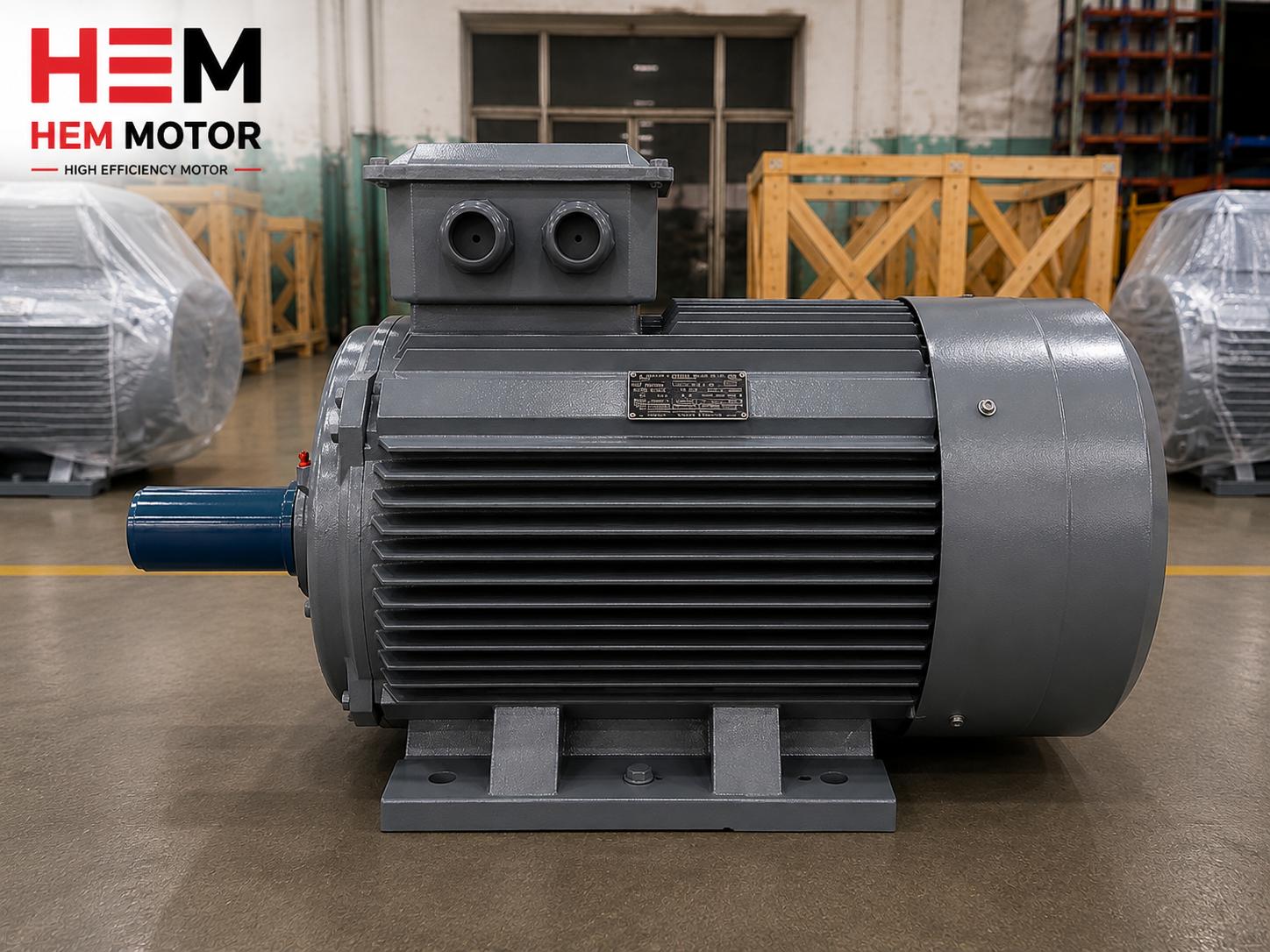

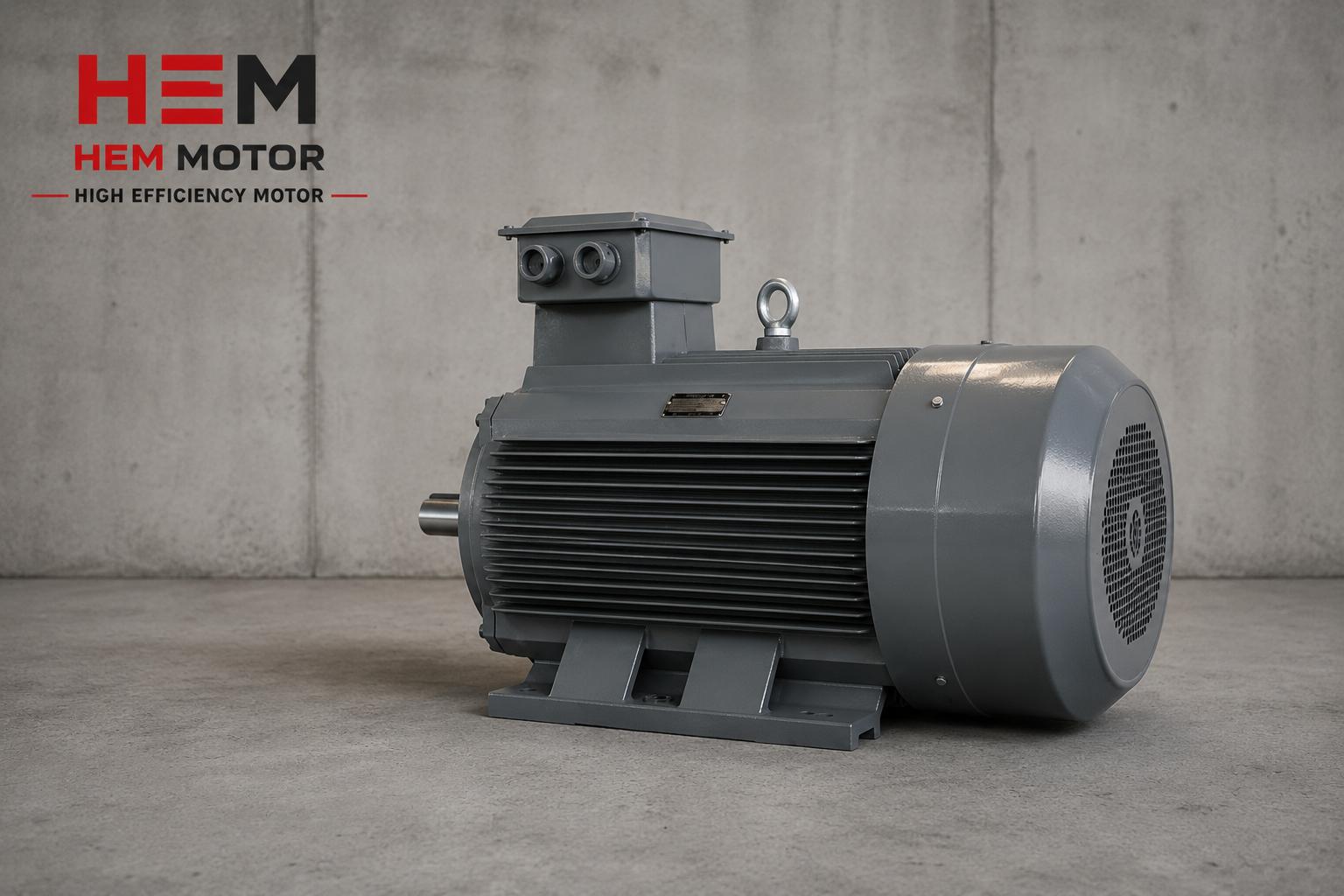
IE3 class electric motors have become a standard choice that we encounter in almost every branch of industry today. There are two fundamental reasons for this: first, in many power ranges the IE3 efficiency class is now mandatory under the regulations; second, thanks to their high efficiency these motors balance energy cost and lower the total operating expense. As a result, from food factories to mining sites, from water lifting stations to textile plants, the same premium efficiency class is preferred everywhere.
However, the machines each sector drives, the power range it looks for and its speed preference all differ. A mixer in a food plant and a crusher at a mining site have completely different mechanical requirements, even though both use an IE3 motor. In this article we go through eight main sectors one by one, explaining which machines are driven in each, which power-and-speed combination is sought, and what you need to watch out for when making your selection.
Knowing this matching gives you a serious speed advantage at the quotation stage. When a customer says "I want a motor for textiles," an experienced supplier most likely already anticipates which speed, which frame type and which protection class of motor is required. As a manufacturer and seller, this is exactly the sectoral knowledge we share with you.
1. Food and Beverage Sector
In food production, hygiene, continuity and precise speed control come first. In this sector IE3 motors are widely used in mixers, filling lines, conveyor belts, refrigeration compressors and pumps. A speed of 1500 rpm (4 poles) is generally preferred, because most food machines run at medium speed and constant torque.
- Low-to-medium power and high torque in mixers and blenders; speed is often adjusted with a variable frequency drive.
- Continuous operation in refrigeration compressors; high efficiency means direct energy savings.
- Pumps on washing and CIP lines; an appropriate protection class against moisture and cleaning is important.
2. Water and Wastewater Sector
The water sector demands uninterrupted operation and high reliability. Lifting stations, well pumps, treatment plant blowers and dosing pumps are typical machines of this field. Because the annual running hours of an IE3 motor are very high in these applications, the efficiency difference gives the fastest return here.
Choosing the right motor for centrifugal pumps requires a correct understanding of flow rate and head; our article on centrifugal pump motor selection offers a detailed guide on this subject. Generally 2 poles (3000 rpm) are preferred in high-pressure applications, while 4 poles are chosen for medium-pressure transfer lines.
Reliability carries extra weight in this field because a stopped pump in a lifting station can mean an overflow or a supply interruption affecting an entire district. As a manufacturer and seller we therefore see water utilities place a premium not only on efficiency but on holding the right equivalent in stock, so that a failed unit can be swapped within hours rather than days. The combination of very long running hours and the high cost of any stoppage is exactly what makes a premium efficiency class pay back fastest in water and wastewater applications.
3. Mining and Quarry Sector
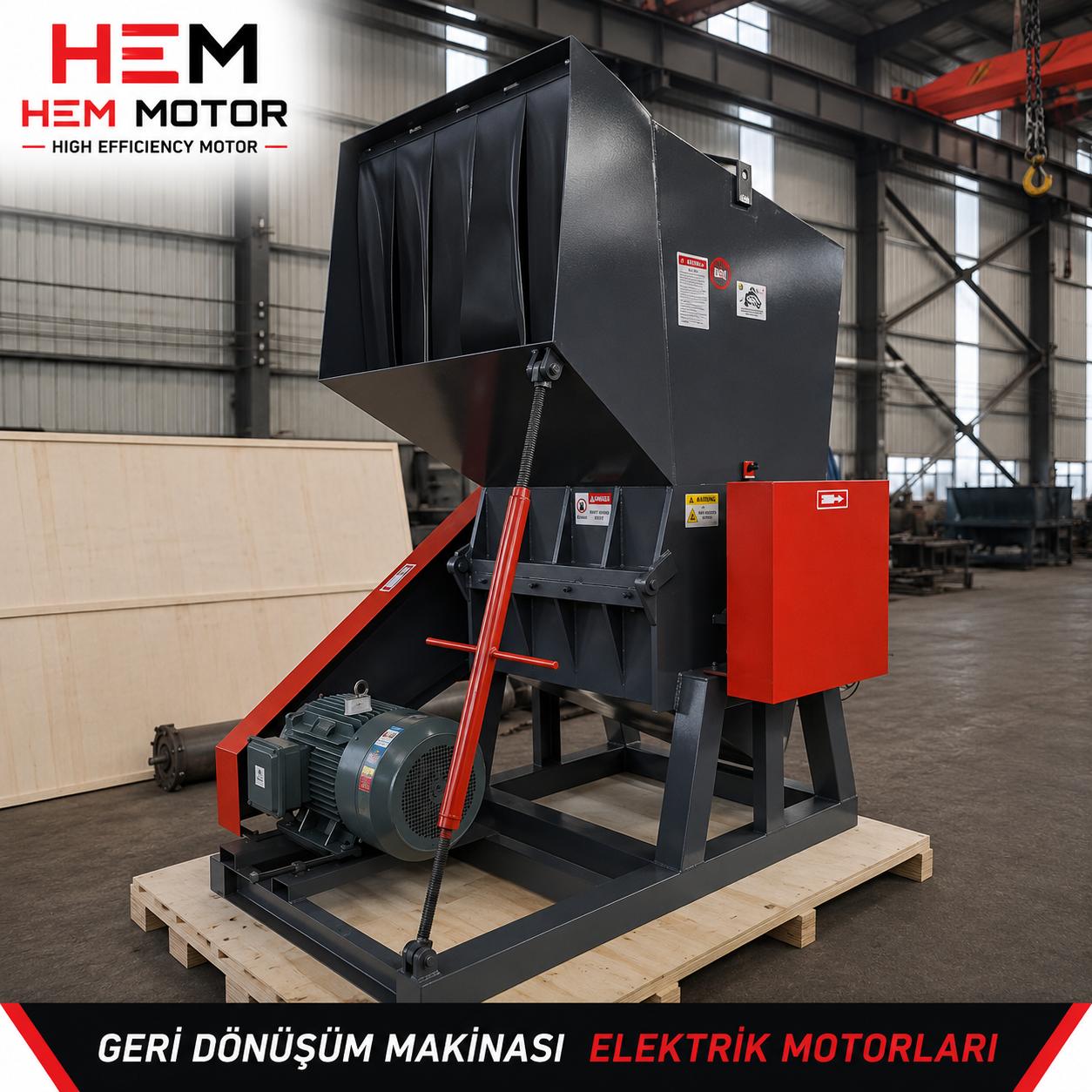
Mining presents one of the toughest environments for motors: dust, vibration, shock loads and moisture in the open field. Here crushers, screens, belt conveyors and dewatering pumps are driven by IE3 motors. In this sector frame strength is at least as important as efficiency; that is why a cast-iron frame is standard.
- High starting torque and shock resistance in crushers and mills; mostly 1000 or 1500 rpm.
- Low speed under continuous load on conveyors; use together with a gearbox is common.
- For open-field protection, quarry motor protection measures are critically important.
4. Cement Sector
Cement production is the domain of giant machines that operate under heavy and continuous load. Rotary kilns, fans, mills and large conveyors require high-power IE3 motors. Because the energy consumption of these motors is very large, the savings achieved as the efficiency class rises reach enormous figures on the plant scale.
Fan applications are especially important in cement; flue-gas fans and cooling fans run continuously and at high power. Using a variable frequency drive for speed control on these fans provides both process control and energy savings.
Because a single cement-plant fan can consume more energy than dozens of small motors combined, even a one- or two-point gain in efficiency translates into a large absolute saving over a year of continuous running. This is the scale effect that makes the efficiency class such a decisive purchasing criterion in heavy industry: the higher the power and the longer the running hours, the more the choice of an IE3 motor over a lower class pays for itself through the electricity bill alone.
5. Textile Sector
Textiles is a sector where a large number of medium-power motors operate at the same time. In spinning, weaving, dyeing and finishing machines, IE3 motors are the standard. The prominent need here is to reduce the total energy consumption of a large number of motors; a small efficiency difference in a single motor turns into a large gain when multiplied across hundreds of motors.
- High speed and precise speed control in spinning machines.
- A moisture-resistant protection class on dyeing and washing lines.
- Continuous operation in fan and extraction systems; efficiency is reflected directly on the bill.
6. Plastics and Rubber Sector
Plastics processing requires long-term operation under constant and high load. In extruders, injection machines, granule conveying and cooling systems, IE3 motors are used. Extruder applications in particular demand continuous high torque; for this reason the motor's thermal endurance and its Class F insulation gain importance.
On the suitability of the insulation class to the application, our article on the winding insulation class explains which class is required in which environment. Because the ambient temperature in plastics plants is generally high, this choice is critical.
7. Machine Manufacturing Sector
Machine builders buy IE3 motors across a wide power-and-speed range to mount on the machines and systems they produce. CNC machine tools, hydraulic units, pump sets and conveyor systems fall into this category. The prominent need here is that the shaft diameter and connection dimensions fit the machine exactly.
A wrong shaft dimension can render even a correctly powered motor unusable; that is why the subject of shaft diameter and key dimensions must be clarified before ordering. For machine builders, standard frame types and flange connections provide great convenience.
For a manufacturer that ships its own machines to end customers, the motor is not the end product but a component that must fit a tightly defined envelope. The flange pattern, the shaft end and the terminal-box orientation all have to align with the surrounding design. This is why machine builders value a supplier who can deliver consistent, standard-conforming motors across many power ratings: it lets them design once and source repeatedly, knowing each batch will drop into place exactly as the first one did.
8. Agriculture and Irrigation Sector
Agricultural irrigation means a seasonal but intensive use. Deep-well pumps, irrigation systems, feed preparation machines and ventilation fans run on IE3 motors. Because they operate in the open field and in humid environments, protection class and corrosion resistance come to the fore.
- Generally 2 or 4 poles in irrigation pumps; efficiency is very valuable due to the high running hours.
- Corrosion and moisture protection in the open air; a cast-iron frame is preferred.
- Variable load in feed and harvest machines; robust mechanical endurance is required.
Frequently Asked Questions
Is the same IE3 motor used in every sector?
Even though the efficiency class is the same, the application requirements differ. The frame strength and protection class of an IE3 motor at a mining site must be far higher than one in an air-conditioned food plant. For the right selection, you need to evaluate the sector, machine type, speed, running hours and environmental conditions together.
Does the sector determine the speed selection, or the machine?
The deciding factor is the machine; the sector only indicates a tendency. High-pressure pumps generally require 2 poles (3000 rpm), while conveyors and mills require low speed. Sector knowledge provides a starting point, but the final speed choice is determined by the need of the driven machine.
Is IE3 mandatory or a preference?
In many power ranges IE3 is the minimum requirement under the regulations. Even in cases that fall outside this, it is a strong reason for preference in high-running-hour applications because of the energy savings. To choose the product suitable for your sector, you can reach us through our electric motors homepage.