English
 Türkçe

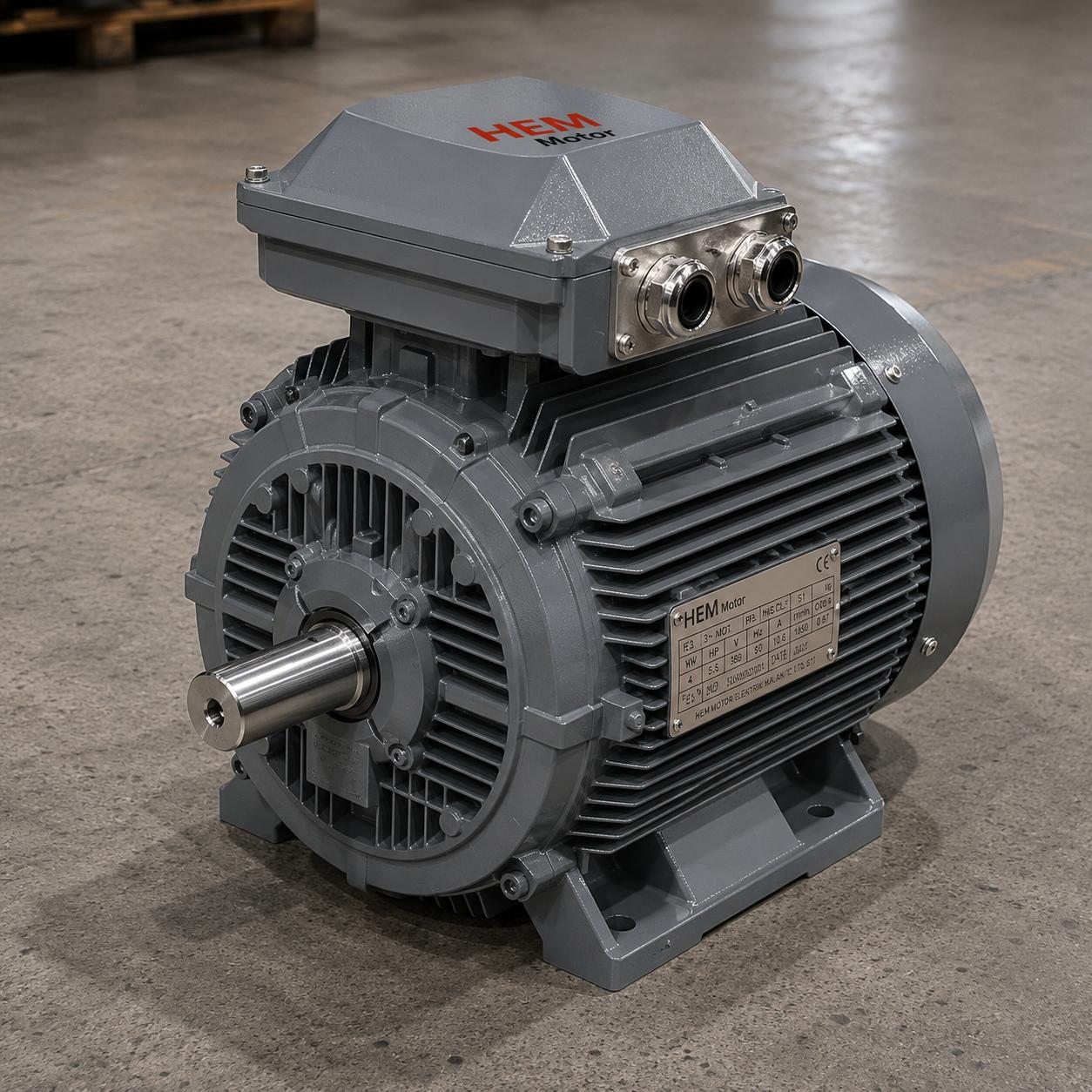

When you buy an asynchronous motor, even though the nameplate reads "1500 rpm", when you run the motor under load and measure the speed you will see a value of around 1440 rpm. Many users mistake this for an error, or even a defective product. Yet this difference is entirely normal and is a natural phenomenon called slip, arising from the fundamental working principle of the asynchronous motor. In this article we explain, step by step, the difference between synchronous speed and actual speed, why slip occurs, and why choosing the right speed when ordering matters so much.
Understanding this is not merely a theoretical curiosity; it directly affects your purchasing decision. Selecting a motor at the wrong speed causes your machine to run faster or slower than it should, degrades production quality and leads to energy loss.
How Does an Asynchronous Motor Work?
The asynchronous motor (induction motor) is the most widely used motor type in industry. Its working principle relies on the rotating magnetic field created by the stator windings inducing a current in the rotor. This induced current produces a torque that makes the rotor follow the rotating field. Here lies a critical point: for the rotor to turn, it must lag slightly "behind" the rotating field — that is, there must be a speed difference.
If the rotor turned at exactly the same speed as the rotating field, there would be no relative motion between them, no current would be induced and no torque produced. For this reason, the asynchronous motor can never reach synchronous speed; it always turns slightly below it. This "lagging behind" is slip itself, and it is mandatory for the motor to work.
Synchronous Speed: The Theoretical Upper Limit
Synchronous speed is the speed of the rotating magnetic field and depends on only two things: the grid frequency and the motor's number of poles. The formula is simple:
Synchronous Speed (rpm) = (120 × Frequency) / Number of Poles
On a 50 Hz grid, the synchronous speeds for different pole numbers are:
- 2-pole: (120 × 50) / 2 = 3000 rpm
- 4-pole: (120 × 50) / 4 = 1500 rpm
- 6-pole: (120 × 50) / 6 = 1000 rpm
- 8-pole: (120 × 50) / 8 = 750 rpm
These values are theoretical upper limits. If the motor were unloaded and frictionless it would come very close to these speeds; but in the real world the motor always turns slightly below them.
What Is Slip and How Is It Calculated?
Slip is the ratio of the difference between synchronous speed and actual speed to the synchronous speed, and is usually expressed as a percentage:
Slip (%) = ((Synchronous Speed − Actual Speed) / Synchronous Speed) × 100
For a 4-pole motor, if the synchronous speed is 1500 and the actual speed under load is 1440, the slip is: ((1500 − 1440) / 1500) × 100 = 4%. In standard industrial motors, slip is usually between 2% and 6%. This is exactly the difference between the 1500 on the nameplate and the 1440 you measure — not a defect, but a result of the motor's nature.
Why Does Speed Drop as Load Increases?
The most important property of slip is that it changes with load. As the mechanical load on the motor increases, the motor must produce more torque; this means more rotor current and therefore a larger speed difference (higher slip). As a result, as the load increases, the actual speed drops somewhat further.
- At no load (unloaded): The speed is very close to synchronous speed, slip is almost zero.
- At half load: The speed is slightly below synchronous speed.
- At full load: The speed drops to the rated value on the nameplate (for example 1440).
- At overload: Slip increases, the speed drops further and the motor begins to strain.
This behaviour is the basis of the asynchronous motor's flexible structure, which adapts to load changes on its own.
Choosing the Right Speed When Ordering
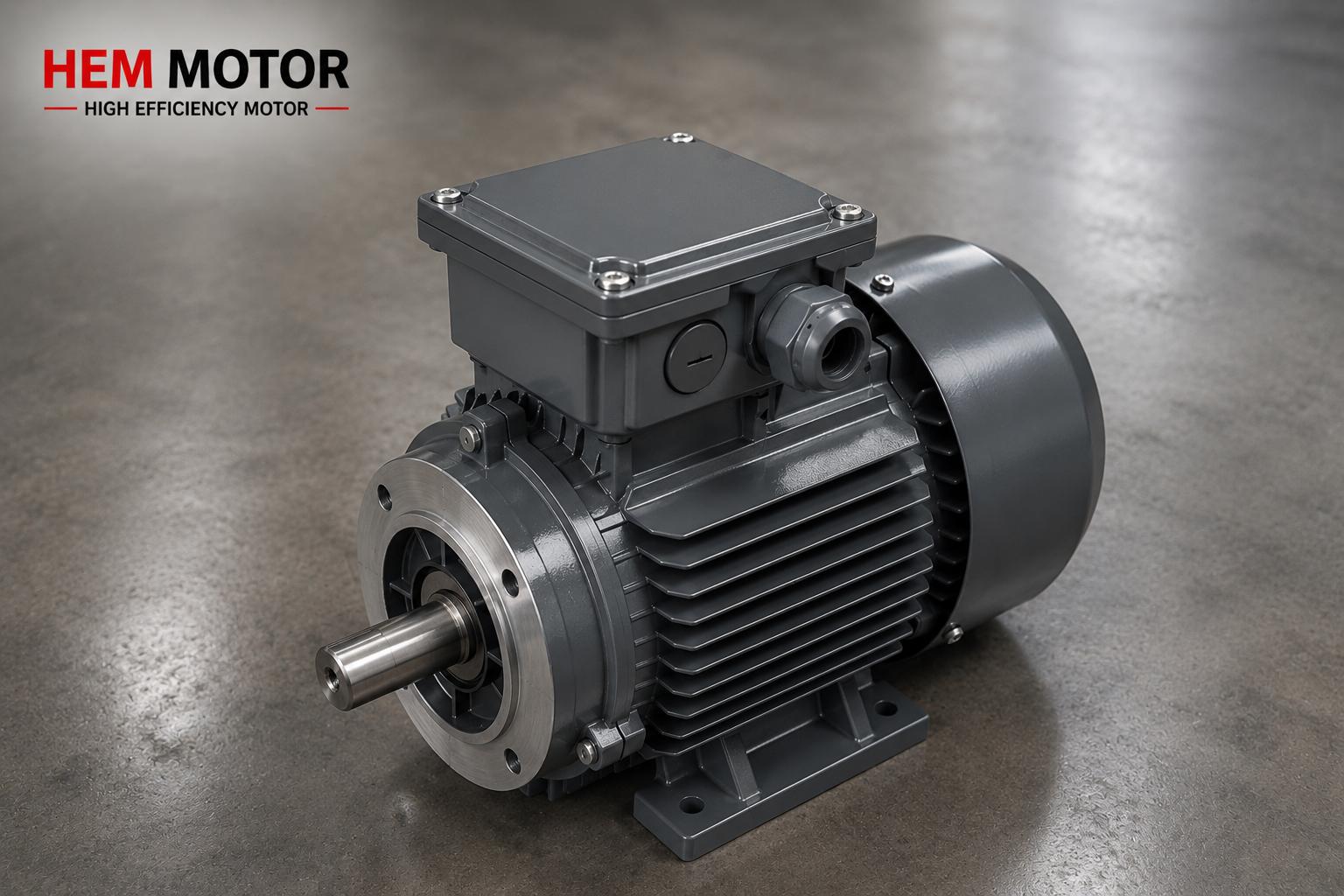
When ordering a motor, you should base your choice not on the nameplate's rated speed (for example 1440 rpm) but on the operating speed you need. The critical question here is: at what speed should your machine turn? Selecting the wrong number of poles causes your machine to run at a completely wrong speed. For example, if you accidentally buy a 3000 rpm (2-pole) motor instead of 1500, your machine turns twice as fast, which is unacceptable in most applications.
Among the information you should convey to your supplier when ordering, the number of poles or the rated speed must always be included. If your machine needs to run at variable speed, you should consider a motor together with a frequency converter (drive); in that case you can adjust the speed over a wide range by changing the frequency. For up-to-date electric motor prices and different speed options, the healthiest way is to clarify the speed you need and request a quote. For different applications you may evaluate the 4-pole three-phase motor and 2-pole high-speed motor options.
Speed Control with a Frequency Converter
The speed of an asynchronous motor, as the formula shows, depends directly on the grid frequency. A frequency converter (VFD) allows the motor's speed to be adjusted by changing the grid's fixed 50 Hz. For example, if you lower the frequency to 25 Hz, the synchronous speed of a 4-pole motor drops to 750 rpm. This way a single motor can operate over a wide speed range, control the production process precisely and provide energy savings. In pump and fan applications, frequency control is the most effective way to achieve serious energy savings.
Which Speed for Which Application?
To choose the right speed, you need to know the speed your application requires. Different pole numbers suit different uses:
- 2-pole (~2900 rpm): Applications requiring high speed: centrifugal pumps, compressors, high-speed fans and some grinding machines.
- 4-pole (~1440 rpm): The most common range: conveyors, general-purpose pumps, ventilators and many machine drives. It is a balanced choice between torque and speed.
- 6-pole (~960 rpm): Applications wanting lower speed and higher torque: heavy-load conveyors, mixers.
- 8-pole (~720 rpm): Very low-speed, high-torque special applications.
If you need a very low output speed, it is usually more economical and efficient to use a gearbox (reducer) rather than a motor with more poles. A geared motor combines high torque with low speed.
The Relationship Between Slip, Torque and Current
Slip is closely related not only to speed but also to the torque the motor produces and the current it draws. The asynchronous motor's torque-slip curve is the key to understanding the motor's behaviour. At the moment of starting, since the motor is not yet turning, slip is 100%; at this instant the motor draws the highest current (the starting current can be 5-7 times the rated current). As the motor speeds up, slip decreases and the current drops toward the rated value.
At the rated operating point (for example 4% slip) the motor delivers its rated torque and rated current. When the load increases, the motor produces more torque by increasing slip; but beyond a certain point (breakdown torque) the torque no longer increases and the motor reaches a stalling point. At this point slip has risen greatly and the current has reached dangerous levels. This is why running a motor continuously above its rated power leads to winding burnout.
- Starting moment: Slip 100%, current very high, torque equals starting torque.
- Acceleration: Slip decreases, current drops, speed approaches synchronous speed.
- Rated point: Slip 2-6%, rated torque and rated current.
- Overload: Slip increases, current rises, risk of heating.
Abnormal Slip Can Be a Sign of a Problem
While normal slip is the motor's natural behaviour, a much higher slip than expected (that is, the speed dropping noticeably below the rated value) can herald a problem. The most common causes are:
- Overload: If the motor is loaded beyond its capacity, slip increases and speed drops. This is a typical symptom of wrong power selection.
- Low voltage: When the supply voltage drops, the motor's torque decreases; to carry the same load, slip increases.
- Rotor problem: In a squirrel-cage rotor, a broken bar lowers the torque and increases slip.
For this reason, measuring the speed actually gives information about the motor's health too. A speed that drops far below the rated value shows that the motor is straining and needs to be examined.
Frequently Asked Questions
My motor's nameplate reads 1440 but I measure 1450 — is something wrong?
No, nothing is wrong. The actual speed varies with the load on the motor. If the load is less than the nameplate value (full load), the speed rises slightly toward the synchronous speed (1500). Measuring 1450 shows that your motor is running below full load; this is entirely normal.
Does slip reduce the motor's efficiency?
Slip causes some heat loss in the rotor circuit, but this is a mandatory and natural loss for the asynchronous motor to work. High-efficiency motors are designed with lower slip values. Excessively high slip, on the other hand, noticeably reduces efficiency and usually indicates overload or low voltage.
When ordering, should I specify the number of poles or the speed?
Both work, because they are related. Specifying the rated speed (for example 1440 rpm) is sufficient in most cases; this indicates a 4-pole motor. To be sure, conveying both the approximate operating speed you need and, if possible, the number of poles guarantees that the right product arrives.