English
 Türkçe

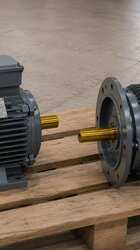
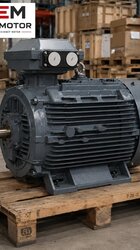
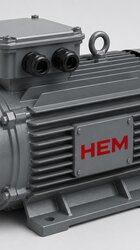
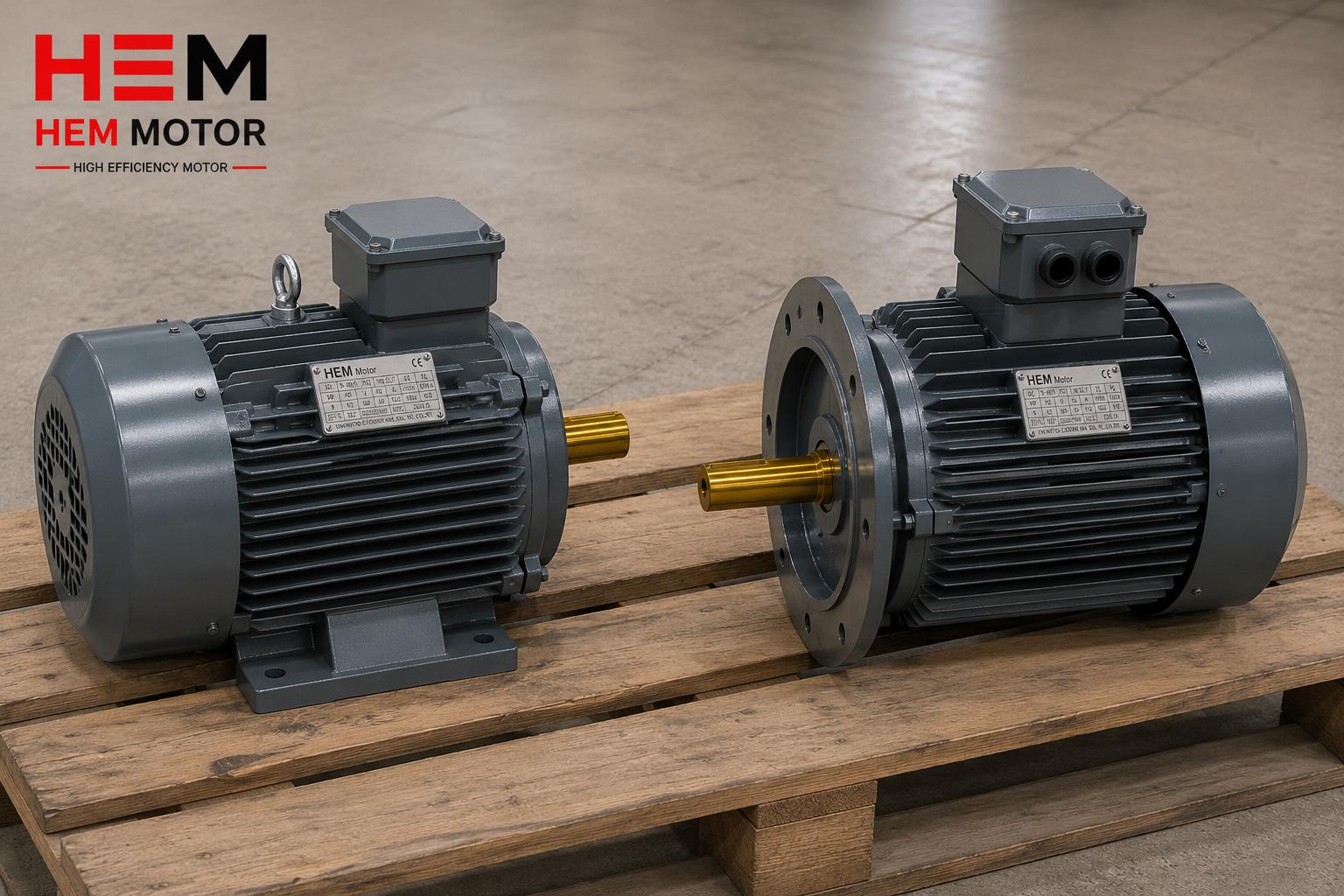

When a new electric motor arrives on site, the most common mistake made in the field is to connect the motor straight to the grid and press the button to see "does it run?" Yet correct commissioning directly determines whether the motor runs healthily on its first day and whether the warranty coverage is preserved. A hasty first startup either puts the motor at risk in the very first minute, or spreads an unnoticed fault over time until it turns into a major failure later.
In this article we present a commissioning check list valid for all three-phase asynchronous motors. We will take each step in order, from insulation (megger) measurement to direction-of-rotation check, from terminal connection to no-load running. The goal is to commission the motor under the right conditions from the first minute and to secure both the equipment and the warranty.
Let us draw an important distinction from the outset: this list differs from the transport-damage inspection. When the motor reaches the site, you must first check whether it was damaged during transport, and only then apply the first-startup steps here. If the damage check is skipped, a problem that emerges during commissioning may be mistaken for a motor defect.
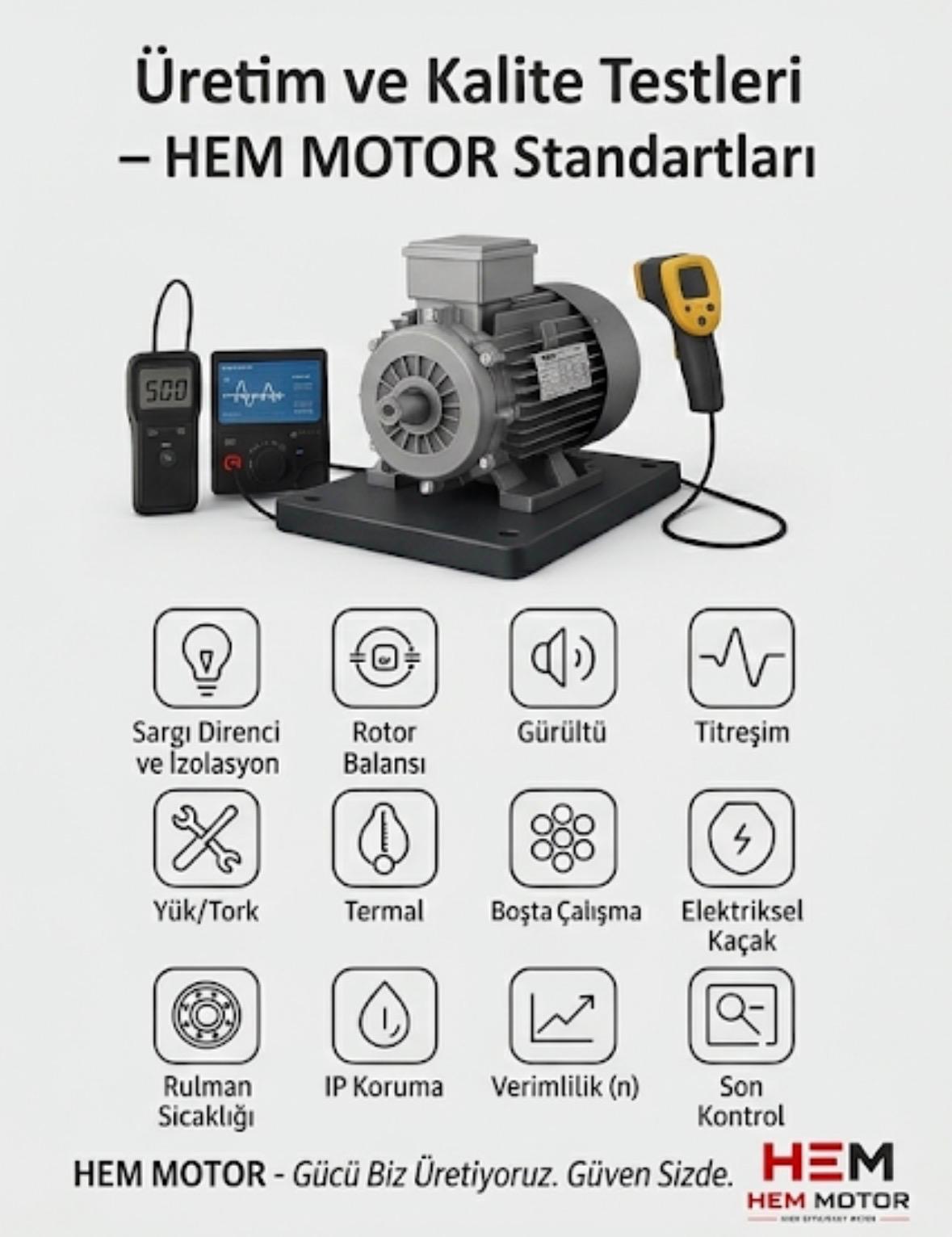
Before Commissioning: Damage and Visual Inspection
Before moving on to the first-startup steps, you should be sure the motor is physically sound and ready. This preliminary check eliminates in advance many problems that could appear in later steps.
- Body and fan-cover inspection: Check whether there is impact, crack or denting during transport. It is important that the fan cover is not deformed.
- Free shaft rotation check: Turn the motor shaft by hand to confirm it rotates freely without binding; binding may indicate a bearing or seating problem.
- Verification of nameplate data: Check that the power, speed, voltage and frequency match the application.
- Terminal box cleanliness: There should be no moisture, dust or foreign object inside.
After this visual check is complete, you can proceed to the electrical measurement and connection steps. Whether the motor has been affected by moisture after storage is especially critical on motors that have waited for a long time.
1. Insulation (Megger) Measurement
The most important first electrical step of commissioning is measuring the winding insulation resistance with a megger (megohmmeter). This measurement shows whether the insulation of the windings against the body is sound, and is vital especially on motors that have waited in storage for a while or stayed in a humid environment.
- Before measurement: Make sure the motor is de-energised and prepare the terminal connections for measurement.
- Measurement: The resistance between each phase winding and the body (earth) is measured with the megger.
- Evaluation: The measured insulation resistance must be at a sufficient level; low values indicate moisture or insulation degradation.
- In case of a low value: If the motor has been affected by moisture, a drying process may be required before commissioning.
If the insulation resistance is insufficient, the motor must absolutely not be energised; otherwise the winding may be damaged at the first startup. This measurement is also an important step for preserving the warranty. For more information on winding health, you can review our motor insulation resistance measurement article.
2. Terminal Connection: Star or Delta?
On three-phase asynchronous motors, the connection arrangement in the terminal box determines whether the motor runs at the correct voltage. A wrong connection can cause the motor either not to turn at all or to draw excessive current and burn out.
- Read the nameplate value: The voltages at which the motor runs for star (Y) and delta (Δ) connection are written on the nameplate (for example 400/690 V).
- Choose according to grid voltage: If the grid voltage equals the delta value on the nameplate, a delta connection is made; if it equals the star value, a star connection is made.
- Position the link plates correctly: The terminal links are placed according to the star or delta position.
- Tightness check: All terminal screws must be tightened to the proper torque; a loose connection causes heating and sparking.
If a star-delta start is to be applied, make sure the connection diagram is made accordingly. On choosing the right connection, our star delta connection guide is a practical resource.
3. Direction-of-Rotation Check
Before the motor is connected to the load, the direction of rotation must absolutely be checked. In many applications (pump, fan, compressor) a wrong direction of rotation damages the equipment or causes it not to work at all.
- Separate from the load: If possible, the motor is tested unloaded by removing the coupling or belt.
- Apply brief power: The direction of rotation is observed by applying power to the motor very briefly.
- Direction correction: If the direction of rotation is wrong, the direction is reversed by swapping any two of the three phases.
- Direction verification: On pumps and fans the direction of rotation is usually marked with an arrow on the body.
The motor must not be connected to the load until the direction of rotation is verified. Especially on pumps, reverse rotation can cause serious damage in a short time.
4. No-Load (Unloaded) Running
After the insulation, connection and direction-of-rotation checks are complete, the motor is first run unloaded. This step confirms that the motor is mechanically and electrically sound.
- Vibration and sound: There should be no abnormal vibration, noise or rubbing sound.
- Current check: The no-load current drawn should be within the expected value range.
- Heating observation: There should be no excessive heating in short-term running.
- Bearing sound: Irregular or metallic sounds coming from the bearings are checked.
After no-load running is completed without problems, the motor is connected to the load and similar checks are repeated under load. Under load, the current value must not exceed the rated current on the nameplate.
5. First Startup Under Load and Monitoring
After the motor is connected to the load, the first startup must be monitored carefully. The main points to observe at this stage are:
- Current drawn: Under load, the current must not exceed the rated current on the nameplate; if it does, the load or connection should be reviewed.
- Temperature tracking: The operating temperature is monitored until it stabilises; a continuously rising temperature indicates a problem.
- Protection settings: It is verified that the thermal and overcurrent protections are set to suit the motor's rated values.
- Observation period: The motor should be observed periodically in the first hours and its values recorded.
Correct commissioning extends the motor's life and prevents unexpected stoppages. For new motor supply and current price information, you can request a quote from our electric motor prices page. A correctly installed motor serves trouble-free for many years, both in terms of energy efficiency and operational safety.
Alignment (Shaft Misalignment) and Mechanical Connection Check
Another step as important as the electrical checks is aligning the motor correctly with the equipment it drives. Shaft misalignment between the motor and the pump, fan or gearbox is one of the most common problems that, when overlooked at commissioning, shortens bearing life and creates vibration and overheating.
- On coupled connections: The parallel and angular misalignment between the motor shaft and the driven equipment shaft should be checked with a dial indicator or laser alignment device.
- On belt-pulley connections: The pulleys should be in the same plane and the belt tension appropriate; an over-tight belt damages the bearing.
- Foot plane: The base on which the motor sits must be flat and the feet in full contact; a "soft foot" creates stress in the frame.
- Bolt torques: Mounting bolts must be tightened to the proper torque and checked to prevent loosening from vibration.
A well-done alignment both reduces vibration and lowers energy loss. Alignment errors, even if unnoticed in the first days, show up over time as bearing and coupling failure. So the mechanical connection is an inseparable part of the commissioning check list.
Verifying the Protection and Control Equipment
As much as the motor itself, the panel that feeds and protects it must be set correctly. Before the first startup, the protection elements should be verified to suit the motor's rated values.
- Thermal relay setting: The thermal protection should be set to the rated current on the nameplate; a wrong setting either trips needlessly or leaves the motor unprotected.
- Contactor selection: The contactor should suit the motor's power and switching frequency.
- Fuse and cable cross-section: The supply cable cross-section and fuse value should be chosen to suit the current the motor draws.
- Earthing: The earthing connection of the motor body must be sound and continuous; this is mandatory for both safety and correct operation.
On motors run with a frequency inverter (drive), setting the drive parameters to the motor's nameplate values is also done at this stage. A wrong parameter can cause the motor either to produce insufficient torque or to overheat. For the right drive selection, our frequency inverter selection content helps.
First-Week Monitoring and Recording
Commissioning does not end the moment the motor starts running. The first week is a critical observation period showing how the motor behaves under real operating conditions. The records kept in this period form a reference for the early diagnosis of problems that may arise later.
- Current recording: The current the motor draws under different load conditions should be noted and compared with the rated value.
- Temperature tracking: Body and bearing temperatures should be measured periodically; they are expected to settle at a stable level.
- Vibration observation: A rise in the vibration level can be an early sign of an alignment or bearing problem.
- Sound and smell: Abnormal noise or a burning smell is a warning requiring immediate intervention.
These observations also support keeping the motor within warranty coverage; because regular recording documents that the usage conditions were correct in the event of a failure. Correct commissioning and systematic monitoring are the foundation of the motor offering a trouble-free service life extending over decades.
Frequently Asked Questions
Why is connecting a new motor straight to the grid and running it risky?
Because there is a chance the motor was affected by moisture during storage or transport, its winding insulation weakened, or it was connected incorrectly. If power is applied directly without insulation measurement, terminal connection and direction-of-rotation checks, the motor can be damaged or even burn out in the first minute. Moreover, such a wrong practice can also lead to losing the warranty coverage. So applying the steps in order protects both the equipment and the warranty.
Is insulation (megger) measurement necessary for every motor?
Yes, insulation measurement is critically important especially on motors that have waited in storage for a while or stayed in a humid environment. This measurement confirms that the insulation of the windings against the body is sound. If the insulation resistance is low, the motor may have been affected by moisture and drying may be required before commissioning. Energising a motor with insufficient insulation can cause winding damage at the first startup, so this step must not be skipped.
How do I check the direction of rotation and correct it if needed?
The direction of rotation is observed by applying power very briefly with the motor separated from the load if possible. On pumps and fans the correct direction is usually marked with an arrow on the body. If the direction of rotation is wrong, the direction is reversed by swapping any two of the three phases feeding the motor. This check must absolutely be done before the motor is connected to the load; because, especially on pumps, reverse rotation can cause serious damage in a short time.