English
 Türkçe

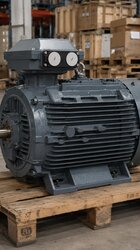
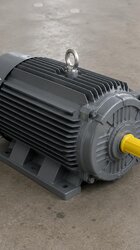
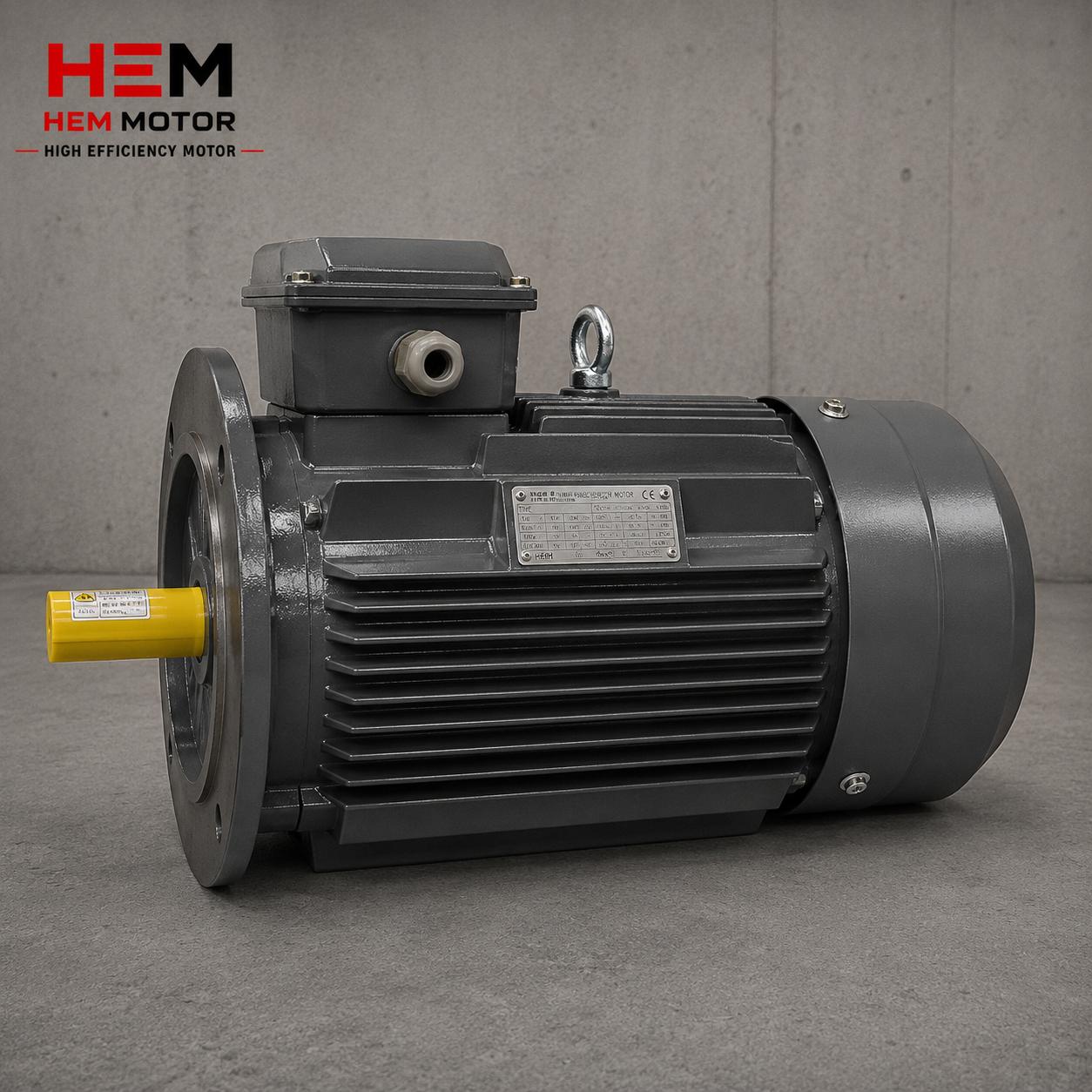

45, 55 and 75 kW are the powers that form the start of the high-power band in industry, and a project's main drive motors are mostly selected from within them. At this level, a motor is no longer an ordinary spare part; it is an investment item that requires planning for lead time, shipping, installation and commissioning. A wrong power or speed selection means not only inefficiency but also a long lead time and delays at commissioning. This guide is prepared to give purchasing and project managers buying a motor between 45 and 75 kW a clear picture of correct speed selection between 2 and 4 poles, frame size, starting method, and the lead-time, shipping and commissioning plan. Our goal is to ensure you get the motor onto your site on time and without problems.
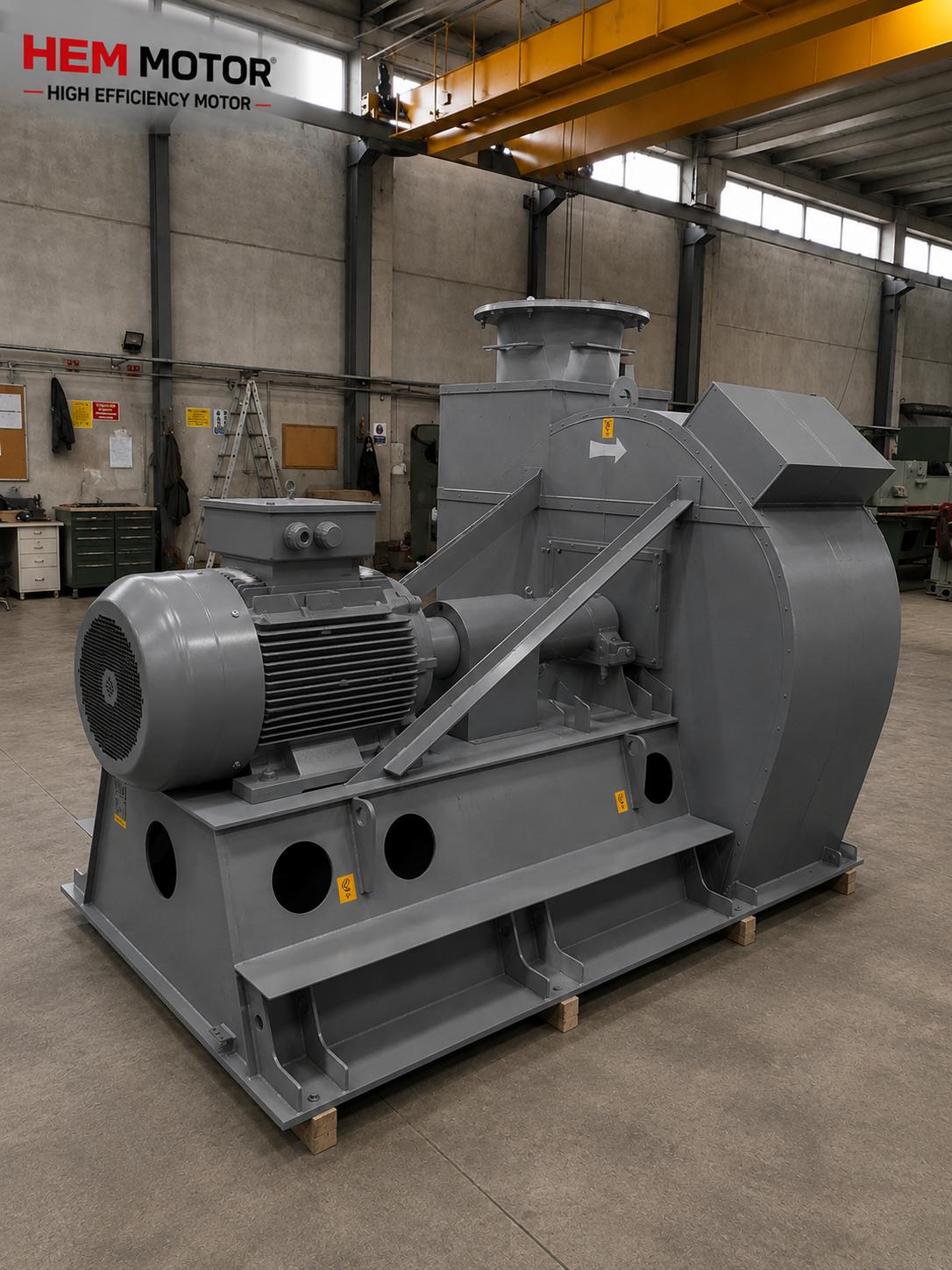
45, 55 and 75 kW: Which Power for Which Job?
Because these three powers are in close steps, which one is correct for the same application is a frequently asked question. 45 kW is a typical starting point for medium-large pumps, fans and compressors, while 55 kW meets one step higher flow and 75 kW meets larger plant equipment. The way to select the right power is to know the real power requirement of the load; an oversized motor runs inefficiently at a low load ratio, while a small motor is continuously strained. To strike this balance, our article on at what load to run a motor: efficiency, power margin and correct sizing offers a clear framework. To calculate the required kW for pump, fan and conveyor, our motor power calculation article is a practical tool. For needs above this power band, our article on high-power motor supply above 90 kW is a complementary resource.
2 Pole or 4 Pole? Speed Selection
At these powers, the most critical decision is the pole count, that is, the speed selection. A 2-pole motor runs at about 3000 rpm high speed, and a 4-pole motor at about 1500 rpm medium speed. The pole count determines not only speed but also the torque produced: a 4-pole motor produces about twice the torque of a 2-pole at the same power. Therefore, the speed and torque need of the application determines which pole you choose. To clarify pole-application matching, our article on the asynchronous motor buying guide: which pole count for which job, 2, 4, 6 poles is a fundamental reference.
2 Pole (3000 rpm): High Speed, Low Torque
2-pole motors are preferred for high-pressure pumps, screw compressors and high-speed fans. Because balanced, low-vibration operation is critical at high speed, quality balancing and bearing construction are important. At these powers, 2-pole motors usually come into play in high-flow fluid applications.
4 Pole (1500 rpm): The Most Common Drive Speed
4-pole 1500 rpm is the most preferred speed in the high-power band as well. Conveyors, mixers, crushers, medium-large pumps and general industrial drives largely run at this speed. Because it produces higher torque, it is a safe choice for starting and variable loads. For special applications needing low speed, 6 and 8 pole options can also be considered; for this, see our article on 6 and 8 pole low-speed asynchronous motor selection.
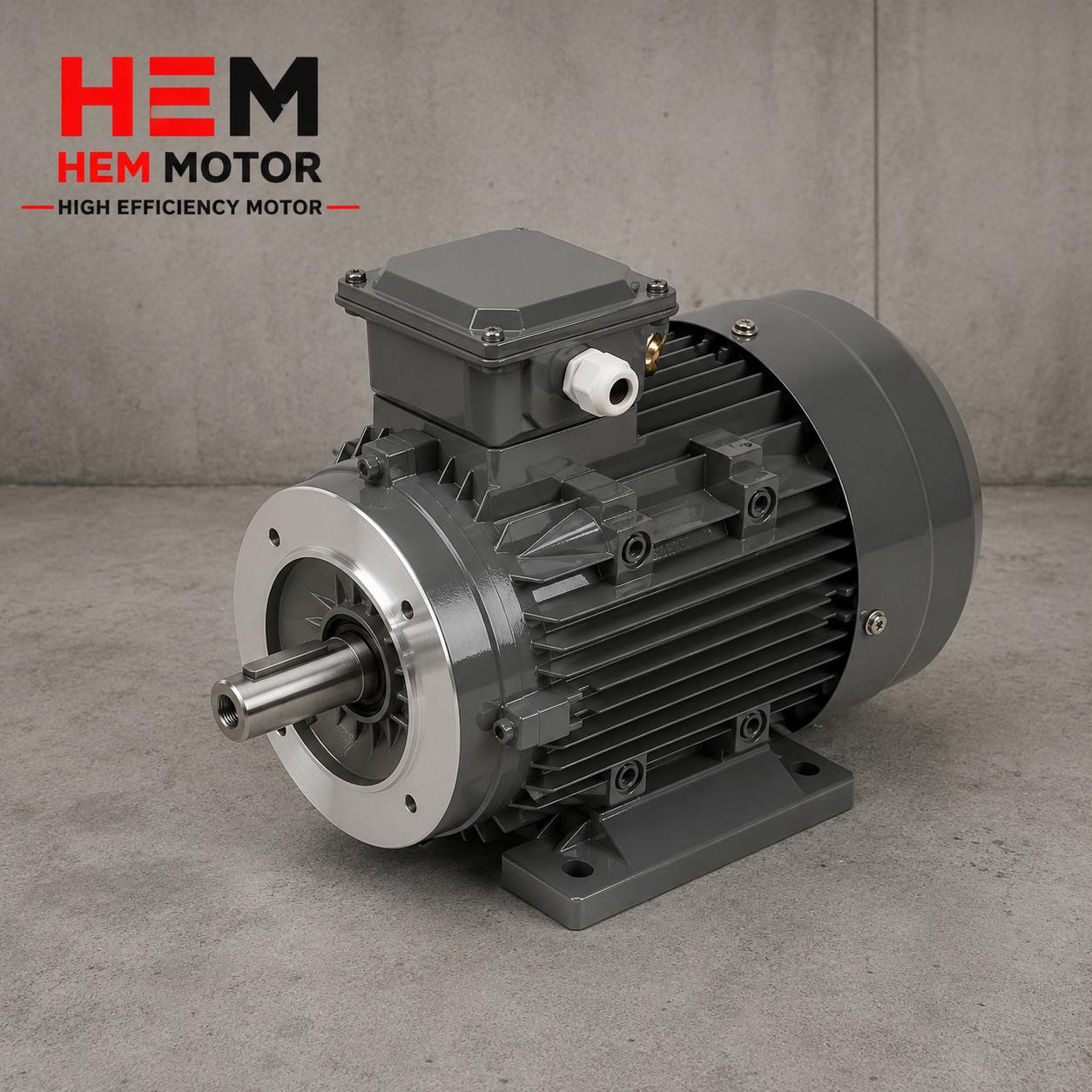
Frame Size: 225, 250 and 280
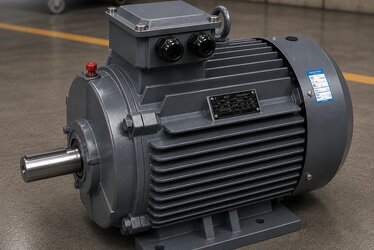
45, 55 and 75 kW motors are usually found in IEC 225, 250 and 280 frame sizes. Depending on the speed and power combination, the same power can come in a different frame; typically 45 kW is in the 250 frame, 55 kW in the 250/280 range, and 75 kW in the 280 frame. Because the frame size determines the foot hole spacing, shaft height and shaft diameter, an exact match is essential for installation when replacing an existing motor. At these powers, the frame is standard cast iron, providing high mechanical strength and a vibration-damping advantage. To select the frame-power match correctly, our article on frame size and power matching in cast iron body motors offers a detailed table. For shaft diameter, key and coupling compatibility, our article on shaft diameter, key and coupling matching in cast iron motors simplifies the pre-order check.
Mounting Type and Mechanical Connection
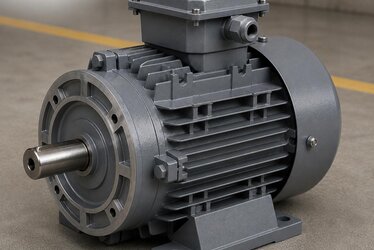
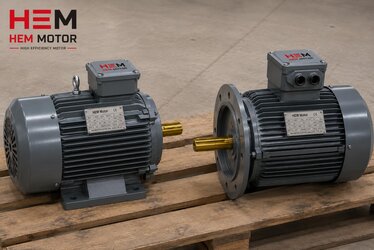
In this power band, B3 foot mounting is the most common option; it is preferred in coupled pump, conveyor and crusher drives. B5 is used in directly flange-connected applications, and B35 in machines that need both foot and flange. For mounting type options, you can review our electric motor mounting types product group. Because the motor is heavy at high power, a handling and lifting plan before installation is important; our article on cast iron motor frame sizes (IEC 56-355): weight and handling addresses this.
Starting: Star-Delta and Soft Starter
Direct-on-line (DOL) starting is almost never preferred for motors of 45 kW and above; an inrush current reaching 6-7 times the rated current both collapses the grid and creates a shock in mechanical transmission. At these powers, the standard solutions are star-delta starting and a soft starter. While star-delta is an economical and common method, a soft starter protects the grid and mechanics better by ramping up the start; it stands out especially in applications needing a smooth start such as pumps and fans. Our article on starting AC asynchronous motors: star-delta or soft starter explains in detail which method is right and when. Protection equipment should also be planned along with starting; here, our article on electric motor protection: thermal, relay and fuse selection shows the way.
Lead Time, Shipping and Commissioning Plan
High-power motor supply, unlike lower powers, involves a logistics and planning process. The first step is lead time: if the required power, speed and mounting type are in stock, delivery is fast; for special configurations, production time comes into play. Our article on from-stock delivery or production order clarifies the difference between stock delivery and a production order. The second step is shipping: because motors are heavy at these powers, the right choice among freight depot, cargo and project delivery options is important; our article on motor shipping to facilities in Anatolia addresses delivery options. To guard against damage risk at delivery, the shipping damage checklist must always be applied. The third step is commissioning: for rotation direction, insulation resistance and first-start checks, the electric motor commissioning and first-start checklist should be followed.
Efficiency, Energy Cost and IE4
Because 45-75 kW motors run continuously at high load, annual energy consumption is a far larger cost item than the purchase price. Therefore, the efficiency class is especially important at these powers; one step higher efficiency recovers the purchase-price difference many times over across the motor's economic life. You can review the advantage of IE4 super premium motors from our electric motor IE4 product group, and assess the total cost of ownership view from our article on how to calculate TCO in high-efficiency motors. For your general efficient motor needs, our high efficiency electric motors product group covers all options. You can reach other guides in this power band from our power and speed options blog category.
Running on a Generator and Inrush Current
On construction sites and facilities far from the grid, 45-75 kW motors are often fed by a generator. Because the inrush current is high at these powers, the generator must be selected not only by its rated power but by the capacity to handle the inrush current. Otherwise, the motor strains the generator at start and the voltage collapses. Our article on the generator kVA - motor kW matching guide explains, with calculation, how many kVA of generator handles how many kW of motor. Our article on electric motor selection on generator-powered sites addresses the inrush current problem and its solutions. At these powers, using a soft starter significantly reduces the starting load on the generator.
Application Areas: Where Are These Powers Used?
45, 55 and 75 kW motors take on the main drive role in many sectors. In water and wastewater plants, large transfer and submersible pumps; in industrial plants, screw compressors and large ventilation fans; in concrete batching plants, mixer and conveyor drives; in crushing-screening plants, screen and feeder motors; in mining and mill applications, heavy-duty drives fall in this power band. Each application has a different load characteristic: pumps and fans carry a variable-torque (square-law) load, while crushers and conveyors demand impact and constant torque. This difference affects both the speed selection and the starting method. When an emergency replacement is needed in conveyor drives, the conveyor belt motor emergency replacement checklist reduces production loss. For mixer and screw drives in concrete batching plants, our article on electric motor supply for concrete batching plants guides the right selection.
In crusher drives that carry impact and variable loads, the motor's torque class and starting torque are especially important. To select the right torque class for the load, our article on asynchronous motor torque classes (Design N/H) and starting torque explains the decisive criteria. Because the frame is standard cast iron at these powers, resistance to dusty and harsh field conditions also stands out as an advantage.
Common Mistakes During Commissioning
The most common mistakes when commissioning a high-power motor are wrong rotation direction, a loose terminal connection, missing grounding, and low insulation resistance due to moisture in a motor that has waited long in storage. These mistakes lead to early failure or to the warranty being called into question. For commissioning motors that have waited long in stock, our article on electric motor storage and long-term holding: moisture, bearings and commissioning lists the check steps. Measuring the insulation resistance before commissioning is a critical safety step; for this, our article on insulation resistance and megger test in asynchronous motors explains the method. For correct grounding and electrical safety, our article on grounding and electrical safety in cast iron motors must always be applied.
Frequently Asked Questions
How do I decide between 45, 55 and 75 kW?
The decision depends on the real power requirement of the load the motor will drive. When we have the pump or fan curve, the existing motor's nameplate data or the application's operating point, we determine the right power together. If the load occasionally approaches its peak value and growth is planned, one step higher provides margin; if the load is steady and low, a large motor runs inefficiently at a low load ratio. The right choice matters for both energy and investment.
Which starting method is required at these powers?
Direct-on-line starting is not recommended at 45 kW and above. The standard solution is star-delta or a soft starter. In applications needing a smooth start such as pumps and fans, a soft starter is more suitable; when an economical solution is sought and mechanical shock is not an issue, star-delta is sufficient. If there is generator feeding, a soft starter is preferred because it reduces the starting load. If you state your application, we will also recommend the suitable starting equipment.
What is the lead time for a high-power motor?
If the required power, speed and mounting type are in stock, delivery is usually short. For requests such as a special shaft, special mounting, exproof or special voltage, production time comes into play and the lead time extends. To give you the most accurate information, it is enough to send the power, speed and mounting details of your need; we will immediately share the current stock and lead-time status.
Get a Quote
Contact us for a clear quote on 45, 55 and 75 kW motors with the right pole, speed and frame selection, including the lead-time, shipping and commissioning plan. Send your power, speed, mounting and application details, and we will share the stock status and price shortly. Phone: +90 (532) 345 49 86 · Create a quote request from our contact page.