English
 Türkçe

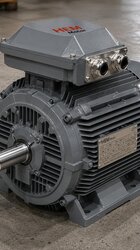
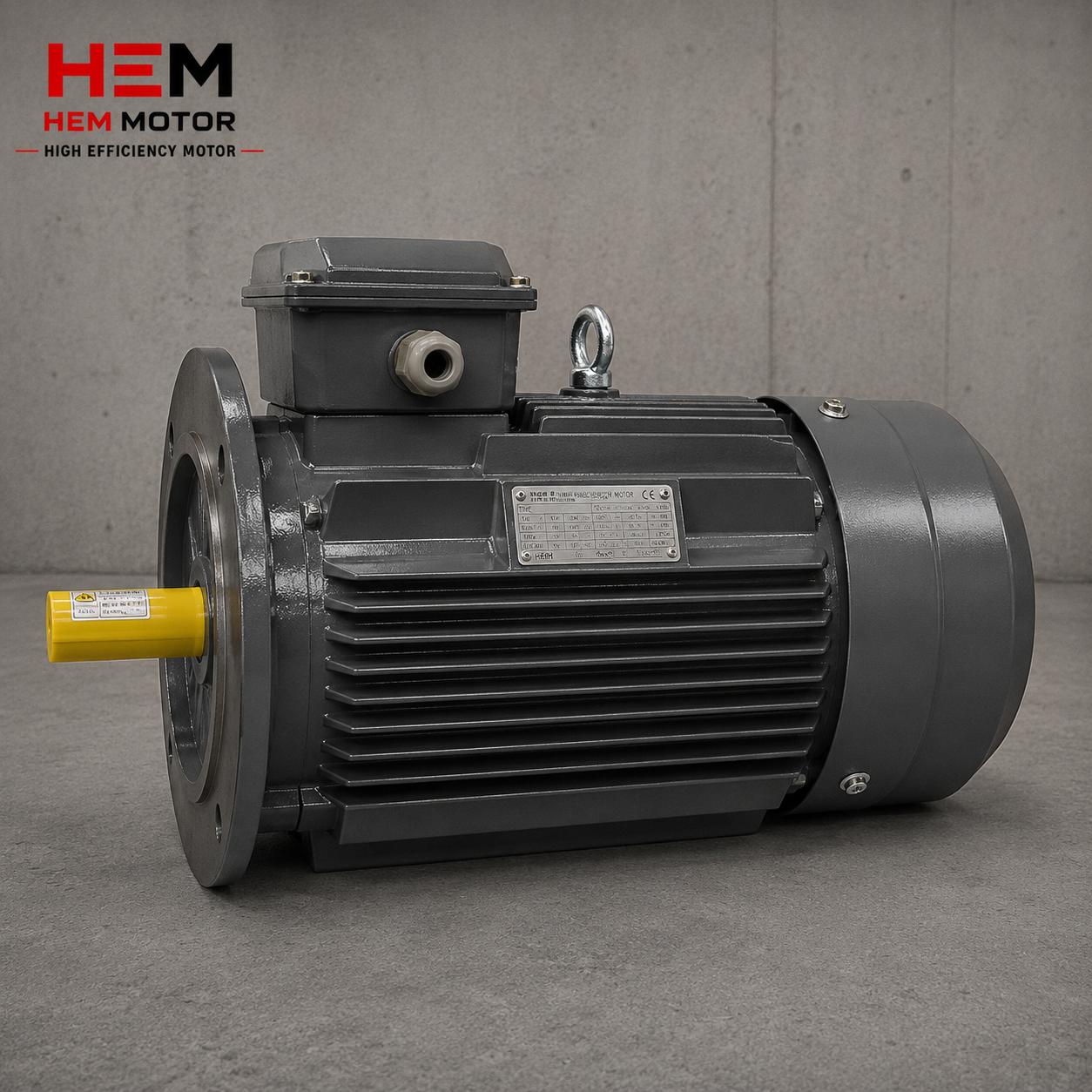

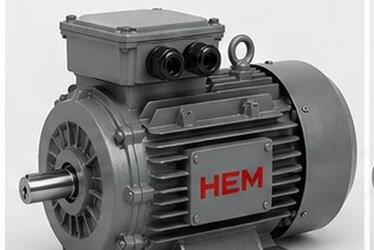
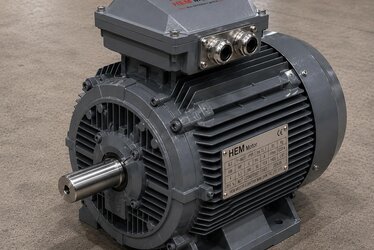
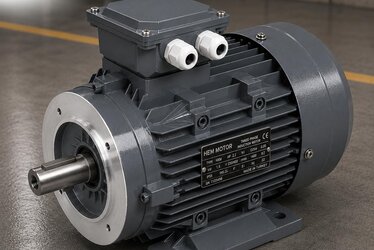
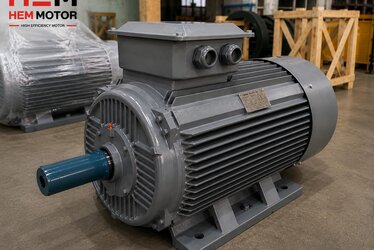
Most motors in industry run at 2 and 4 poles at high and medium speed; however, some applications demand low speed and high torque. This is exactly where 6-pole (about 1000 rpm) and 8-pole (about 750 rpm) low-speed asynchronous motors come into play. Choosing a low-speed motor in the right application often removes a gearbox layer, reducing both the investment and the maintenance burden. This guide gives purchasing and facility managers buying a motor for low-speed loads such as mixers, cranes, mills and cooling towers a clear roadmap on pole count, torque, the gearless direct-drive logic and efficiency. Our aim is not to deliver a technical lecture, but to help you correctly select the low-speed motor best suited to your application.
The Relationship Between Pole Count, Speed and Torque
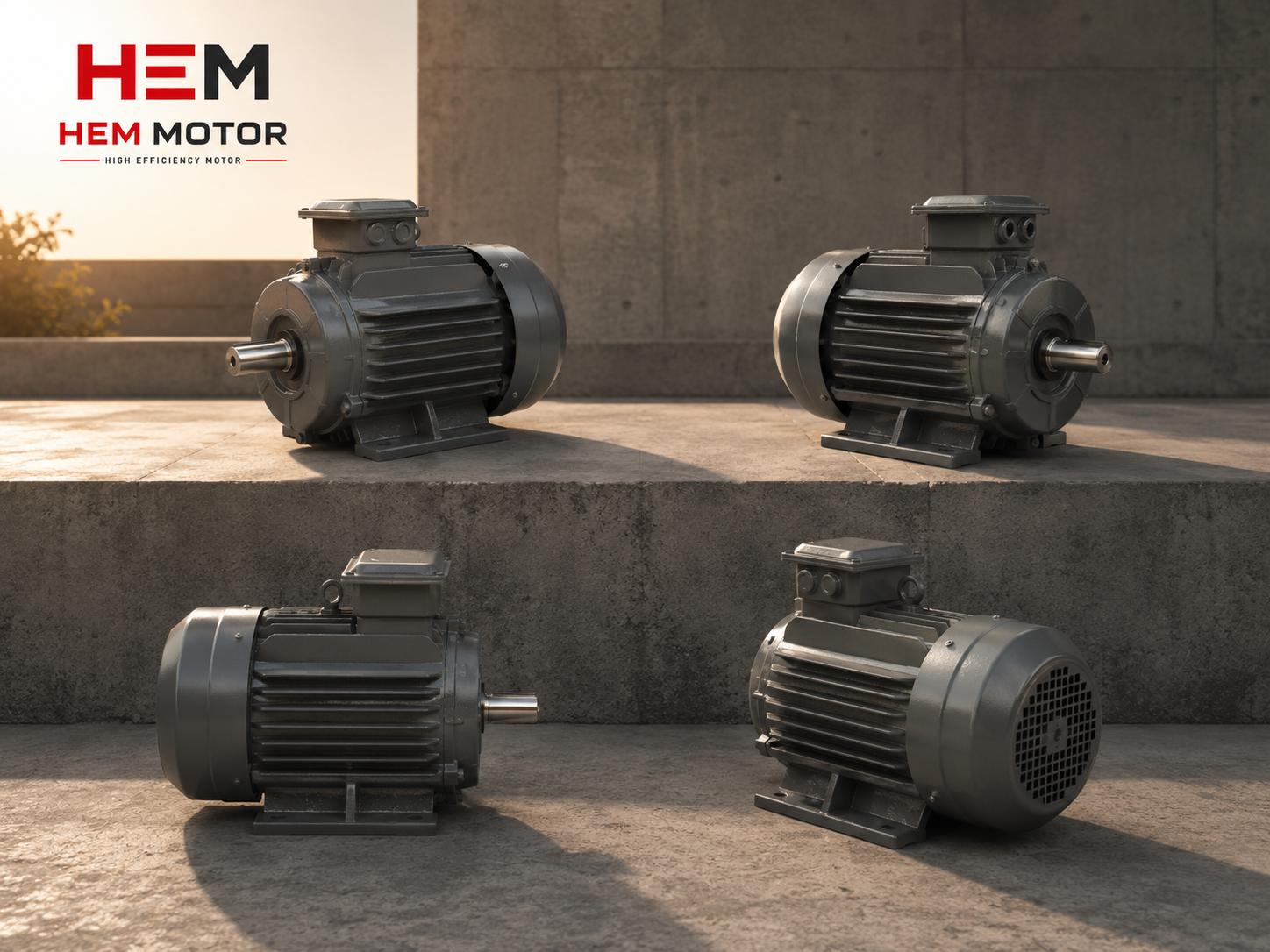
In an asynchronous motor, speed is inversely proportional to the pole count: as the pole count increases, the synchronous speed drops. On a 50 Hz grid, 2 poles give about 3000 rpm, 4 poles 1500 rpm, 6 poles 1000 rpm and 8 poles 750 rpm synchronous speed. The actual speed is slightly below these values due to slip; for example, a 6-pole motor turns at about 960-980 rpm under load. Our article on slip and actual speed in asynchronous motors explains the slip and actual-speed relationship in detail. The critical point here is this: as the pole count of a motor at the same power increases, the speed drops but the torque it produces rises. Because power is proportional to the product of torque and speed; as speed drops, torque rises to maintain the same power. That is why 6 and 8 pole motors are a natural choice for low-speed loads.
The Advantage of a Low-Speed Motor: Gearless Direct Drive
The biggest appeal of low-speed motors is that in some applications they reduce or entirely remove the need for a gearbox. If the load is already going to run at around 1000 or 750 rpm, fitting a 6 or 8 pole motor directly instead of slowing a 1500 rpm motor with a gearbox means fewer parts, less oil maintenance and fewer failure points. Our article on low-speed (high-pole) motors: gearless direct drive covers this direct-drive logic and its advantages comprehensively. However, not every low-speed need can be solved without a gearbox; at very low output speeds, a gearbox is unavoidable. Our article on geared motor or separate motor + reducer compares which to choose from a purchasing and maintenance standpoint.
6 Pole (1000 rpm): Balanced Torque and Quietness
6-pole motors sit at a balanced point between the power of a 4-pole and the low speed of an 8-pole. They are ideal for applications needing moderately high torque, low vibration and relatively quiet operation. Large-diameter fans, cooling tower fans, mixers and some conveyor drives typically run with a 6-pole motor.
8 Pole (750 rpm): Very High Torque
8-pole motors produce the highest torque at the lowest speed. They are preferred for mills, heavy mixers, large and low-speed fans, and special drives requiring high torque. These motors usually provide a direct-drive advantage by reducing the gearbox layer.
Typical Applications: Where Is a Low-Speed Motor Needed?
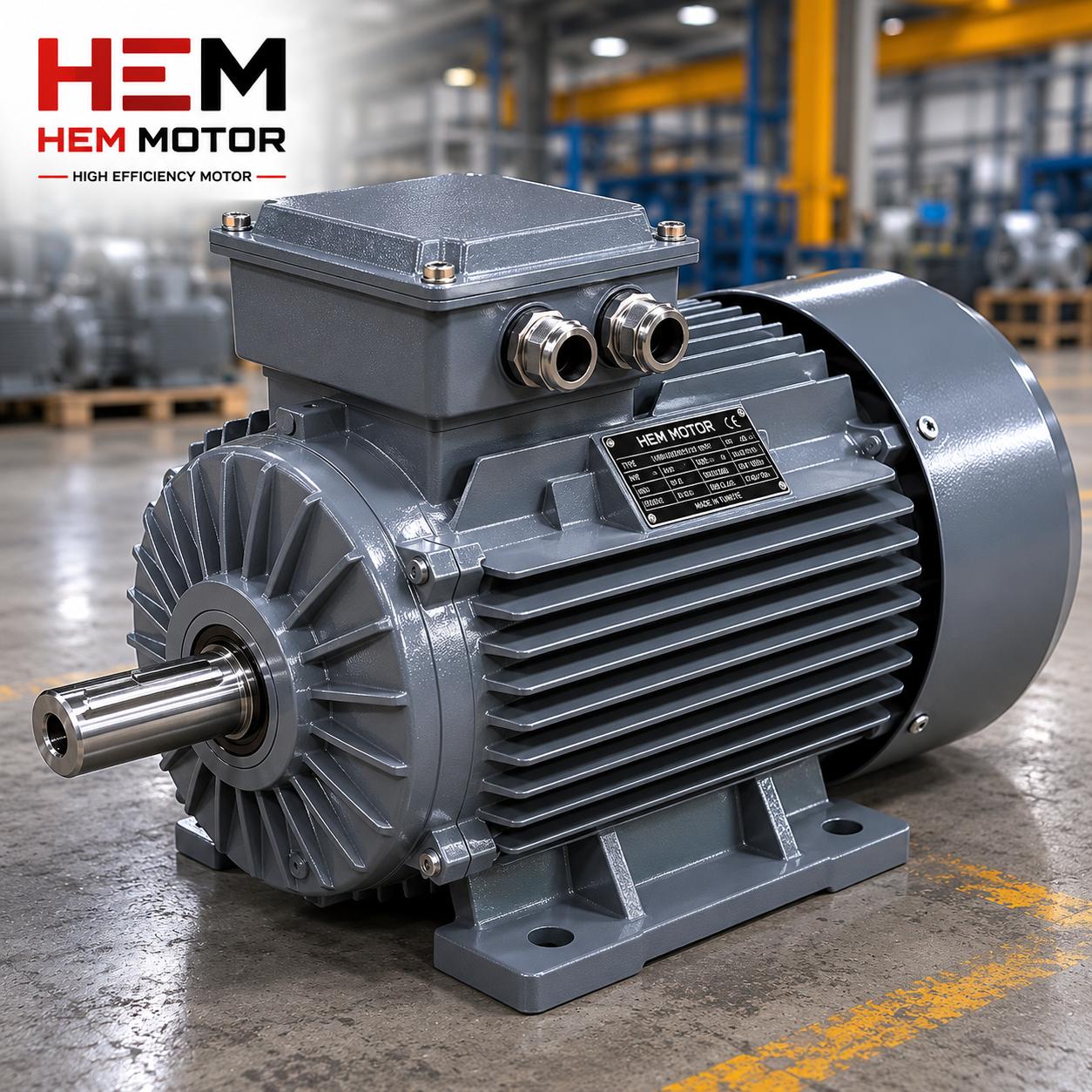
Low-speed motors stand out in a specific group of applications. Agitators and mixers demand low speed and high torque; direct drive is especially advantageous in viscous, dense media. In crane and lifting drives, low speed makes the controlled movement of the load easier. In mill and grinding applications, low speed is needed to turn the heavy load with high torque; our article on mine and ore mill motors: high torque and heavy-duty supply addresses the high-torque need in detail. Because cooling tower fans are large-diameter and low-speed, they run quietly and efficiently with a 6 or 8 pole motor; our article on cooling tower and chiller fan motors guides on outdoor and IP protection. In large-diameter fan applications, our article on centrifugal and axial fan motor selection completes the speed selection.
Efficiency and Power Factor
One point to watch with low-speed motors is that efficiency and power factor (cos φ) are typically a bit lower than in high-speed motors. This is inherent to the motor's construction; an 8-pole motor at the same power runs in a larger frame and usually at a slightly lower power factor than a 2-pole motor. Therefore, when selecting a low-speed motor, not only the speed but also the efficiency class and power factor should be evaluated. Our article on efficiency and pole count in asynchronous motors: comparing 2, 4, 6, 8 poles shows this clearly. Because a low power factor can increase the risk of a reactive penalty, our article on power factor (cos φ) and reactive penalty in high-efficiency motors offers an important warning. For those wanting to raise the efficiency class in continuously running plants, our electric motor IE4 product group also includes low-speed options.
Frame Size and Mechanical Matching
At the same power, a low-speed motor comes in a larger frame than its high-speed equivalent. For example, at a given kW value, a 4-pole motor is in one frame size, while the same power at 8 poles may be one or two steps larger in frame. This affects both the price and the mounting dimensions. Therefore, when selecting a low-speed motor, the frame size and mechanical connection dimensions should be clarified in advance. Our article on frame size and power matching in cast iron body motors addresses this in detail. For shaft diameter, key and coupling compatibility, our article on shaft diameter, key and coupling matching in cast iron motors simplifies the pre-order check. For mounting type options, you can review our electric motor mounting types product group.
Direct Drive or Gearbox? The Decision Point
The most important decision in low-speed motor selection is whether the required output speed will be met directly by a motor or by a gearbox. If the operating speed is in the 750-1000 rpm range, a 6 or 8 pole motor is usually a direct and economical solution. However, if a much lower output speed (for example 50-100 rpm) is needed, the motor alone cannot provide this speed; in that case a gearbox is unavoidable. Even then, connecting a low-speed motor to a gearbox allows reaching the same output speed with a smaller reduction ratio. Our article on which electric motor fits a worm gear and NMRV reducer explains this by IEC frame and flange matching. The gain of combining an efficient motor with a gearbox is addressed in our article on using an IE4 motor with a gearbox: the gain in the efficient motor + gearbox combination. You can reach other guides on this topic from our asynchronous/AC motors blog category.
Starting and Start-Up Behavior
Because low-speed motors produce high torque, they also provide a strong starting torque at start-up. This is an advantage for turning high-inertia loads such as mixers and mills. However, in high-power 6 and 8 pole motors, direct-on-line (DOL) starting again draws a high inrush current; therefore, above certain powers, star-delta or a soft starter is preferred. Our article on starting AC asynchronous motors: star-delta or soft starter explains in detail which method is right and when. In applications carrying high-inertia and impact loads such as mixers and mills, the motor's torque class is also important; to select the right torque class for the load, our article on asynchronous motor torque classes (Design N/H) and starting torque offers the decisive criteria. Planning protection equipment along with starting reduces failure risk in continuously running drives.
In crane and lifting applications, besides low speed, the need for a brake motor may arise; when a brake motor is needed for controlled stopping of the load, our article on IE4 brake motor supply: conveyor and crane applications guides the right selection. Whether to choose a squirrel-cage or slip-ring rotor also gains importance in heavy-starting loads; here, our article on the difference between squirrel-cage and slip-ring asynchronous motors explains which is suitable for which load.
Stock, Supply and Replacement
Because 6 and 8 pole motors see less demand than 2 and 4 pole motors, the stock depth may vary by application. Therefore, early planning for a low-speed motor need is important to prevent production stoppage. When replacing an existing low-speed motor, the power, speed (pole count), frame size, mounting type and shaft diameter from the nameplate are enough for an exact replacement. Our article on from-stock delivery or production order clarifies the lead-time difference between stock delivery and a production order. For the logic of keeping spare motors in critical drives, we recommend our article on a critical spare motor list and stock planning. To prevent the wrong motor from arriving, pre-order nameplate matching is essential; you can verify this with our article on avoid the wrong motor delivery: pre-order nameplate matching.
Frequently Asked Questions
Should I buy a 6-pole or 8-pole motor?
The decision depends on the required operating speed and torque need. If the operating speed is around 1000 rpm, a 6-pole motor is the right choice; if around 750 rpm, an 8-pole motor. If the torque need is very high and the speed should be as low as possible, 8 poles stand out. To make the best selection, it is enough to share your application's operating speed and load type; we will determine the suitable pole count and power together.
Is a low-speed motor or a geared motor more economical?
This depends on the required output speed. If the operating speed is in the 750-1000 rpm range, a direct 6 or 8 pole motor usually means fewer parts and less maintenance; in that case, the gearless solution is economical. However, if a much lower output speed is needed, a gearbox is mandatory, and then using a low-speed motor with a smaller reduction ratio provides an advantage. If you state your application, we will recommend the most suitable solution.
Why is the efficiency of a low-speed motor lower?
Low-speed motors inherently contain more pole windings and run in a larger frame at the same power. This causes efficiency and power factor to be typically a bit lower than the high-speed equivalent. Even so, in the right application, a low-speed motor can provide an advantage in total system efficiency by removing gearbox losses. Choosing a high efficiency class in continuously running plants offsets this difference.
Get a Quote
Contact us for fast supply of 6 and 8 pole low-speed asynchronous motors with the right speed, torque and frame selection. Send your application's operating speed, torque need and mounting information; we will determine together whether a direct drive or a geared solution is needed and prepare a clear quote. Phone: +90 (532) 345 49 86 · Create a quote request from our contact page.