English
 Türkçe


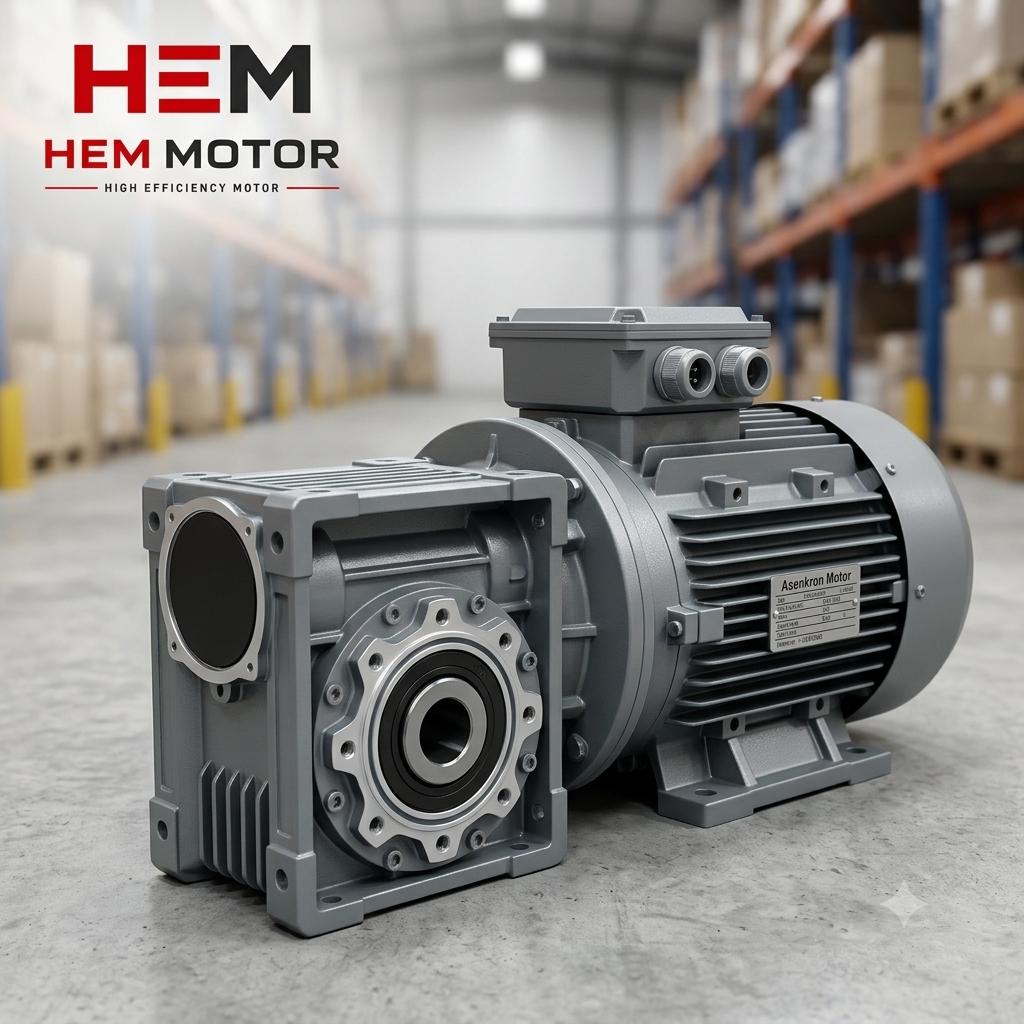

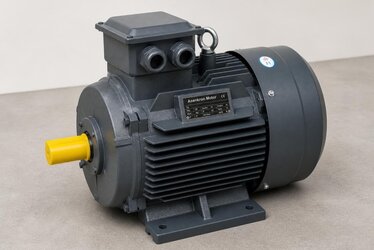
When looking for a motor for a low-speed, high-torque application such as a conveyor, mixer, screw or hoist, the decision has two layers: you must choose both the right reducer and the right motor. The commercial opportunity often missed here is this: in a reducer-driven application, the efficiency class of the motor directly determines the total energy consumption of the system. Matching an IE4 super premium motor with a quality reducer both meets the low-speed, high-torque need and delivers a measurable gain on the electricity bill for years. In this article we cover the IE4 motor + reducer combination, the system (motor x reducer) efficiency, the choice between worm gear and helical reducer, and the purchasing gain of correct matching. As HEM Motor, because we manufacture and supply both IE4 electric motors and reducers, we help you correctly select the motor and reducer as a compatible package.
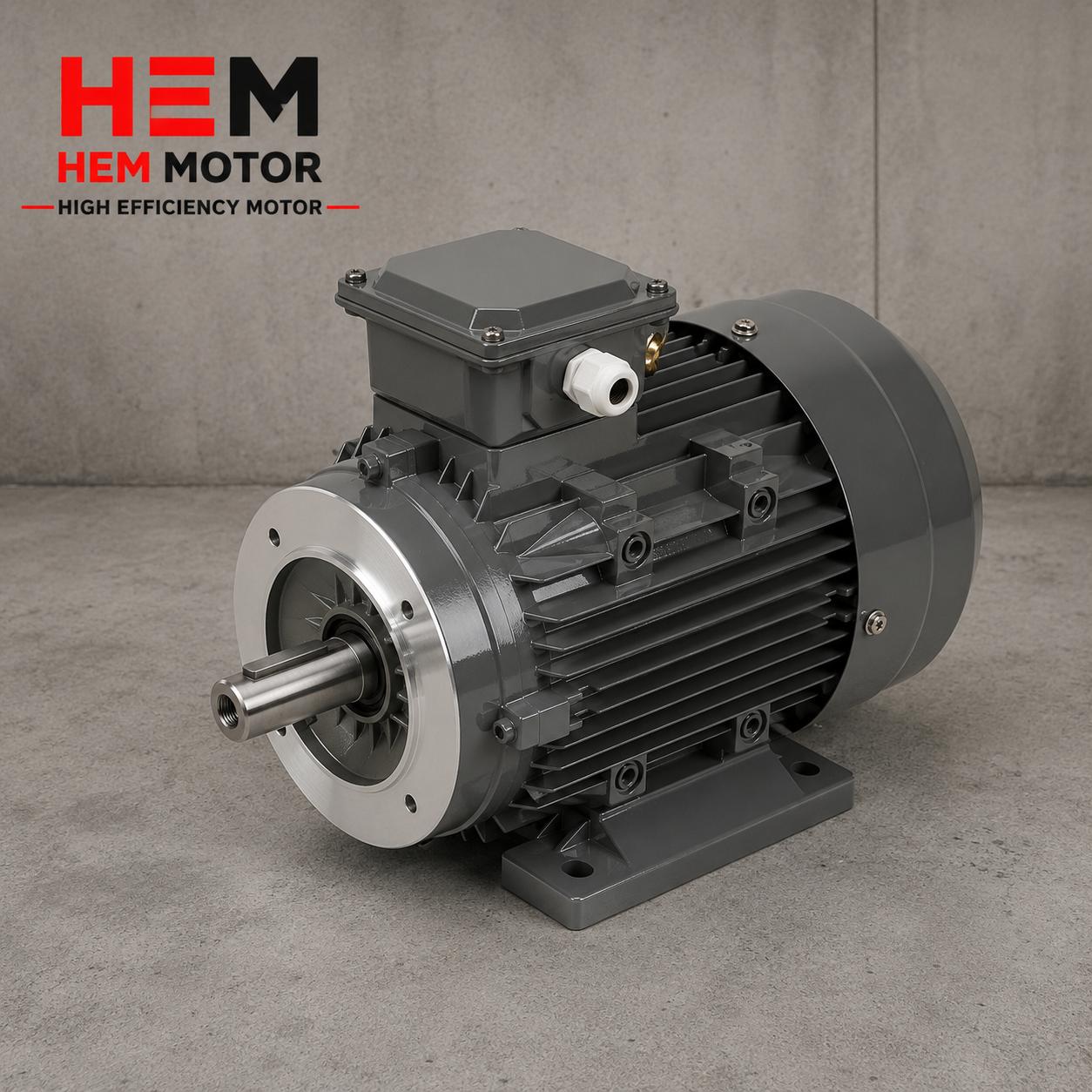
Why an IE4 Motor With a Reducer? The System Efficiency Logic
In a reducer-driven application the energy path is as follows: grid power enters the motor first, the motor converts it to mechanical power, then the reducer transfers this power to the load as low speed and high torque. In this chain two efficiencies are multiplied: motor efficiency and reducer efficiency. System efficiency is the product of these two values. Therefore, raising the efficiency class of the motor (switching from IE3 to IE4) directly pulls up the efficiency of the whole system; because the loss is reduced from the very start, on the motor side.
This logic is especially valuable in continuously running drives. In a conveyor or mixer running long hours a day, each efficiency point of the motor turns into a large energy difference over the year. Our article examining where efficiency losses are reduced in an IE4 motor explains the technical source of this gain. When you combine the efficiency logic in a reducer system with the total cost of ownership (TCO) of a high-efficiency motor, it becomes clear why the IE4 + reducer combination makes sense.
Reducer Efficiency: Worm Gear or Helical?
The reducer type directly affects system efficiency. Worm gear reducers are compact, economical and provide a high reduction ratio; they also offer a self-locking feature in many applications. In return, their efficiency is generally lower than bevel-helical (K series) reducers, and efficiency drops as the ratio grows. Bevel-helical reducers, on the other hand, run with higher efficiency and are more economical at high power under continuous heavy load. So when doing the same job with an IE4 motor, the reducer type choice determines total energy consumption.
We addressed this choice economically in our article on K series bevel-helical or worm gear; we explained which is more economical for which job on an application basis. Our article on the factors affecting worm gear reducer prices explains the factors affecting reducer price and correct frame selection. On the product side, our worm gear reducers and helical worm gear reducers range offer a wide choice of ratio and frame compatible with IE4 motors.
IEC Connection Matching: How Does the Motor Fit the Reducer?
The most critical issue when fitting an IE4 motor to a reducer is mechanical compatibility. The reducer is designed for a specific IEC motor frame and flange type (B5 or B14); the motor frame size, shaft diameter, flange dimension and key structure must match the input side of the reducer exactly. For example, the HEM series worm reducers in the catalog match motor frames from IEC 63 to IEC 160 in certain power ranges, with B5/B14 flange options. A wrong flange or shaft diameter means the motor cannot be fitted to the reducer or is damaged under load.
To do this matching correctly, our article on which electric motor fits a worm gear and NMRV reducer gives the IEC frame and flange matching in detail. Verify shaft diameter, key and coupling compatibility with our article on motor shaft diameter and key dimensions. For the choice between B5 and B14, our article on B5 flanged or B14 flanged guides machine manufacturers; our electric motor mounting types page lists the mounting codes.
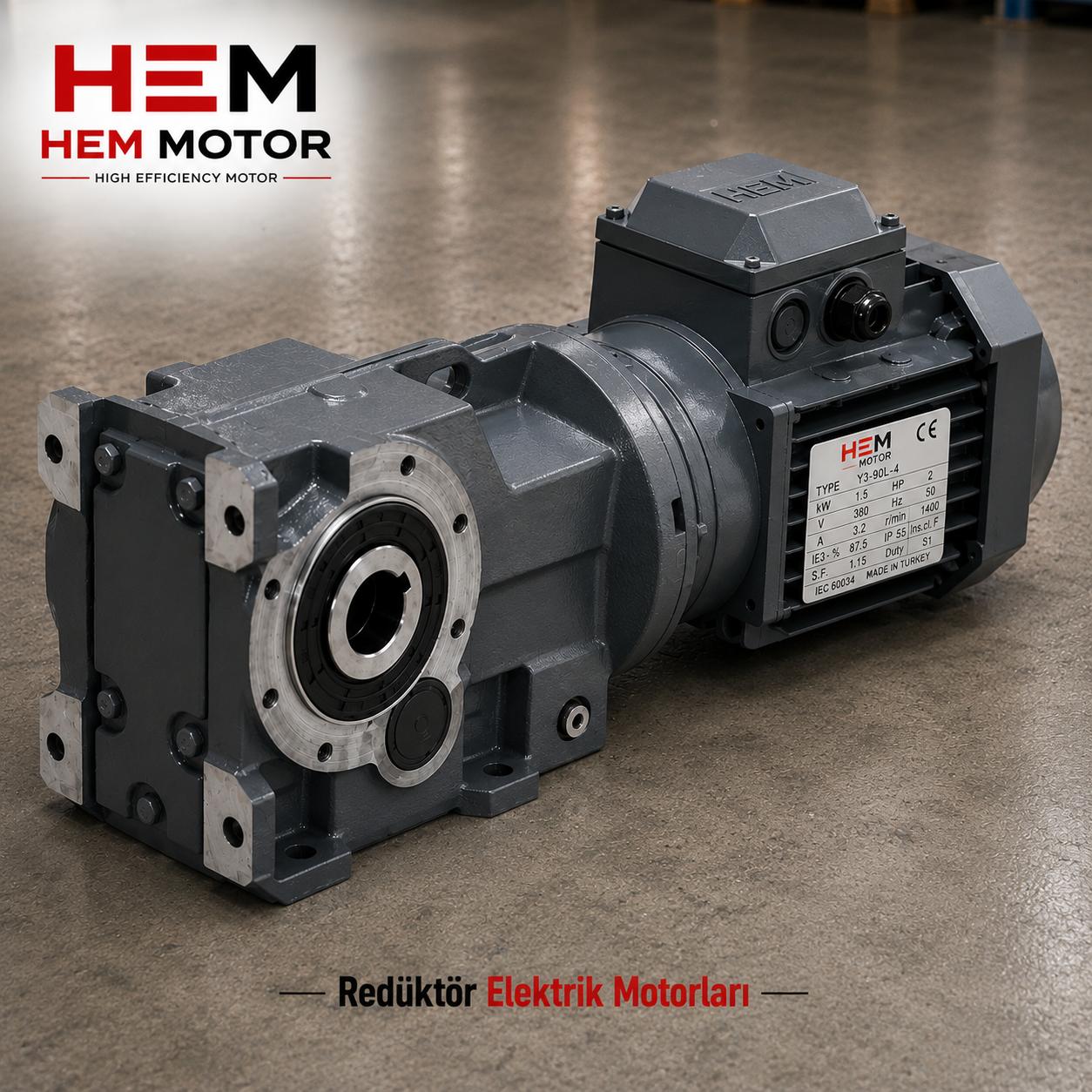
Geared Motor or Separate Motor + Reducer?
A common question in purchasing is whether to buy the motor and reducer as a single unit (monobloc geared motor) or separately. Both approaches have advantages: the monobloc solution is compact and ready to mount; the separate motor + reducer offers the flexibility of replacing only the faulty part in case of failure and selecting the motor independently. If you want to use IE4 efficiency at the highest level, selecting the motor separately gives you full control over the efficiency class.
We addressed this decision in depth from a purchasing and maintenance perspective in our article on geared motor or separate motor + reducer. The mounting position and lubrication of the reducer are also part of a correct order; our article on reducer mounting positions (M1-M6) and lubrication explains this detail. Some applications require self-locking; our article on self-locking in worm gear reducers shows in which application this is essential.
Reduction Ratio and Output Speed Selection
The heart of reducer selection is the right reduction ratio. If you fit a 1/30 ratio reducer to a motor turning at 1400-1500 rpm, the output speed becomes about 46 rpm; a 1/10 ratio gives a higher output speed, a 1/100 ratio a very low output speed. First determine the output speed and torque your application requires, then select the suitable ratio and frame. The power and speed of the IE4 motor and the reducer ratio must be calculated together to meet the exact need of the load. A wrong ratio means either a system that cannot carry the load or an unnecessarily large one; both are a cost loss.
The Purchasing Gain in the IE4 + Reducer Combination
The purchasing gain of matching an IE4 motor with a reducer is three-layered. First, energy: high motor efficiency lowers annual electricity consumption in continuously running reducer drives. Second, life: the low heating and solid bearing structure of quality IE4 motors build a long-lived system together with the reducer. Third, supply: buying the motor and reducer from a single supplier as a compatible package provides the advantage of a single point of contact for warranty and service.
We showed the real gain of replacing an old standard motor with an IE4 with a consumption calculation in our article on replacing your old motor with an IE4; in reducer drives this calculation is even more meaningful. To verify mechanical compatibility (frame, foot, shaft) when switching to an IE4 motor, our article on mechanical compatibility in the transition to an IE4 motor guides you; this compatibility is critical in a reducer system. From our efficient electric motors range, we can determine together the right IE4 motor for your application.
Sector Examples: Conveyor, Mixer and Hoist
The IE4 + reducer combination stands out in many industrial applications requiring low speed and high torque. In conveyor belt systems, efficiency reflects directly on the bill due to continuous operation; in mixer and agitator applications, high torque and low speed are required together; in screws and elevators, a solid, continuously running system is needed. In these applications, when the efficiency advantage of the IE4 motor combines with the correct ratio of the reducer, it pays off in both energy and durability.
In facilities such as concrete batching plants and feed factories, the need for geared motors is intense; in these applications, correct motor-reducer matching is the basis of production continuity. When an exact match is needed for an emergency conveyor motor replacement, our article on emergency replacement and swap of a conveyor belt motor offers a checklist. Selecting the right motor and reducer compatibly from the start also provides a fast solution in such emergencies.
Correct Sizing and Service Factor in a Reducer System
When using an IE4 motor with a reducer, not only efficiency but also correct sizing determines the gain. Choosing the motor much larger than needed both raises the initial cost and, by running the motor at a low load ratio, drops the efficiency below the nameplate value; choosing it too small strains the motor under continuous overload and shortens its life. In reducer drives, the starting torque and shock character of the load are important; therefore the service factor of the motor and reducer should be selected according to the load profile of the application.
In shock or hard-starting loads such as mixers, crushers and elevators, keeping the service factor margin of the system sufficient prevents failure. We addressed how loaded you should run the motor and the right power margin in our article on how loaded to run the motor; efficiency and correct sizing. A correctly sized IE4 motor, together with the reducer, both runs close to its nameplate efficiency and is long-lived; this is the basis of the real gain in a reducer system.
If Variable Speed Is Needed: IE4 + Reducer + Drive
In some applications, keeping the output speed constant is not enough; you need to change the flow, speed or feed amount during the process. In this case, driving the IE4 motor with a frequency drive (VFD) adds variable-speed flexibility on top of the fixed ratio of the reducer. The drive provides process control by continuously adjusting the motor speed and brings additional energy savings in applications such as pumps and fans. So the IE4 + reducer + drive combination is a strong solution for facilities that want both high efficiency and flexible control.
We addressed the savings that a high-efficiency motor with a frequency drive provides in pumps and fans in our article on high-efficiency motor + frequency drive. To determine whether constant or variable torque is needed, our article on motor selection in variable-speed applications guides you. If you share your application variable-speed need, we recommend the IE4 motor, the reducer and, if needed, the drive as a compatible package.
Frequently Asked Questions
Why should IE4 be preferred in a motor used with a reducer?
In a reducer drive, system efficiency is the product of motor efficiency and reducer efficiency; raising the efficiency class of the motor directly increases the efficiency of the whole system. An IE4 super premium motor lowers annual electricity consumption in continuously running applications such as conveyors, mixers and screws. Because efficiency is lower in worm gear reducers, the IE4 gain on the motor side is even more valuable in these systems.
Can I fit an IE4 motor to any reducer?
No; the reducer is designed for a specific IEC motor frame and flange type (B5/B14). The motor frame size, shaft diameter, flange dimension and key must match the input side of the reducer exactly. For correct matching, the IEC connection dimensions of the motor and reducer must be compared before ordering; in case of doubt, share the dimensions of your existing system with us and let us determine the compatible package together.
Should I choose a worm gear or a bevel-helical reducer?
In applications requiring low power, a compact structure and self-locking, a worm gear reducer is economical. In applications requiring high power, continuous heavy load and high efficiency, a bevel-helical reducer is more efficient and more economical in the long run. The choice is made according to the output speed-torque need and operating time; if you share your application, we recommend the right reducer type and IE4 motor together.
Get a Quote
Matching an IE4 motor with the right reducer raises system efficiency while meeting the low-speed, high-torque need and delivers a gain on the electricity bill for years. Share your application output speed, torque and operating time information with us; let us determine the compatible IE4 motor + reducer package together. HEM Motor is with you as a single point of contact that manufactures and supplies both the motor and the reducer. For a fast and accurate quote, call: +90 (532) 345 49 86 or reach us through our contact page.