English
 Türkçe

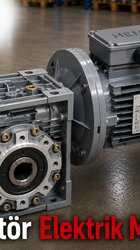
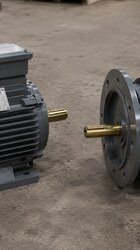
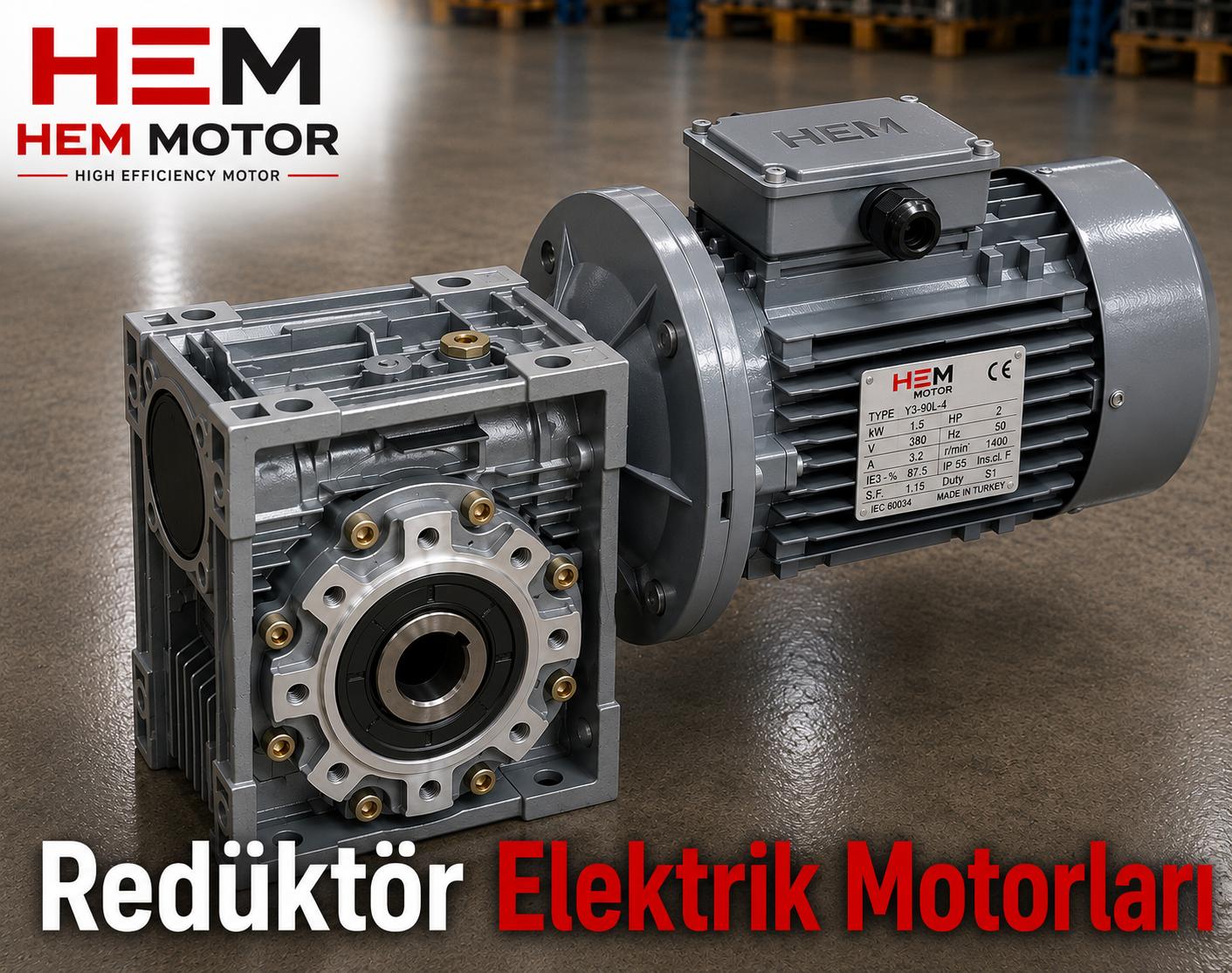

In a lifting or conveyor application, the most critical question is often this: when the motor stops, will the load run back? One of the most valuable features of worm gear reducers is that, under certain conditions, they prevent the load from running back on its own; this is called self-locking. In this guide we explain, from a purchasing perspective, what self-locking really is, at which reduction ratios it appears, how it provides an advantage in holding loads in applications such as lifting and conveying, and where its limit begins.
At HEM Motor we have been manufacturing since 1979 and supply worm gear reducers and compatible electric motors from our stock in Turkey. Self-locking, when understood correctly, provides a serious advantage in terms of safety and cost, but when wrongly assumed it creates risk; that is why setting the application up correctly is important.
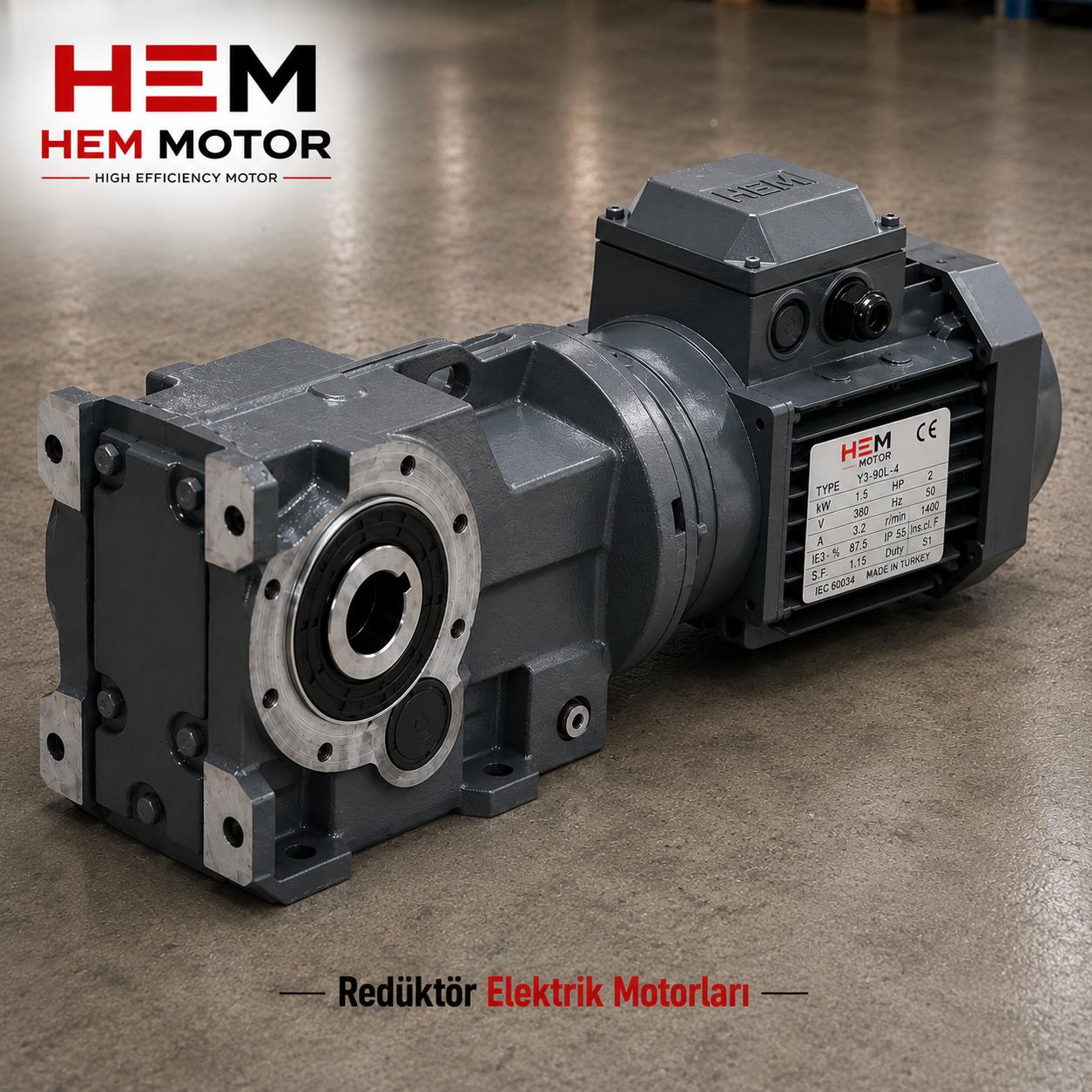
What Is Self-Locking?
In a worm gear reducer, motion is transmitted as the worm shaft driven by the motor turns the bronze gear. This structure has an interesting property: while motion flows easily from input to output, it does not always flow from output back to input. In other words, when the load on the output shaft tries to turn the worm back, under certain conditions this back-driving does not occur and the system locks itself. When you cut the motor power, the load stops where it is, with no need for an extra brake.
What determines this behaviour is the thread angle of the worm, that is the lead angle. When the angle is small, friction does not allow the load to turn the worm back and the system locks; as the angle grows, back-driving becomes possible. In practice, at high reduction ratios the lead angle is small, so the tendency to self-lock increases, while at low ratios it decreases. Correctly matching the worm gear reducer with the motor and choosing the ratio are decisive here; the housings in our worm gear reducers category cover different ratio and power ranges.
At Which Ratios Does Locking Occur?
The general rule is this: as the reduction ratio rises, the worm's lead angle shrinks and the tendency to self-lock strengthens. At low ratios (for example less reduction in a single stage) the angle is relatively large, so the system may allow back-driving; this means the load could run back without the motor. For this reason, in applications expected to hold a load, you need to consider not only power and speed but also the ratio that will provide the locking behaviour.
There is an important nuance here: self-locking can behave differently in the static state (load standing still) and the dynamic state (under vibration). A system that locks statically can slowly slide back over time under continuous vibration. For this reason, where a critical safety function is required, rather than treating self-locking as sufficient on its own, the right approach is to support it with an additional braking measure. To clarify the motor connection while choosing the right housing and ratio, our article on matching a motor to a worm gear reducer offers guidance.
Holding the Load in Lifting, Conveyors and Elevators
The places where self-locking is most valuable are applications where the load must not run back when it stops. In a lifting mechanism, when the motor stops while the load is suspended in the air, it is vital that the load does not fall; a self-locking worm gear reducer can take on this task without an extra mechanical brake. On an inclined conveyor, the same principle keeps the material from sliding back when it stops. In elevators and similar lifting systems, holding the load safely is the basic expectation too.
This advantage means a simpler system: instead of a separate holding brake, friction lining and its maintenance, the locking that comes from the nature of the reducer holds the load. A worm gear reducer selected at the right ratio both saves space and reduces the number of connections in small and medium-power lifting and holding jobs. For small-power applications the HEM30 housing worm gear reducer and, for drives requiring higher power, the HEM130 housing worm gear reducer are suitable starting points.
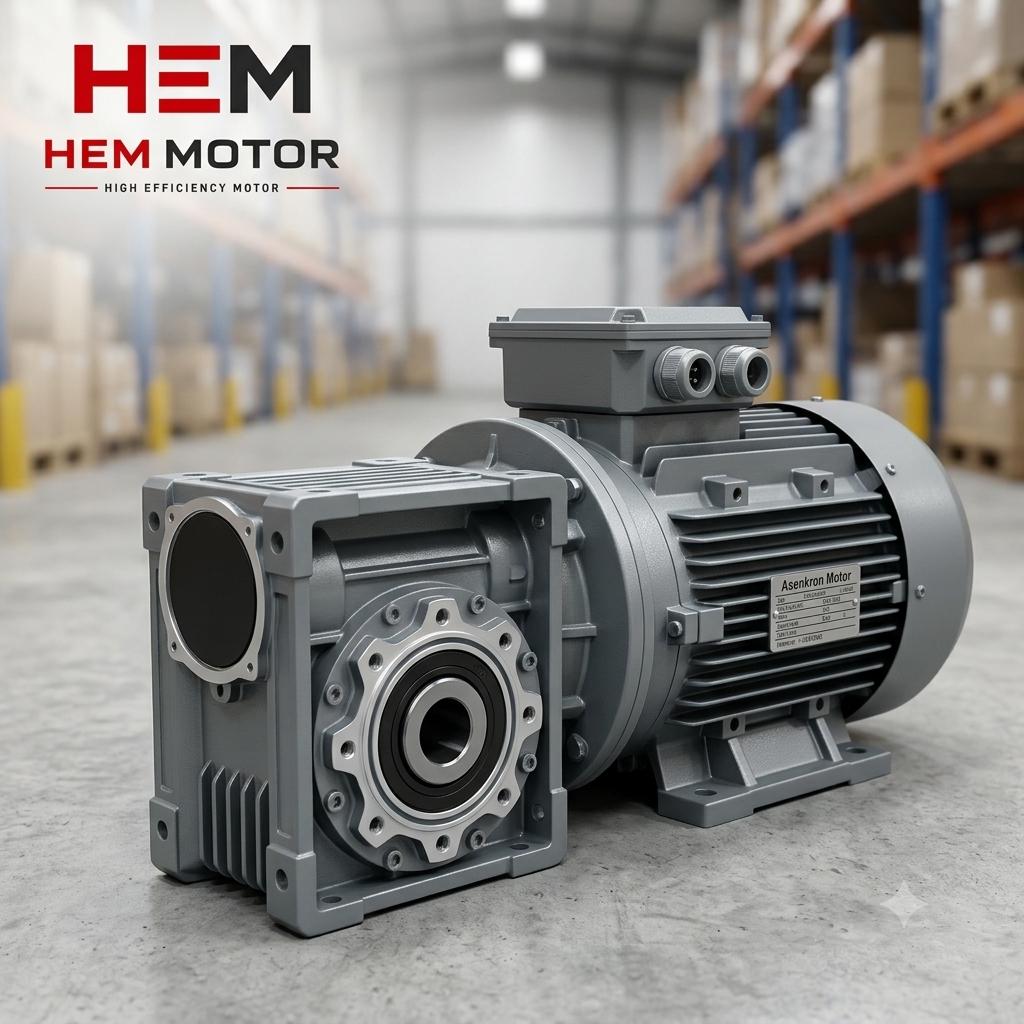
The Advantage of Locking Instead of a Brake
The practical benefit of self-locking is that in most light and medium-load applications it saves a separate brake system. It means fewer parts, fewer connections and less maintenance; this lightens both the initial investment and the operating burden. Moreover, the load staying where it is during a power outage offers simple and predictable behaviour in terms of safety. The load not running back while the system is stopped is an extra layer of confidence for the operator.
That said, the efficiency of a worm gear reducer can fall at high ratios compared with other reducer types; in other words, the price of the locking advantage may be some loss of efficiency. If load holding is not critical and efficiency is your priority, alternative reducer types such as bevel helical may be more suitable. We covered this comparison in detail in our article on K-series bevel helical or worm gear.
The Limits of Locking and Safety
Self-locking is a powerful feature, but it should not be seen as a stand-alone safety element in every situation. In lifting systems that carry people or that carry a high risk to life safety, an independent braking or catching device is expected in addition to self-locking. Since vibration, lubrication condition and wear can affect the locking behaviour over time, periodic inspection is essential in critical applications.
For the right decision, you need to evaluate the application's load-holding need, safety class and efficiency priority together. If load holding is critical, a self-locking worm gear reducer at the right ratio comes to the fore; if efficiency is critical, alternative types do. To clarify whether you should prefer a ready geared solution or a separate motor and reducer, our article on a geared motor or a separate motor plus reducer makes the decision easier.
The Right Ratio and Housing Choice Determines Locking
In an application that wants self-locking, the choice does not end with finding a reducer that meets the power; you need to determine the ratio and housing in a way that provides the locking behaviour. The same housing shows a different locking tendency at different ratios; a reducer that allows back-driving at a low ratio can hold the load safely at a high ratio. For this reason, along with the output speed and torque target, the locking need must also be placed among the selection criteria.
The housing size, in turn, determines both the power and the torque capacity. Straining a small housing at high torque leads to both heating and premature wear; a worn gear can over time also disrupt the locking behaviour. For this reason, in a reducer expected to hold a load, choosing the housing with a sufficient margin protects both durability and locking safety. To see the factors that affect the reducer price and housing choice in detail, our article on factors affecting worm gear reducer prices is a good starting point.
The Effect of Lubrication and Temperature on Locking
In worm gear reducers, friction is the basic factor that both provides locking and lowers efficiency. The lubrication condition directly affects this balance: insufficient oil accelerates wear, while oil of the wrong viscosity changes the friction character. As temperature rises, the oil's properties change, and in long-term operation the reducer's behaviour can differ from how it was on the first day. For this reason, in an application where locking is critical, the right oil type and regular maintenance are essential for the continuity of performance.
The mounting position also affects lubrication and therefore the health of the reducer; especially in vertically mounted reducers, getting oil to some parts requires extra measures. To see the relationship between mounting position and lubrication in detail, you can make use of our article on reducer mounting positions and lubrication. When the right position, the right oil and the right ratio come together, self-locking works reliably for years.
In Which Sectors Does It Stand Out?
Self-locking worm gear reducers are preferred in many sectors where the load must stay in place when it stops. Small and medium-scale lifting mechanisms, inclined belt conveyors, barrier and gate automation, rotating platforms and some positioning applications are among the foremost. In these applications, the simple structure, few parts and safe stop during a power outage make self-locking attractive.
By contrast, in continuous drives requiring high efficiency and high power, if there is no need for the locking advantage, types such as bevel helical are more suitable. To clarify which reducer type suits your sector and load profile, it is enough to share your need with us; we evaluate the application together and steer you to the right solution. For more guide content you can also review our guide and technical information category.
The Right Order in an Application Where Locking Is Wanted
The way to place a sound order in an application that wants self-locking is to state clearly not only the power and output speed but also the locking expectation. How large the load is, at what angle it stops (horizontal, inclined or suspended) and how it should behave during a power outage are the basic pieces of information that determine the right ratio. Sharing this information from the start ensures the reducer is chosen at a ratio that both meets the power and holds the load.
In addition, the frame and flange compatibility of the motor to be fitted to the reducer is part of the order; when the motor and reducer are not considered together, a mechanical mismatch causes time loss in the field. Clarifying whether you want a ready geared combination or separate components is also important in terms of lead time and assembly. When you share your need as a whole, we recommend the right ratio, the right housing and a compatible motor as a single solution.
Striking the Balance Between Locking and Efficiency
Self-locking is not an advantage in every application; sometimes it is not worth giving up efficiency. If load holding is not critical, instead of the efficiency loss of a high-ratio worm gear, a more efficient reducer type can be preferred. Striking this balance requires correctly identifying the real priority of the application: is a safe stop or low energy consumption the priority? The answer to this question largely determines which reducer type will be chosen.
While efficiency comes to the fore in continuous and high-power drives, locking comes to the fore in intermittent drives that need to hold a load. In cases where both needs are required together, it is possible to provide the locking with a worm gear and balance the efficiency with the housing and ratio choice. To make this fine adjustment according to your application, it is enough to share your load and operating regime with us; we strike the most suitable balance together.
Comparing Self-Locking and Back-Driving
Whether a drive allows back-driving or not directly affects the safety of the application. In a system that allows back-driving, when the motor stops the load can turn the mechanism back under its own weight; this is a desired feature in some applications (for example where free rotation is needed) and a dangerous condition in others. A self-locking worm gear reducer, on the other hand, prevents this back-driving and holds the load in place. What determines which behaviour is correct is entirely the need of the application.
In jobs where the load must not run back, such as lifting and inclined conveying, locking is a safety advantage. By contrast, in some applications that require free rotation or manual movement, locking is not wanted, because the mechanism needs to be able to be turned back. For this reason, in reducer selection the question "should it lock or not" must be answered according to the function of the application. The wrong choice leads either to the load running back or to a loss of flexibility from unnecessary locking.
Application Analysis for the Right Choice
To make the right decision it is enough to clarify a few basic features of the application: should the load stay in place when it stops, should the mechanism be able to be turned back manually or by the load, is the operation continuous or intermittent, and how much is efficiency a priority? The answers to these questions largely determine whether a self-locking worm gear reducer or a different type is suitable. Decisions made without application analysis can lead to unexpected behaviour in the field.
You do not have to make this analysis on your own; sharing your load, working angle and safety expectation is enough for us to determine the right type together. We clarify, according to the real need of your application, whether you should proceed with the locking advantage of a worm gear reducer or the efficiency advantage of another type. This way you face neither an unnecessary lock nor an unwanted back-driving surprise.
Frequently Asked Questions
Does every worm gear reducer self-lock?
No. Self-locking depends on the worm's lead angle and therefore on the reduction ratio. At high ratios the angle is small, so the locking tendency strengthens; at low ratios the angle is larger, so the system may allow back-driving. For this reason, in an application expected to hold a load, the reducer's ratio and locking behaviour must be chosen correctly from the start.
Does self-locking replace an additional brake?
In many light and medium-load applications, when chosen at the right ratio, it can eliminate the need for a separate holding brake and simplify the system. However, in lifting systems with a high risk to life safety or that carry people, it should not be considered sufficient on its own and should be supported with an independent braking or catching device. The safety class of the application determines this decision.
Does locking weaken over time?
Continuous vibration, changes in the lubrication condition and gear wear can affect the locking behaviour over time. A system that locks statically can show slow sliding under heavy vibration. For this reason, periodic inspection and correct lubrication are important in critical applications. Regular maintenance protects both locking safety and reducer life.
Get a Quote
If you want your load to stay in place when it stops and your system to be both safe and simple, let us determine together a self-locking worm gear reducer at the right ratio. Tell us your load, your working angle and your safety expectation; let us recommend from our stock the reducer and motor combination most suited to your application. For a fast and accurate price you can call us on +90 (532) 345 49 86 or reach us through our contact us page.