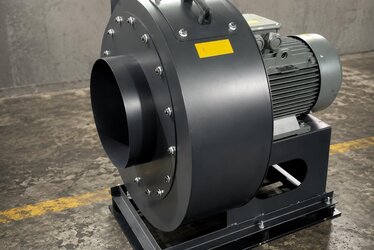
In the ready-mixed concrete industry, a plant stoppage is not only a loss of production; it means mixer trucks waiting on the road, missed pouring slots committed to sites, and customer losses that can reach contractual penalties. Behind a significant part of plant stoppages lies a wrongly selected or late-supplied electric motor: a motor straining on the cement screw, an undersized power tripping the thermal on the aggregate belt, a drive locking up at start-up in the mixer. This article addresses, one by one, every heading that companies installing, operating or overhauling a concrete batching plant must watch in motor supply — specifically for mixer, screw, belt and vibrator motors. As an electric motor manufacturer producing in Turkey since 1979, HEM Motor is a supplier that has provided motors to hundreds of plants; it delivers its IE3 and IE4 motors in the 0.55–355 kW range from strong stock in Turkey, with same-day shipment for most items. In this guide you will find which motor is needed at which point of your plant and what to watch for when requesting a quote.

The Motor Inventory in a Concrete Plant: Which Motor Runs Where?

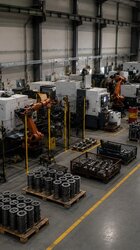
A typical stationary concrete plant contains 15–25 electric motors, gathered into four main groups. The first and most critical group is the mixer drive: the heart of the plant — a twin-shaft or planetary mixer — turns with one or two 30–75 kW motors depending on capacity. The second group is the cement and mineral-additive screws: the screws carrying cement from the silo to the weigh hopper are driven by geared motors in the 7.5–18.5 kW range. The third group is the aggregate line: the collecting (aggregate) belt and the inclined transfer belt call for 11–37 kW motors, while the under-bin dosing belts are around 4–7.5 kW. The fourth group is the auxiliary equipment: it consists of the compressor, water pump, additive dosing pumps and bin vibrators, and contains many small motors in the 0.55–15 kW band.

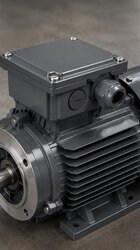
Setting up this entire inventory from a single source, with the same brand, brings the operation two concrete benefits: the spare-motor stock simplifies (one spare of the same frame rescues multiple points) and a solution is produced with a single contact in case of failure. On HEM Motor's concrete plant electric motors page you can review the motor options prepared by plant equipment.

Beton santrali mikser ve agrega bandi elektrik motorlari

Mixer Motors: The Plant's Most Critical Drive

The decisive factor in mixer motor selection is the start-up condition. The mixer never starts completely empty; because of concrete left from the previous batch and sudden loading, the motor has to get going against high resistance. That is why a high starting-torque rotor design and a robust cast iron body are essential in mixer motors. On the speed side, 1500 rpm (4-pole) is standard; the drive reaches the mixer shaft through a reducer. In twin-shaft mixers, it is important that the characteristics of the two motors are matched so that load sharing is balanced; using motors of two different brands and different series leads to synchronisation problems. IP55 protection class and F-class insulation are the minimum requirements on the mixer floor, where cement dust and wash water are intense. A 37 kW motor for a 1 m³ mixer, 55 kW for a 2 m³ mixer, and 75 kW and twin-motor solutions for 3 m³ and larger mixers are the common field equivalents; the exact value must be confirmed with the drive power given by the mixer manufacturer.

Screw Motors: Resistance to Cement Dust and Jamming

Cement screws are the point in a concrete plant where motors are replaced most often, and the reason is usually the wrong selection. The screw's load fluctuates widely according to the fill ratio; cement that jams in the silo or hardens after absorbing moisture severely strains the motor at start-up. For this reason, two rules apply to a screw motor: first, one step above the calculated power is chosen (for example, if the calculation shows 9 kW, 11 kW is taken); second, the motor must definitely be high starting-torque. The speed is generally chosen as 1500 rpm and reduced to the screw speed by a reducer; on long screws, a combination of a 1000 rpm motor and a lower-ratio reducer reduces vibration. It is common for screw motors to be coupled to the reducer with a flange (B5 or B35) connection; the dimension of the reducer input flange must definitely be confirmed before ordering. Because cement dust penetrates everywhere, IP55 protection and cooling fins cleaned at regular intervals are the two conditions for keeping the winding temperature under control.

Belt and Dosing Motors: The Power of Standardisation

The aggregate collecting belt, the transfer belt and the under-bin dosing belts are the most numerous group of motors in the plant by count. The selection criteria in this group are relatively simple: 1500 rpm speed, geared drive, B3 or B5 connection and 4–37 kW power depending on the belt. The real commercial gain comes from standardisation: a plant that chooses all its belt motors from the same series secures its whole line with two or three spare motors. For belt motors running in the open during winter months, F-class insulation and IP55 protection; for dusty conditions in summer, periodic fin cleaning are again valid rules. Because dosing belts have frequent stop-starts, setting the motors' thermal protection according to the starting current prevents unnecessary stoppages.

Pump, Compressor and Vibrator Motors: A Small but Critical Group

The plant's small motors are often neglected; yet the failure of a 1.5 kW motor in an additive dosing pump also stops production by spoiling the batch recipe. In water pumps, 3000 rpm (2-pole) motors are common, and IP55 protection against moisture is essential. In screw compressors, because operation is in continuous regime, the efficiency class is important; on a 22 kW compressor motor under load 12 hours a day, an IE4 choice quickly pays for itself. In bin vibrators, small motors with vibration-resistant, reinforced bearings are used, and periodic checking of these motors' mounting bolts is the simplest way to prevent body cracks. The most correct commercial move in the small-motor group is to buy all of them in the same order, from the same manufacturer as the main motors: shipment becomes single, the warranty is gathered under one roof, and your total negotiating power increases.

Summary Table: Concrete Plant Motor Selection Matrix

EquipmentTypical PowerSpeedConnectionCritical Point
Mixer (1-3 m³)37–75 kW1500 rpmB3 / B5High starting torque, matched motor pairs
Cement screw7.5–18.5 kW1500 / 1000 rpmB5 / B35One step larger power, jamming tolerance
Aggregate belt11–37 kW1500 rpmB3 / B5Standardisation, spare plan
Dosing belt4–7.5 kW1500 rpmB3 / B5Thermal setting suited to frequent start-up
Water / additive pump0.55–15 kW3000 / 1500 rpmB3 / B5IP55, moisture resistance
Compressor7.5–22 kW1500 / 3000 rpmB3Efficiency in continuous regime (IE4)

IE3 or IE4? An Efficiency Calculation for the Plant Operator

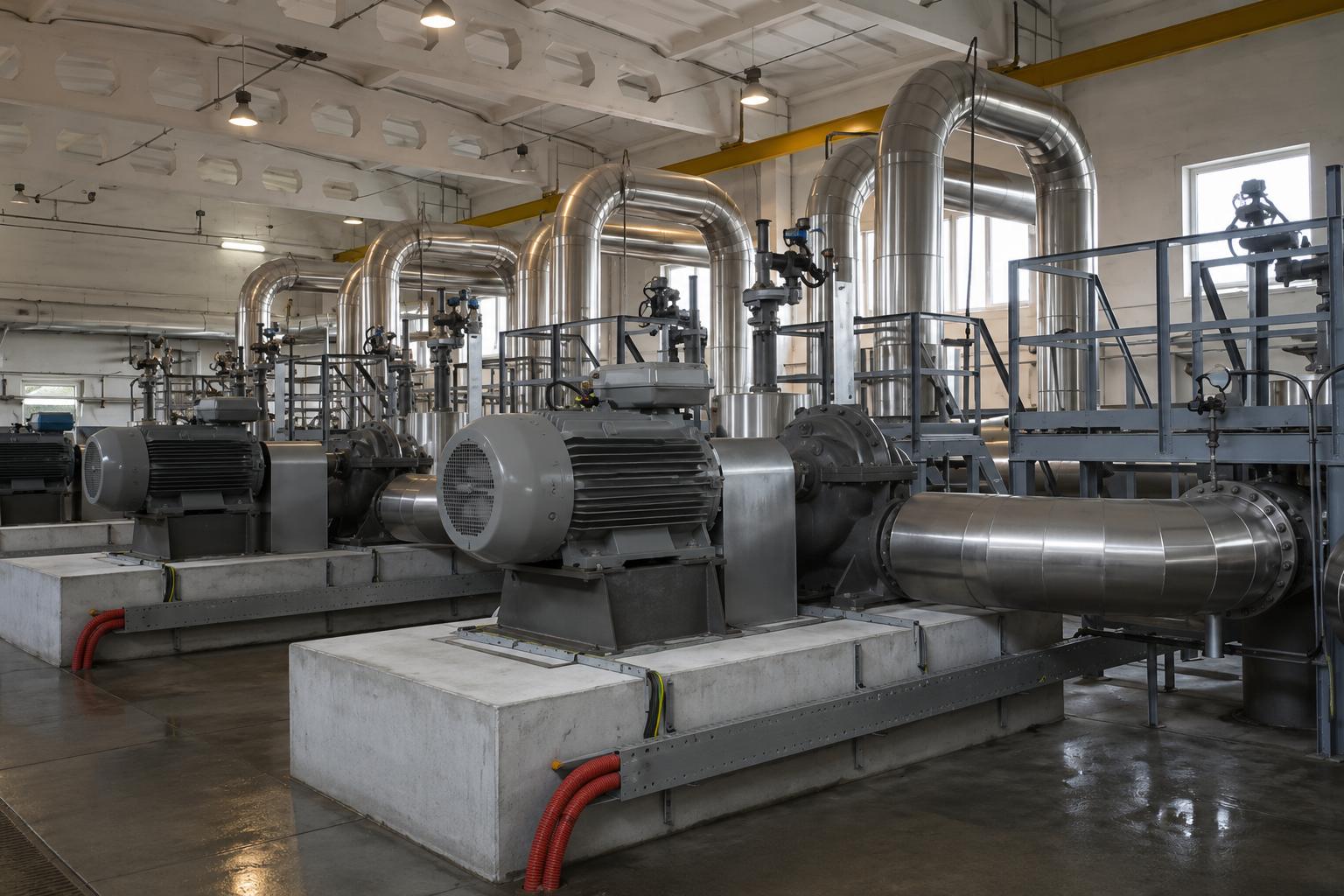
Concrete plant motors run 10–16 hours a day in season; in continuously loaded motors such as the mixer and compressor, the efficiency class shows up directly on the electricity bill. IE4-class motors run with lower losses than IE3, and the difference reaches thousands of kilowatt-hours a year on 55–75 kW mixer motors. In newly installed plants we recommend choosing IE4 for all main drives, and in overhauls at least upgrading the mixer and compressor motors to IE4. In HEM Motor's high-efficiency electric motors category, all plant powers are offered from stock in both classes. The second benefit of a high-efficiency motor is that it runs cooler: as the winding temperature drops, the insulation life lengthens, which widens the failure interval in the dusty, hot plant environment.

Cimento helezonu ve reduktorlu motor grubu beton santralinde

Mobile Plants and Generator Operation

In site-type mobile plants the motor inventory is similar to a stationary plant; however, two additional conditions come into play. The first is transport-induced vibration: in plants that are frequently dismantled and set up, the motor mounting bolts and cable glands must be checked at every installation, and cast iron should be preferred as the body. The second is generator supply: on sites without grid power, the starting current of large motors determines the generator size; starting the mixer and screw motors with a soft starter and sequencing the start-ups with automation shrinks the generator investment. In mobile plant projects, if you share the supply information together with the motor list, we include the starting recommendation in the quote.

The Cost of the Wrong Choice and Late Supply

Let us make it concrete with an example: in a plant producing 400 m³ of concrete a day, if the cement screw motor burns out and the replacement motor arrives 5 days later, the lost production reaches 2,000 m³; for most operations, this is a turnover loss many tens of times the price of the motor. The same failure turns into a few hours of unplanned maintenance if there is a spare motor in stock or the supplier can deliver the next day. The second cost item is wrong power selection: an undersized screw motor trips the thermal throughout the season and each time creates 20–30 minute micro-stoppages; the annual sum of these micro-stoppages often turns, unnoticed, into a large loss. The third is mechanical incompatibility: a motor that arrives with the wrong flange dimension holds up the line while an adapter is fabricated in the field. The common solution to these three risks is the same: verifying the motor list together with the manufacturer before ordering and making a spare plan for critical items.

A Realistic Scenario: Overhaul of a 100 m³/h Plant

Let us take the motor overhaul of a ten-year-old plant with a capacity of 100 m³ per hour. The on-site survey produces this picture: two 37 kW motors on the 2 m³ twin-shaft mixer (one rewound, its efficiency dropped), 11 and 15 kW motors on three cement screws (one tripping the thermal frequently), a 30 kW motor on the aggregate belt, 22 kW on the transfer belt, 5.5 kW motors on four dosing belts and a total of 30 kW in the pump-compressor group. The overhaul decision takes shape as follows: both mixer motors are replaced with a matched IE4-class pair (replacing a single motor creates load imbalance), the thermal-tripping 11 kW screw motor is stepped up one power to 15 kW IE3, the belt motors are standardised with IE3 motors from the same series, and one spare each of 15 kW and 5.5 kW is taken into stock. The total investment stays below the plant's two-day turnover; in return, the risk of motor-related unplanned downtime throughout the season is minimised. This entire overhaul can be shipped from HEM Motor stock in one go, with a single delivery note.

The Information to Prepare Before Requesting a Quote

The way to get a fast and accurate quote in motor supply is to convey the request completely. The information our sales team asks of plant customers is as follows:

  • Equipment list: The equipment the motor will connect to (mixer, screw, belt, pump) and its capacity if available.
  • Power and speed: The kW value and speed (3000/1500/1000/750 rpm); if unknown, a photo of the existing motor's nameplate.
  • Connection type: B3 foot-mounted, B5/B14 flange or B35 combined; for motors coupled to a reducer, the flange dimension.
  • Operating regime: Daily operating hours, start-up frequency and seasonal intensity.
  • Efficiency preference: IE3 or IE4; if you are undecided, we offer a recommendation according to your operating hours.
  • Lead-time expectation: Planned overhaul or urgent failure replacement; the urgency determines the shipment plan.

Once these six pieces of information reach us, our quote comes back to you the same day with stock confirmation and a delivery date. Sending a photo of the nameplate closes all technical questions in one go in most cases.

The Manufacturer Advantage in Supply: Stock, Lead Time and Warranty

The three questions a concrete plant operator should ask in motor supply are: is it in stock, will it be on site tomorrow, who is the warranty contact? In the importer channel the answers to these three questions are often uncertain; in the manufacturer channel they are clear. HEM Motor keeps all common plant powers in its factory stocks in Turkey; shipment or vehicle organisation is done on the order day, the warranty process runs directly with the manufacturer, and even years later an exact equivalent in the same frame size is supplied. If you also have a stone-crushing plant on the aggregate side, you can review our crusher and stone-crushing plant motor selection guide, and for your feed and mill investments our feed factory and mill motors selection article.

Frequently Asked Questions

Will a HEM Motor fit one-to-one in place of a foreign-brand motor in my plant?

Yes. Because our motors are produced in standard frame dimensions, the shaft diameter, shaft height, flange and foot dimensions are fully compatible with all brands of the same frame size. It is enough to send a photo of the existing motor's nameplate; our sales team confirms compatibility and comes back with stock and lead-time information.

Should I replace the mixer motor one at a time or as a pair?

In twin-shaft mixers it is important that the two motors are of matched characteristics for load sharing. When one of the motors fails, we recommend replacing both together, of the same series and the same efficiency class; an old-new mix causes the new motor to constantly take excess load and age prematurely.

Which motors should I keep as spares before the season?

The minimum spare list is this: one screw motor (of your most common power), one belt motor (of your medium power) and one of the common power of your dosing belts. Instead of keeping a spare for the mixer motor, working with a manufacturer capable of next-day delivery is more economical for most operations; the HEM Motor stock system is built exactly for this need.

Get a Quote

Send us your motor list or photos of your existing motors' nameplates for your concrete plant; let us make the power, speed and connection verification free of charge, and convey a manufacturer price the same day together with stock availability and delivery time. You can reach us by phone at +90 (532) 345 49 86 or create a written request through our contact us page. HEM Motor: manufacturer assurance since 1979, strong Turkey stock and delivery that does not keep your plant waiting.