English
 Türkçe




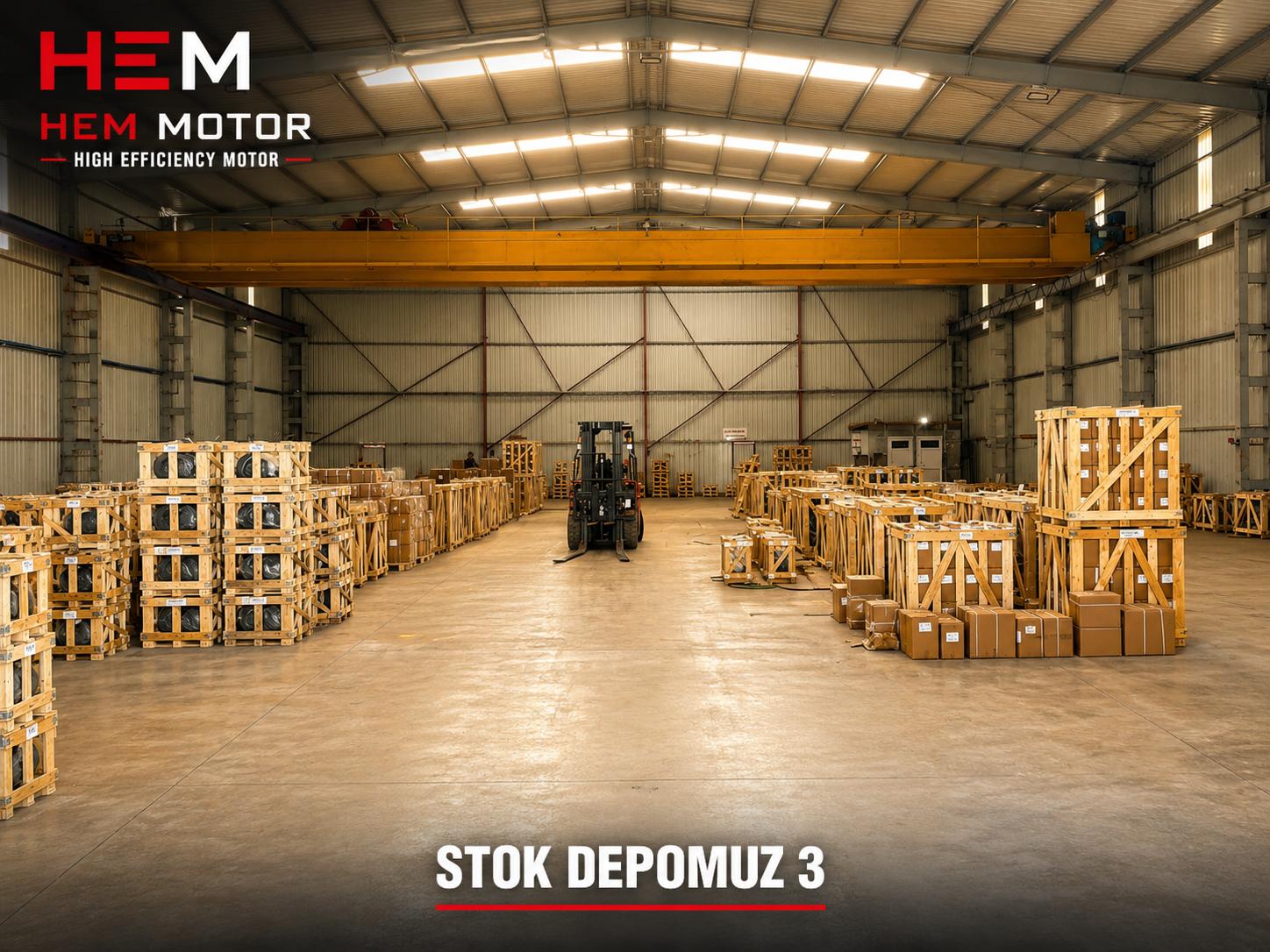

When a production line stops, time begins to flow in its most tangible form: money. For a facility in Anatolia, whether the replacement motor reaches the site in 24 hours or 72 hours is often a decision more expensive than the price of the motor itself. Because every hour of downtime means lost production, delayed shipments and idle labour. In this article we explain how to plan electric motor shipping to facilities in Anatolia; in which case freight, courier and project delivery options come into play; and what to check on receipt.
Two basic variables set the shipping channel: the motor's weight and your urgency. Small, light motors can be sent by box and courier speed, while heavy large-frame motors require freight (overland transport) or project transport. Choosing the right channel optimises both delivery time and shipping cost. The wrong channel means either needless cost or a critical delay.
The Two Variables That Set the Shipping Channel
For each motor the right delivery channel is set at the intersection of weight and urgency. Once you clarify these two variables, only the suitable packaging and tracking remain.
1. Weight and Frame Size
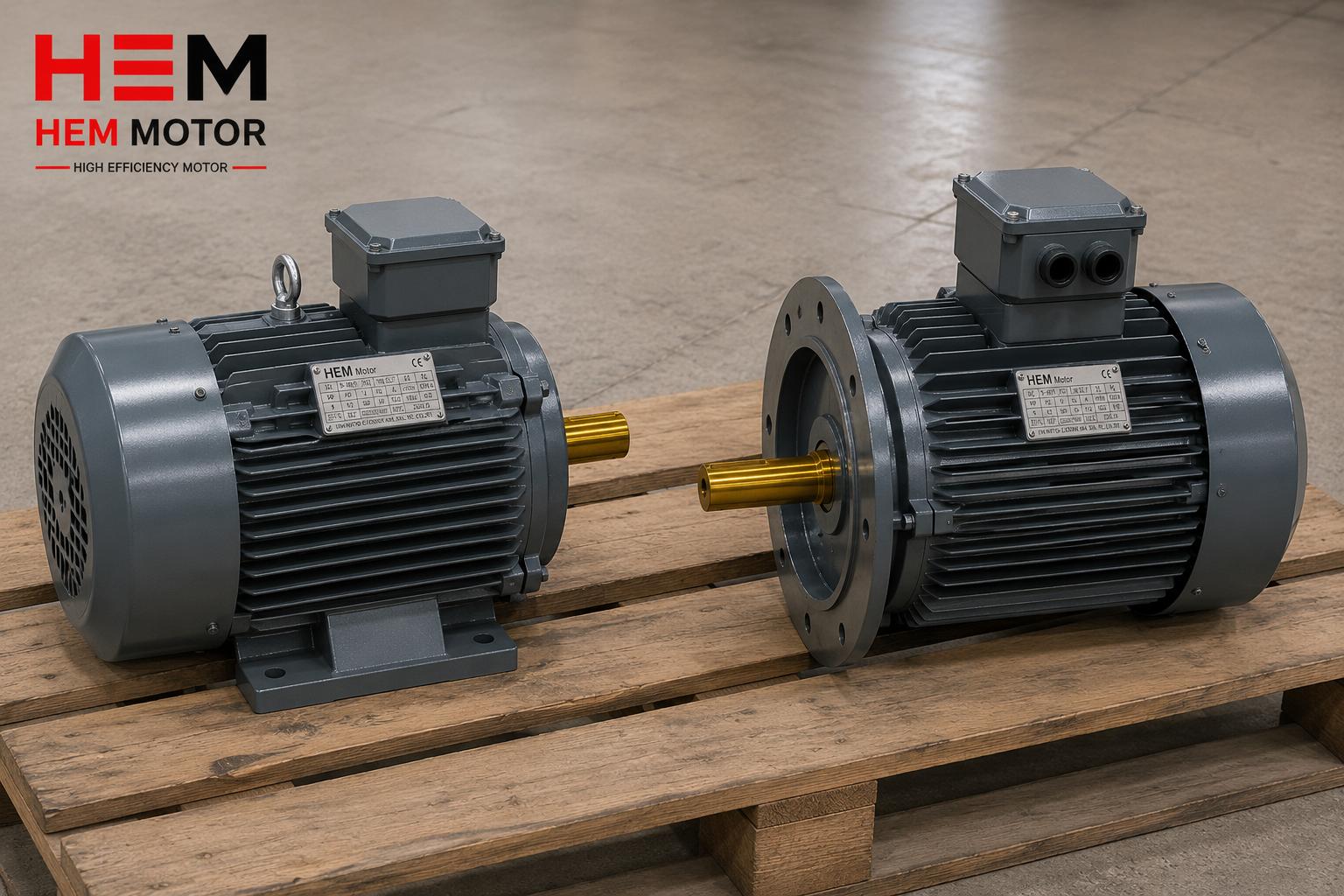
The motor's IEC frame size directly sets its weight. Small-frame motors start at a few kilograms, while large-frame cast iron motors can reach hundreds of kilograms. As weight rises, courier shipment becomes impossible and forklift loading and freight transport come into play.
- Small motors: Usually sent by box, standard or express courier.
- Medium frames: Palletised and carried by freight (overland transport) firms.
- Heavy frames: Sent by project transport that requires a forklift, crated or palletised.
2. Urgency
The second variable is how long the line can stay down. For a stopped production line urgency is highest; here the fastest channel is chosen, accepting extra cost if needed. For a planned renewal or spare purchase, the standard, economical channel can be preferred.
Delivery Channels: Which One When?
Three basic channels stand out in shipping. Each has its own speed, cost and packaging characteristics.
Courier (Express Delivery)
The most practical method for light, small motors. It offers door-to-door delivery and is easy to track. In emergencies the express courier option shortens delivery time markedly. However, due to weight and size limits, it suits only small-frame motors.
Freight (Overland Transport)
The standard channel for medium and large motors. Palletised motors are carried via freight firms to the nearest branch of the facility or directly to the address. It offers the best cost-speed balance and has regular runs to many points in Anatolia.
Project Transport
Used for very heavy frames, bulk shipment of multiple motors or deliveries requiring special equipment. It includes forklift loading-unloading, crating and insured transport. It is preferred for large facility installations and bulk motor replacements.
Correct Packaging: Preventing Damage in Transit
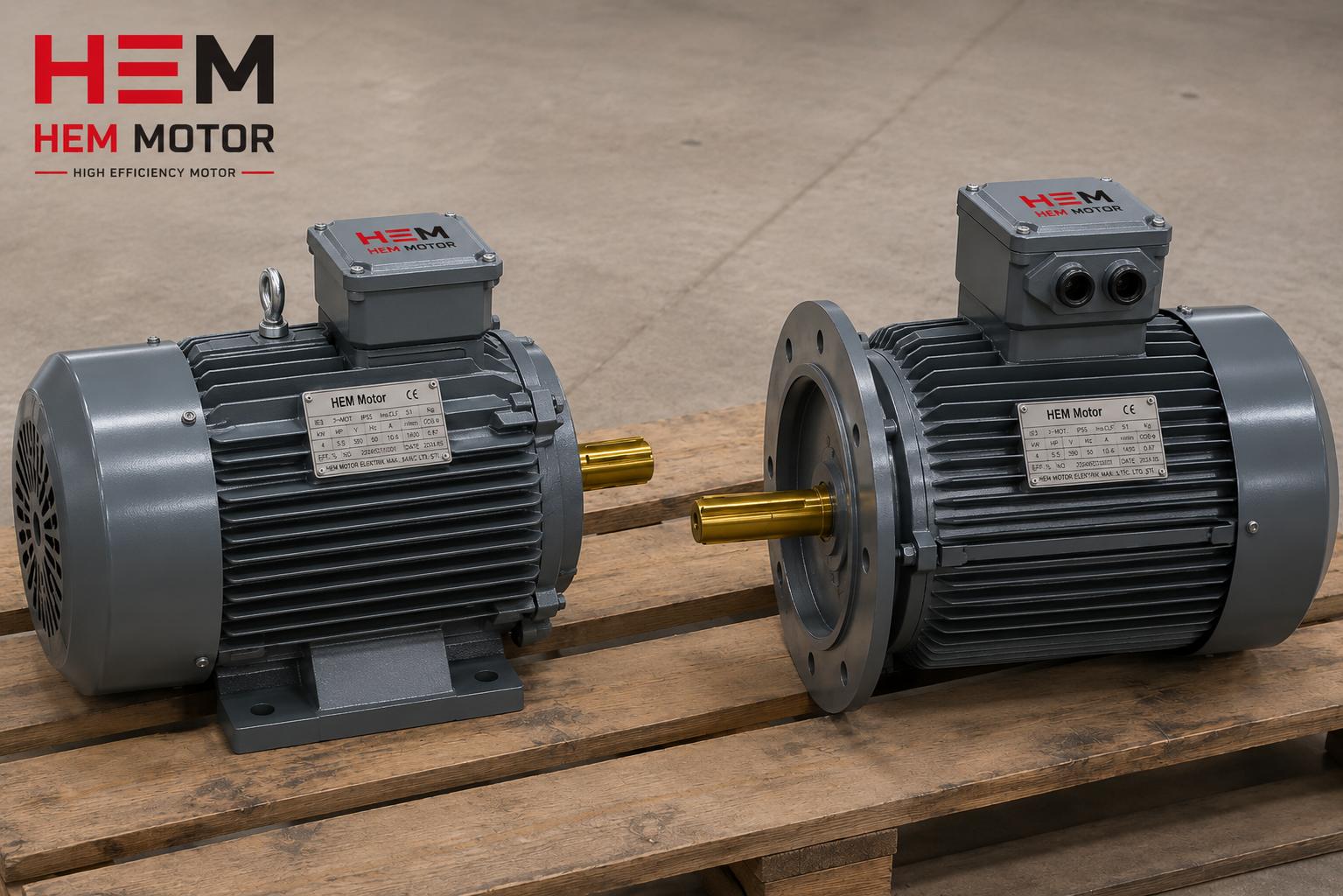
Even if a motor leaves intact, the impact it takes in transit can affect warranty coverage and post-delivery performance. So packaging is the invisible but critical part of shipping.
- Pallet and fixing: Medium and large motors are fixed to a pallet; the shaft and terminal box are protected against impact.
- Shaft protection: The shaft end is supported so it is not damaged by impact during transport.
- Moisture and dust: The motor is protected against moisture and dust with stretch wrap and a suitable cover.
- Label and waybill: The motor's power, speed and frame data with shipping documents are added to the package.
What to Check on Receipt?
When the motor reaches the site, the first thing to do before commissioning is the transport-damage inspection. This inspection also prevents future warranty disputes.
- External inspection: Before opening the packaging, look for impact marks on the outside of the package.
- Shaft and fan cover: Check whether the shaft end is bent or the fan cover crushed.
- Terminal box: Verify the box and connections are in place.
- Turn the shaft by hand: If the shaft turns freely the bearings are most likely sound.
- Label check: Verify that the arriving motor's nameplate exactly matches the power, speed and frame you ordered.
If damage is found, it is important to document it before commissioning the motor. For a motor that arrives undamaged, the next step is the commissioning and first-startup checklist. These two processes complete each other: first the damage check, then the first-startup steps.
Shipping Planning Across Anatolian Geography
Anatolia holds widely differing industrial basins and transport conditions. Delivery to a facility in an organised industrial zone does not require the same planning as delivery to a mine site in a mountainous region. So when choosing the shipping channel, not only weight and urgency but also the destination's transport infrastructure must be taken into account.
- Organised industrial zones: Thanks to regular freight runs and easy forklift access, delivery is fast and smooth.
- Mine and construction sites: Road conditions can be tough; forklift or crane unloading for heavy frames should be planned in advance.
- Remote districts: Receiving at the freight branch and completing the last mile by local transport is often the most economical method.
A good shipping plan requires knowing the destination's features in advance. Is there a forklift, is a crane needed, is the address in a location a truck can enter? When these questions are answered, delivery is completed without surprises.
Being Prepared for Emergency Replacement
When a motor fails suddenly, the most valuable thing is time. The most effective way to speed up the emergency replacement process is to be prepared. If the nameplate data of the facility's critical motors is recorded in advance, the information set to send the supplier at the moment of failure is ready.
- Nameplate archive: Record in advance the power, speed, frame size, mounting type and shaft diameter of critical motors.
- Standard step preference: Motors in standard power-speed steps can be supplied quickly from stock.
- Delivery address clarity: The full address and the receiving person's details should be ready so shipping is not delayed.
- Unloading readiness: A forklift or crane should be on hand at the site for heavy motors.
This preparation dramatically shortens the time between "the motor failed" and "the new motor is running". A well-planned emergency replacement process is often the single factor that minimises the cost of downtime.
Managing Downtime Cost Through Shipping
Shipping is in fact a matter of downtime cost management. A standard motor that can be supplied quickly from stock, sent through the right channel, minimises a line's downtime. So critical facilities want to know in advance the stock status and delivery times of the motors they use most. Planning in advance which motor will arrive where, in what time and with what packaging, dramatically reduces the time lost in an emergency.
At the heart of supplying the right product in the right time lies a clearly defined need. You can reach our wide product range and stock logic from our homepage; for the most sought-after combinations you can review our IE3 stock guide.
FAQ
Which channel is fastest for motor shipping?
The fastest channel depends on the motor's weight. For light, small-frame motors express courier offers the shortest door-to-door time. For medium and large motors, freight (overland transport) gives the best speed-cost balance. Very heavy frames and bulk shipments require project transport. If urgency is high, the fastest suitable channel is chosen, accepting extra cost.
What should be done first when the motor is received?
A transport-damage inspection should be done before commissioning. Impact marks on the outside of the package are checked, the shaft end and fan cover are inspected, the terminal box is verified, and the shaft is turned by hand to test bearing freedom. Finally, the arriving motor's nameplate is compared with the ordered power-speed-frame data. If there is damage, it must be documented before commissioning.
Why is shipping time so important for a stopped line?
Because every hour of downtime is direct production loss, and this loss is often many times the price of the motor. The difference between 24 and 72 hours creates a serious cost through missed shipments and idle labour. So the stock status and delivery time of critical motors should be known in advance, and the right channel planned before an emergency.