English
 Français
 Türkçe
 Español
 Русский




A water utility just across the border orders twelve motors for a new pumping station. They are loaded on time, then sit at the border crossing for three days: the number of packages on the packing list does not match the number on the truck, and the customs tariff code on the invoice differs from the one in the buyer's declaration. When the motors finally reach site, a second problem appears. The station's starters are star-delta, but the motors are rated to run in star on that supply.
When electric motors are supplied from Türkiye to neighbouring countries, most problems come not from the motors but from order information scattered across too many places. Technical data sits in one email, the Incoterm in another thread and the document requirements arrive at the last minute. This article sets out the contents of a single export order file that both the overseas buyer and the shipper can work from.
Does the motor suit the destination supply?
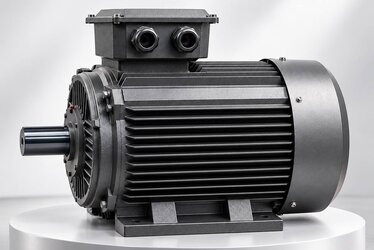
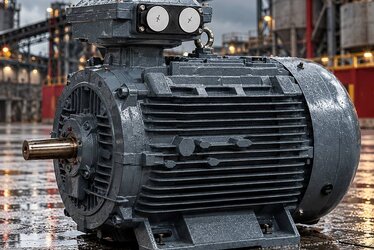
A question that is often skipped on domestic orders moves to the top when a border is involved: is the motor right for the supply at the site it is going to? The voltage and frequency on the nameplate must match the local supply. HEM Motor's three-phase ranges are built for 50 Hz networks, with 230/400 V or 400/690 V windings.
If the destination network uses a different voltage or frequency, that is a separate matter to raise with the technical team before ordering; a motor run outside its nameplate values will not deliver the expected speed, torque or temperature rise. How voltage and frequency affect a motor is explained in motor rated voltage and frequency.
As the opening example shows, the starting method belongs in this part of the file too. For star-delta starting on a 400 V network, the motor must be rated 400/690 V. If the buyer states the panel arrangement on the order, the risk of an unusable motor on site disappears. The technical section should also cover:
- Power, number of poles and speed.
- Mounting arrangement (B3, B5, B14, B35 or vertical) and flange size.
- Protection class and site conditions: will ambient temperature exceed +40 °C or altitude exceed 1000 m?
- Whether the motor runs on a drive, and whether options such as winding temperature sensors or anti-condensation heaters are needed.
Altitude is easy to overlook for sites on high plateaus in some neighbouring countries. Above 1000 m the air cools less effectively, so the motor may need derating or the next size up. Stating the site altitude on the order avoids the question coming up after delivery.
Delivery terms: where cost and risk change hands
Incoterms rules define the point at which transport cost and the risk of loss or damage pass to the buyer. The ones seen most often in motor exports are:
- EXW (Ex Works): the buyer collects from the seller's warehouse and handles loading, export clearance and transport. It suits buyers with their own forwarder and customs broker, but whose name the export declaration goes under must be agreed first.
- FCA (Free Carrier): the seller clears the goods for export and hands them to the carrier the buyer nominates. A balanced split for road freight.
- CPT / CIP: the seller pays carriage to the named place, while risk passes to the buyer when the goods are handed to the first carrier. Under CIP the seller also arranges insurance.
- DAP (Delivered at Place): the seller brings the motors to an address in the buyer's country; import clearance and duties stay with the buyer.
Whatever the rule, the quotation must state which delivery point the price refers to. Reading a quote line by line is covered in reading a motor proforma and quotation.
The document set and who prepares it
A large share of border delays come from small inconsistencies between documents. A typical motor export needs:
- Proforma invoice, the basis for payment and the production or dispatch plan.
- Commercial invoice with the motor description, quantity, unit price, Incoterm and customs tariff code.
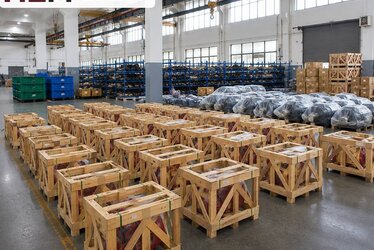
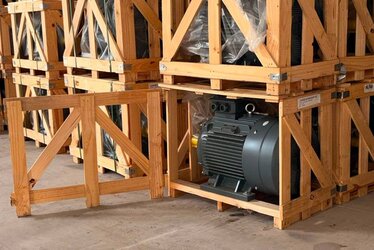
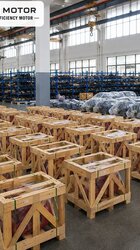
- Packing list giving each package or pallet number, contents, net and gross weight and dimensions.
- Transport document: a CMR for road freight, a bill of lading for sea freight.
- Any additional documents the destination country asks for, such as a declaration of conformity, technical data sheet or country-specific certificates.
The buyer's own customs broker knows best which documents their customs will require. Passing that list to the shipper at order stage means the paperwork is ready before dispatch. Check too that the product description on the invoice, on the packing list and on the package markings is identical. HEM Motor's catalogue lists conformity frameworks such as CE, EAC and ISO 9001; which document applies to a given model is shared on request. What a CE declaration covers is explained in CE marking and the declaration of conformity.