English
 Français
 Türkçe
 Español
 Русский

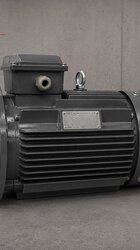
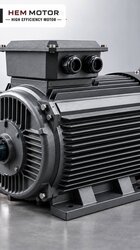
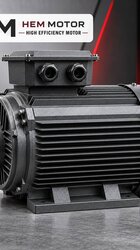
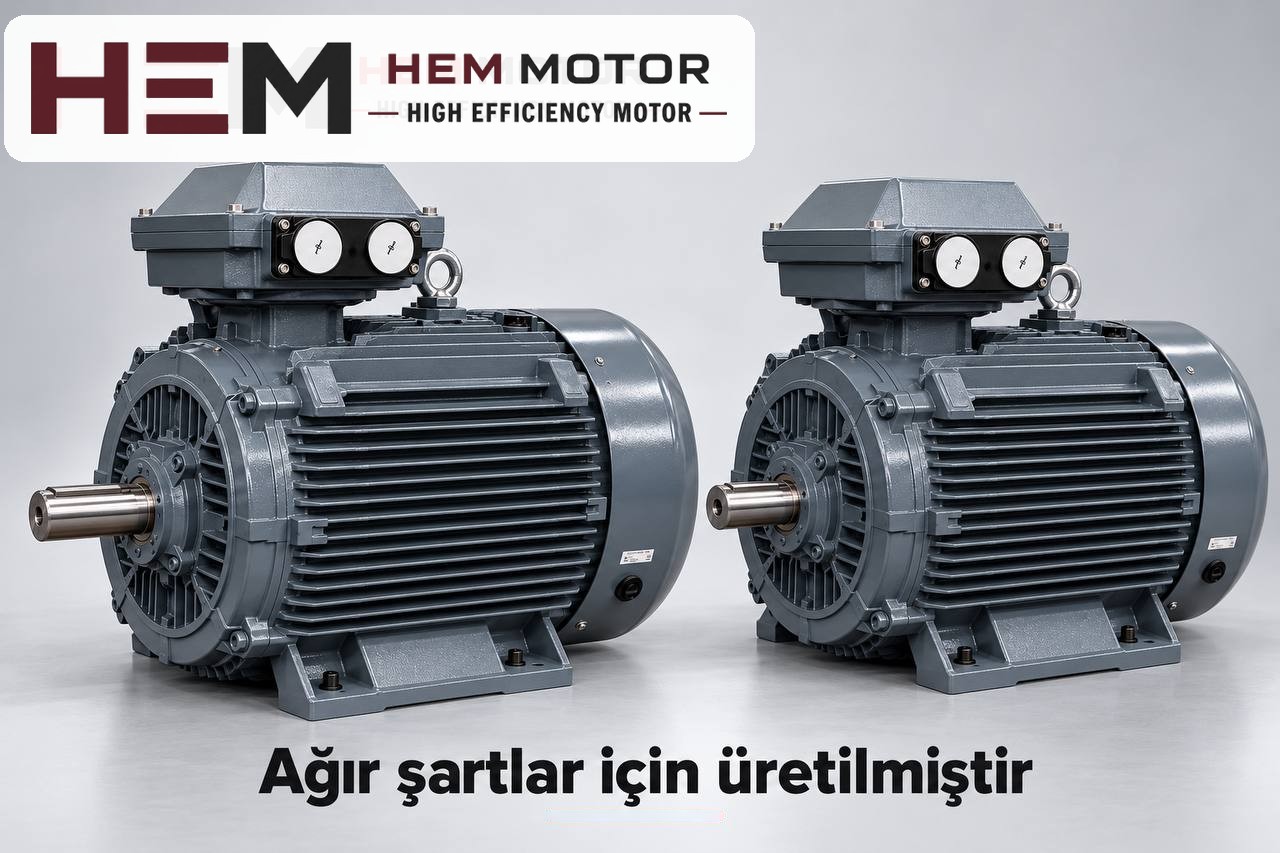

When choosing a replacement for a three-phase motor whose nameplate shows HP (horsepower), the right approach is to convert the HP value to kW and fit it to a standard kW rating: 1 HP equals about 0.746 kW, but motors are not built to the exact result of that calculation; they are built to IEC standard power ratings. In this article we bring together the kW equivalents of common values from 1/3 HP to 220 HP, HEM Motor's 1,500 rpm (4-pole) model for each rating, and the HP–kW mix-ups most often seen in the market.
The relationship between HP and kW: a short reminder
Two different horsepower definitions are found on electric motors. Mechanical (imperial) horsepower is 1 HP ≈ 0.746 kW, while metric horsepower (PS, CV) is ≈ 0.735 kW. The difference is negligible at small powers; what matters in motor selection is which standard rating the calculated value falls on. From HP to kW: kW = HP × 0.746; from kW to HP: HP = kW ÷ 0.746.
Calculating the power a machine needs from load, speed and torque is a separate topic; this article focuses on finding the correct model for a motor whose power is already known or read from an old nameplate.
HP – kW – model table (1,500 rpm, 4-pole)
The HP values in the table are the equivalents given for each model in HEM Motor product records; the kW column is the standard IEC power rating. The model column shows the 4-pole motor with 1,500 rpm synchronous speed; rated speed is the nameplate value. Between 0.55 and 11 kW there are also cast iron frame options with the same power and code; the table links the aluminium frame version.
| HP | kW rating | Model (4-pole) | IEC frame | Rated speed | Frame |
|---|---|---|---|---|---|
| 1/3 HP | 0.25 kW | 71M1-4 | 71M | 1,340 rpm | Aluminium |
| 1/2 HP | 0.37 kW | 71M2-4 | 71M | 1,340 rpm | Aluminium |
| 3/4 HP | 0.55 kW | 80M1-4 | 80M | 1,400 rpm | Aluminium |
| 1 HP | 0.75 kW | 80M2-4 | 80M | 1,420 rpm | Aluminium |
| 1.5 HP | 1.1 kW | 90S-4 | 90S | 1,445 rpm | Aluminium |
| 2 HP | 1.5 kW | 90L-4 | 90L | 1,445 rpm | Aluminium |
| 3 HP | 2.2 kW | 100L1-4 | 100L | 1,450 rpm | Aluminium |
| 4 HP | 3 kW | 100L2-4 | 100L | 1,450 rpm | Aluminium |
| 5.5 HP | 4 kW | 112M-4 | 112M | 1,450 rpm | Aluminium |
| 7.5 HP | 5.5 kW | 132S-4 | 132S | 1,460 rpm | Aluminium |
| 10 HP | 7.5 kW | 132M-4 | 132M | 1,460 rpm | Aluminium |
| 15 HP | 11 kW | 160M-4 | 160M | 1,465 rpm | Aluminium |
| 20 HP | 15 kW | 160L-4 | 160L | 1,465 rpm | Cast iron |
| 25 HP | 18.5 kW | 180M-4 | 180M | 1,470 rpm | Cast iron |
| 30 HP | 22 kW | 180L-4 | 180L | 1,470 rpm | Cast iron |
| 40 HP | 30 kW | 200L-4 | 200L | 1,475 rpm | Cast iron |
| 50 HP | 37 kW | 225S-4 | 225S | 1,485 rpm | Cast iron |
| 60 HP | 45 kW | 225M-4 | 225M | 1,485 rpm | Cast iron |
| 75 HP | 55 kW | 250M-4 | 250M | 1,485 rpm | Cast iron |
| 100 HP | 75 kW | 280S-4 | 280S | 1,486 rpm | Cast iron |
| 125 HP | 90 kW | 280M-4 | 280M | 1,486 rpm | Cast iron |
| 150 HP | 110 kW | 315S-4 | 315S | 1,488 rpm | Cast iron |
| 180 HP | 132 kW | 315M-4 | 315M | 1,488 rpm | Cast iron |
| 220 HP | 160 kW | 315L1-4 | 315L | 1,488 rpm | Cast iron |
All models are for 50 Hz; up to 3 kW the winding is 230/400 V, and from 4 kW upwards it is 400/690 V (Δ/Y). If you are looking for a 2-pole (3,000 rpm) or 6-pole (1,000 rpm) motor, the frame may be different at the same kW rating; you can see those options on the product pages or with the filters in the store. For current values see our electric motor current table, and for torque values our torque table.
Why don't the HP values in the table match the exact calculation?
The HP equivalents in the table are rounded commercial values. For example, 4 kW ÷ 0.746 ≈ 5.36 HP, but in the market this motor is called "5.5 HP"; 0.75 kW is exactly 1.005 HP and is referred to as "1 HP". The reason is that motors are built to kW ratings, not to HP, and HP is used only as an approximate label.
So after converting the HP value on an old nameplate, match the resulting figure to the nearest kW rating. 10 HP × 0.746 = 7.46 kW corresponds to the 7.5 kW rating; 25 HP × 0.746 = 18.65 kW corresponds to the 18.5 kW rating. Small differences are not a selection error.
"5.5 HP" or "5.5 kW"? The most common mix-up
The situation that causes the most confusion in the market is that the same figure exists both as an HP and as a kW rating. When someone says "a 5.5 motor", one person may mean 5.5 HP (i.e. 4 kW, 112M-4) and another 5.5 kW (i.e. 7.5 HP, 132S-4). The same applies to "7.5": 7.5 HP = 5.5 kW, while 7.5 kW = 10 HP (132M-4).
- Always write the unit when ordering: "5.5 kW" or "5.5 HP".
- As the table shows, these two powers are in different frames (112M and 132S); a wrong choice also affects mounting.
- On belt-and-pulley machines, look at the old motor's nameplate rather than relying on the technician's verbal description.
- HP is more common on small single-phase motors; apply the same conversion when switching to three-phase.
To see power and speed combinations side by side, review suitable HEM Motor models and current prices.