English
 Français
 Türkçe
 Español
 Русский

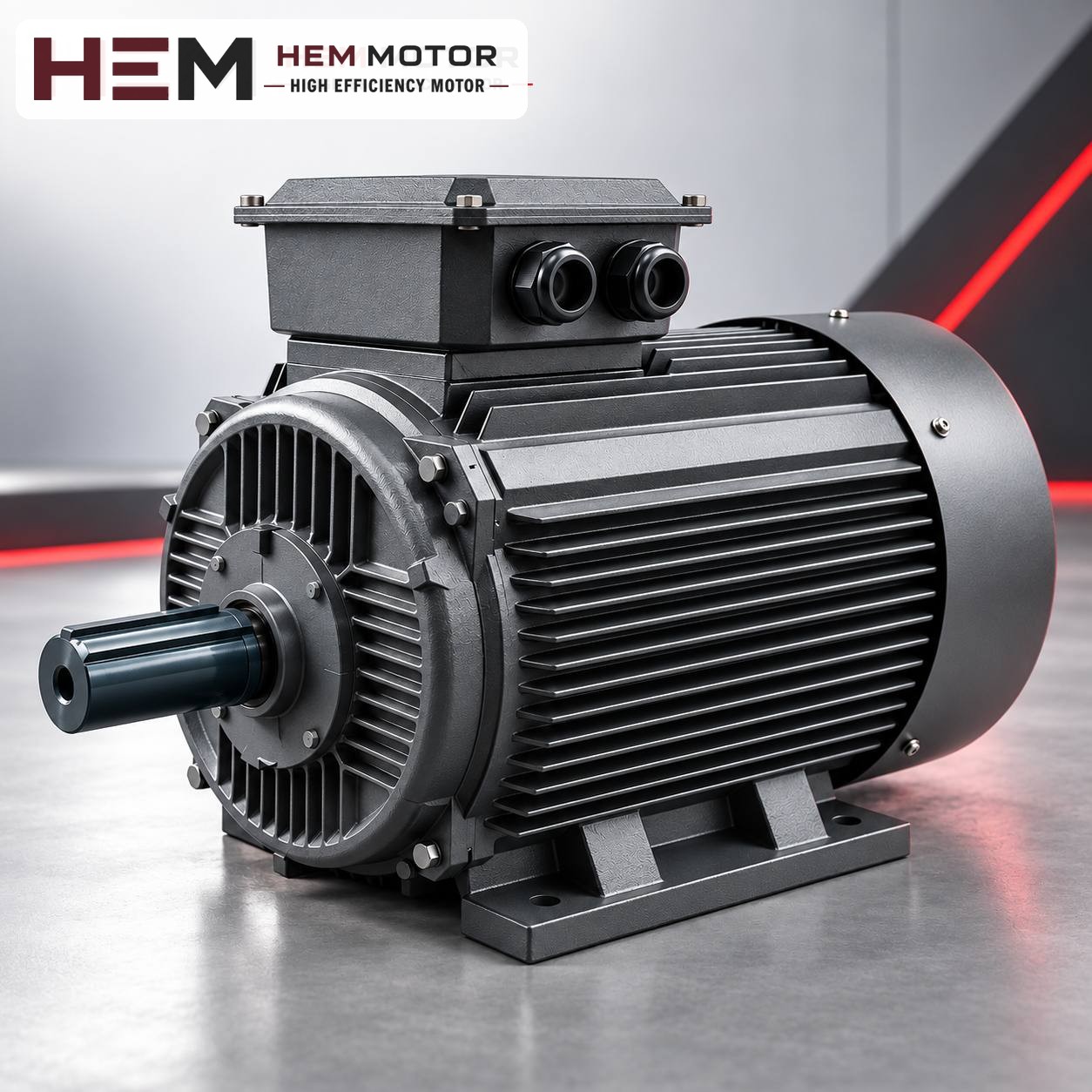

For anyone looking for a 22 kW (30 HP) motor, the first question is usually "1,500 or 3,000?". Both motors have the same power, but what they deliver to the machine is very different: a 3,000 rpm motor turns its shaft twice as fast and gives half the torque, while a 1,500 rpm motor gives twice the torque at half the speed. A motor at the wrong speed either drives the machine faster than necessary and overloads it, or never brings it to its operating point. This article explains how to choose the speed at 22 kW according to the way the machine is driven, and what to watch out for when considering a switch between the two speeds.
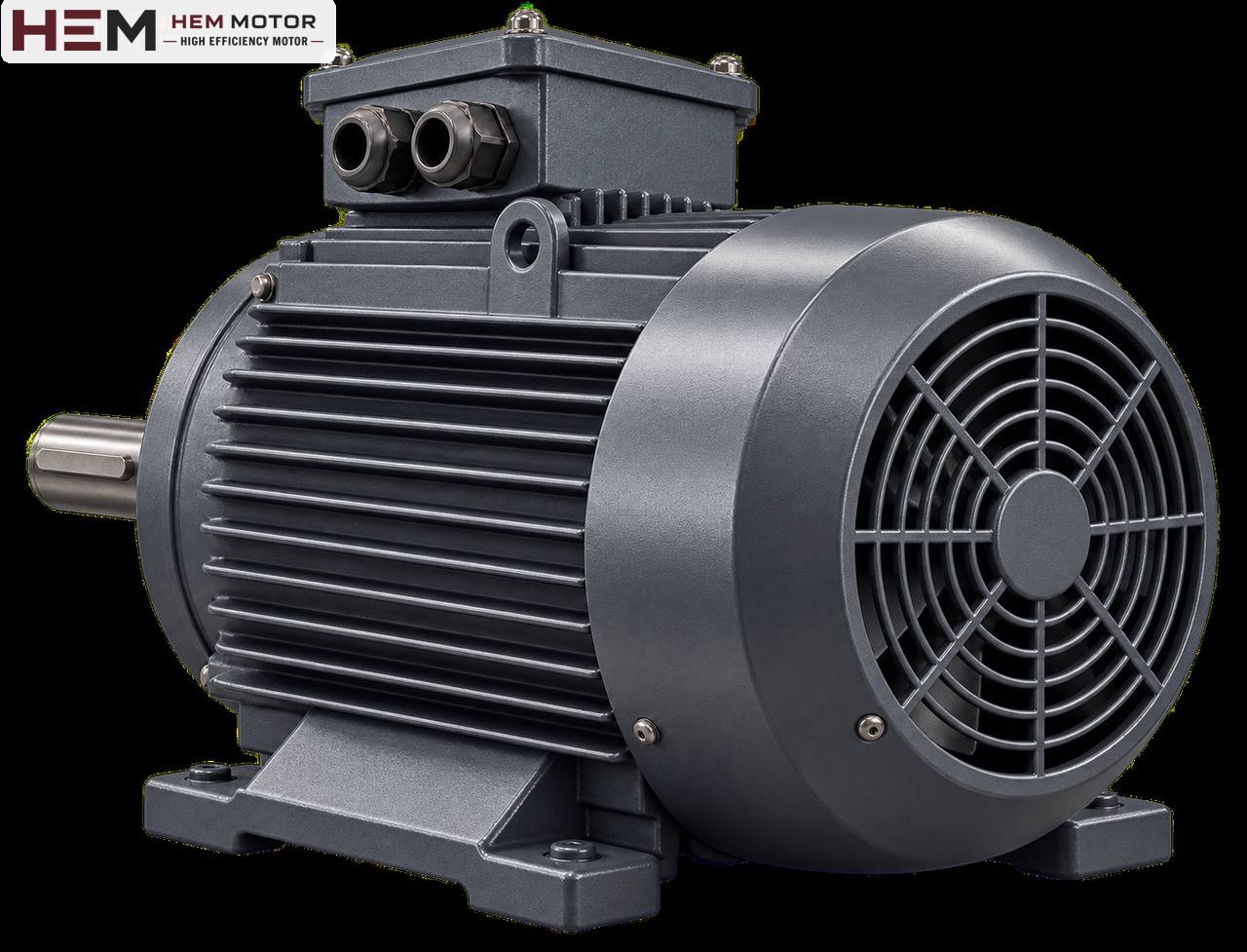
Values of the 1,500 and 3,000 rpm models at 22 kW
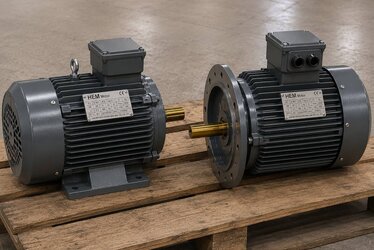
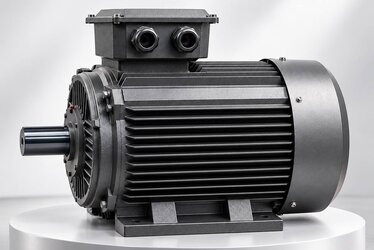
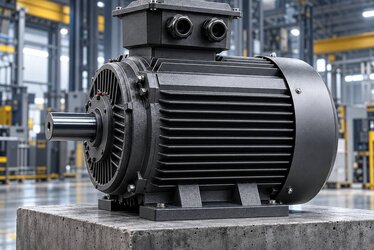
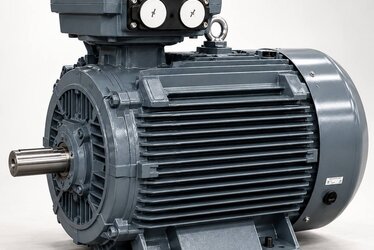
At HEM Motor, 22 kW is offered with a cast iron frame. The nameplate values of the 1,500 and 3,000 rpm models side by side are as follows:
| Feature | 180L-4 (4 poles) | 180M-2 (2 poles) |
|---|---|---|
| Synchronous / rated speed | 1,500 / 1,470 rpm | 3,000 / 2,955 rpm |
| IEC frame | 180L | 180M |
| Rated current (400 V) | 39.7 A | 38.5 A |
| Rated torque | 142.9 Nm | 71.1 Nm |
| Voltage | 400/690 V (Δ/Y), 50 Hz | 400/690 V (Δ/Y), 50 Hz |
| Product page | 180L-4 cast iron | 180M-2 cast iron |
Both models have IP55 protection and class F insulation. The currents are close to each other; the real difference is in torque and frame length. To carry twice the torque, the 1,500 rpm model sits in a longer 180L frame. Even though the shaft height is the same, the two frames differ in foot hole spacing and shaft end dimensions.
The machine decides the speed, not the motor
The starting point for choosing the speed is how fast the machine's shaft needs to turn. The connection between the motor and the machine determines how that speed is reached.
Direct coupled drive
If the motor shaft and the machine shaft are joined by a coupling, the machine turns at the motor's speed. In this case the speed is fixed by the machine's design speed and cannot be changed. If a 1,500 rpm motor is fitted to a centrifugal pump designed to run at around 2,950 rpm, the pump reaches only about a quarter of its head; conversely, fitting a 3,000 rpm motor to a pump designed for 1,450 rpm overloads both the pump and the motor. On a coupled machine, changing the speed means changing the machine.
Belt and pulley drive
In belt drives the machine speed is set by the pulley ratio, so on paper either motor can be used. However, to reach the same machine speed with a 3,000 rpm motor, the motor pulley must be smaller or the machine pulley larger. A small pulley leads to more frequent belt bending, higher belt tension and a greater side load on the shaft. For this reason, in belt drives that need a high reduction ratio (that is, when the machine turns slowly), a 1,500 rpm motor usually gives a better-balanced arrangement.
Gearbox drive
Gearboxes are selected for a particular input speed, and most standard gearboxes are rated for a 1,500 rpm input. Connecting a 3,000 rpm motor to the same gearbox doubles the output speed, halves the output torque and can push the bearings and seals on the gearbox input side beyond their permitted limit. On a geared drive, check the gearbox manufacturer's input speed limit before changing the motor speed. Other points to watch when connecting a motor to a gearbox are summarised on the motors for gearboxes page.
1,500 or 3,000: decision list
- 3,000 rpm (180M-2) may make sense: for direct-coupled centrifugal pumps and fans designed for high speed; for high-speed blowers and some compressors; in applications where the machine builder specifies a 2-pole motor.
- 1,500 rpm (180L-4) may make sense: for general-purpose machine drives; for geared conveyors, mixers and screw conveyors; for heavy-starting or high-torque loads; for belt drives that need a high reduction ratio.
- Check both options: belt-driven fans can use either speed; here the pulley size, belt speed and the permitted speed of the fan impeller are assessed together.
This list shows general tendencies; an exact speed or power cannot be recommended from the machine's name. Load, duty time, starting conditions and connection type must be evaluated together.