English
 Türkçe


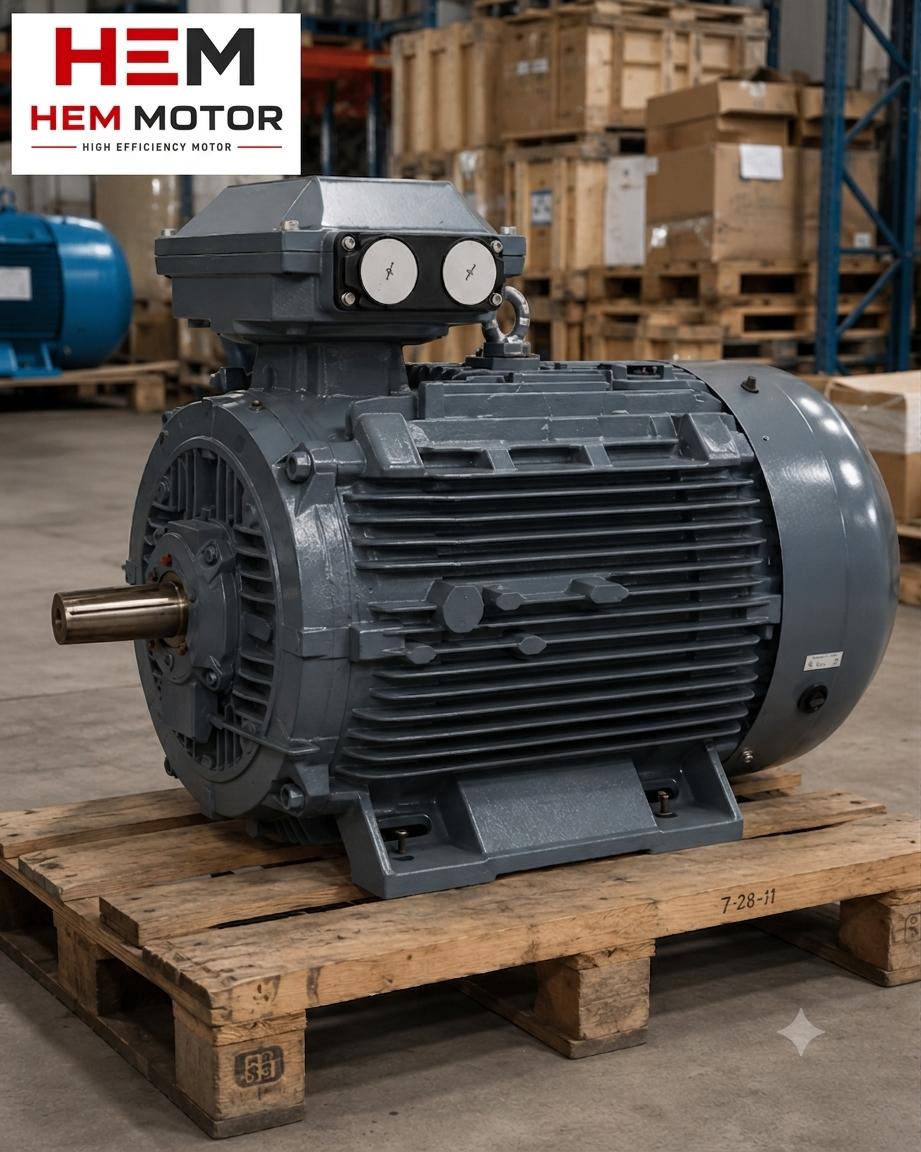

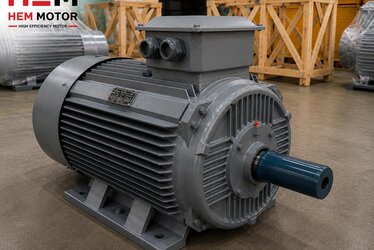
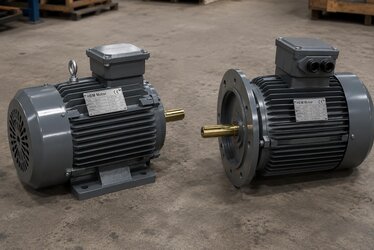
When buying an electric motor, how many years the motor will run without failure is as important as the power and efficiency class on the nameplate, and sometimes even more so. Because the real cost of an industrial motor is not the purchase price but the total cost of ownership (TCO) it creates over its life. One of the largest items in this cost is the bearing, the most frequently failing mechanical part of the motor. After winding failures, the most common cause of failure in electric motors is problems originating from the bearing; that is, bearing quality and the right selection largely determine the motor's life. This article addresses, from the purchasing decision standpoint, the quality signs that determine bearing life in cast iron body motors: what you should look at as a buyer, which details herald long life and which herald early failure. The aim is to give you concrete criteria that, without dismantling and inspecting the motor, let you distinguish a long-lived motor from a cheap but short-lived one as early as the quote and delivery stage. HEM Motor, as an electric motor factory manufacturing since 1979, supplies cast iron body motors with a quality bearing structure from Türkiye stock.
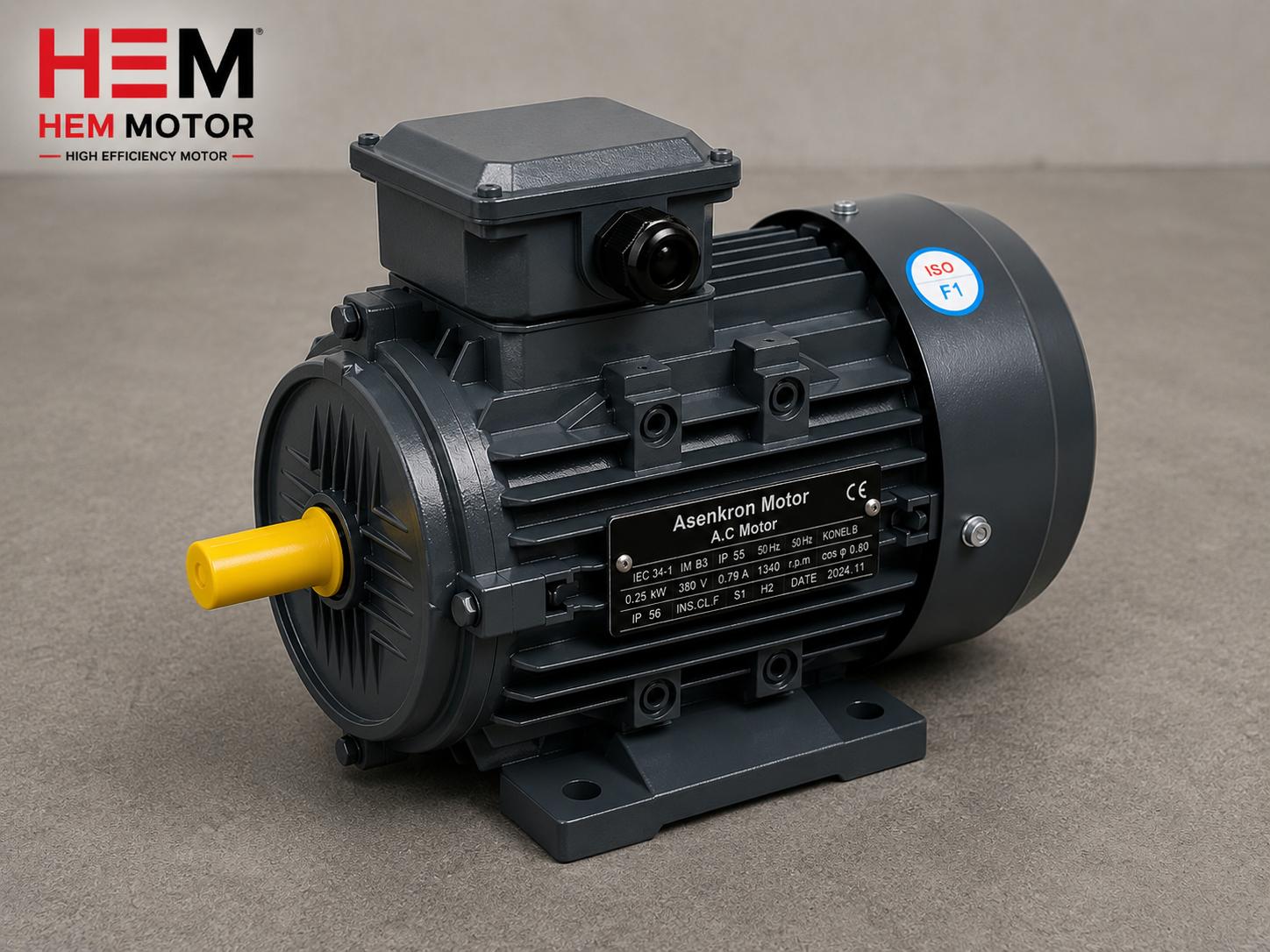
How Does a Cast Iron Body Extend Bearing Life?
A determinant of bearing life at least as important as the quality of the bearing is the body that carries the bearing. Most buyers think of the bearing as a stand-alone part; in fact, the bearing sits in its seat inside the body, and the behavior of the body directly affects how the bearing works. For this reason, a "good body" is as much a condition of long life as a "good bearing." A cast iron body has much higher mass and mechanical rigidity than aluminum. This mass damps the vibrations that arise during the motor's operation. Vibration is the bearing's number one enemy: a vibrating seat causes the balls and the raceway surfaces to fatigue with micro-impacts, the grease film to break down, and finally early wear. The damping capacity of cast iron lowers the vibration amplitude reaching the bearing, allowing the balls and the seat surfaces to fatigue less; this directly means a longer bearing life.
The second factor is thermal stability. A cast iron body distributes heat evenly and stays dimensionally stable; this ensures the geometry of the bearing seat is not distorted by temperature. When the geometry of the bearing bore is distorted, the bearing cannot distribute the load it carries evenly and fails early by being overloaded from one point. The rigid and stable structure of cast iron keeps the bearing bore within tolerance for longer. Aluminum bodies expand more than cast iron as they heat up; in a cycle of continuous heating and cooling, this expansion-contraction difference can over time lead to loosening at the bearing seating surface. The lower expansion tendency and high rigidity of cast iron reduce this risk, making the bearing's tight and even seating in the body long-lasting. For a detailed evaluation comparing cast iron and aluminum bodies in terms of environment and application, you can take a look at our cast iron or aluminum frame guide; this article, on the other hand, focuses specifically on the quality signs in terms of bearing life.
Quality Signs to Look For When Buying
When buying a motor you cannot directly measure the bearing and seat quality; but you can look at several concrete indicators that give a sign of long life. Knowing these signs lets you distinguish a motor with a low price but a short life from a motor that is a little more expensive at first sight but will run without failure for years. The three headings below are concrete quality criteria you can ask about at the quote stage and check at delivery as a buyer.
Quality Bearing and the Right Grease
The brand and class of the bearing are the backbone of the motor's life. The high-precision class bearings of well-known manufacturers offer a much smoother surface and a more stable tolerance than cheap counterparts; this means quieter operation and a longer life. The grease inside the bearing is at least as critical as the bearing: the temperature range, consistency and life of the grease must be selected according to the application. In a motor running at high temperature, standard grease breaks down early and the bearing seizes by being left dry. In a quality motor, the bearing comes filled with long-life grease suited to the operating temperature and speed. When buying, asking about the motor's bearing type and grease class gives direct information about its life.
A practical quality sign is also the motor's running sound and vibration. A motor with smooth bearings and good balancing is quiet and vibration-free when running idle; when you put your hand on the body, a smooth, uniform vibration is felt. A crackle, a rhythmic tapping or a growing hum is a sign of an early problem in the bearing or a low-quality seat. When receiving a new motor, a short idle running test is the fastest way to confirm these quality signs by eye and ear. The insulation class (F) and protection class (IP55) on the nameplate are also indirect quality indicators; because a well-insulated and protected motor protects the bearing region against moisture, dust and excessive heat and therefore extends bearing life.
Grease Nipple: Re-Greasable Structure
In high-power and continuously running motors, the grease nipple is an important quality sign. Thanks to the grease nipple, the bearing can be re-greased at certain intervals while running, without dismantling the motor. This makes it possible to renew the grease when its life is up, without leaving the bearing to run dry, and significantly extends bearing life. In continuously running heavy-duty applications, preferring a motor with a grease nipple can protect the bearing for years with a planned lubrication maintenance. While lifetime-greased (sealed) bearings are sufficient at small powers, a re-greasable structure is an important advantage for long life at large powers. In a motor with a grease nipple, the grease inlet and outlet channels being correctly designed also ensures the old grease is purged and the new grease reaches the bearing; this detail determines whether the lubrication actually works. At the purchasing stage, for a motor that will run continuously and heavily, asking whether there is a grease nipple and what the recommended lubrication interval is clarifies the motor's maintenance plan from the start and secures bearing life.
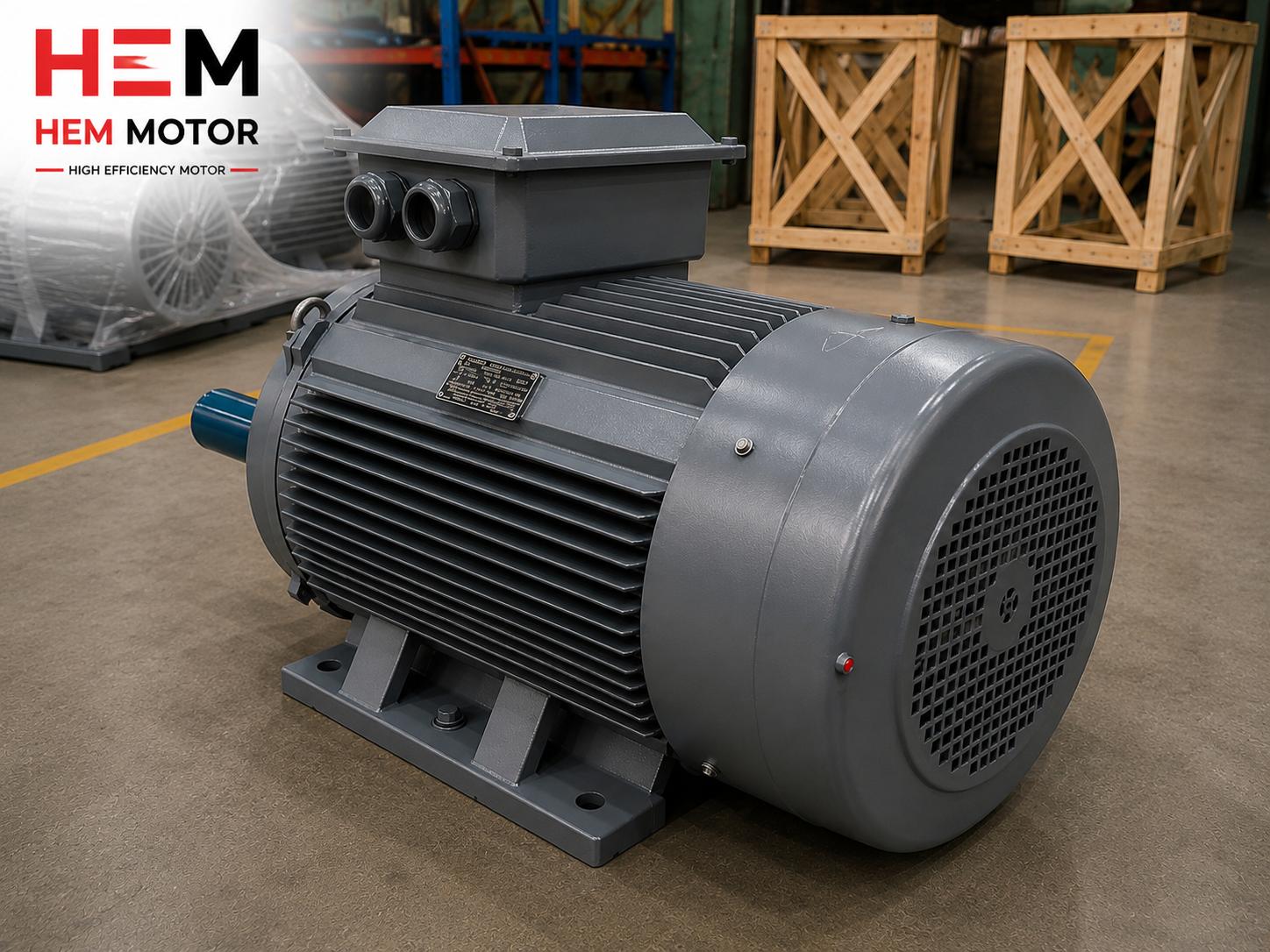
Bearing Selection According to Load Type
Not every application loads the bearing the same way, and the right bearing type must be selected according to the load character. This begins with the buyer describing their application correctly to the seller.
Radial load (belt-pulley drive): In a motor running with a belt and pulley, the pulley applies a continuous sideways force on the shaft. This radial load may require a higher load capacity bearing (for example a roller bearing at large powers) instead of a standard ball bearing. In applications where the belt tension is high, an inadequate bearing selection is the most common reason for the motor's early failure.
Axial load (vertical mounting, pump drive): In motors mounted vertically or connected directly to a pump, a thrust force arises along the shaft axis. If a bearing arrangement that will carry this axial load is not selected, the bearing is overloaded from one direction and fatigues quickly. This point is especially important in vertically running motors.
Impact load (crusher, jaw crusher, heavy duty): In heavy-duty applications such as stone crushing, jaw crushers and similar, a continuous impact load is placed on the motor. For these applications, a reinforced bearing structure and a vibration-resistant design are essential. The HEM range includes, for such heavy work, cast iron body models suited to heavy-duty conditions with high starting torque and a reinforced bearing structure such as mining sector electric motors.
Speed (pole count) is also a factor affecting bearing load and life. In high-speed (2-pole, ~3000 rpm) motors the bearing turns faster; this means the grease and surface quality become more critical. In low-speed (6-pole, ~1000 rpm) high-torque motors, the mechanical load on the bearing comes to the fore. The speed suited to your application and the bearing suited to it must be considered together; you can find in detail how the right pole/speed decision is made in our asynchronous motor pole selection guide.
For the right bearing selection, clearly stating your application at the purchasing stage (belt-pulley or coupling, vertical or horizontal, is there an impact load) directly determines the motor's life. A motor that comes with the wrong bearing type fails early in its application even with the highest-quality bearing. For example, a motor connected directly with a coupling places an additional radial and axial load on the bearing when the coupling is not aligned correctly; therefore both the right bearing selection and alignment at assembly are important together. Describing your drive method and the type of your machine to the seller ensures both that the motor with the right bearing arrives and that there is long life after assembly.
Long Life = Low TCO
The real importance of bearing and seat quality in the purchasing decision emerges in the total cost of ownership (TCO). A motor with a cheap bearing that cannot damp vibration may have a low purchase price; but at every failure production stops, labor and spare part costs arise for the bearing replacement, and production is lost while the motor is dismantled and reinstalled. In a continuously running facility, the cost of a single unplanned stoppage often exceeds the motor's price difference many times over. Within the total amount you pay over a motor's life, the purchase price is often a small share; the truly large items are energy consumption and the failure/downtime cost. Because a quality bearing and a solid body lower both of these large items at once, investing in the right quality signs means savings over the long term.
A bearing failure usually develops not suddenly but gradually. First a slight hum or a temperature rise begins, then the vibration and noise grow, and finally the bearing seizes and locks the shaft and the motor stops. This gradual progression takes much longer in a quality bearing and can be caught with planned maintenance; in a low-quality bearing, it can turn into a failure in a short time without warning. Therefore a quality bearing provides not only a longer life but also the chance to notice the failure in advance and intervene in a planned way. This is an indirect but important TCO advantage that lowers the risk of unplanned stoppage.
In contrast, a cast iron body motor with a quality bearing and correctly selected for the application runs without failure for years, minimizing both the maintenance cost and unplanned stoppages. For this reason, when evaluating electric motor prices, you must look not only at the listed price but at the motor's expected life, the bearing quality and the downtime cost it will create in case of failure together. HEM's cast iron body electric motors are produced with this logic, with the aim of long life and low TCO through a quality bearing and a solid body structure. The matching of the frame size with the power is also important in terms of bearing load; you can find the details of the right frame size selection in our cast iron motor frame size guide. For the entire cast iron range, you can review our efficient electric motors product category. To see all our guide content about cast iron body motors collectively, you can also take a look at our cast iron body motors guide section.
Frequently Asked Questions
Does a cast iron body really affect bearing life?
Yes, it directly affects it. The high mass and rigidity of the cast iron body damp the motor's operating vibration. Since vibration is the bearing's greatest wearer, lower vibration means less ball and seat fatigue, and therefore a longer bearing life. In addition, because cast iron stays thermally stable, the geometry of the bearing seat is not distorted by temperature; this supports the bearing carrying the load evenly and providing a long life.
Is it essential to buy a motor with a grease nipple?
It depends on the power and operating duration. In small-power, occasionally running motors, a lifetime-greased (sealed) bearing is sufficient and a grease nipple is not needed. However, in high-power, continuously running heavy-duty motors, a grease nipple is an important advantage; because it allows the bearing to be re-greased at planned intervals without dismantling the motor and does not leave the bearing to run dry when the grease's life is up. In continuously running facilities, preferring a motor with a grease nipple significantly extends bearing life.
Why is the bearing type important in the order?
Because every load type requires a different bearing. A belt-pulley drive creates a radial load, vertical mounting and pump drive create an axial load, and heavy work such as a crusher creates an impact load. If you do not clearly state your application in the order, a standard bearing is fitted to the motor and it can fail early under the wrong load. A motor that comes with the right bearing type runs without failure for years in the same application; that is why stating your drive method and load character at the quote stage is critical. Especially in applications where the belt tension is high and a large pulley is used, this information can determine whether the motor will fail in years or within months; that is why we recommend describing your application in as much detail as possible.
Get a Quote
Send us in which application (belt-pulley, coupling, pump, crusher, etc.) and under which conditions you will run your motor; let us recommend a motor with the right bearing type, grease class and, if needed, a grease nipple and a heavy-duty cast iron body in a single quote. As HEM Motor, we supply cast iron body IE3/IE4 motors between 0.55 and 355 kW with a quality bearing structure from Türkiye stock with fast shipping. Reach us right away at +90 (532) 345 49 86 or fill out the form on our contact us page; let our technical team plan the longest-lived motor solution for your application together with you. When the right bearing, the right grease and a solid cast iron body come together, your motor runs for years with low maintenance and a low total cost.