English
 Türkçe

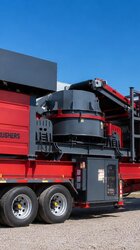
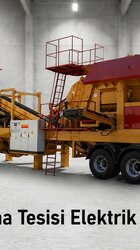
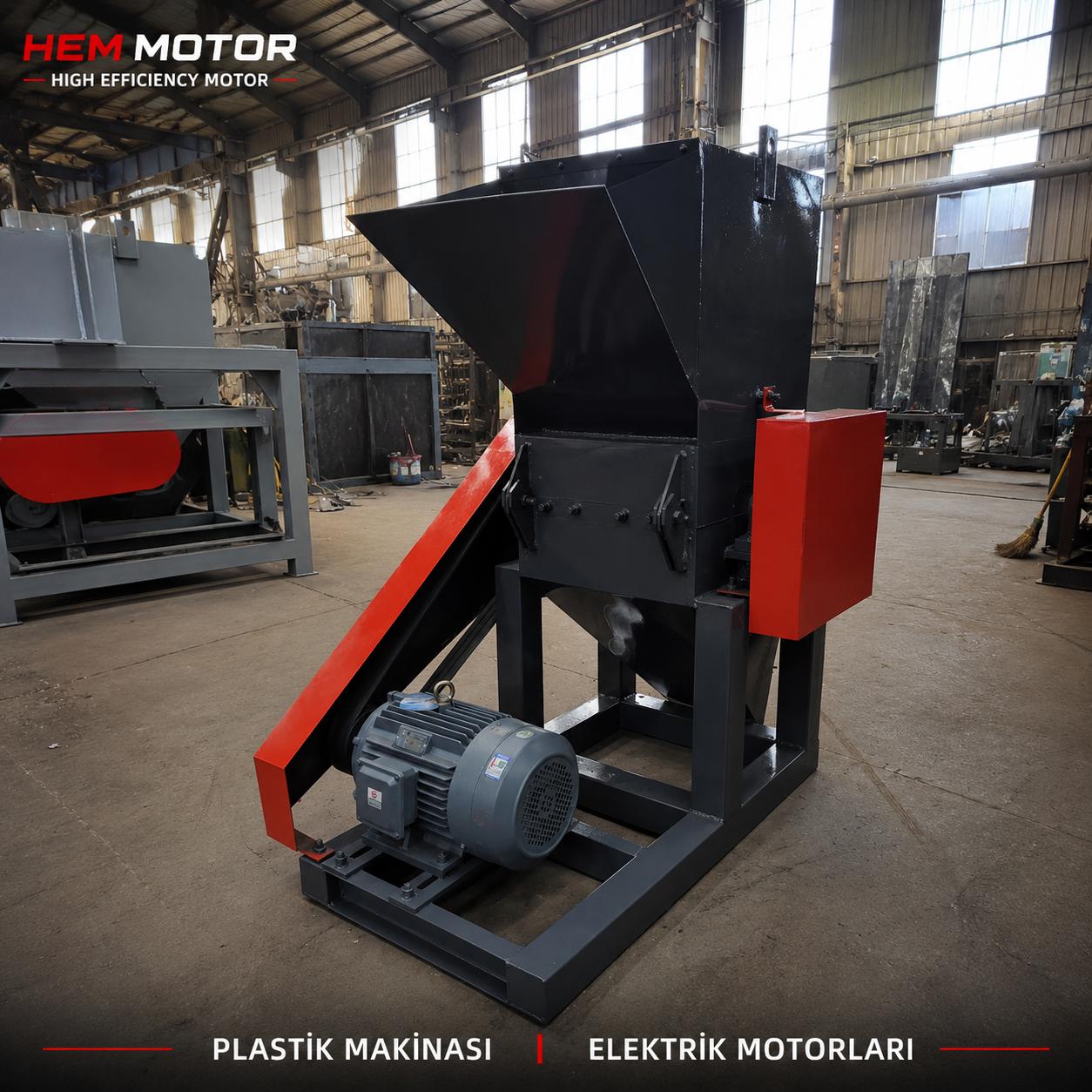

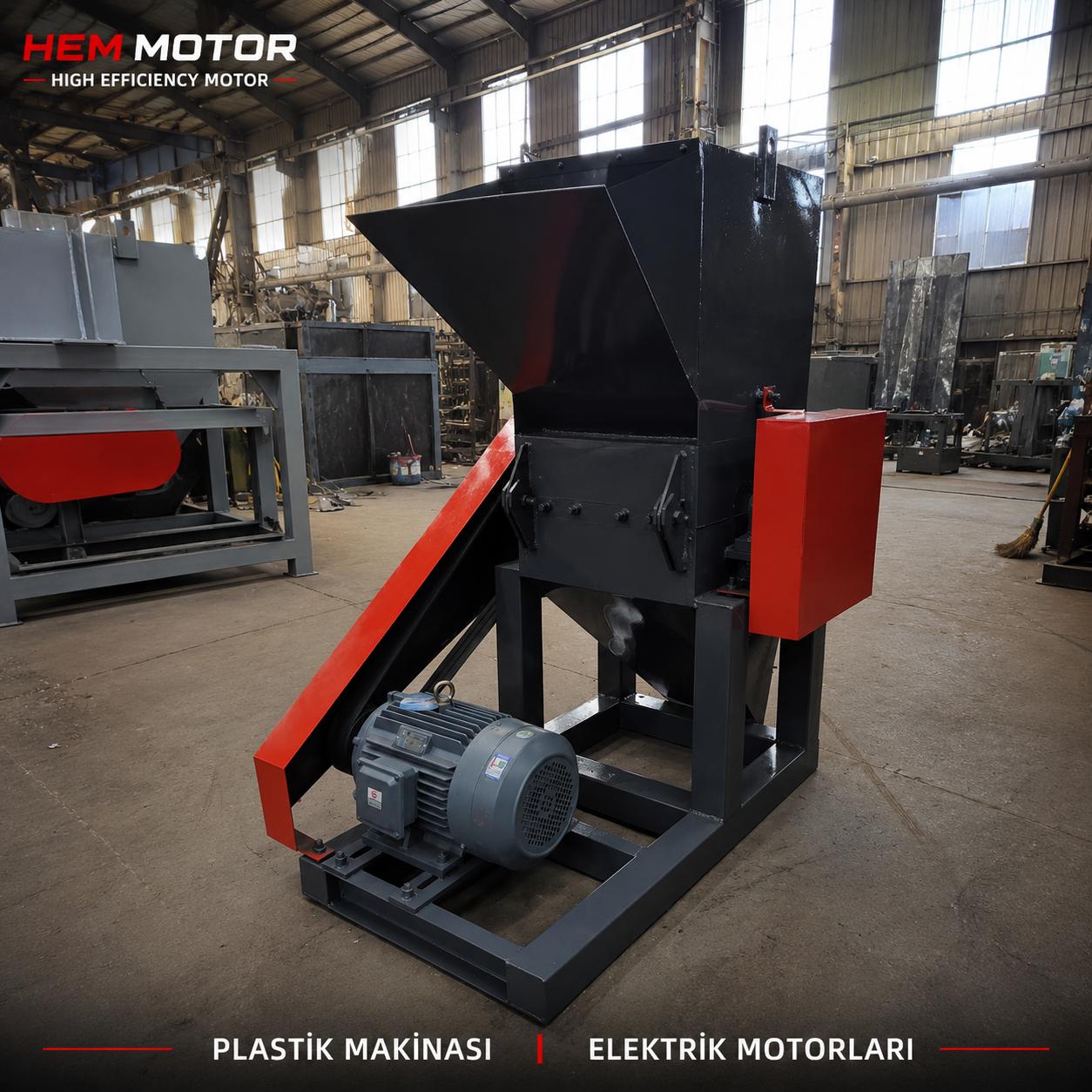
In crusher and stone-crushing plants, the moment the motor is stressed the most is the initial start. A heavy flywheel mass and a crusher with material left inside demand very high starting torque and a long high starting current from the motor. A wrongly chosen starting method stresses both the motor and the plant's electrical infrastructure; the right method extends the motor's life and prevents grid fluctuations. As both a manufacturer and supplier, HEM Motor provides high starting-torque, cast iron body three-phase motors and asynchronous motors for crusher applications, and recommends direct on line (DOL), star-delta, soft starter and variable frequency drive (VFD) options to suit your application. This guide compares crusher-motor starting methods from a buyer's perspective.
Why Is Starting Critical on a Crusher? The High Starting-Torque Problem
Whether jaw, impact or cone type, a crusher is a machine with high moment of inertia. Its large flywheel mass requires the motor to produce far more torque than normal during start. Moreover, if material was left in the crusher after the previous stop, the motor must start under load; this lengthens the start time and raises the starting current.
In direct starting, the starting current can reach 6-8 times the rated current. Combined with a long start time, this high current can cause the motor to overheat, protection relays to trip and voltage to collapse on the grid. So the right starting method on a crusher motor is not just a convenience but a necessity for the plant's reliable operation. We cover the correct motor power and speed selection for a crusher in our electric motor selection for a crusher and stone-crushing plant article.
Direct On Line (DOL): When Is It Enough?
Direct On Line starting connects the motor directly to the grid at full voltage. It is the simplest and cheapest method; a single contactor and thermal protection suffice. Because it provides high starting torque, it is mechanically advantageous on crushers that must start under load.
However, DOL's limit is the high starting current it creates. On small-power crushers and in plants with a strong grid, DOL is acceptable. On high-power motors the starting current strains the grid capacity, and soft starting methods become necessary. Especially on generator-powered sites, the DOL starting current creates a serious problem; we cover this in our motor selection on generator-powered sites article.
Star-Delta Starting: Advantage and Its Limit on a Crusher
Star-delta starting first starts the motor in a star connection at low voltage, then switches to a delta connection as speed rises. It cuts the starting current to about one third, reducing grid strain. Its cost is reasonable and it has been widely used in industry for years.
However, in the star connection the starting torque also drops to about one third. This is the critical point on a crusher: if the crusher must start under load, the low star torque may not be enough to complete the start and the motor stays stuck in star. So star-delta is safe on a crusher only in applications that can start at no load or light load. We detail the star-delta vs soft starter comparison in our starting AC asynchronous motors: star-delta or softstarter article.
Soft Starter: A Balanced Solution for Crushers
A soft starter is an electronic starter that reduces starting current and mechanical stress by gradually ramping the voltage applied to the motor. Unlike star-delta, it controls starting torque and current within an adjustable ramp, providing a smooth, controlled start on high-inertia loads such as crushers.
The biggest advantage of a soft starter for a crusher is that it can keep sufficient starting torque while lowering the starting current. Letting the flywheel mass accelerate slowly also reduces shock loads in the belt-pulley and gear system, extending the life of the mechanical components. The soft starter solves DOL's high-current problem while overcoming star-delta's low-torque limit, so it is frequently preferred on medium and high-power crushers. We cover the appropriate motor protection devices to use with the starter in our motor protection devices purchasing article.
Variable Frequency Drive (VFD): When Full Control Is Needed
A variable frequency drive (VFD) fully controls both the motor's start and its running speed. It keeps the starting current at the rated-current level while providing the highest starting torque at low speed, an ideal feature for crushers that must start under load. It also makes it possible to optimize crushing speed according to the fed material thanks to speed adjustment.
A VFD costs more than the other methods and brings additional requirements such as a harmonic filter, cooling and a suitable cabinet. But in plants that start and stop frequently, need speed adjustment or run on a generator, the VFD is the safest and most flexible solution overall. We explain VFD selection logic in our VFD with an asynchronous motor article. As HEM Motor, we offer VFD-compatible high-efficiency motors from stock.
How to Select the Crusher Motor and Starting Method?
The right choice depends on the motor's starting condition and the plant's electrical infrastructure. A practical decision framework:
Small Crushers Starting at No Load
On small-power crushers connected to a strong grid that can start at no load, DOL or star-delta may be enough; they are the most economical solutions.
Medium-Large Crushers Starting Under Load
In plants where starting under load is likely and grid strain matters, the soft starter best balances torque and current.
Plants Needing Speed Adjustment or a Generator
For sites that want to adjust crushing speed, start frequently or run on a generator, the VFD is the most controlled option.
Whichever method you choose, the motor must suit the high starting torque and heavy-duty conditions. We cover reducing failure and downtime cost on a crusher motor in our motor failure and downtime cost in a crusher plant article.
The Right Product in a Crusher Motor: Power, Body and Protection
As much as the starting method, the motor itself must be chosen correctly. Crusher motors are produced with high starting torque, a reinforced bearing structure, a cast iron body and IP55 protection, providing reliable operation in dusty and impact-prone environments. We cover motor protection against the dust, humidity and impact of a quarry and mine site in our motor protection at a quarry and mine site article.
Motor supply on mobile and portable crushing plants requires separate attention; we cover these applications in our motor supply on a mobile crusher and portable crushing plant article. For the screen, feeder and belt motors other than the main crusher, our screen, feeder and belt drive in a crushing-screening plant article offers guidance. Browse our full efficient electric motors range and more on our home page.
Starting Methods Compared: A Quick Decision Table
To choose the right starting method, it helps to compare the four options across the criteria that matter most to a buyer: starting current, starting torque, cost and mechanical gentleness. Direct on line (DOL) offers the highest starting torque and the lowest cost, but the highest starting current; it is the right choice only where the grid is strong and the motor starts at no load. Star-delta lowers the current to about one third, but the torque also drops to one third, so it suits only crushers that start unloaded.
The soft starter sits between these two: it controls both current and torque within an adjustable ramp, providing a smooth start while keeping enough torque for a crusher. The VFD offers the most control, keeping current at the rated level while giving high torque at low speed and adding speed adjustment, but at the highest cost and complexity. For a crusher motor, the practical hierarchy is usually: DOL or star-delta for small, unloaded starts; soft starter for the typical medium-large crusher; and VFD where speed control or generator operation is required. Sharing your starting condition and grid capacity lets us recommend the right method and a matching motor in one step.
Mechanical Stress and Maintenance: How Starting Affects Life
The starting method affects not only the motor but the entire drive train. Each abrupt DOL start delivers a shock load to the belt-pulley, coupling and gear system; over time this shortens the life of bearings, belts and couplings. By accelerating the flywheel mass gradually, a soft starter or VFD significantly reduces these shock loads, which lowers mechanical maintenance and unplanned downtime.
This is an important total-cost consideration for crusher operators: although a soft starter or VFD costs more upfront, by extending the life of mechanical components and the motor it can reduce overall ownership cost. Monitoring winding temperature on a heavily loaded crusher motor is also valuable; our PT100 and PTC thermistor temperature monitoring article explains this protection. As HEM Motor, we help you choose both the starting method and the motor with mechanical life and downtime cost in mind.
Ordering: What to Tell Us for the Right Crusher Motor
To supply the right crusher motor quickly, we recommend confirming the following at the quotation stage: motor power (kW), speed (rpm), mounting type (B3/B5/B35), shaft diameter, starting condition (no load / under load), planned starting method (DOL / star-delta / soft starter / VFD) and the operating environment (quarry, mobile plant, dust/humidity level). If you are unsure about any of these, sharing your existing motor's nameplate data is the most reliable starting point. Our information to provide when requesting a quote list shows exactly what we need.
For heavy applications, the body material and protection class are decisive; cast iron body, IP55 protected motors are the standard choice for crushers. To compare body materials, our cast iron or aluminum body motor selection article guides the decision. As HEM Motor, with our manufacturer and supplier identity, we provide the crusher motor in the correct frame and speed, compatible with your chosen starting method, from stock and with fast shipment.
Frequently Asked Questions
Is star-delta starting suitable on a crusher motor?
Because star-delta also cuts starting torque to about one third, it is safe only on crushers that start at no load or light load. If the crusher will start under load, the low star torque may not complete the start; a soft starter or VFD is more suitable. Share your starting condition and we will determine the right method together.
Soft starter or VFD, which is better for a crusher?
If you only want a smooth, controlled start, a soft starter is economical and sufficient. If you need to adjust crushing speed, start frequently or run on a generator, a VFD provides full control but at higher cost. We recommend a suitable motor compatible with both solutions according to your needs.
Is a crusher motor different from a standard motor?
Crusher motors are built for heavy duty with high starting torque, a reinforced bearing structure, a cast iron body and IP55 protection. A standard motor may not withstand a crusher's high inertia and impact load in the long run. That is why application-specific motor selection matters.
Get a Quote
Let us determine the right motor and starting method for your crusher and stone-crushing plant together; we will offer a high starting-torque, cast iron body motor with stock and lead-time information. Reach us now via our contact page or call us at +90 (532) 345 49 86. As both manufacturer and supplier, HEM Motor delivers the right motor to heavy industry at the right price with fast shipment.