English
 Türkçe

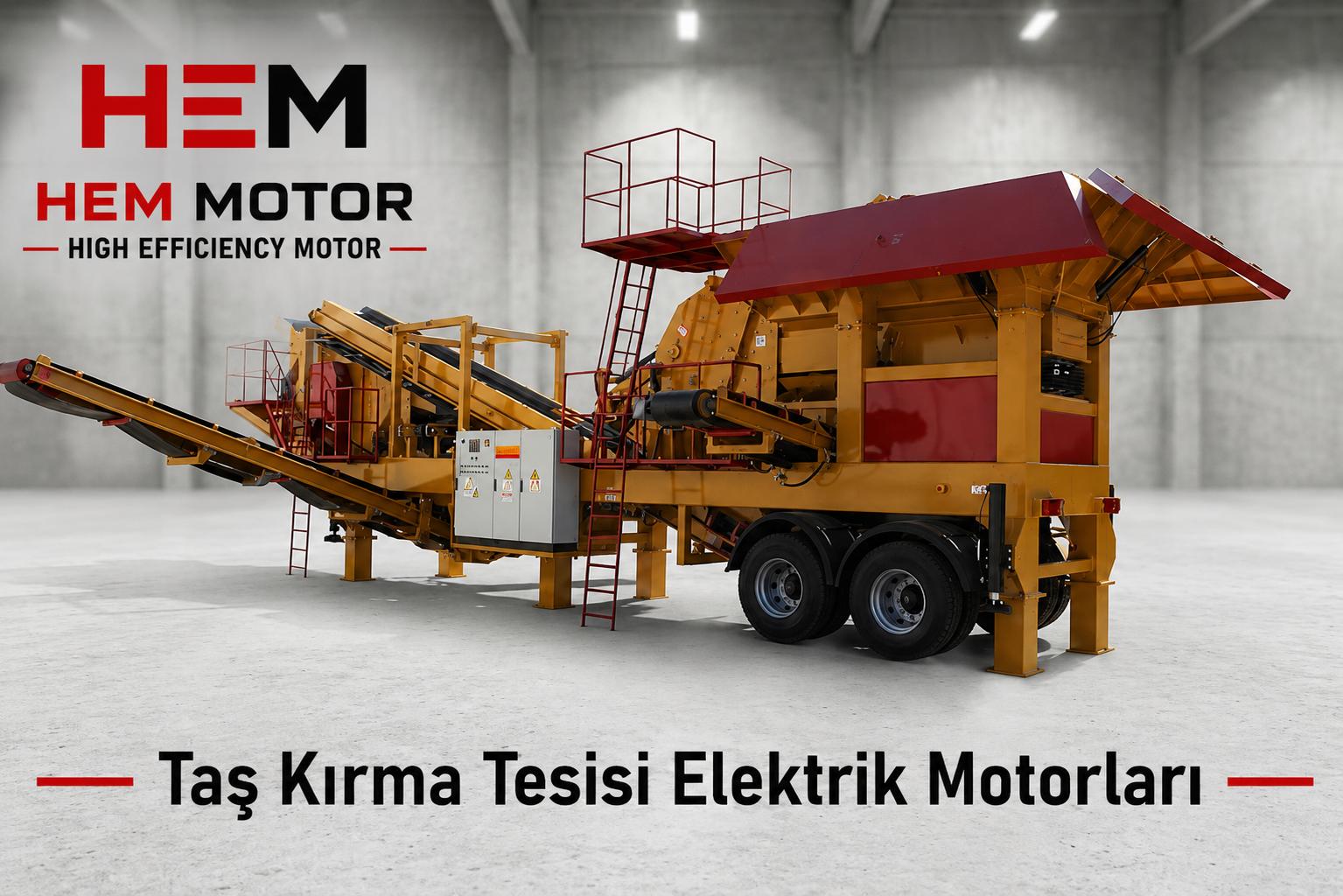

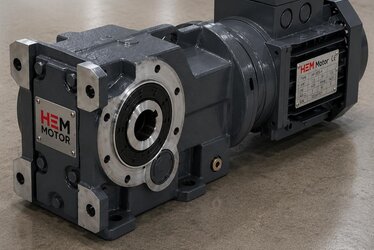
Cement factories are among the most energy-intensive industrial plants in any country, and almost all of this energy is converted into work through electric motors. Mills alone consume a significant part of the plant's electricity (a share that varies roughly between 5% and 45% depending on the application); fans and aspirators take around 30%, and conveyors about 5-8%. Under such a large energy load, motor selection directly determines production cost and downtime risk. As HEM Motor, we supply heavy-duty cast iron body motors in the IE3/IE4 efficiency class, IP55 protected, from stock for the mill, fan/aspirator and conveyor drive needs of cement factories. In this article we explain how to choose the right motor at every stage of cement production.
The Distribution of Motor Load in Cement Production
Cement production consists of stages such as raw material crushing, grinding, clinker firing and final grinding, and a different type of motor comes into play at each stage. The lion's share of the plant's electricity consumption is spent in the grinding (mill) and ventilation (fan/aspirator) processes. For this reason, when selecting a motor in a cement factory, the efficiency of the most heavily used and highest power-drawing motors is the priority; even a small efficiency difference, on a continuously running high-power motor, corresponds annually to a serious amount of energy.
For the technical and purchasing teams buying motors for a cement factory, the critical point is this: in these plants, motors are high-power, continuously running equipment whose stoppage is very costly. Therefore motor selection is not merely a purchasing decision but also an energy management and continuity decision. A motor chosen with the right efficiency class saves electricity well above its purchase price over its lifetime; a properly backed-up critical motor prevents unplanned downtime. In this article we address both aspects, application by application.
Cement production is a different process from a concrete batching plant or a crusher/stone-crushing plant. In a concrete batching plant, ready cement, aggregate and water are mixed; in a cement factory, cement is produced from raw material. To clarify this distinction, you can also look at our articles on electric motor supply for a concrete batching plant and crusher and stone-crushing plant motor selection; in this article we focus on the unique motor needs of the cement production line.
Mill Motors: High Power and Heavy Duty
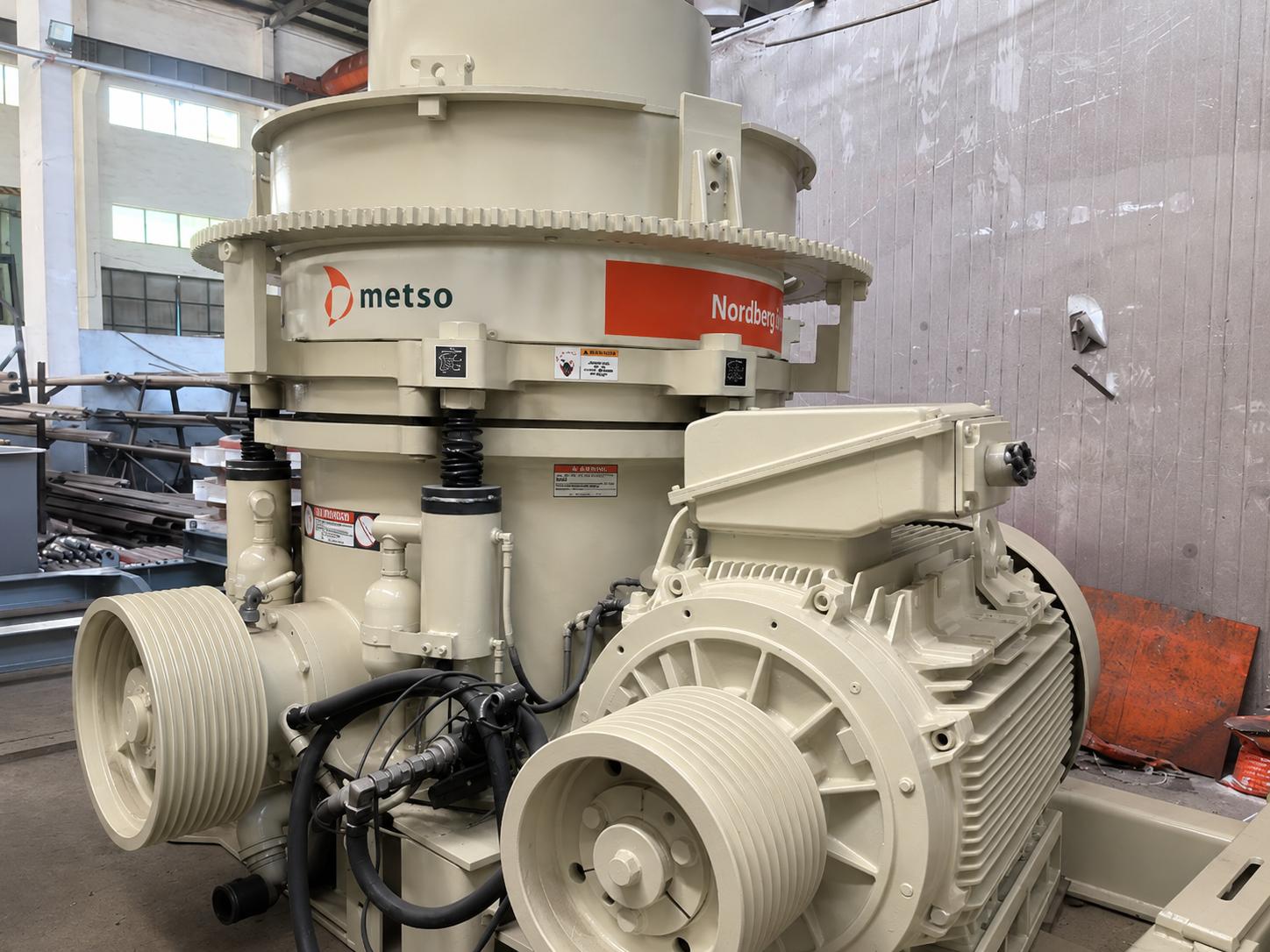
The most powerful and most critical motors of a cement factory are found on the mills. Ball mills, vertical mills and cement grinding units consume the largest share of the plant's electricity; the mill's electricity share can vary roughly between 5% and 45% depending on the application. These motors demand high starting torque, continuous operation under heavy load and vibration resistance. For this reason, cast iron body, reinforced-bearing, heavy-duty motors are preferred on mill drives.
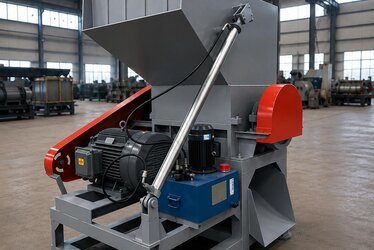
For heavy grinding and crushing applications, HEM Motor offers impact-resistant cast iron body motors in its stone-crushing and heavy-duty plant motors group. The asynchronous motor used in these applications must be selected to provide high starting torque and stable operation under continuous heavy load; as the frame sizes of an industrial electric motor grow, the required mechanical strength also increases. For mill drives with high power needs, lead time and transport planning are important on motors of 90 kW and above; applying the logic of pre-season stock planning here too reduces the downtime risk.
Fan and Aspirator Motors: The Heavy Labourers of Ventilation
In cement factories, fan and aspirator motors are the largest energy consumers after the mills, with roughly a 30% share. Processes such as kiln ventilation, dust collection, cooling and gas extraction are all driven by powerful fans. These fans generally run 24/7; for this reason efficiency in fan motors feeds directly into the electricity bill. On fan motors working in a dusty environment, IP55 protection lowers the failure risk by preventing dust from entering the motor.
HEM Motor offers motors in the 0.25 kW – 355 kW range, IP55 protected, with foot-mounted/flanged/combined mounting options in its industrial fan motors group. Our article on fan motor selection in aspirator and dust collection systems, which details fan motor selection in dust collection and extraction systems, deepens this subject.
Conveyor Drive Motors: The Continuity of Material Flow
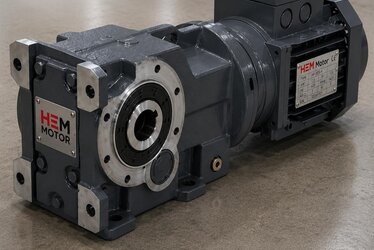
Conveyor and belt systems are like the veins that carry raw material and clinker within the plant. Although conveyor motors consume about 5-8% of the plant's electricity, the stoppage of a conveyor can mean the complete halt of production. For this reason, continuity and ease of replacement are important in conveyor drive motors. Conveyors generally run at low output speed together with a gearbox.
HEM Motor offers motors for conveyor applications with cast iron and aluminium body options. To avoid stopping production when a conveyor motor fails, it is necessary to think with backup in mind; our article on the screen, feeder and belt drive in a crushing-screening plant is complementary in terms of belt and feeder motors.
Dusty and Abrasive Environment: The Advantage of IP55 and Cast Iron
The cement factory environment is characterised by intense dust, vibration and mechanical strain. Under these conditions, the motor's protection class and body material directly determine its lifetime. HEM motors are standard IP55 protected; this class protects the winding and bearing life by preventing fine cement and raw material dust from entering the motor. A cast iron body, on the other hand, provides resistance to vibration and impact, and is sturdier than aluminium under heavy-duty conditions.
We detailed how motor protection should be handled on dusty and abrasive sites in our article on motor protection at the stone quarry and mine site. For heavy-duty and mining-type applications, our mining sector electric motor group offers high starting torque and vibration resistance. For more information on the durability provided by a cast iron body, you can review our cast iron body motors category.
Power and Speed Matching: The Right Choice on Cement Drives
Every drive point in a cement plant demands a different power and speed combination. Mills generally run at high power and relatively low speed; for this reason large-frame, high-torque motors are preferred. Fans and aspirators may run at 1500 or 3000 rpm depending on air flow; 2-pole (3000 rpm) motors are common on high-pressure gas extraction fans, and 4- or 6-pole motors on large-diameter cooling fans. Conveyor and elevator drives run at low output speed together with a gearbox; here the motor's speed is reduced to the desired level by the gearbox ratio.
The correct power selection prevents both energy waste and insufficient performance. A motor selected larger than necessary runs at low load with low efficiency, causing energy waste; a motor selected too small overheats and shortens its life. For this reason, on high-power cement motors the power-to-frame match must be made carefully. If you are replacing an existing motor, preserving the power, speed, frame size and shaft diameter information on the nameplate is the safest path; for a new investment, the machine manufacturer's recommendation is taken as the basis.
Energy Efficiency: The Big Effect of a Small Difference at High Power
Because the motors in a cement factory are high in power and long in running hours, the choice of efficiency class is decisive in the annual energy cost. On a high-power motor, even a one-to-two percentage point efficiency difference corresponds, due to continuous operation, to a significant amount of energy annually. Using an IE4 motor instead of an IE3 on a continuously running high-power mill or fan motor can bring serious energy savings over the year. This saving usually compensates for the difference in the motor's purchase cost in a short time. To quantify the investment decision, our article on IE3 vs IE4 investment with an amortisation calculation and our article on energy efficiency audit and motor inventory will be useful.
In plants involving high powers such as cement, the right efficiency class choice also improves the plant's reactive penalty and energy audit performance. You can reach our entire high-efficiency product range from the high-efficiency electric motors category, and for heavy-duty and crushing applications you can follow our crusher and stone-crushing motors blog category.
Clinker Cooler, Elevator and Auxiliary Drives
There is one more group in cement production that is overlooked yet whose continuity is critical: clinker cooler fans, bucket elevators, screw conveyors, feeders and dosing systems. Although these do not draw great power on their own, the stoppage of any one of them can lock the production line. For example, the stoppage of the clinker elevator causes a build-up at the kiln outlet. On these auxiliary drives too, IP55 protection and a cast iron body provide reliable operation in the dusty environment. In most cement plants, the number of these auxiliary motors is far greater than that of the main equipment motors; therefore standardising them (preferring the same powers and frame sizes) makes both stock management and spare part supply easier. A shareable spare for motors of the same frame size increases the plant's flexibility.
In plants with such a large number of auxiliary motors, keeping spares of the most used powers and speeds in stock is a wise strategy. The approach of stock planning according to season and production plan regarding which powers to keep as spares can also be adapted for cement plants. On drives requiring low speed/high torque such as screws, elevators and mixers, the motor is generally used together with a gearbox.
When Choosing the Right Motor: A Checklist for the Cement Plant
When buying a motor for a cement factory, clarifying the following information enables you to get a correct and fast quote. Application: Mill, fan/aspirator, conveyor or auxiliary drive? Each has a different duty profile. Power (kW) and speed (rpm): Taken from the nameplate if an existing motor, or from the machine manufacturer's recommendation for a new investment. Mounting type: Foot-mounted (B3), flanged (B5/B14) or combined (B35). Frame size and shaft diameter: Essential for mechanical fit in an exact replacement. Efficiency class: When IE4 is preferred at high powers, the energy saving is significant. Environment: Dust intensity and temperature determine the IP protection and cooling need.
To gather this information you can use the checklist in our article on exact matching with nameplate information. How the frame size and power match is made on high-power motors you can assess together with our industrial supply article. If you want to replace an existing brand's motor, our replacing an old brand motor exactly guide leads the way in equivalent selection.
Downtime Cost and Critical Stock Management
In a cement factory, one hour of unplanned downtime means a very serious production loss. For this reason, backing up the motors at critical points should be thought of like insurance. Especially on motors running without a backup on a single line, such as the mill, the main fan and the clinker elevator, keeping a spare in stock eliminates the downtime risk. We covered how to reduce the downtime cost of a motor failure in crusher and heavy-duty plants in our article on motor failure and downtime cost in a crusher plant; the same principles apply to cement plants too.
As HEM Motor, we provide fast dispatch in the most common powers and speeds in our stock, and on high-power special motors we make the lead time and transport planning together. You can assess the backup approach we apply in mining and heavy-industry supply contracts together with our article on motor protection at the stone quarry and mine site.
The soundest supply model for cement plants is a continuity-based supply relationship rather than a one-off purchase. When we draw up your plant's motor inventory together, we can clarify which powers and speeds are most frequently used, which points require a critical spare, and which motors should be prioritised for replacement with an efficient equivalent. This planned approach both prevents unplanned downtime and moves your plant a step ahead in energy efficiency audits. A gradual renewal programme starting with high-consumption motors such as the mill and the fan improves the plant's total energy performance without straining the budget.
Frequently Asked Questions
Which motors consume the most electricity in a cement factory?
The large part of the plant's electricity is spent in the mill (grinding) motors; the mill's share can vary roughly between 5% and 45% depending on the application. Fans and aspirators take around 30%, and conveyors about 5-8%. For this reason, efficiency improvements should first focus on the mill and fan motors.
Why is a cast iron body preferred on a mill motor?
Mills are applications that produce high starting torque, heavy load and continuous vibration. A cast iron body is more durable than aluminium against this mechanical strain and vibration; together with a reinforced bearing structure, it provides long life under heavy duty. HEM motors are offered for these applications with a cast iron body option.
What is the delivery time for high-power cement motors?
On high-power motors of 90 kW and above, the delivery time varies according to the stock situation and transport planning. To avoid downtime on critical motors, we recommend stating your need in advance and getting a quote; we can provide fast dispatch for the powers in our stock.
Is IP55 sufficient on fan and aspirator motors?
In the dusty environment of a cement plant, IP55 protection protects the winding and bearing life by preventing fine dust from entering the motor, and is suitable for most fan/aspirator applications. If the point where the motor is located is exposed to excessive dust build-up or water splash, higher protection can be assessed on request. Sharing the condition of the mounting point makes it easier for us to bring the right recommendation.
Get a Quote
Are you looking for a mill, fan/aspirator or conveyor motor for your cement factory? Share the power, speed, mounting type and application information with us; let us quickly quote the motor suited to your plant from our IE3/IE4 and heavy-duty cast iron stock. Call +90 (532) 345 49 86 right away or reach us through our contact us page.