English
 Türkçe

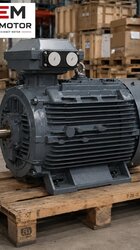
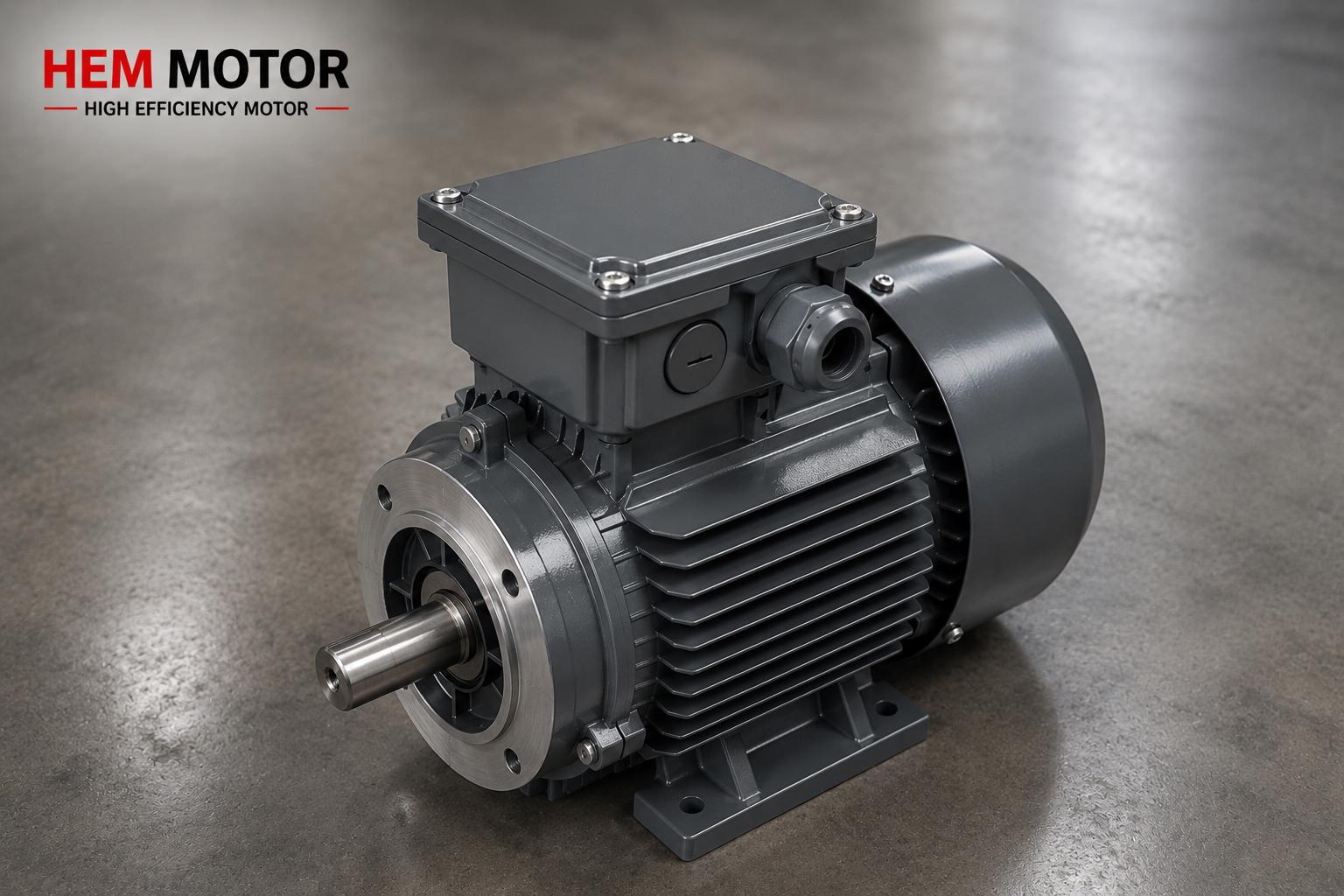

When selecting an electric motor, most buyers look only at the rated power (kW); yet on the motor's nameplate, alongside that power, another value sits quietly: the service factor (SF). This small number shows how much above the rated power your motor can safely carry a short-term, non-continuous overload. Understood correctly, the service factor provides an invaluable safety margin against the sudden load peaks your production line experiences; misunderstood, it leads both to premature motor burnout and to needlessly oversized motor selection. In this guide we explain step by step what the service factor means in IE3 efficiency-class motors, how it is read on the nameplate, and why the right SF selection is critical.
Our goal is not to give you a memorised rule, but to enable you to evaluate the correct service factor and the correct motor power together by looking at your own application's load profile. A correctly selected IE3 electric motor means a system that handles overload peaks smoothly for years, runs without overheating and lasts a long time.
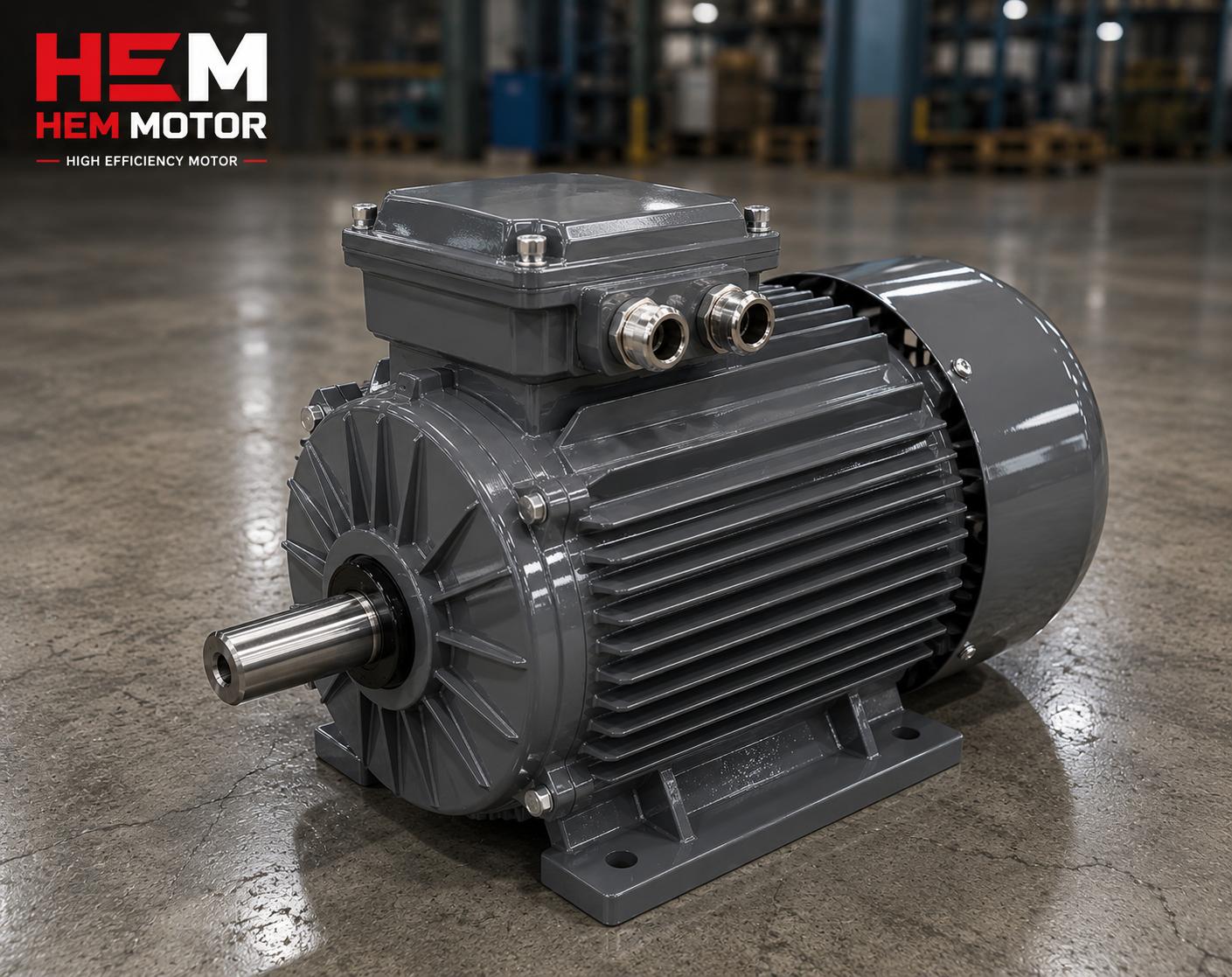
What Is the Service Factor (SF)?
The service factor is a multiplier value showing how many times its rated power a motor can be loaded under short-term, non-continuous conditions. It is written on the nameplate as "SF" or "Service Factor" and is usually a number between 1.0 and 1.15. This value expresses how much "reserve" power the motor has beyond nominal conditions.
- SF 1.0: The motor is designed to run only at its rated power. This power can be drawn continuously, but going above it pushes the motor beyond its design limits.
- SF 1.15: Under suitable environmental conditions, the motor can carry a load about 15% above its rated power, provided it is not continuous. So a motor with 10 kW rated power and 1.15 SF can briefly handle a load corresponding to roughly 11.5 kW.
The phrase to underline here is "non-continuous." The service factor is not permission to run the motor continuously at 15% extra load; it is a buffer zone designed to safely absorb sudden and temporary load peaks.
How Is the Service Factor Read on the Nameplate?
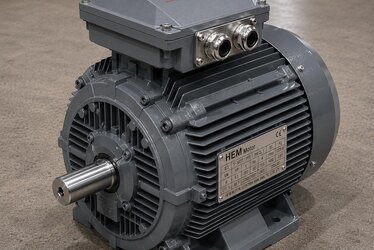
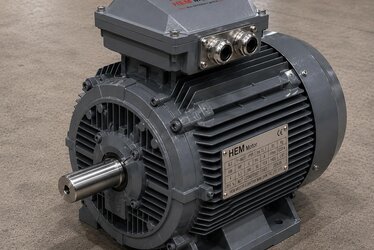
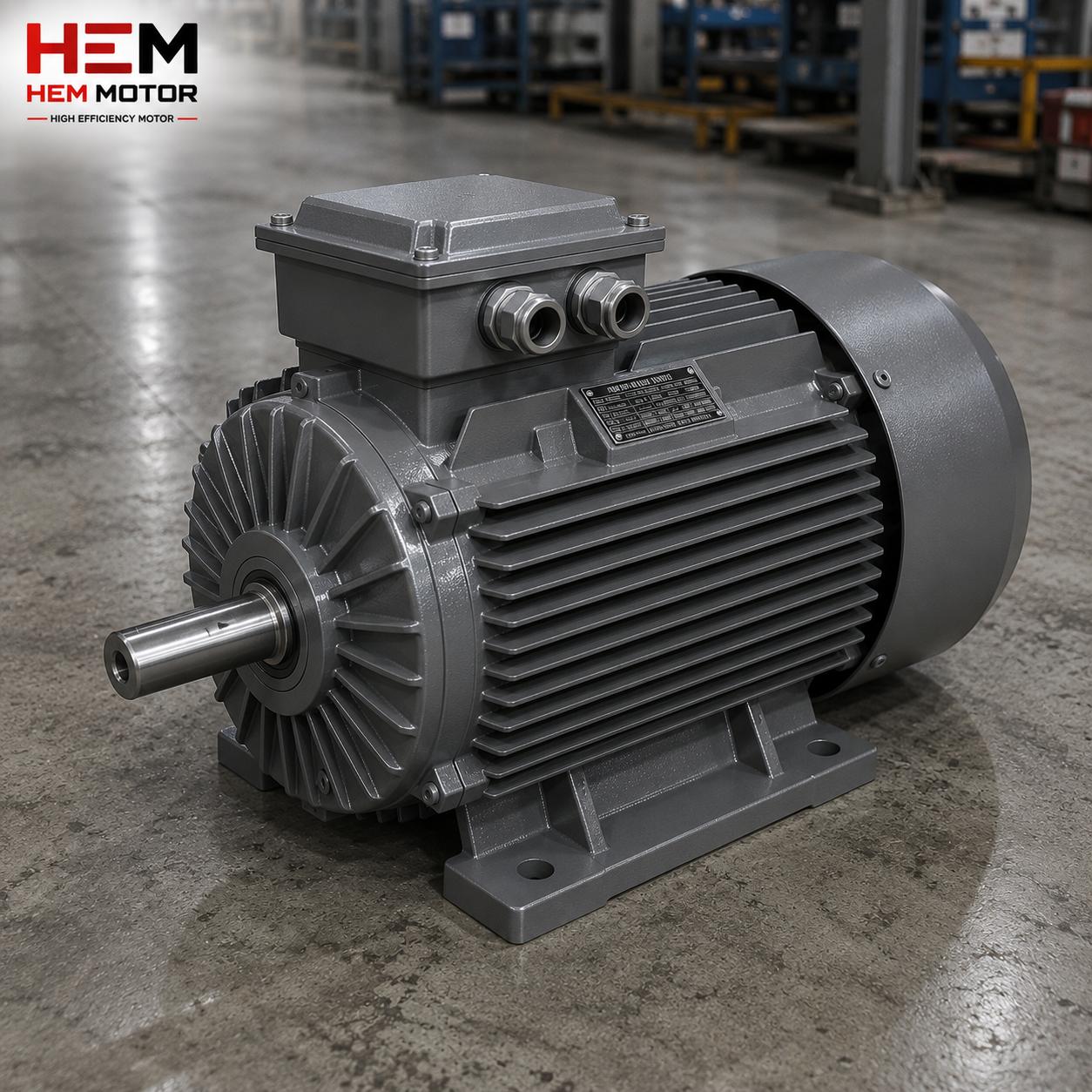
On the motor nameplate the service factor usually appears in a small field next to the rated power, voltage and current values. You will see an expression like "SF 1.15." If this value is not explicitly stated on some motors, it is assumed to be SF 1.0 by default. Reading the nameplate correctly is the first step to understanding the motor's real overload capacity.
The service factor should be evaluated not on its own but together with the motor's other rated values. For the SF to be valid, the motor must operate within certain environmental conditions (ambient temperature, altitude above sea level, voltage and frequency tolerances).
Environmental Conditions Affecting the Service Factor
The overload capacity the service factor promises is valid "under suitable conditions." Deviation from these conditions reduces or eliminates the reserve the SF provides.
1. Ambient Temperature
Standard motors are usually designed for a 40°C ambient temperature. When the ambient temperature exceeds this, the motor's cooling capacity drops and the safety margin provided by the service factor erodes. In a hot environment a motor with SF 1.15 may in practice behave close to 1.0.
2. Altitude Above Sea Level
At high altitudes air density decreases, which lowers the motor's fan-cooling efficiency. In installations above 1000 metres, the load the motor can carry — and therefore the effect of the service factor — decreases.
3. Voltage and Frequency Deviations
Fluctuations in mains voltage and frequency increase the motor's heating. The service factor is defined on the assumption that voltage and frequency are at their rated values; deviation from these values consumes the overload reserve.
Why Does the Right Service Factor Matter?
Choosing the right service factor prevents two common mistakes. The first is selecting a motor with insufficient reserve: in an application with load peaks, an SF 1.0 motor constantly runs at the edge, overheats and eventually burns its winding. The second is selecting an oversized motor, raising both investment cost and the energy expense from running inefficiently at low load.
The service factor offers a smart balance between these two extremes. In an application whose load profile is mostly steady but occasionally peaks, an SF 1.15 motor safely handles those peaks without stepping up to a higher power. Thus the motor runs safely and the cost of an unnecessarily large motor is avoided.
- Applications with load peaks: A high service factor is valuable in systems with sudden load increases such as crushers, compressors, conveyors and presses.
- Constant-load applications: For fans and pumps that run continuously at the same load, SF 1.0 is often sufficient.
- Harsh environmental conditions: In hot or high-altitude environments, selection must be made more carefully because part of the SF reserve will be consumed by the environment.
The Relationship Between IE3 Efficiency Class and Service Factor
IE3 premium efficiency-class motors run at a lower operating temperature thanks to higher-quality material and better design. This means the overload reserve provided by the service factor can be used more healthily. A low-loss IE3 motor handles the same load peak with less heating, which extends insulation and bearing life. Therefore, when a high efficiency class meets a suitable service factor, both an energy-efficient and a durable system is obtained.
SF Selection in Terms of Supply and Stock
Determining a motor with the correct service factor before the project begins prevents overload problems in the field and the premature failures they cause. When requesting a quote from your supplier, clarifying not just power but also the service factor, efficiency class and operating environmental conditions guarantees that the right product arrives. For up-to-date electric motor prices and the stock availability of motors with a suitable service factor, the healthiest approach is to clarify your technical specifications and request a quote. For a wider product range you may also evaluate the three-phase electric motor and IE4 high-efficiency motor options.
Information to Send to Your Supplier
For a motor with the correct service factor, you should provide your supplier with: rated power (kW), required service factor, speed/pole count, ambient temperature and altitude, voltage and frequency, mounting type, and the application's load character (steady or peaking). A request with this clarity both guarantees that the right motor arrives and speeds up the supply process.
The Difference Between the Service Factor and Overload Protection
It is important not to confuse the service factor with the electrical equipment that protects the motor. The service factor is the motor's own structural overload reserve; a thermal overload relay, motor protection circuit breaker or electronic overload protection are external safety elements that take the motor out of service in conditions exceeding this reserve. The two work together: the service factor absorbs short peaks within itself, while the protection equipment stops the motor in long-term or dangerous overload, protecting the winding from burnout.
In a correct system, the motor protection relay is set according to the motor's rated current and is selected so as not to needlessly cut the temporary reserve provided by the service factor, yet to stop the motor in time under sustained overload. This balance is critical for both production continuity and motor safety. Selecting a motor with a high service factor alone is not enough; that motor must be supported with correctly set protection.
High Current at Starting
The service factor defines the overload reserve in continuous operation; however, the high current at the motor's starting moment is a separate matter. An asynchronous motor draws several times its rated current during start-up. In frequent stop-start applications, this starting current both strains the grid and heats the motor. Using a soft starter or frequency converter reduces this starting surge and prevents the motor from needlessly consuming its service factor reserve. Thus the motor retains a wider safety margin for real load peaks.
Frequently Asked Questions
Can I run a motor with a 1.15 service factor continuously at 15% extra load?
No. The service factor is not permission for continuous overload; it is a reserve designed to safely absorb short-term, non-continuous load peaks. Running the motor continuously at the SF upper limit increases heating and shortens insulation life. If you expect continuous high load, selecting a motor of higher power is the correct approach.
Is the advantage of the service factor preserved in a hot environment?
Not entirely. The service factor is defined for standard environmental conditions (usually 40°C ambient temperature, sea level). As ambient temperature rises or altitude increases, cooling capacity drops and the SF reserve decreases. In such environments, motor selection should be made with a wider safety margin.
Should I choose an SF 1.0 motor or an SF 1.15 motor?
This depends on your application's load profile. In an application running at a steady, predictable load, SF 1.0 is sufficient. In applications with sudden load peaks such as crushers, compressors or presses, SF 1.15 offers a valuable safety margin and reduces the risk of premature failure.