English
 Français
 Türkçe
 Español
 Русский

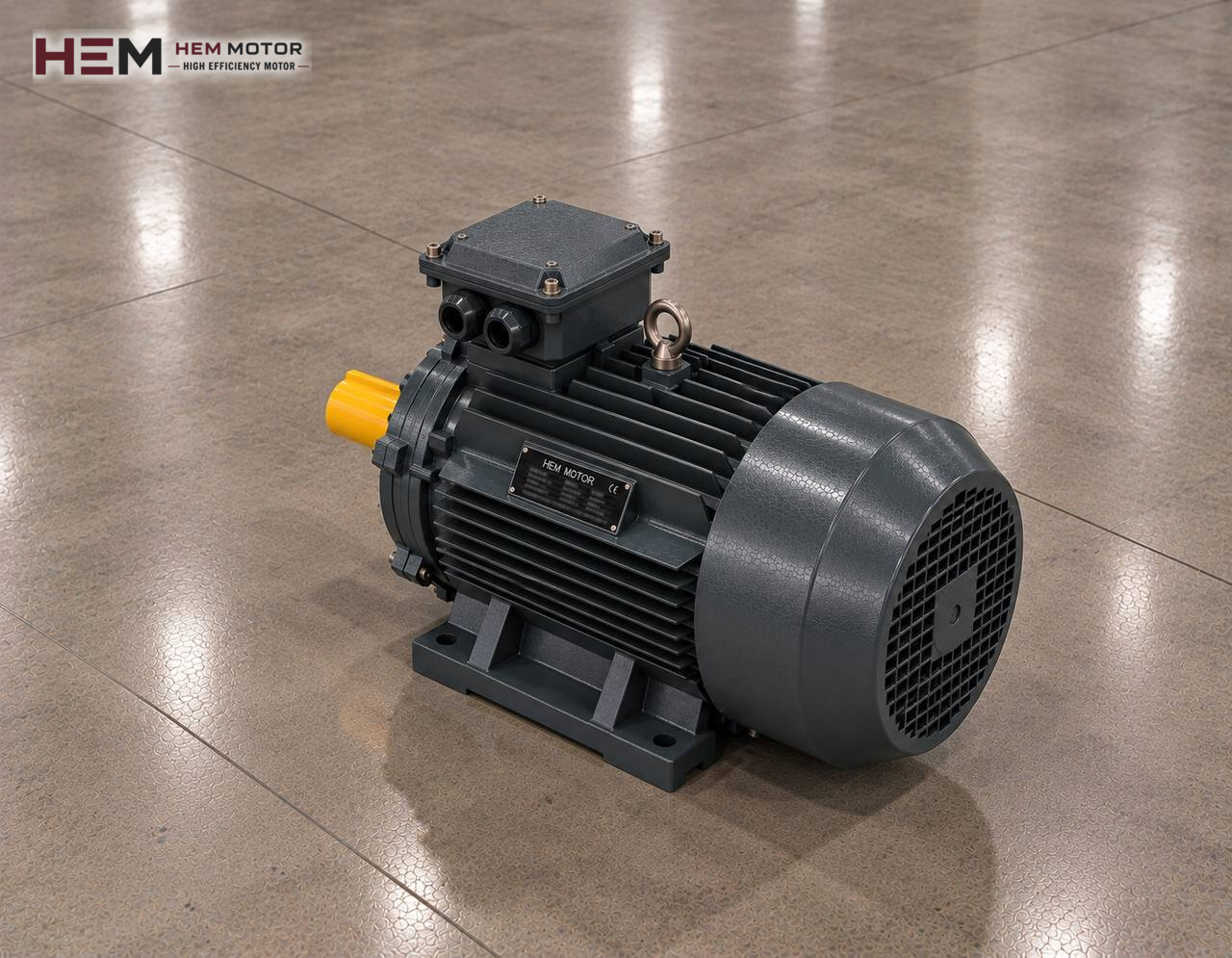
However powerful the shredder, crusher or baler in a recycling plant, throughput drops if the material reaching it is irregular. The conveyors that carry material to the machine, dose it into the mouth and take it away at the exit therefore set the rhythm of the line. This page focuses on the three-phase motors that turn feed and discharge conveyors; for the plant's large machines you can return to the waste processing and recycling machine electric motors page.

What sets a recycling conveyor apart from an ordinary belt?
A belt on a food or packaging line carries products of known weight and size. A recycling conveyor, by contrast, may see a heap of plastic film, then a car rim, then a wet bale of cardboard within the same minute. The load keeps changing in both quantity and shape. Sharp metal edges cut the belt, wire and rope wrap around rollers, and wet material sticks to the belt surface.
That is why, besides flat rubber belts, recycling often uses steel slat conveyors, cleated and sidewall inclined belts, and chain conveyors. Whichever is chosen, the common point from the motor's side is the same: high torque at low speed, irregular load and the possibility of starting fully loaded.
The conveyor feeding the shredder: controlling speed
The conveyor going to the shredder or crusher mouth must not bring more than the machine can swallow. In most plants the feed belt is managed by a control that watches the main machine's motor current: when the main machine strains, the feed slows or stops, and when current falls it speeds up again. This arrangement requires the feed motor to be run from a frequency inverter.
On some lines the feed belt runs in reverse for a short time when the shredder jams, to loosen the heap at the mouth. If reversing is frequent, the suitability of motor and gearbox for this duty should be discussed in the order. If there is a metal detector above the feed belt, the belt stops or reverses when an unwanted part is detected; this is another factor that raises the number of starts.
Roll-back on inclined belts
On inclined conveyors lifting material to a mouth above ground, a loaded belt can slide back when power is lost. To prevent this, a backstop in the gearbox or a brake motor is used. If you want a brake motor, state it in the order; the backstop belongs to the gearbox side.
The exit side: discharging shredded material
Material leaving the bottom of the shredder is usually taken away by a steel slat conveyor, a screw or a short belt. If this discharge conveyor stops, the space under the machine fills and the main motor soon jams. That is why the discharge conveyor starts before the main machine and stops after it. The start sequence is set up on the panel side; what matters for the motor is that the discharge conveyor can also start with a full heap of material on it.
Shredded metal or rubber is sharp and abrasive; belts and slats wear fast and chains stretch. If maintenance falls behind, friction rises and motor current climbs over time. Seeing current increase day by day often signals in advance that the conveyor mechanics, not the motor, need attention.
Starting torque and gearbox matching
On feed and discharge conveyors the motor is almost always connected to the drum or chain sprocket through a gearbox. Motor selection follows the torque needed at the gearbox output and the starting condition with a loaded belt; these torque and ratio values come from the conveyor maker's calculation. For geared motors see electric motors for gear reducers, and for belt drives in general conveyor belt electric motors.
On lines with a frequency inverter, the drive accelerates the motor gently at start and reduces the sudden pull on the belt. Our three-phase series are suitable for drive operation. If the feed belt carries full load at very low speed for hours, the motor's own fan falls short and a separately powered fan may need to be added; if the panel is far away, a dv/dt or sine filter at the drive output is considered. Write these details in the order; a short explanation is in the inverter operation question.
Walking floors and small auxiliary drives
In some plants material is drawn from the bunker by a hydraulic walking floor. Here the electric motor does not drive the floor but the hydraulic pump; the pushing force is produced by the hydraulic system. Motor selection follows pump flow and pressure; details are on the hydraulic pump electric motors page.
Short transfer belts at the side of the line, rotary diverter flaps or collection carts are usually small drives between a few hundred watts and a few kilowatts. At small auxiliary points without a three-phase supply, the single-phase series (0.18–5.5 kW) can be considered; see the single-phase electric motor page.
Dust, rain and the open stock yard
Feed conveyors often run from an open stock yard into a closed hall. Part of the motor fleet works under rain and sun, part of it in the shredder's dust. Paper fibre and plastic dust stick to the fan cover; cleaning the grille and fins should top the maintenance list.
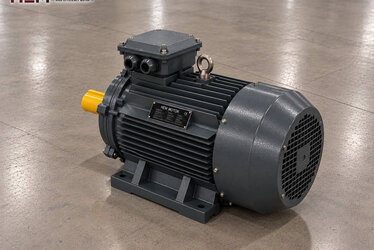
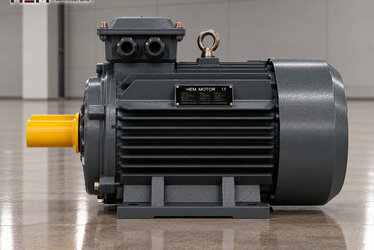
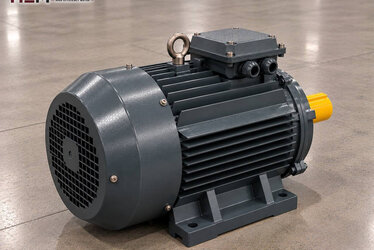
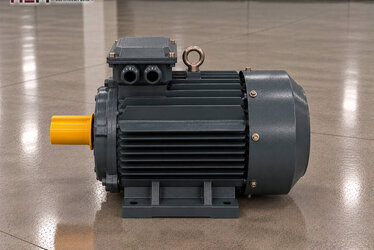
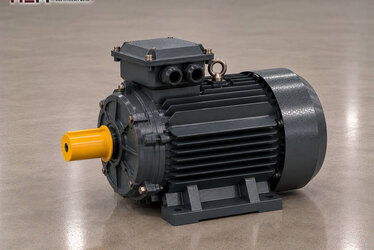
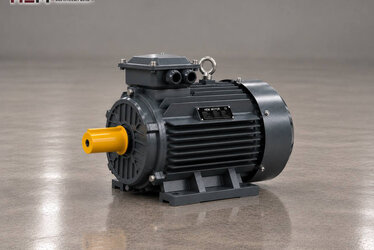
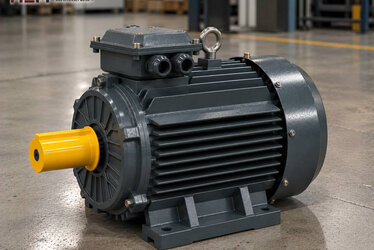
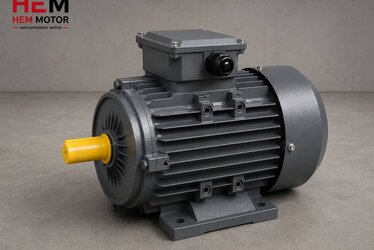
HEM three-phase motors are IP55 and are protected against dust and splashing water. Hose or pressure washing and standing in puddles are not design conditions for this class; in such a location protective measures by the machine maker or a special motor are needed, state this in the order. In an open yard it is wise to put a rain cover over the motor and to ask for an anti-condensation heater against the temperature swing between night and day; a PTC or PT100 sensor for winding monitoring is also an order option.
Example motors by conveyor type
| Conveyor | Load faced by the motor | To be confirmed | Example HEM model |
|---|---|---|---|
| Shredder feed belt | Speed varying with the main machine, occasional reversing | Drive, reversing frequency | 4 kW 1,450 rpm cast iron 112M-4 |
| Inclined steel slat conveyor | Heavy, loaded start, roll-back risk | Gearbox torque, brake arrangement | 11 kW 1,465 rpm cast iron 160M-4 |
| Under-shredder discharge | Abrasive, continuous, prone to jamming | Start sequence, current monitoring | 5.5 kW 1,460 rpm cast iron 132S-4 |
| Short transfer belt | Light, intermittent | Gearbox flange, mounting position | 1.1 kW 1,445 rpm aluminium 90S-4 |
The ratings in the table are values commonly seen on such conveyors; for a final selection the conveyor load, required speed and gearbox ratio, mounting arrangement and operating environment are assessed together. If an existing motor is being replaced, the values on its nameplate are the soundest starting point.
Mounting and quotation details
Conveyor motors are mostly connected to the gearbox by flange (B5 or B14) or with the combined foot-and-flange B34/B35 design; foot-mounted B3 and vertical V1, V3, V5, V6, V15 versions are also supplied depending on frame size. We check the flange and shaft end required by the gearbox together with you before the order; the list is in the mounting arrangements question.
For a quotation write: the machine and conveyor type (feed, inclined slat, discharge, transfer), power (kW), speed (rpm), supply voltage, mounting type and gearbox details, quantity, and whether the motor runs from a drive. A nameplate photo of the old motor speeds things up: find an equivalent motor from the nameplate. Options and prices are on the shop page; for WhatsApp and phone go to the contact page.
Frequently Asked Questions
What is needed to adjust feed belt speed according to shredder current?
The feed motor must be run from a frequency inverter, and the drive must be managed by a control that receives the main machine's current signal. This control belongs to the panel side; on the motor side it is enough to state the drive operating conditions in the order.
The inclined conveyor rolls back when power is lost; is replacing the motor the solution?
Replacing the motor alone will not solve it. A backstop in the gearbox or a brake motor is required. If a brake motor is preferred, state it in the order.
Why does the discharge conveyor motor keep tripping its overload?
Most often the underside of the conveyor or the chain sprocket has filled with shredded material, or the main machine was started before the discharge conveyor. Cleaning, chain tension and start sequence should be checked; then the protection setting should be compared with the nameplate current.
Is IP55 enough for a conveyor motor in an open yard?
IP55 protects against dust and splashing water; putting a rain cover over the motor and keeping it away from puddles is enough. If hose washing or standing in water is involved, extra protection or a special motor is needed.