English
 Français
 Türkçe
 Español
 Русский

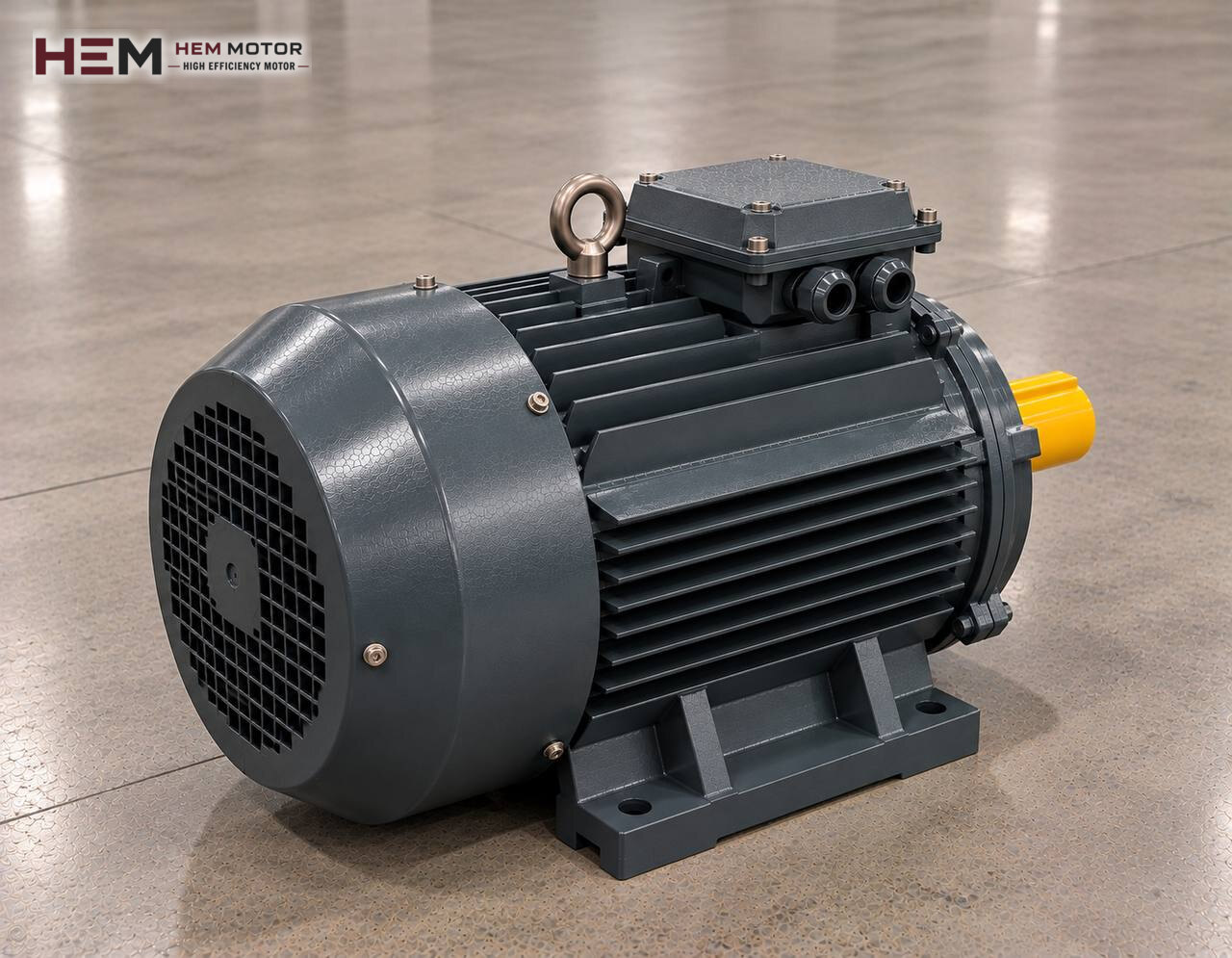
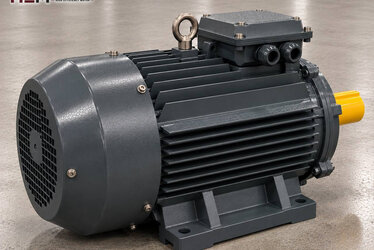
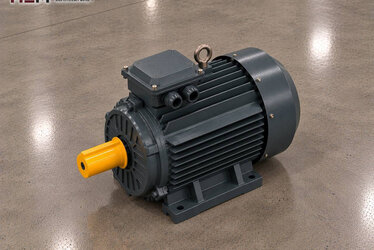
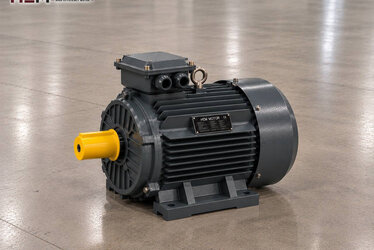
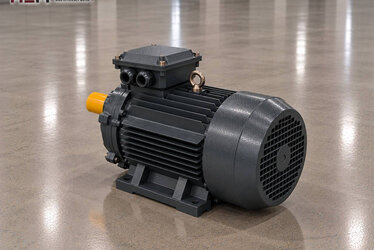
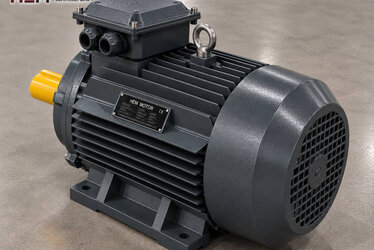
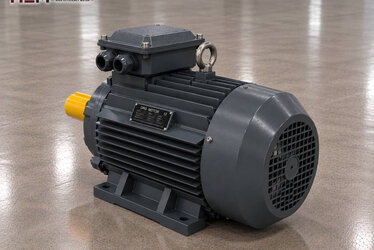
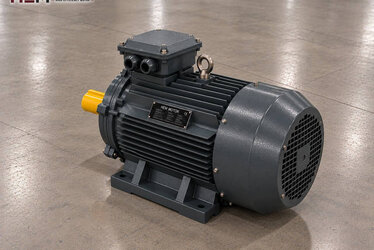
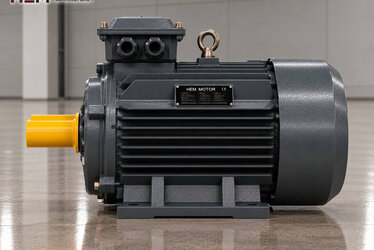
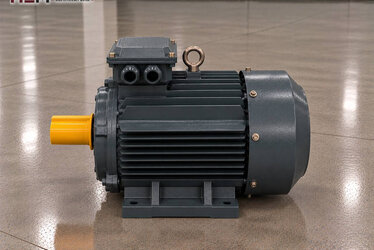
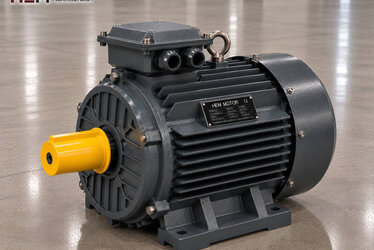
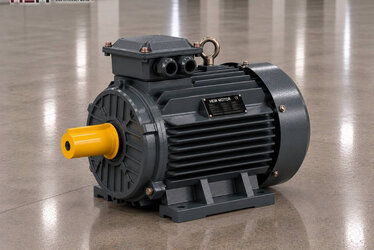
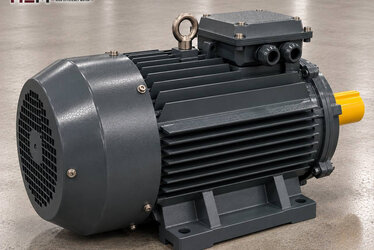
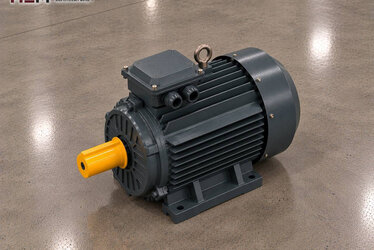
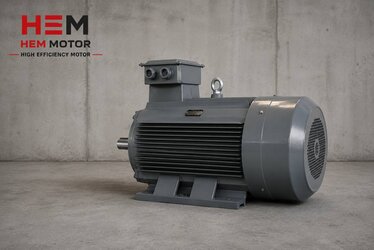
A tertiary crusher is the machine at the third stage of a crushing line that takes pre-crushed, screened stone and turns it into sand and fine chippings. The horizontal-shaft tertiary impact crusher is the most common type at this stage; in some plants a vertical shaft impactor or a finely set cone crusher does the same job. This page is based on the horizontal-shaft tertiary impact crusher and the three-phase motor that drives it. The whole crushing and screening line and its other machines are summarised on the stone crushing plant electric motors main page.

The job of the third stage: making sand
The stone arriving at a tertiary crusher is small, but the product wanted is much finer. Fineness comes from the rotor's high rotational speed and from the stone striking many times inside the crushing chamber. For this reason the rotors of these crushers turn faster than those of earlier stages, and the lower part of the chamber usually has a grinding path or an adjustable lower apron.
For the motor this means a continuous, high load even though the incoming stone is small. The energy spent per tonne of sand is greater than for coarse chippings; as the share of fine product rises, so does the motor load. A tertiary crusher motor runs close to rated load for whole shifts, so continuous thermal load rather than short peaks decides motor selection.
Closed circuit and circulating load
A tertiary crusher almost always works in closed circuit with a screen. Oversize that does not pass the screen returns to the crusher on a belt. This circulating load can make up a significant part of the total feed and grows quickly when screening efficiency falls.
In the motor, this shows up as crusher current slowly climbing over hours while the feed belt runs at the same speed. When screen wire wears or screen openings blind with wet material, the amount returning to the crusher increases. Watching motor current and the return belt load together makes it easier to tell whether the problem lies in the crusher or the screen. Against overload, the feed or return belt can be slowed automatically.
Rotor speed, pulleys and drive
The rotor still turns slower than the motor; the difference is that the reduction ratio is smaller than at earlier stages. A 4-pole motor is usual, and the motor pulley is chosen closer in diameter to the rotor pulley. The pulley ratio can be changed to adjust sand fineness; since belt speed rises with such a change, check that the belt type suits that speed.
In plants where product demand changes with the season or the job site, a frequency converter is preferred: by adjusting rotor speed, different sand curves are obtained from the same machine. Our three-phase series can be driven by a frequency converter. At the tertiary stage the drive is mostly used near or slightly above rated speed. If the motor must deliver full torque while turning slowly for long hours, its own shaft fan is not enough and a separately supplied fan is added; if the drive is far from the panel, fitting a dv/dt or sine filter at the output is considered. When running above rated frequency, the motor's mechanical limits and belt speed must also be checked separately. Stating drive operation in your order is enough; the subject is covered in detail on the inverter compatible motor page.
Wet and sticky material
In sand production the stone is usually damp or is wetted to suppress dust. Fine, moist material sticks to the chamber walls, aprons and discharge. As build-up grows the chamber narrows, friction around the rotor increases and motor current rises without any increase in crushed tonnage. A current rise of this kind points to chamber cleaning rather than overfeeding.
Another consequence of moist material for the crusher motor is its environment. Wet dust sticks to the motor fins like mud and quickly reduces heat dissipation. The IP55 enclosure and class F insulation of our motors are intended for dust and rain. If water will splash directly onto the motor or the frame will be washed with pressurised water, this protection is not enough; we ask that the machine builder provide a protective measure or that you specify a special motor in the order. Placing the motor away from the splash zone of the crusher's discharge belt and putting frame cleaning on the weekly plan are practical measures.
Starting, wear and protection
A high-speed rotor stores a lot of rotational energy during starting. Starting is always done with an empty chamber; the feed belt must not run before the crusher motor reaches full speed. The starting method is chosen from direct-on-line, star-delta, soft starter or drive according to transformer capacity, motor power and rotor inertia.
At the tertiary stage blow bars and aprons wear quickly; a worn bar lowers tip speed and spoils sand fineness. Some operators compensate by increasing speed, which keeps motor power at its limit until the next bar change. Checking vibration after a bar change, replacing the belt set together and keeping to the motor's bearing regreasing interval are especially important at this stage. A PTC thermistor or PT100 in the winding and an anti-condensation heater that keeps moisture away during stoppages are options that can be added to the motor order.
On a belt-driven slide base the most common arrangement is foot-mounted B3. Depending on frame size, flange (B5, B14), foot-and-flange (B34, B35) or vertical (V1, V3, V5, V6, V15) designs are also possible; we confirm shaft and flange dimensions with you at the ordering stage.
Sample motors for tertiary crushers
| Application | Drive layout | Main concern | Sample HEM model |
|---|---|---|---|
| Small sand crusher | V-belt, 4-pole | Continuous thermal load | 90 kW 1500 rpm 280M-4 |
| Tertiary in closed circuit with a screen | V-belt, 4-pole | Circulating load, current monitoring | 185 kW 1500 rpm 315L-4 |
| Tertiary with sand curve set by drive | V-belt, frequency converter | Belt speed, filter | 250 kW 1500 rpm 355M-4 |
| High-capacity sand line | V-belt | Starting method, transformer capacity | 315 kW 1500 rpm 355L-4 |
The sample models are for guidance; the final decision is made according to the crusher's load, required speed, mounting arrangement and operating conditions, based on the crusher manufacturer's data. Rated torque rises with larger frames: the 355M-4 model delivers 1,602 Nm at 1,490 rpm and the 355L-4 model 2,019 Nm at the same speed.
Information list for a quote
To prepare the quote we need: the crusher's make and type; the required power (kW) and speed (rpm); supply voltage; mounting type and transmission; starting method; if a drive is used, whether it will run above rated frequency; quantity. If you add a photo of the nameplate of the motor on site, we find the equivalent faster.
You can browse models and prices in our shop and larger ratings in the cast iron frame motors category. For WhatsApp and phone, go to the contact page.
Frequently Asked Questions
Why does tertiary crusher motor current rise while the feed is constant?
There are two common causes: more oversize returning to the crusher because screening efficiency has dropped, and moist material sticking inside the crushing chamber. Checking the return belt load and the inside of the chamber shows which one it is.
Does raising rotor speed to make finer sand strain the motor?
Yes; as speed rises, both breakage and power demand increase. At the new speed, measure that motor current does not exceed its rated value, and respect the manufacturer's speed limits for the rotor and belts.
Is it possible to run above rated frequency with a drive at the tertiary stage?
Within a short range it is possible, but above rated frequency the motor works at constant power, meaning its torque falls. Bearing, balance and belt speed limits must be assessed separately, and this use should be stated in the order.
What extends motor life in a wet sand environment?
Keeping the motor out of the splash zone, fitting a canopy over it, cleaning the fins and fan cover regularly and using an anti-condensation heater during long stoppages are the most effective measures.