English
 Français
 Türkçe
 Español
 Русский

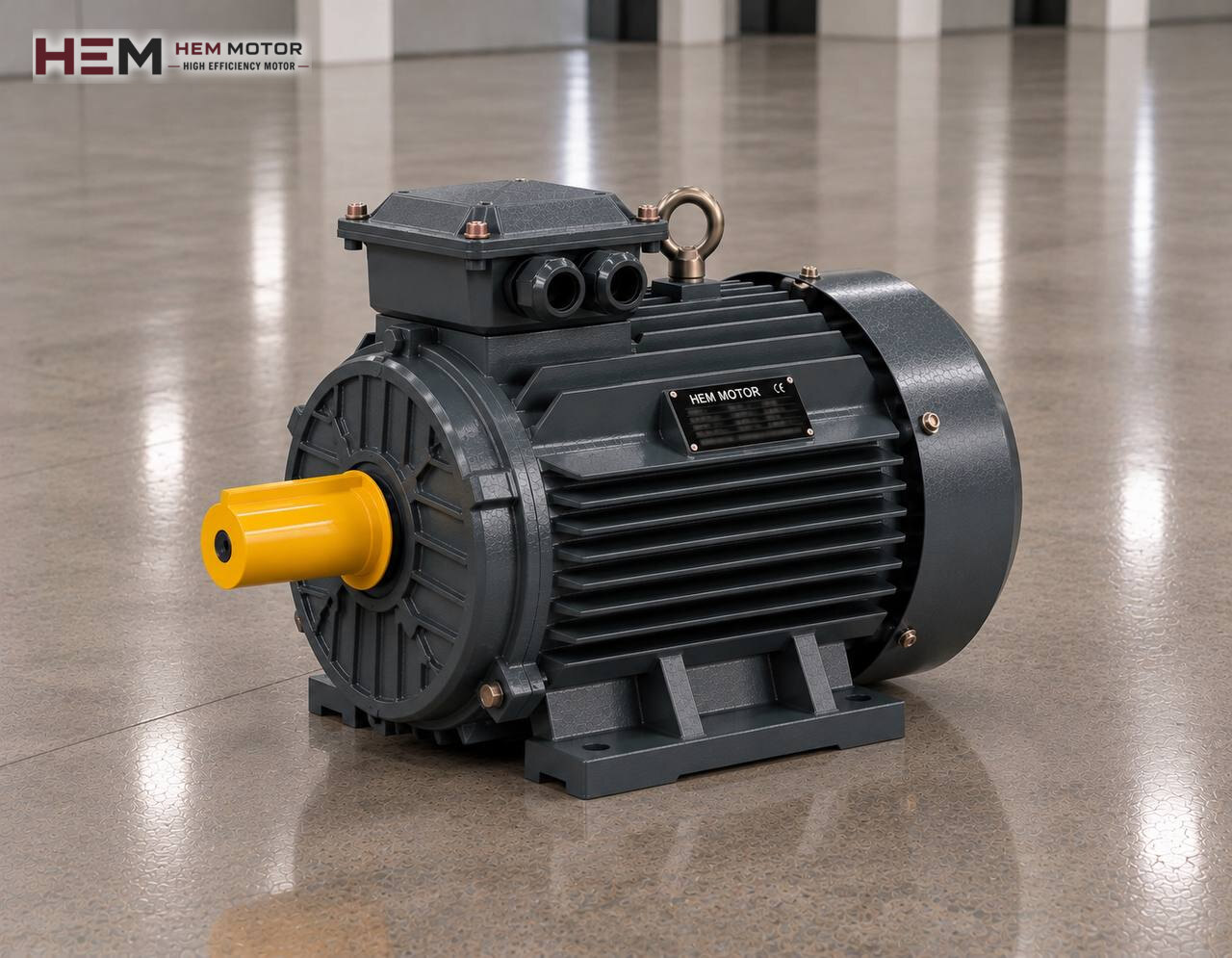
A rotary screen, or trommel as it is called on site, is a large inclined cylinder whose shell is made of perforated plate or screen panels. As it turns slowly, the material inside tumbles; the fine part passing through the holes drops into the collecting chute below, and the oversize leaves from the other end of the cylinder. It is widely used for washing and separating clayey material in sand and gravel pits, on mobile screening machines and for screening compost or soil. This page describes the motor that turns the cylinder; for the other machines in the sector, see the electric motors for stone crushing plants page.

The difference from a vibrating screen: slow rotation, not shaking
In a trommel the screening surface does not shake; it rotates. The cylinder turns very slowly, its speed is tiny compared with the motor shaft; the stones inside rise and slide back, and this tumbling provides both the separation and the breaking up of clay lumps. Rotational speed is the heart of the machine: in a cylinder turning too slowly the material slides along the bottom and screening is poor, while in one turning too fast the material is pressed against the wall by centrifugal effect and rotates with it. The correct speed is set by the machine manufacturer according to the cylinder diameter.
The motor cannot deliver this low speed directly. The speed of a 1,500 or 1,000 rpm class motor is reduced by a high-ratio gearbox and often by an additional chain or gear stage. That is why choosing a trommel motor cannot be separated from the gearbox input speed and the number of poles of the existing motor.
How is the cylinder turned?
Trunnion roller (friction) drive
Steel tyre rings run around the outside of the cylinder, and the cylinder rests on four or more rollers through these rings. One pair of rollers is driven; the motor and gearbox turn the shaft of these rollers and the cylinder rotates by friction. On mobile trommels the rollers may be rubber-coated. On some machines the rollers on each side are driven by a separate motor.
Chain or girth gear drive
A chain sprocket or a large girth gear is fixed to the cylinder shell; a pinion on the gearbox output turns this gear. On heavy and long washing trommels this arrangement is preferred because it allows no slip.
Hydraulically driven mobile machines
On some tracked or towed trommels a hydraulic motor turns the cylinder; the electric motor, if any, drives the hydraulic pump. In that case the selection is based on pump flow and pressure; the electric motors for hydraulic pumps page covers this subject.
Unbalanced load and inertia at start-up
The heaviest moment for a trommel is turning a cylinder that has stopped full. At standstill the material forms a heap in the lower part of the cylinder; when rotation starts, this heap has to be lifted to one side, and noticeably more torque is needed at the gearbox output than during steady rotation. Add to this the inertia of the large steel cylinder itself. With wet, clayey material the heap is heavier and sticks to the cylinder wall.
For this reason trommels often use a frequency inverter or a soft starter instead of direct-on-line or star-delta starting. An inverter allows a high-torque start from low frequency and fine adjustment of the rotational speed to suit the site; when the material changes (dry stone, clayey gravel, compost), the cylinder speed can be changed accordingly. Emptying the cylinder before the plant is stopped at the end of a shift makes the next morning's start noticeably easier.
HEM three-phase ranges are suitable for speed control by inverter; if the motor will run at full load well below rated speed for long periods, an external fan may be needed, and if the distance between motor and panel is long, a dv/dt or sine filter is considered. State these conditions in the order; details are on the inverter-compatible motors page.
Gearbox, mounting and alignment
The motor and gearbox usually sit on a frame beside or under the cylinder. In a separate-base arrangement there is a flexible coupling or belt between motor and gearbox; in a compact arrangement the motor is flanged directly onto the gearbox. HEM motors are offered in B3, B5, B14, B34, B35 and vertical V1/V3/V5/V6/V15 designs depending on frame size; flange and shaft dimensions are confirmed when ordering. The gearbox ratio and drive roller diameter are the machine manufacturer's calculation; for the motor side, the electric motors for gear reducers page offers guidance.
In a friction drive, misalignment between the rollers and the tyre ring makes the cylinder drift axially and the rollers wear unevenly; this can show up as a periodic ripple in the motor current. In a chain drive, chain tension and sprocket wear should be monitored in the same way.
Wet screening, mud and maintenance
On washing trommels water is fed into the cylinder through a spray pipe and the discharge side is muddy. The drive unit is often at a low point where this water splashes. An IP55 motor is protected against splashing water, but it is not designed for pressurised water jet cleaning or for standing in mud; a sheet-metal shield over the motor and drainage underneath are good practice. An anti-condensation heater to prevent condensation during long stoppages and a PTC sensor to monitor the winding with inverter operation are order options.
In dry screening, especially of compost and soil, fine dust covers the motor fins; housing cleaning should be on the maintenance list. Lubrication of the roller bearings and blinding of the screen panels are also items that directly affect motor load: a blinded cylinder carries more material and turns more heavily.
Example motors and selection table
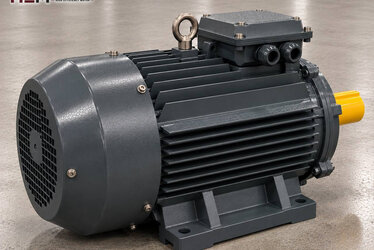
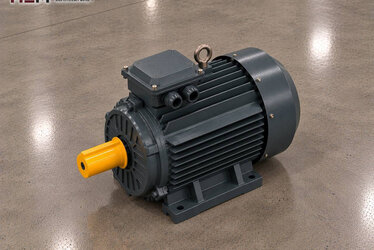
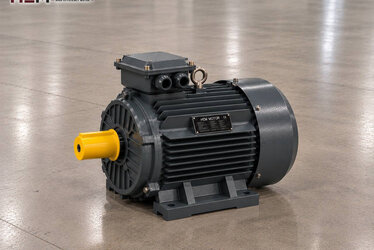
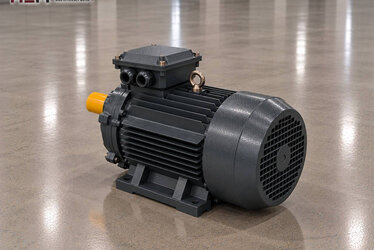
Because trommels work through a gearbox, 4- and 6-pole motors are common. On a small compost or soil trommel, the 4 kW 132M1-6 delivers 39.5 Nm at 968 rpm. On a medium-sized sand and gravel trommel, the 5.5 kW 132M2-6 (54.3 Nm) and the 11 kW 160L-6 (970 rpm, 108.3 Nm) are models worth considering. On a long, heavy washing trommel, the 15 kW 180L-6 provides 146.5 Nm at 978 rpm. If the gearbox input is chosen for the 1,500 rpm class, 4-pole models of the same power are considered.
| Trommel type | Drive arrangement | Value to watch | Example HEM model |
|---|---|---|---|
| Compost and soil trommel | Rubber-coated drive rollers | Roller slip, dust | 132M1-6, 4 kW |
| Sand and gravel separation trommel | Gearbox and steel rollers | Start with a full cylinder | 132M2-6, 5.5 kW |
| Clayey material washing trommel | Chain or girth gear | Wet heap, splashing water | 160L-6, 11 kW |
| Long, heavy washing trommel | Girth gear, inverter start | External fan, PTC | 180L-6, 15 kW |
| Hydraulically driven mobile trommel | Hydraulic pump | Pump flow and pressure | According to pump data |
The models are examples only; the final choice depends on the cylinder load, required speed, gearbox arrangement and site conditions.
Data needed for a motor request
Send the trommel diameter and length, machine make, drive arrangement (rollers, chain, girth gear), the power (kW), speed (rpm), supply voltage and mounting type of the existing motor, gearbox input flange and shaft size and the quantity required; add whether it runs on an inverter or direct, and whether screening is wet or dry. If the old motor's nameplate is readable, sending a photo as described on the find an equivalent from the nameplate page is enough.
You can review frame and power options with prices in the shop. To reach us by WhatsApp or phone, use the numbers on the contact page; motors held in our warehouse are dispatched from Türkiye.
Frequently Asked Questions
Can I increase the trommel's rotational speed by changing the motor?
Cylinder speed must stay below a limit set by its diameter; if exceeded, the material sticks to the wall and rotates with it, and screening breaks down. If a speed change is needed, it should be made with an inverter and within the range given by the machine manufacturer.
Why does the trommel motor trip on overload at the morning start?
In a cylinder that stopped full, lifting the heap in the lower part requires high torque. Emptying the cylinder at the end of the shift and reviewing the thermal setting and starting method are the first steps.
What should be watched on a trommel driven by separate motors on each side?
Both motors must have the same power, speed and number of poles. With inverter operation, settings for equal load sharing between the motors are made according to the machine manufacturer's recommendation.
Why does the motor current ripple periodically on a roller-driven trommel?
Most often misalignment or wear between the roller and the tyre ring, or material building up unevenly inside the cylinder, causes this ripple. Roller alignment and screen panels should be checked.