English
 Français
 Türkçe
 Español
 Русский

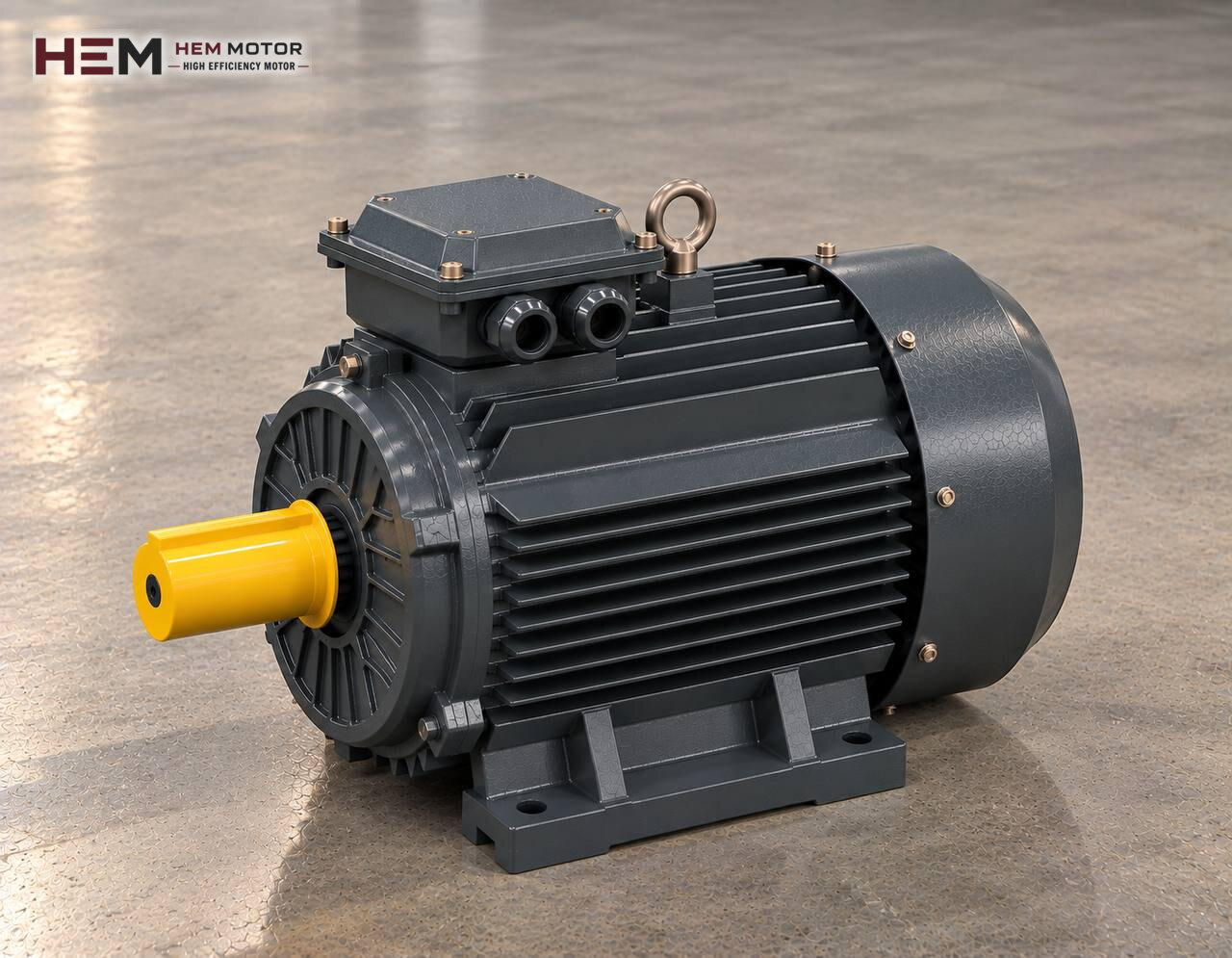
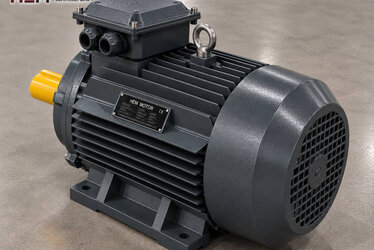
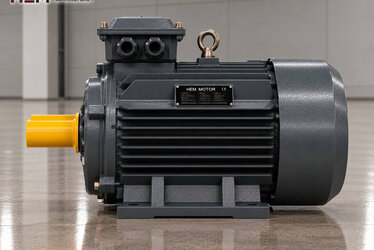
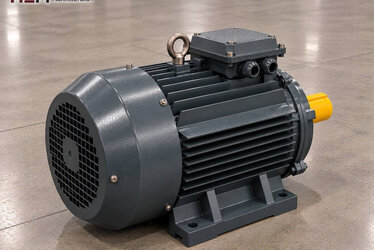
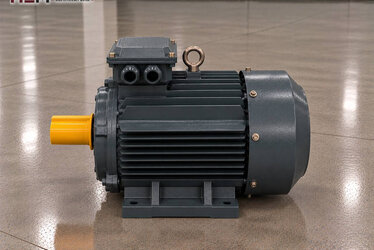
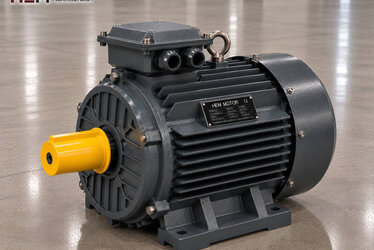
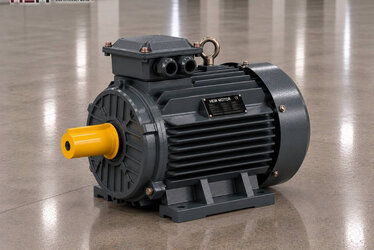
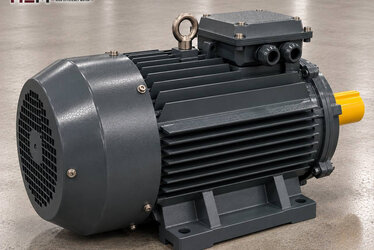
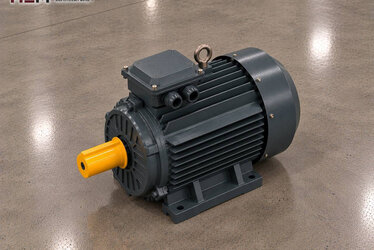
The primary impact crusher breaks the large blocks blasted from the quarry at the first stage, by impact rather than by squeezing. Rock entering through a wide feed opening strikes the blow bars on a heavy, large-diameter rotor, breaks and is thrown against the impact aprons above. Because it gives a high reduction ratio and a cubic product in a single stage on limestone, dolomite and similar medium-hard rock, some quarries choose it instead of a jaw crusher. This page covers the electric motor that turns the rotor; the general framework of the line is on the stone crushing plant electric motors page.

What sets the impact crusher apart at the primary stage?
Compared with second-stage impact crushers, the primary machine has a much larger feed opening and blocks on the metre scale can enter. To withstand them the rotor is made both heavier and wider in diameter; the blow bars are thick and long. Rotor speed is usually lower, because the aim is not a fine product but reducing the large block to a size the next stage can handle.
For the motor the meaning is clear: a larger rotating mass, a longer acceleration and a deeper speed drop the moment a block hits. On a primary impact crusher, motor selection depends less on continuous crushing power than on whether the motor can carry this inertia and the impact peaks.
The impact of a large block and the rotor's energy store
When a large block hits a blow bar, the rotor instantly gives part of its kinetic energy to the rock and its speed drops. The heavy rotor acts as an energy store here: it meets most of the impact from its own speed, while the motor restores the lost speed before the next block. If blocks arrive often and in quick succession, the rotor has no time to recover and motor current stays above rated value for long periods.
The match between feeder and crusher therefore matters. If the speed of the feeder in front of the crusher is linked to the crusher motor current, feed slows when current rises and the rotor recovers. When the grizzly ahead of the feeder bypasses fines around the crusher, the rotor is loaded only with rock that actually needs breaking. When uncrushable iron enters the chamber, the impact aprons swing back on springs or hydraulics; this is the machine's safety device.
Large inertia: starting time and method
The rotor of a primary impact crusher has a much larger moment of inertia than many machines of the same power. While the motor brings this mass from standstill to rated speed it draws close to starting current for a long time; the duration can approach the motor's permitted locked-rotor time. Rotor inertia, pulley ratio and the start time expected by the crusher manufacturer are the three basic data we need for motor selection.
At this size, direct-on-line starting strains the supply and the belts heavily and is rarely chosen. A soft starter limits current but also lowers torque, so a heavy rotor takes even longer to start. A frequency inverter can deliver high torque at low current and is becoming increasingly common on large primary crushers. Some plants use a fluid coupling between motor and rotor pulley so the motor accelerates unloaded first. The right method is decided by transformer capacity, cable length and the crusher manufacturer's requirement together. A PTC thermistor or PT100 for monitoring the winding during long starts is an order option.
Pulley, belts and motor position
On primary impact crushers the drive usually uses multiple V-belts or wedge belts. Because rotor speed is low a large pulley ratio is needed; 6-pole (1,000 rpm) motors are therefore common, while some machines prefer a 4-pole motor and a larger ratio. Belts that can slip slightly partly damp the impact of a block and the opening of the aprons.
The motor usually sits beside the crusher on a slide or swing base that sets belt tension, and foot-mounted B3 is common. The large pulley puts significant radial load on the motor's drive-end bearing; fitting the pulley against the shaft shoulder and replacing belts as a set are important. The rotor is locked while blow bars are turned or replaced; isolating and locking out the motor before this work should be part of the maintenance instructions.
Environment and maintenance
The primary impact crusher works under the hopper, on an open site, in heavy dust. Our motors have an IP55 frame and class F insulation; however, dust building up on the fins reduces cooling and, combined with long starts, makes the winding heat up faster than expected. Regular cleaning of the fan cover, a simple shelter against sun and rain, and an anti-condensation heater for long winter stops are recommended. Dust suppression water should not be aimed directly at the motor.
As blow bars wear or one breaks, rotor balance is lost and vibration passes into the motor through the belts and base. Measuring vibration after a bar change and checking the tightness of motor foot bolts protects bearing life.
Sample motors
| Primary crusher layout | Situation for the motor | Check first | Sample HEM model |
|---|---|---|---|
| Small quarry, limestone | Heavy rotor, low speed | Pulley ratio, start time | 110 kW 1,000 rpm 315L1-6 |
| Medium primary impactor | Successive block impacts | Feeder–current link | 160 kW 1,000 rpm 355M1-6 |
| Large-ratio drive with 4-pole motor | High belt speed, large inertia | Starting method, transformer capacity | 200 kW 1,500 rpm 315L2-4 |
| Large primary crusher with drive | Long acceleration, variable feed | Inverter, winding sensor | 200 kW 1,000 rpm 355M2-6 |
These models are for guidance; the final choice is set by the crusher's rotor inertia and load, required speed, mounting and site conditions. As values: the 355M1-6 delivers 1,543 Nm at 990 rpm and the 355M2-6 1,929 Nm rated torque. All these ratings have a service factor of 1.15; the margin is for short impacts, not for continuous overfeeding.
Information required for a quote request
Send us your primary crusher's machine details (brand, model, feed opening), required power (kW) and speed (rpm), site voltage, mounting arrangement, pulley diameter and belt type, planned starting method, drive use and quantity. A nameplate photo of the installed motor speeds up the comparison. For drive operation in this power class, the inverter-compatible motors page explains low-speed cooling and cable filters.
High-power models are in the cast iron frame series, prices in our shop. For WhatsApp and phone, use our contact page.
Frequently Asked Questions
Why does a primary impact crusher motor struggle for so long at start-up?
The rotor is very heavy and large in diameter; the motor draws high current until it brings this mass to rated speed. Starting with the rotor empty and choosing a starting method suited to the inertia relieve the winding and the supply.
Should a 6-pole or a 4-pole motor be chosen for a primary crusher?
Since rotor speed is low, a 6-pole motor does the job with a smaller pulley ratio and gives higher shaft torque for the same power. A 4-pole choice is also possible; the decision follows the crusher manufacturer's pulley calculation.
What should be done if the motor trips on successive large blocks?
Linking feeder speed to crusher motor current and removing fines at the grizzly give the rotor time to recover. It should also be checked that the overload setting matches nameplate current and start time.
What should be watched on the motor side when changing blow bars?
Before the change the motor must be isolated and locked out. Afterwards, check that the bars are fitted in opposite pairs of equal weight, and check belt tension and motor foot bolts.