English
 Français
 Türkçe
 Español
 Русский

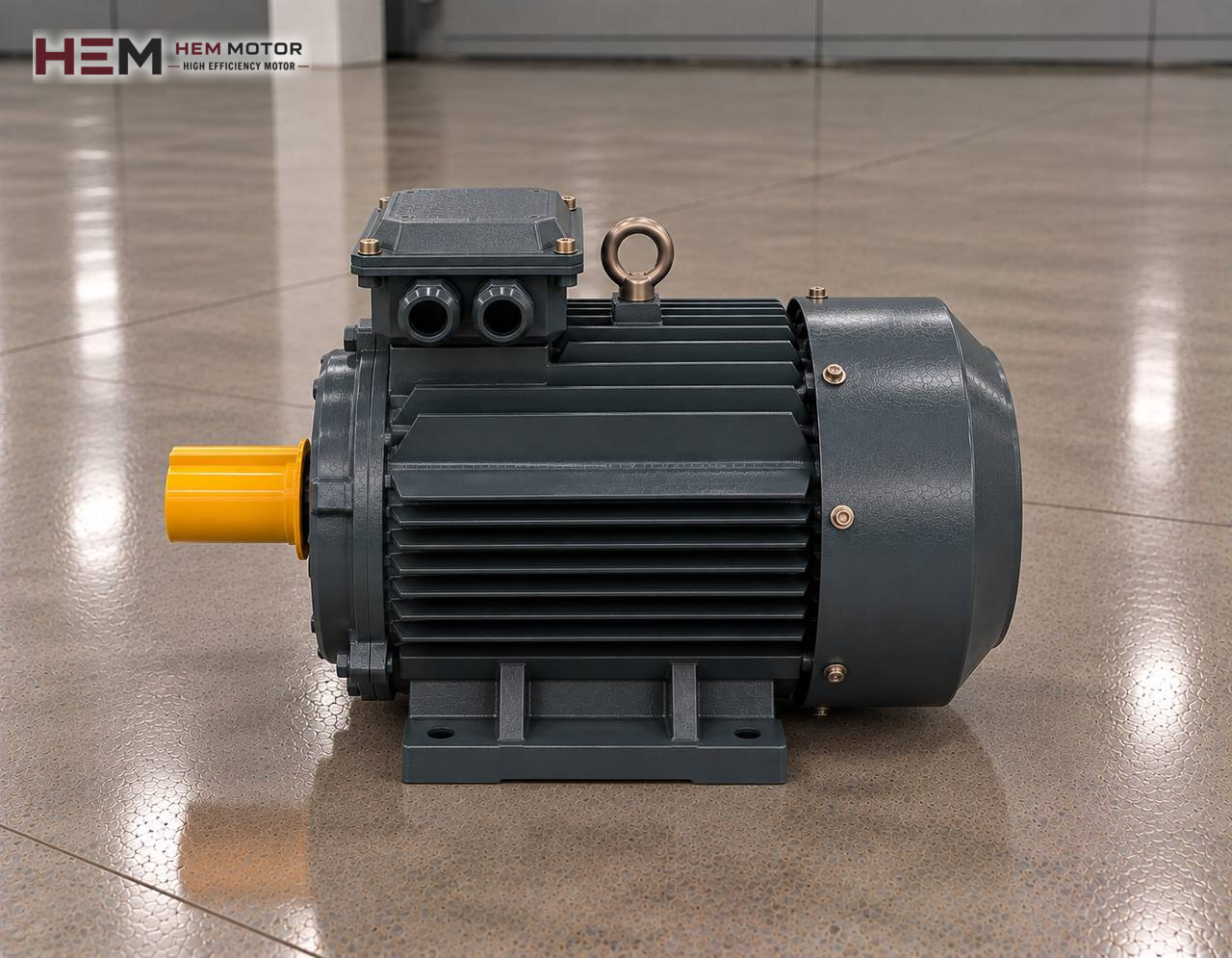
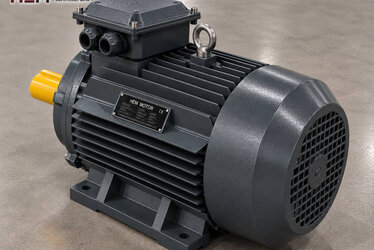
Crushed stone is split into saleable fractions, such as chippings, manufactured sand and graded aggregate, on the vibrating screen. A steel box sitting on springs holds two, three or four decks of wire mesh; as the box shakes, the stones bounce along the mesh and anything smaller than the openings drops to the deck below. This page covers the electric motor that turns the mechanism shaking the box; for the whole line you can go back to the electric motors for stone crushing plants page.

The screen box vibrates in two different ways
On inclined screens a single shaft runs across the middle of the box. As the unbalanced weights at both ends of the shaft rotate, the box follows a circular path; what actually moves the material forward is the slope of the box. This is the most common arrangement in quarries.
On horizontal screens an exciter is bolted to the box. Inside it are two shafts locked together by gears and rotating in opposite directions. The forces of the unbalanced weights add up in one direction and cancel out in the other, so the box swings back and forth in a straight line. This motion carries the material without any slope, and because the box is lower it is also preferred on mobile plants.
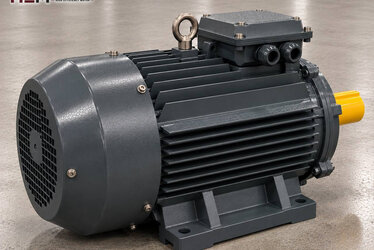
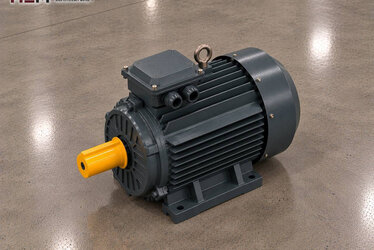
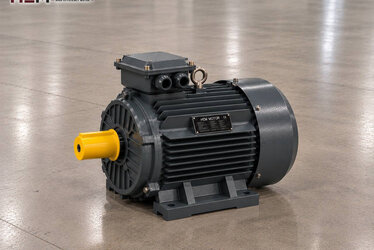
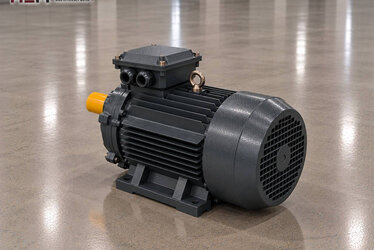
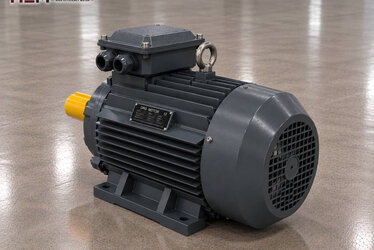
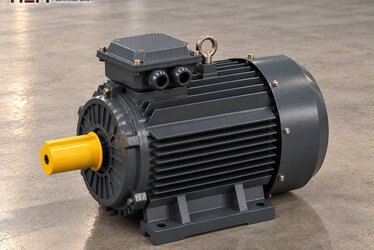
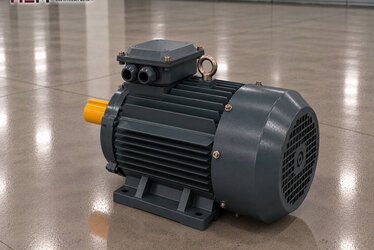
Some small screens have two vibration motors (vibromotors) fitted directly to the sides of the box. These special motors with unbalanced weights on the housing are not included in the HEM Motor 2026 catalogue. What is described here is the standard three-phase motor standing on a separate base next to the screen and driving the vibrating shaft or the exciter.
What does the motor spend its power on?
Most of the screen motor's power goes not to the stone itself but to the moving mass. It has to keep the unbalanced weights at constant speed, overcome friction in the large screen bearings and make up for the energy the springs absorb on every stroke. That is why, once the screen is up to speed, the motor current is fairly flat; it rises a little when the feed increases, but there are none of the sharp swings seen on a crusher.
Conditions that raise the current permanently are another matter. Wet clayey material sticks to the mesh and adds mass to the box, friction grows when the grease in the screen bearings breaks down, and grease thickened on winter mornings loads the motor during the first minutes. Logging the motor current regularly reveals these problems before the screen bearing overheats.
The resonance zone at start and stop
The unbalanced weights have a large moment of inertia; the screen reaches full speed not in a couple of seconds but over a somewhat longer time. The motor draws high current throughout, so the thermal protection setting and the starting method should match the real run-up time of the screen. With star-delta starting the starting torque drops; on a heavy screen, check during commissioning whether the motor accelerates enough in star. A soft starter or a frequency inverter gives a more controlled run-up.
While accelerating, the box passes through the low speed that matches the natural frequency of the spring system. At start this passage is quick. At stop, however, the screen coasts down on its own inertia, stays longer in this zone and the box swings much wider than normal; this is the moment that does the most harm to the frame, chutes and connections. Some manufacturers specify braking through the inverter or a mechanical brake to shorten this passage. On an inverter-driven screen, do not leave the motor at low frequency for long.
The screen should start empty, and the feed belt should come on only after the screen has reached full speed. This sequence belongs to the automation, but it spares the motor a heavy start every morning.
Belts, pulley ratio and direction of rotation
The motor is not mounted on the moving box but on a fixed base beside it. The V-belts running from the motor pulley to the pulley on the vibrating shaft stretch and shorten slightly with every stroke of the box; that is why the belt run is kept long and belt tension is set to absorb the movement. Some horizontal screens use a cardan shaft instead of belts.
The vibration frequency is set by motor speed and pulley ratio together; the amplitude of the screen and the life of the mesh are calculated for this value. When replacing the motor, keep the number of poles and the pulley diameters the same as before. Motors in the 1,500 rpm class are common on stone screens, and the 1,000 rpm class is also seen on some large screens.
On an inclined screen the direction of shaft rotation affects how fast material travels across the deck. The correct direction is given in the machine manufacturer's documentation; after connecting the new motor, check the direction with a short test run and swap two phases if needed.
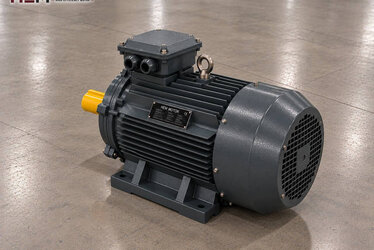
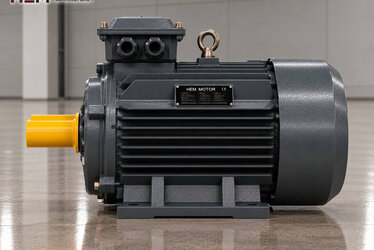
The motor is usually foot-mounted (B3) and sits on a slide rail for belt tensioning. Depending on frame size, HEM offers foot, flange and foot-flange versions as well as vertical positions; the rail or base dimensions are confirmed together at the time of ordering.
The motor in dusty and wet screening conditions
In dry screening, the screen is one of the dustiest machines on the site. The IP55 enclosure limits harmful dust ingress; even so, dust building up on the housing fins and fan cover reduces cooling and calls for regular cleaning. In wet screening, the spray bars over the box create a water mist. The motor should not be directly in the path of this mist and, where possible, should be protected by a sheet-metal shield; a standard IP55 motor is not designed for pressurised water jets.
Vibration of the box also reaches the base through the steel structure. Tightness of the foot bolts and a cable that enters the terminal box through a flexible conduit without tension belong on the periodic maintenance list. On screens with frequent starts or inverter drive, a PTC winding sensor, and on wet plants that stand idle for long periods, an anti-condensation heater, can be requested as order options. With inverter operation, if the motor will run at full load at low speed for long periods an external fan comes into question, and with long cables a dv/dt or sine filter; details are on the inverter-compatible motors page.
Example motors and selection table
Among the common choices on a medium-sized multi-deck stone screen, the 11 kW 160M-4 delivers 71.7 Nm at a rated speed of 1,465 rpm. For a wider box, the 15 kW 160L-4 (97.8 Nm) and the 18.5 kW 180M-4 (1,470 rpm, 120.2 Nm) are models worth considering. On large horizontal screens the 22 kW 180L-4 provides 142.9 Nm.
| Screen layout | What the motor faces | Point to settle when ordering | Example HEM model |
|---|---|---|---|
| Single-shaft inclined screen, 2–3 decks | Long run-up with unbalanced weights | Pulley diameter, direction of rotation | 160M-4, 11 kW |
| Wide inclined screen, 4 decks | Heavy box, wide swing at stop | Starting method, need for a brake | 160L-4, 15 kW |
| Horizontal screen with exciter | Driving two shafts by cardan or belt | Cardan connection, base dimensions | 180M-4, 18.5 kW |
| Large horizontal screen, wet screening | Water mist and sticky material | Anti-condensation heater, shield | 180L-4, 22 kW |
| Inverter-driven screen | Ramped start and braking | PTC, cable length, filter | According to the existing nameplate |
The models in the table are examples; the final choice depends on the screen load, required speed, mounting arrangement and operating conditions.
Information needed for a quotation
Send the screen type (inclined or horizontal), make and number of decks, together with the power (kW), speed (rpm), supply voltage and mounting type of the existing motor, the pulley or cardan connection and the number of motors you need. Also mention whether the screen runs on an inverter or does wet screening. If the nameplate of the old motor is readable, a photo as described on the send the motor nameplate page is enough.
You can find the power and frame options with current prices on the buy electric motors page and the larger frames among the cast iron frame models. To reach us by WhatsApp or phone, use the contact page; motors in stock are shipped from our warehouse in Türkiye.
Frequently Asked Questions
Why does the box swing more when the screen stops than when it runs?
As the screen slows down it passes the natural frequency of the spring system, and the amplitude grows in this zone. If the coast-down is long, consider the braking method recommended by the manufacturer and check the springs and box connections.
Is star-delta starting suitable for a screen motor?
It is used on many screens. However, because the starting torque is lower in star, on a heavy box the motor may switch to delta before it has accelerated enough. Measure current and run-up time during commissioning; if it is not sufficient, consider a soft starter or an inverter.
Can I change the pulley to make the screen vibrate faster?
This is not recommended. The vibration frequency and amplitude are set to what the box and bearings can carry. If a change is needed, the new ratio should come from the machine manufacturer.
What should I check after connecting the new motor?
Check the direction of rotation, belt tension and pulley alignment; run the screen empty and note the current. This value is a good reference point for comparison at later maintenance.