English
 Français
 Türkçe
 Español
 Русский

Sand, chippings and gravel coming out of crushers and screens wait in separate piles in the open yard until they are sold or shipped. The machine that builds these piles is the stockpile (stacker) conveyor: a belt on an inclined boom carries the material upward and releases it from the top. This page describes the electric motors that drive the belt, the slewing and the boom movement of a stacker conveyor; for the other points of a crushing and screening plant, see the stone crushing plant electric motors page.

How many separate motors does a stacker conveyor have?
A fixed stacker conveyor usually has a single motor: the belt motor that turns the gearbox at the head pulley. As the yard grows, the machine becomes mobile and the number of motors increases.
- Belt drive: The main motor that raises material along the boom; almost all of the power demand is here.
- Radial travel: On a radial stacker the lower end of the boom pivots, while the upper end describes an arc on a wheeled chassis. The wheels are driven by small geared motor units.
- Boom luffing and telescoping: The movement that changes the boom angle and, on telescopic types, extends the inner boom is often made with a hydraulic cylinder or a winch. In a hydraulic layout the motor turns a pump; for selection see the hydraulic pump motors page.
On an inclined belt most of the load goes into lifting
On a horizontal conveyor the motor mainly overcomes friction in the idlers and the belt. On a stacker conveyor, however, the boom is inclined and material is lifted to a certain height every second. The steeper and longer the boom and the higher the hourly tonnage, the greater the motor shaft power. That is why, of two conveyors of the same length, the one building a higher pile has the bigger motor.
Wet material changes this calculation. Washed sand or rain-soaked chippings are heavier and also stick to the belt, creating extra resistance on the return side. In winter, a cold start of the belt and bearings also increases resistance. Motor power is set on the basis of the conveyor manufacturer's calculation and the heaviest material case; on an existing machine the nameplate of the old motor gives a reliable starting point.
Stopping with a loaded belt and starting again
The hardest moment for a stacker conveyor is when material remains on the belt because the feeding conveyor stops suddenly or power is cut. On restart, the motor has to set the loaded belt and the mass on it in motion along the inclined boom. This start is noticeably heavier than starting an empty belt.
The incline creates another hazard: when the motor stops, the loaded belt tends to run back. Inclined conveyors therefore have a device that prevents rollback (usually a mechanical backstop on the gearbox or head pulley). This is part of the machine; what must be done on the motor side is to make sure the direction of rotation is connected correctly at first commissioning.
The starting method is chosen according to transformer capacity, belt length and how often the belt starts loaded. A soft starter tensions the belt and its splices without jerks; a frequency inverter additionally allows belt speed to be adjusted. With star-delta starting torque is also reduced, so it may be insufficient on a loaded, steep belt; the decision belongs to the conveyor and electrical design.
Belt motor connection and mounting options
The belt motor usually sits beside the head pulley at the highest point of the boom. Two layouts are common: motor and gearbox are joined by a coupling on a base, or the gearbox is mounted on the pulley shaft and the motor is fitted to the gearbox by flange. In the second layout the motor practically hangs in the air at the end of the boom, so the strength of the flange connection and the torque arm matters.
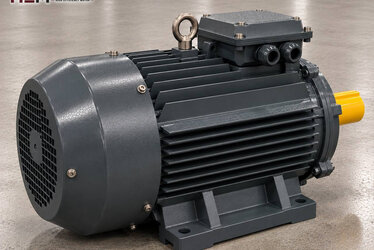
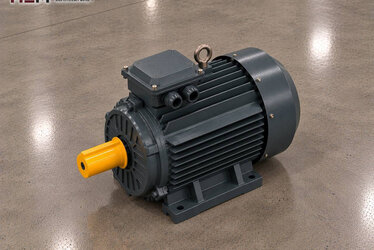
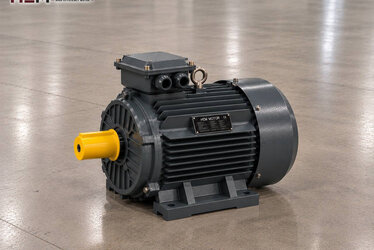
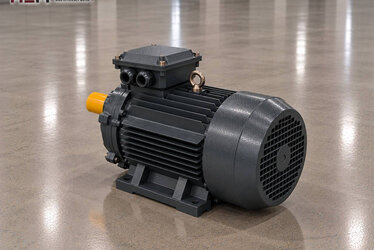
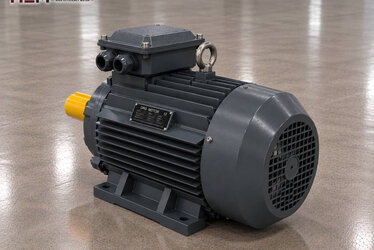
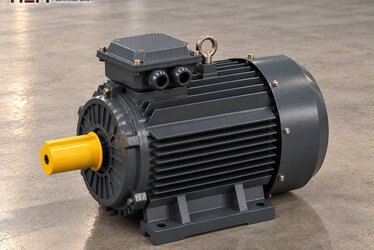
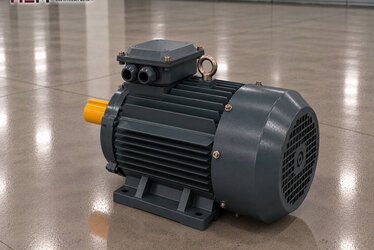
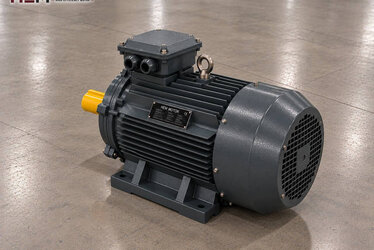
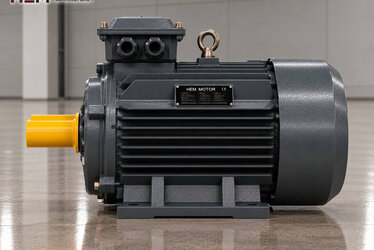
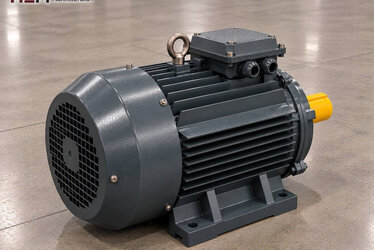
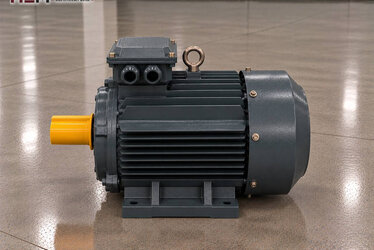
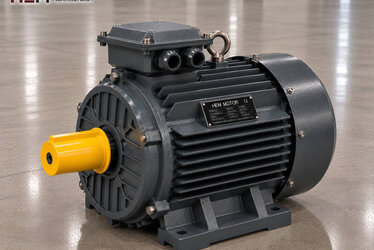
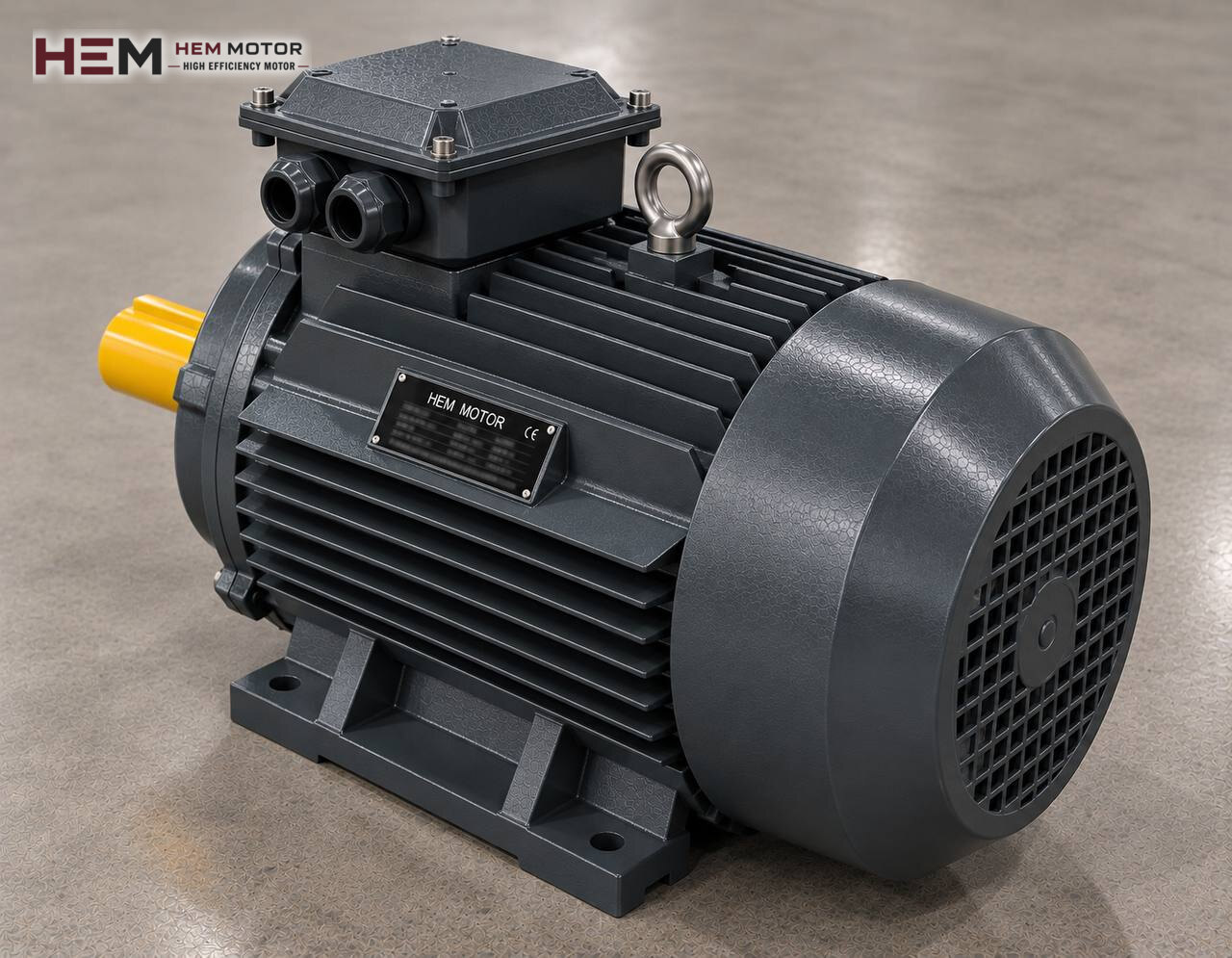
HEM motors are available in foot-mounted, flange-mounted, foot-and-flange and vertical designs depending on frame size; the flange and shaft size to suit the gearbox input are compared with the gearbox data at the time of order. Gearbox ratio and pulley diameter depend on the machine builder's calculation. The motor side of the subject is covered on the electric motors for gearboxes and conveyor belt electric motors pages.
At the end of the boom: rain, wind and hard-to-reach maintenance
The motor at the top of the boom is the most exposed equipment in the plant. It takes rain, sun and wind-borne fine dust directly. IP55 protection is an adequate start against dust and splashing water; a simple cover protecting the motor from rain and positioning the terminal box cable entry facing downward are the easiest ways to keep water out.
In conveyors that stand idle for days in winter, moisture can build up inside the motor; an anti-condensation heater to prevent this can be added with the order. Those who want to track winding heating can also request a version with a PTC thermistor. Because climbing to the end of the boom at every service is difficult, bearing greasing intervals and coupling and torque arm checks should be written into the maintenance plan and combined with plant shutdowns.
HEM model examples for belt and travel drives
4-pole motors used with a gearbox are the most common class for belt drives. For example, the cast iron 180M-4 model, with a rated speed of 1,470 rpm, delivers 120.2 Nm at 18.5 kW. On a longer and higher boom the 30 kW cast iron 200L-4 model produces 194.2 Nm at 1,475 rpm and draws 53.8 A at 400 V. For the geared motor unit driving the travel wheels of a radial stacker, small frames such as the 3 kW cast iron 100L2-4 are options worth checking.
| Movement | Motor's task | Selection point | Example HEM model |
|---|---|---|---|
| Fixed stacker conveyor belt | Lifting material along the incline | Boom incline, tonnage, loaded start | 180M-4, 18.5 kW |
| Long, high-boom belt | High lifting power | Starting method, supply capacity | 200L-4, 30 kW |
| Radial travel wheel | Moving the boom end along the arc | Gearbox flange, frequent stop-start | 100L2-4, 3 kW |
| Telescoping or boom luffing | Turning the hydraulic pump | Pump flow and pressure | According to pump data |
These pairings are only meant to give an idea; the final motor choice is determined by the conveyor's actual load, the required belt speed and motor speed, the connection type and site conditions.
What to prepare for a quotation
Write the type of stacker conveyor (fixed, radial, telescopic) and which movement you need a motor for; then add power (kW), speed (rpm), supply voltage, mounting type, gearbox connection and quantity. The length and incline of the machine and the material it carries also make evaluation easier. If a motor is being replaced, sending us a photo of the nameplate is the shortest route.
To see the cast iron and aluminium frame options in our shop with current prices, go to the buy electric motors page. If you would like to message us on WhatsApp or call, the numbers are on the contact page; motors held in the warehouse are shipped from Türkiye.
Frequently Asked Questions
Should the stacker conveyor motor be at the top or bottom of the boom?
The drive is usually at the head pulley that pulls the belt, that is, at the upper end of the boom. In some designs the drive is placed at the lower end; this decision belongs to the conveyor manufacturer and determines the motor's mounting type.
What should be checked if the motor will not start with a loaded conveyor?
First the load and any jamming on the belt, then the overload setting, starting method and voltage drop are checked. Star-delta starting may be insufficient on a steep, loaded belt.
Does changing belt speed with an inverter affect the motor?
Our three-phase series can be driven by an inverter. If it will run for a long time at low speed and full load, an external fan may be needed, and with long cables a dv/dt or sine filter; state this in the order.
What should be considered for the travel motor of a radial stacker?
These motors stop and start frequently and work in the open yard. A flange compatible with the gearbox, a suitable starting method and the arrangement that holds the wheel in its parked position are determined according to the machine builder's recommendation; request the motor together with this information.