English
 Français
 Türkçe
 Español
 Русский

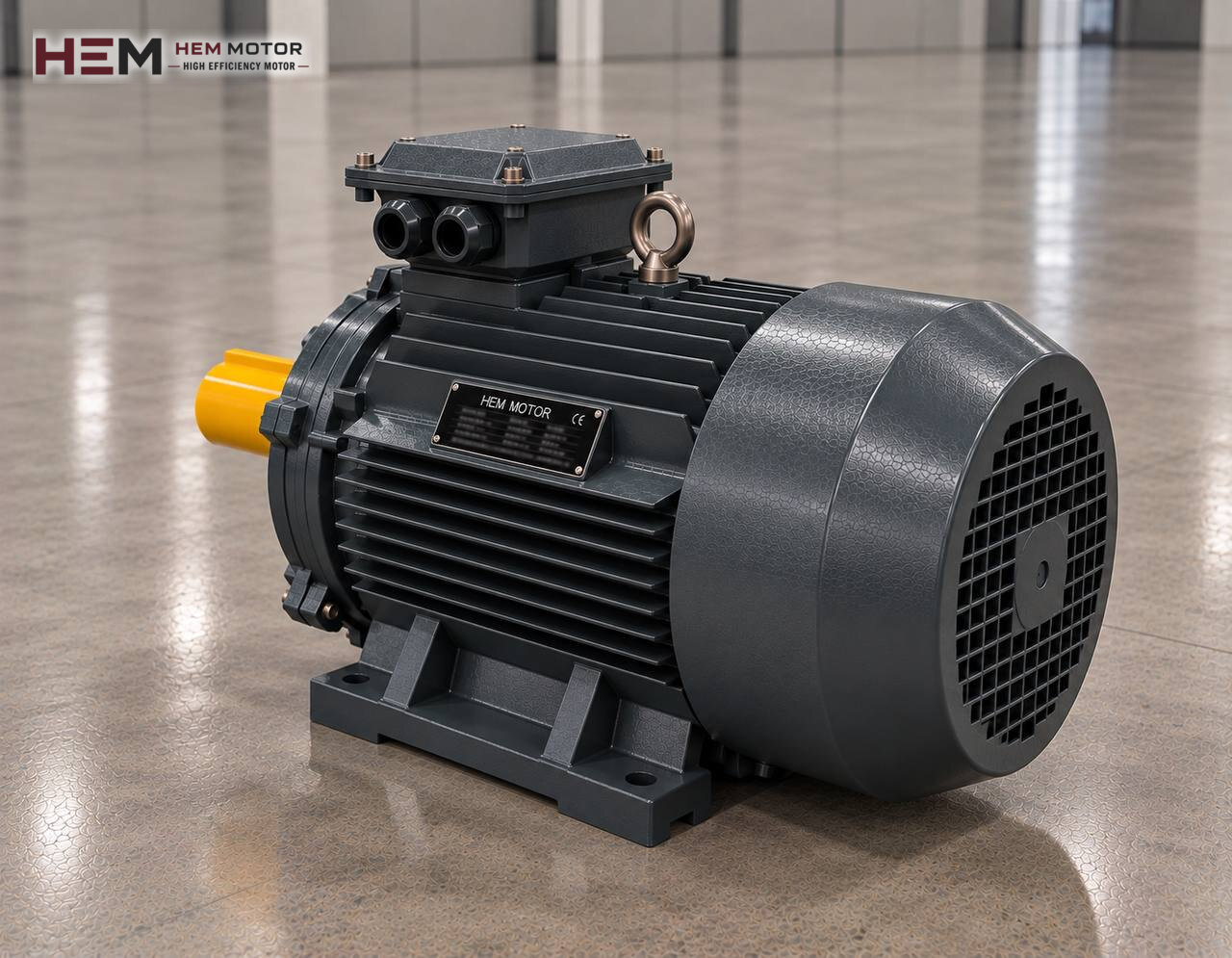
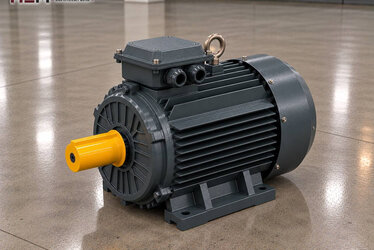
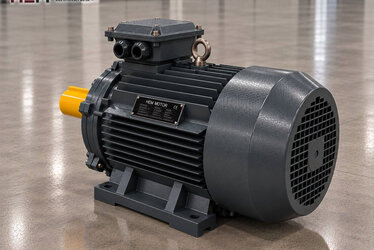
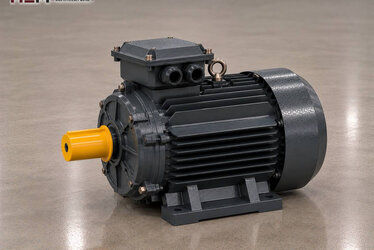
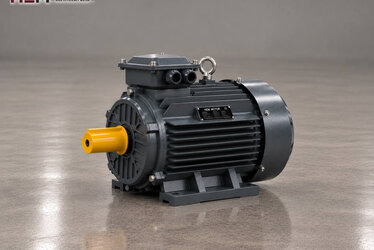
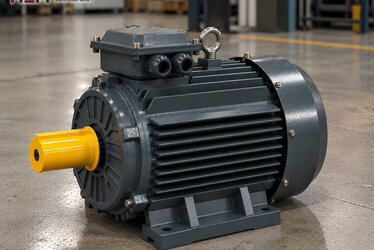
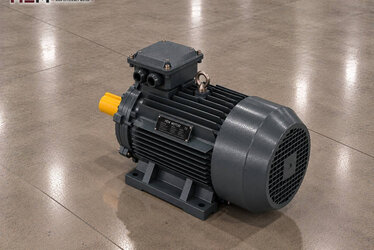
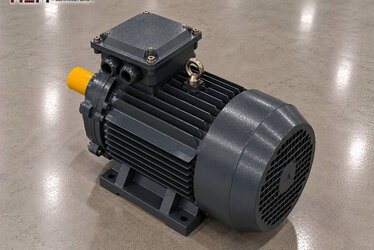
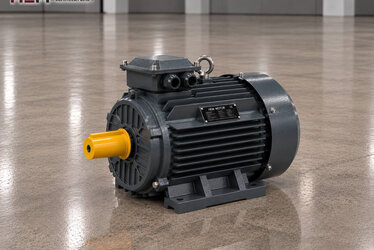
A bridge saw is a stone machine whose cutting head hangs from a bridge travelling on two side beams; it cuts marble, granite and engineered stone slabs to size. The other machines in a stone shop are gathered on the marble and natural stone processing motors page; this page covers only the three-phase asynchronous motors that turn the blade and the auxiliary movements of a bridge saw.

Bridge, carriage and head: a three-axis cutting layout
The frame of the machine consists of two parallel rails sitting on the shop floor or on concrete columns. The bridge travels back and forth on these rails, the carriage on top of the bridge moves the head crosswise, and the head lowers the blade into the stone and lifts it out. The stone lies on a fixed or rotating table; on some machines the table tilts hydraulically up to a vertical position for loading.
On a strip-cutting line the slab flows under the blade, whereas on a bridge saw the stone stays put and the blade is the part that moves. This difference also changes motor selection: the blade motor travels and tilts with the head and passes its vibration straight into the bridge.
How the blade motor works
The motor on the head runs at a fixed speed; the operator sets the cutting rate through the travel speed of the bridge or carriage. In thick granite the cut is usually made in several stepped passes rather than in one go. The blade goes a little deeper on each pass, and motor current rises with depth.
On heads where the blade is mounted directly on the motor shaft, the motor bearings carry not only rotation but also the blade weight and the cutting reaction. During side cuts the axial thrust on the blade loads the front bearing. That is why the shaft diameter, shaft length and bearing arrangement of the old motor must be measured before replacement; a different shaft end with the same kW rating will not seat the blade.
Some heads have a belt or a gearbox between motor and blade. In that layout the blade peripheral speed depends on the transmission ratio. Changing the pole count changes the ratio too; if a 2-pole motor is fitted instead of a 4-pole one, the blade may exceed the peripheral speed allowed by its maker.
Head tilt and motor position
For bevel or mitre cuts the head is tilted to the side. The motor then runs at an angle between horizontal and vertical. Standard frames can run in an inclined position, but for bearing lubrication and terminal box orientation it is sensible to state the maximum tilt angle of the head in the order.
Stopping, blade change and braking
A large-diameter blade keeps spinning freely for a long time after power is cut. The operator approaching the table or changing the blade has to wait for it to stop. To shorten the stop, some machines brake through the drive and others use a brake motor; if you need a brake motor, state it in the order.
After a blade change, check that the new blade has the same diameter and the same speed limit. Worn segmented blades make cutting harder; a gradual rise in motor current usually means the blade has glazed, not that the motor has weakened.
Travel, table and water drives
Bridge travel and carriage movement are done by small geared motors. Because the cutting rate changes with the stone, these motors are usually run from a frequency inverter. On CNC bridge saws with precise positioning the axes are moved by servo systems; servo motors are not part of HEM Motor's 2026 catalogue, while standard motors are used on geared travel drives and auxiliary drives. For gearbox connections see electric motors for gear reducers.
Turning the rotary table and raising or lowering the head are also handled by separate small motors or through a hydraulic unit. The pump that delivers blade cooling water normally runs with a 2-pole motor; for the pump side see pump electric motors.
Against splashing water and slurry
The blade guard holds back most of the water, but as the head turns and tilts, muddy water reaches the motor frame. Since the motor moves with the head, the splash direction changes from cut to cut. If dried stone slurry blocks the fan grille, the motor heats up; cleaning the grille and fins at the end of every shift is the cheapest maintenance step.
HEM three-phase motors are IP55; they are protected against dust trying to get in and against splashing water, but they are not built to run under a continuous water jet or hose washing. In that case the machine guarding should be improved or a special motor considered; write this condition in the order. In a cold workshop an anti-condensation heater, and a PTC or PT100 sensor for monitoring winding temperature, can be added with the order.
Example motors for bridge saws
| Drive | Load character | To check | Example HEM model |
|---|---|---|---|
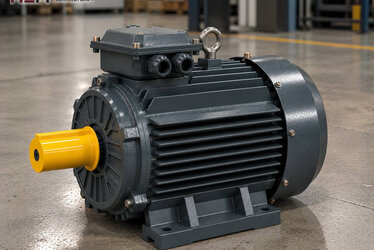
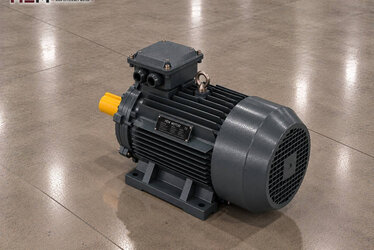
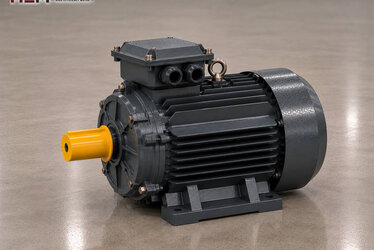
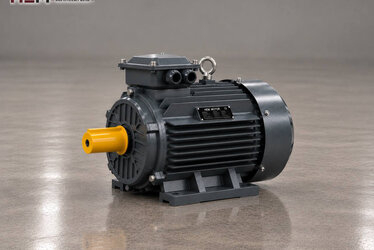
| Blade motor (large head) | Cutting load rising with plunge depth | Shaft end, bearing arrangement, head tilt | 18.5 kW 1,470 rpm cast iron 180M-4 |
| Blade motor (medium head) | Medium load on marble and thin slabs | Blade diameter, transmission ratio | 11 kW 1,465 rpm cast iron 160M-4 |
| Bridge or carriage travel | Geared movement with adjustable speed | Gearbox flange, inverter operation | 1.1 kW 1,445 rpm cast iron 90S-4 |
| Rotary table | Short, intermittent turning | Starts per hour | 0.55 kW 1,400 rpm aluminium 80M1-4 |
The ratings in the table show the range commonly seen on this type of machine; they are not a final selection. The right motor is determined by the head load, the required speed, the mounting arrangement and the workshop conditions. The most reliable starting point is the nameplate of the motor on the machine.
Mounting dimensions and drive notes
Head motors are mostly flange-mounted, while travel motors sit on their gearbox by flange. Depending on frame size, foot-mounted B3, flange B5 and B14, combined B34 and B35, and vertical V1, V3, V5, V6, V15 versions are offered. We compare the flange and shaft end dimensions with you before the order; the list is in the mounting arrangements question.
If you will run the blade or travel motor from a drive, note two points. If the motor will carry a heavy load at low frequency for long periods, the fan on its shaft cannot supply enough air and a separately powered fan may be needed. If the cable between panel and head is long, a dv/dt or sine filter at the drive output is considered. A short explanation is on the inverter operation page.
What to send us for a quotation
When writing about a bridge saw motor, include: the machine make and where the motor sits (blade, travel, table, pump), power (kW), speed (rpm), supply voltage, mounting type, quantity required and whether the motor runs from a drive or direct on line. If the blade mounts directly on the shaft, also give the shaft diameter and length.
A legible nameplate photo provides most of this in one go: find an equivalent motor from the nameplate. Power and speed options with prices are on the shop page; for WhatsApp and phone go to the contact page.
Frequently Asked Questions
Why does the blade motor current on a bridge saw rise during the day?
The most common reason is a glazed blade. As the segments polish, the stone cuts harder and the motor draws more current. Dressing or replacing the blade, reducing the feed rate and checking the cooling water are the first steps.
Is the motor harmed when the head tilts to the side?
Standard frames can run inclined. Still, stating the maximum tilt angle of the head and whether the blade sits directly on the shaft in your order helps select the right bearing and mounting arrangement.
The blade keeps spinning long after stopping; is a brake motor required?
It is not required; braking through the drive is another option. If the machine's safety design calls for a brake motor, state it when requesting a quotation.
Can I buy the axis motors of a CNC bridge saw from HEM?
Axes with precise positioning run on servo systems, and servo motors are not in our 2026 catalogue. We can quote standard three-phase drives such as the blade motor, geared travel drives, pumps and the hydraulic unit.