English
 Français
 Türkçe
 Español
 Русский
 العربية

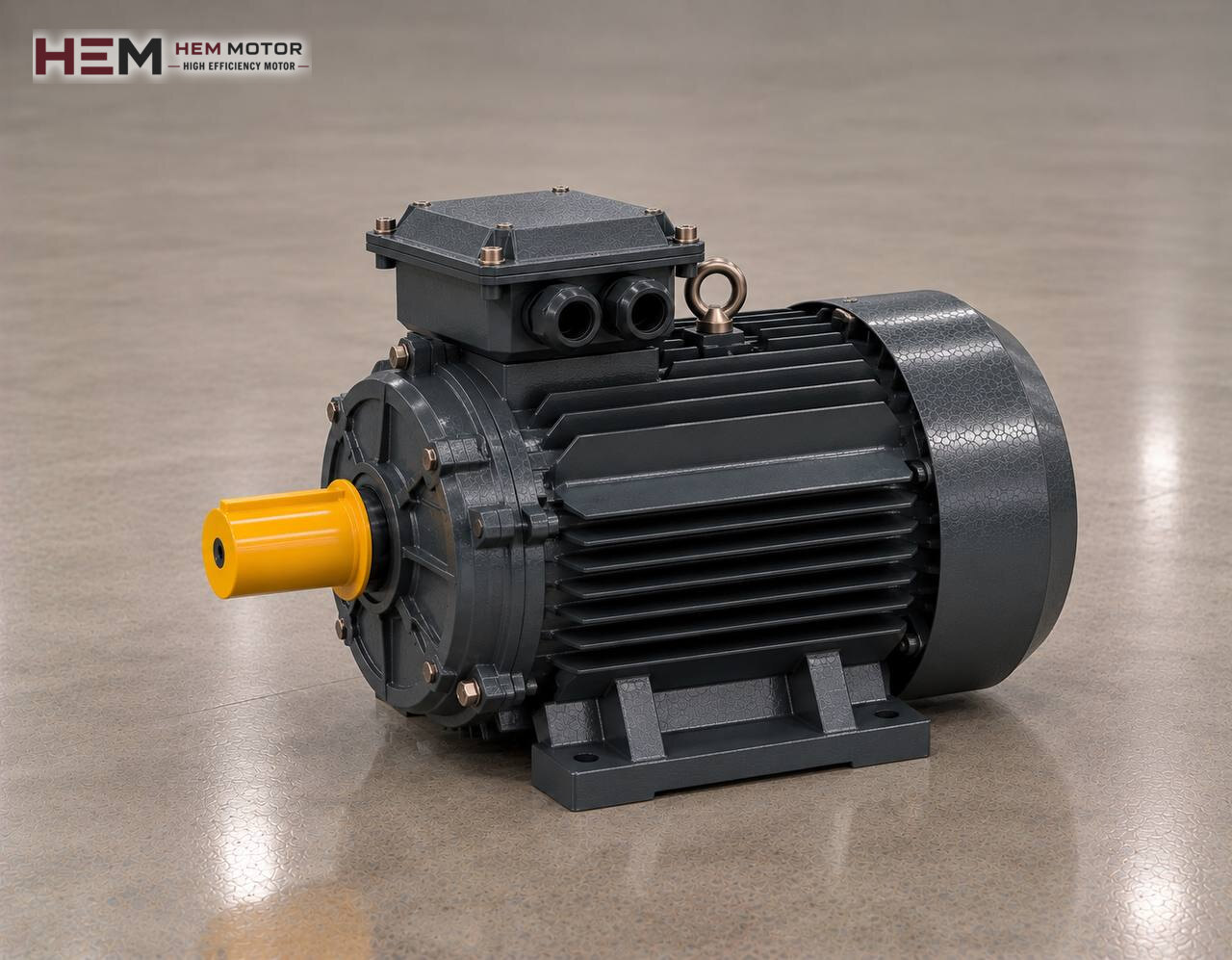
In enclosed car parks, vehicle exhaust gas, especially carbon monoxide, tends to collect under the ceiling and in corners. To remove it, ducted systems use large exhaust fans and ductless systems use jet fans suspended from the ceiling; clean air comes in through the ramps or from supply fans. This page covers the three-phase motor of fans that handle daily exhaust removal, and an important limit: fans that extract smoke in a fire are a separate class. For the parent topic, see the ventilation electric motors page.

The Motor's Task and Its Limit in a Car Park Fan
In ducted car park systems, the exhaust fan usually stands in a plant room or on the roof; the motor turns the centrifugal wheel by belt or directly, and the fan draws air through grilles in the car park ceiling. In ductless systems, jet fans push air along the car park towards the exhaust shaft; inside each jet fan, in the middle of the airflow, there is a small motor. In both layouts the motor's work is to turn the wheel or impeller.
The motor does not decide when the fans run. Carbon monoxide and nitrogen dioxide sensors, the automation panel and the fire alarm system control the fans. In a fire scenario, fan behaviour, fire dampers and the emergency power supply are defined in the building's fire safety design; these decisions belong to the design engineer and the competent authority.
Standard Motors Cannot Be Used on Smoke Extraction Fans
In many car parks the same fans are designed for both daily exhaust removal and smoke extraction in a fire. In a fire, the fan and its motor must be tested and certified to run for a specified time at, for example, 300 °C or 400 °C; these classes are indicated by codes such as F300 and F400. This certificate is a system property in which the fan and motor are tested together.
HEM Motor's standard IP55 motors do not have this kind of high-temperature certificate and are not suitable for fans with a smoke extraction duty. When the motor on such a fan fails, a special motor with the same certificate, as specified by the fan manufacturer, must be used. A standard motor can be considered only for fans designed solely for daily exhaust, with no smoke extraction duty. Always confirm which group your fan belongs to from the fan plate or the fire design.
Information Needed for a Car Park Exhaust Fan Motor
When looking for a motor for a fan confirmed to have no smoke extraction duty, collect the following: the fan type (ducted centrifugal, axial or jet fan), the airflow, pressure and speed on the fan plate, whether a temperature class is written on the fan plate, the nameplate values of the old motor, how the motor is connected to the fan, and the fan control arrangement.
In car parks, fans often run at two speeds: slow at low pollution, fast at busy times. This can be provided by a pole-changing two-speed motor or by an inverter. HEM's standard ranges are single-speed motors; if two speeds are needed, it should be clarified whether this will be met with an inverter. If the fan currently runs with a two-winding two-speed motor, its nameplate shows two power and two speed values; this information should also be sent with the request.
What Determines the Power and Speed of the Exhaust Fan?
The power of a car park exhaust fan comes from the operating point of the fan selected according to the air change requirement in the mechanical design. In ducted systems, duct length, grilles and bends determine the pressure the fan faces; the fan manufacturer writes the shaft power at this pressure in its data sheet. For a motor replacement, this value or the existing motor's nameplate is the basis.
In jet fans the motor is specially fitted inside the fan housing; the shaft end, mounting flange and frame dimensions may be specific to the fan manufacturer. So when replacing a jet fan motor, the fan model and motor dimensions need to be compared with particular care. On belt-driven centrifugal exhaust fans, the wheel speed is set by the pulley ratio; if the motor is chosen with the same speed, the fan's operating point does not change.
| Car park fan type | Smoke extraction duty? | What it means for the motor | Example HEM model |
|---|---|---|---|
| Ducted centrifugal exhaust fan, daily exhaust only | None (confirmed by plate and design) | A standard motor can be considered; belt or coupling connection is checked | 15 kW 1500 rpm cast iron (160L) |
| Plant room axial exhaust fan, daily exhaust only | None (confirmed) | Shaft connection and mounting orientation are compared | 7.5 kW 1500 rpm cast iron (132M) |
| Fresh air supply fan | Depends on the design | The duty is read from the design | 4 kW 1000 rpm cast iron (132M) |
| Smoke extraction fan or F300/F400 rated jet fan | Yes | A standard motor is not suitable; the fan manufacturer's certified motor is required | No example given |
The models in the table are examples only for fans without a smoke extraction duty and are not a final selection; they must be confirmed against the fan plate, the design and the connection dimensions.
Dimensions to Compare on the Fan Base and Flange
The first value checked in a replacement is the IEC frame number; this number ties dimensions such as shaft centre height, foot hole spacing and shaft diameter to a standard system. Which frame corresponds to which dimensions can be seen in the frame size table.
On centrifugal exhaust fans the motor is fixed by its feet to a base; foot holes, shaft height, shaft diameter and length, key and the position of the pulley or coupling are compared. On axial fans the motor is usually fixed by flange or feet to a support inside the fan housing; here the flange diameter, bolt circle and fit of the shaft in the impeller hub matter. Mounting arrangements are listed on the mounting options page. On the electrical side, nameplate voltage, connection (star/delta) and rated current are compared with the new motor.
Exhaust Gas, Moisture and Winter Cold: How the Car Park Affects the Motor
During daily exhaust removal, the fan motor meets air mixed with vehicle exhaust, tyre dust, and moisture from snow carried in and melting in winter. Fans near the ramps are exposed to outdoor temperatures; on very cold winter days the motor location can drop below zero.
HEM motors have IP55 protection and class F insulation. The catalogue is based on an ambient temperature between minus 15 and plus 40 degrees and an altitude of no more than 1000 metres; a colder ramp exit or a high-altitude building should be stated in the order. This temperature range is for normal operation; temperatures in a fire are far above this limit and, as explained above, require a certified motor. Condensation can form inside the housing of fans that stand idle for long periods; an anti-condensation heater and a PTC/PT100 winding sensor are order options.
Sensor Control, Staged Speed and Inverter
Car park fans often run on the command of carbon monoxide sensors: when pollution is low, fans stop or turn slowly, and at busy entry-exit times they switch to full speed. Switching on and off several times a day is normal; but if the sensor setting is too sensitive, the fan starts very often. The number of starts per hour and the starting method should be stated in the request.
If an inverter will be used to adjust fan speed, our three-phase ranges are suitable for speed control by inverter. Fan load falls quickly at low speed, so motor heating at low speed is usually not a problem; however, if long periods at very low frequency are expected, an external fan is considered, and if the cable between panel and fan is long, a dv/dt or sine filter. Issues such as bypassing the inverter in a fire scenario fall within the fire design and should not be confused with motor selection.
What to Send for Replacing a Car Park Fan Motor
To identify an equivalent motor, it is enough to send the following information via WhatsApp. Tips for the nameplate photo are on the send the motor nameplate page.
- The fan machine's plate: especially whether a temperature class such as F300 or F400 is written on it
- Information from the design or building management on whether the fan has a smoke extraction duty
- Photo of the motor nameplate: power, speed, voltage, current and frame
- Fan type (ducted centrifugal, axial, jet fan) and how the motor is connected to the fan
- Mounting type, shaft diameter and a photo of the motor base or flange
- Control arrangement: sensor-based, two-speed, inverter or direct
- How many motors are needed
If a temperature class appears on the plate, or the fan is stated to have a smoke extraction duty, the fan manufacturer should be contacted for the replacement. In other cases you can send the information to the WhatsApp line on the contact page.
Motor Groups in the Shop for Daily Exhaust Fans
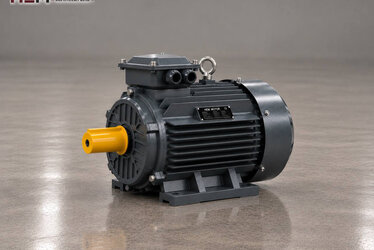
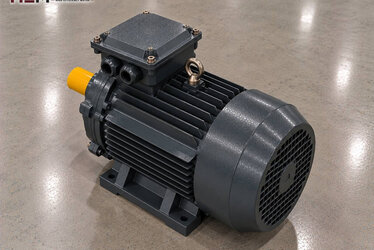
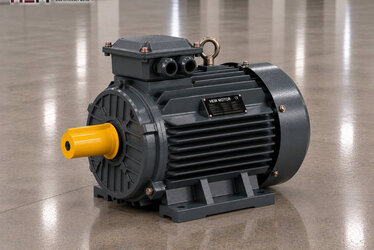
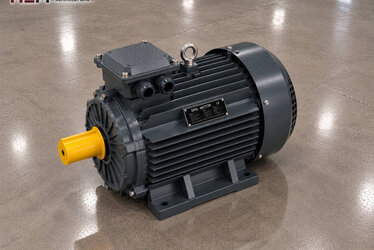
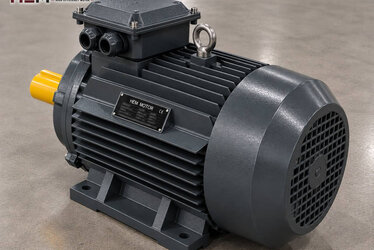
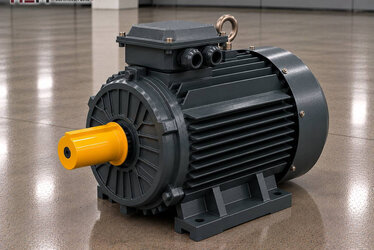
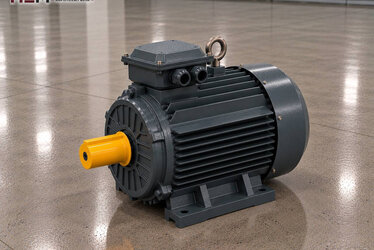
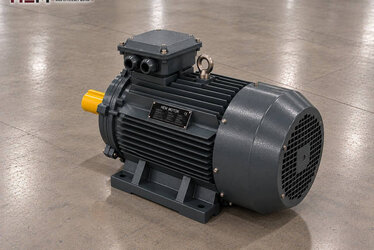
Motors that may suit car park exhaust and supply fans without a smoke extraction duty are listed in the shop. For large centrifugal fans, cast iron frame motors are usually examined; for low-power axial fans, aluminium frame motors can also be considered. As examples, see the 15 kW 1500 rpm cast iron motor, the 7.5 kW 1500 rpm cast iron motor and the 4 kW 1000 rpm cast iron motor. These are examples; their suitability for your fan is confirmed separately by the fan plate, power, speed and connection dimensions.
Frequently Asked Questions
The motor of my car park jet fan has burnt out; can I fit a standard motor?
Check the fan plate first. If there is a temperature class such as F300 or F400, or the fan has a smoke extraction duty, a standard motor is not suitable; the fan manufacturer's certified motor is required. In addition, jet fan motor dimensions may be specific to the fan.
How do I find out whether my fan has a smoke extraction duty?
The fan plate, the building's fire safety design and the building management's technical file contain this information. If you are not sure, consult the engineering firm that prepared the design or the fan manufacturer.
Can a single-speed motor with an inverter be used instead of a two-speed car park fan motor?
For daily exhaust fans this is a common solution, but the control panel must also be arranged accordingly. On fans with a smoke extraction duty, such a change cannot be made independently of the fire design.
Why does the car park fan switch on and off so often during the day?
The on and off thresholds of the carbon monoxide sensor may be set very close to each other. This strains the motor with frequent starts; it is advisable to review the settings with the automation company.
Does the fan motor next to the ramp freeze in winter?
The catalogue value is minus 15 degrees. If the location is colder, state it in the order; an anti-condensation heater can also be requested against condensation during long stoppages.