English
 Français
 Türkçe
 Español
 Русский
 العربية

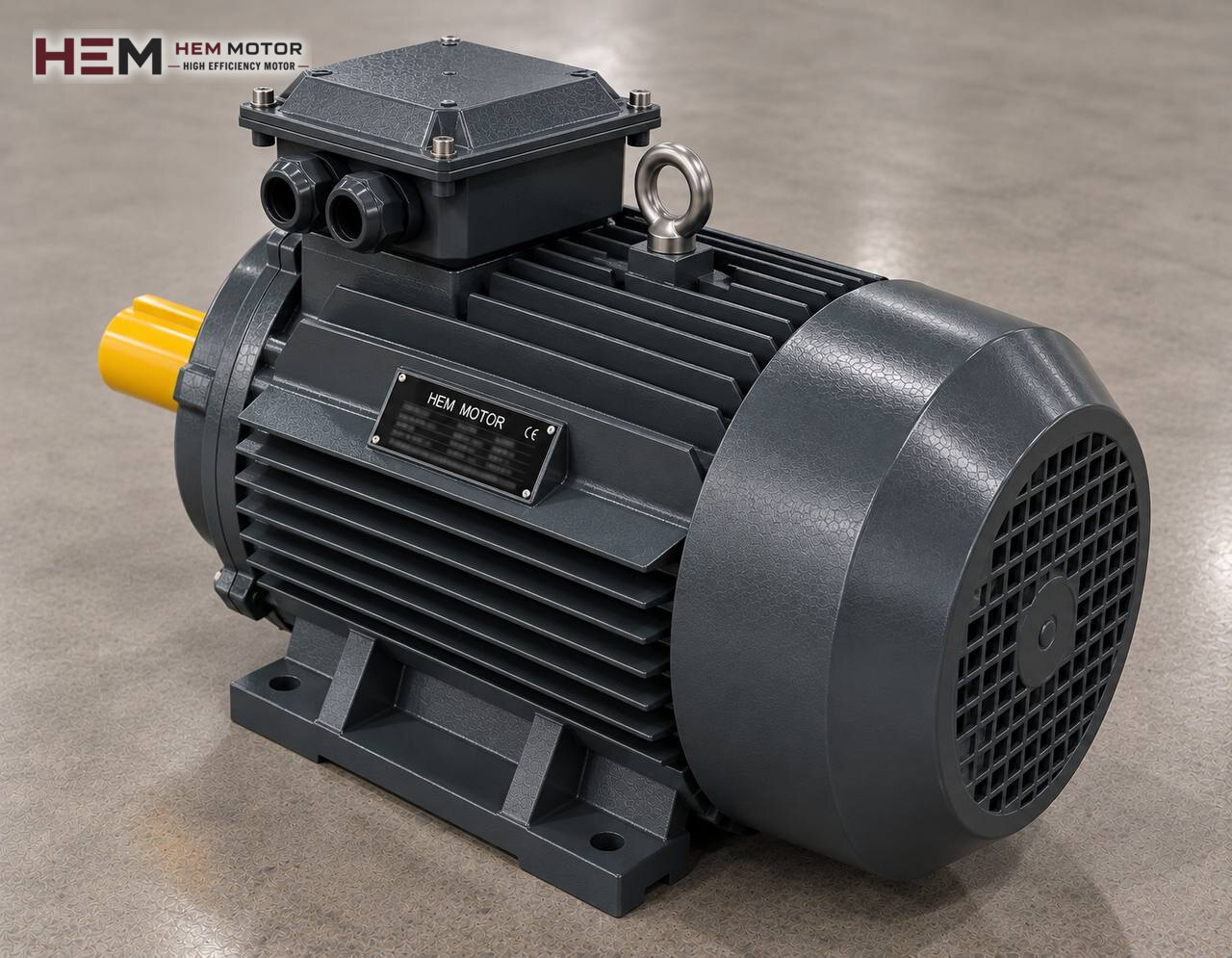
The fume rising from molten metal and electrode coating during welding consists of very fine metal oxide particles and gases, and it must be removed quickly from the welder's breathing zone. Workshops use three arrangements for this: mobile extraction units connected to a welding table or a single station, central systems collecting several extraction arms through a common duct, and general hall exhaust drawing the fume cloud from under the ceiling. All three contain a fan moving the air and a motor turning it. Other fan applications can be reached from the ventilation electric motors page; this article focuses on the motor of the welding fume extraction fan.

What Does the Motor Turn in an Extraction Unit, and What Does It Not Do?
The motor's task is to turn the fan impeller that draws the fume-laden air from the extraction arm or hood through the filter unit and returns it outside or to the room. Welding fume extraction fans are mostly centrifugal, because the narrow extraction arm, flexible hose, spark arrestor and cartridge or bag filter together create high resistance, and an impeller able to generate pressure is needed to overcome it.
The filter cleaning system (cartridge cleaning by compressed-air pulse), spark arrestor, dust bin, arm dampers and differential pressure gauge are parts of the filter unit. The motor does not provide them and does not replace them. Whether harmful substances in the air stay below workplace limit values is also a matter of measurement and system design; motor selection does not answer this question.
Sparks, Metal Dust and the Possibility of an Explosive Atmosphere
Hot sparks and grinding dust are sometimes drawn in with the welding fume. Filter units therefore place a spark arrestor on the suction side and usually keep the motor on the filtered, clean-air side. In this arrangement the motor is protected from direct impact of metal oxide dust.
In some jobs the risk is the dust itself. Fine dust generated when welding, cutting or grinding aluminium, magnesium and similar light metals can create a flammable or even explosive atmosphere in the dust bin and the duct. If cleaners containing solvents are used on the same line, vapour risk is added. If such a location is classified as an explosive atmosphere (ATEX) zone in the operator's assessment, a standard IP55 motor cannot be used there; an Ex-certified motor is required, and such motors are not included in HEM Motor's 2026 catalogue. Solutions such as moving the motor out of the airflow or driving the fan by belt are the decision of the unit manufacturer and the operator.
What Is Needed for a Welding Fume Fan Motor Enquiry
Before a motor request, the type of extraction system should be clear: a single-arm mobile unit, a multi-arm central system or the enclosed hood of a robot welding cell? The unit brand and model, the fan-to-motor connection (impeller directly on the shaft or belt-driven) and whether the motor sits before or after the filter are asked. The nameplate of the existing motor gives power, speed, voltage, current and IEC frame size.
The material being welded should also be known: steel, stainless, aluminium or galvanised sheet. The material gives an idea both of the flammability of the dust and of how fast the filter loads. Whether the system runs continuously through the shift or starts automatically only during welding also matters for control and the number of starts.
Pressure, Number of Arms and the Fan's Power Demand
In welding fume extraction the two main factors determining fan power are the number of extraction points open at the same time and the total resistance of the system. In a single-arm mobile unit the resistance is high and the flow relatively low; in a central system flow grows as the number of arms increases. This calculation belongs to the unit or system manufacturer. When replacing a motor, the power and speed on the fan plate or the old motor's nameplate should be the basis; a generalisation such as "this many kW is enough for welding extraction" should not be made.
To overcome high resistance, the impeller in compact units is often driven directly by a 2-pole motor of about the 3000 rpm class. In large central systems, larger-diameter impellers may be used with a belt or a 4-pole motor. Since raising the speed on the same unit increases fan power roughly with the cube of speed, trying to get "stronger suction" with a faster motor overloads the motor.
| Extraction system | Fan and motor connection | Key information for motor selection | Example HEM model |
|---|---|---|---|
| Single-arm mobile welding fume unit | Impeller directly on the shaft, after the filter | 2-pole speed for high pressure | 1.5 kW, 2,895 rpm, 90S-2 |
| Wall-mounted central unit with several arms | Direct drive, on the clean-air side | Number of arms open at once | 4 kW, 2,905 rpm, 112M-2 |
| Robot cell or welding line hood | Direct drive or belt-driven, in a fan room | Shift length, duct length | 5.5 kW, 2,930 rpm, 132S1-2 |
The models in the table are examples, not a final selection; the decision is based on the unit manufacturer's power and speed data, the motor position and the explosive atmosphere assessment of that location.
Comparing Flange, Shaft and Frame Dimensions with the Unit
In compact welding fume units the motor is often flange-mounted on the side of the fan scroll and the impeller sits directly on the shaft end. So the first information to check is the IEC frame size; then whether the flange is B5 or B14, the flange diameter, shaft diameter and length and key size are checked. Since the position of the impeller inside the scroll depends on shaft length, a difference here can make the impeller rub against the housing. For large fans sitting on a base, the foot hole spacing and shaft height of the foot-mounted (B3) frame are also compared. The electrical values, i.e. nameplate voltage and current, must suit the same network as the old motor.
The distribution of mounting arrangements by frame is on the mounting arrangements page, and basic dimensions are in the frame size table. Exact flange and shaft dimensions are confirmed with the order.
Workshop Environment: Dust, Heat and the Movement of Mobile Units
Even if the motor stands after the filter, the air in a welding shop is dusty and the space under the roof gets quite hot in summer. For the catalogue ratings, ambient temperature should be between −15 and +40 degrees and the installation at no more than 1000 metres altitude; a hotter fan room or a high-altitude site should be written in the order. The IP55 protection of our motors is against dust ingress and splashing water and comes with class F insulation; it is not protection against sparks or hot slag, which is expected from the unit's spark arrestor.
Mobile units constantly change position in the workshop; vibration and strain on the supply cable and plug can loosen connections in the motor terminal box. A sound cable entry and periodic checks of the terminal connections are important for such units. For units stored in cold warehouses and brought into a warm workshop, an anti-condensation heater and a PTC sensor to monitor winding temperature can be requested as order options.
The Fan That Starts with the Weld: Number of Starts and Speed Control
Some systems detect the welding current and start the fan automatically, stopping it a while after welding ends. In this arrangement the fan may start many times an hour. Each start heats the motor; especially with 2-pole motors, starting current and duration should be considered in the protection setting. Where very frequent switching is wanted, running the fan continuously at low speed and speeding it up during welding may be a more suitable solution.
This speed change is done with a frequency inverter. Our three-phase motors can be run on a drive; details are on the inverter-compatible motors page. In central systems, keeping suction pressure constant according to the number of open arms is also a common drive application. Since power falls at low speed with a fan load, an additional cooling fan is generally not required; if the cable between drive and motor is long, a suitable filter should be considered.
Information to Provide When Replacing an Extraction Unit Motor
You can send your request by WhatsApp. Writing power, speed, voltage, mounting type and quantity in addition to a nameplate photo of the old motor speeds up the quotation. WhatsApp and phone details are on the contact page.
- Unit or machine brand, model and number of extraction arms
- A readable photo of the motor nameplate and the IEC frame size
- Flange type (B5/B14) or foot mounting; shaft diameter and length
- Whether the motor sits before or after the filter
- Material being welded and the explosive atmosphere assessment of the area
- Automatic starting or drive use, supply voltage
Product Groups to Review for Welding Extraction Fans
The models on sale can be seen in our electric motor store. For the small and medium powers in mobile and wall-mounted units the aluminium frame group, and for large central extraction fans the cast iron frame group can be reviewed. Example models: 1.5 kW 90S-2, 4 kW 112M-2 and 5.5 kW 132S1-2. These are examples; their suitability for the unit is verified separately.
Frequently Asked Questions
Why is the motor placed after the filter in a welding fume unit?
The air after the filter has been cleaned; the motor and impeller are protected from metal oxide dust and sparks. This arrangement is the unit manufacturer's design choice and should be kept during replacement.
Can a standard motor be used in a workshop welding aluminium?
Aluminium dust can be flammable and explosive. If the area or dust bin is classified as an explosive atmosphere, a standard IP55 motor cannot be used; Ex-certified motors are not included in our 2026 catalogue.
Will suction improve if I fit a faster motor?
As speed rises, the fan's power demand grows very quickly and the motor may be overloaded. If suction is insufficient, filter loading, duct leaks and the number of open arms should be checked first.
The fan switches itself on and off as welding starts; can the motor withstand this?
Frequent starting heats the motor. If the number of starts per hour is high, solutions such as continuous low-speed running with a drive or a switch-off delay should be assessed with the unit manufacturer.
Our mobile unit plugs into a single-phase socket; will a three-phase motor fit?
A three-phase motor needs a three-phase supply. For small single-phase units, our single-phase motors in the 0.18–5.5 kW range can be considered; suitability is checked against the unit data.