English
 Français
 Türkçe
 Español
 Русский

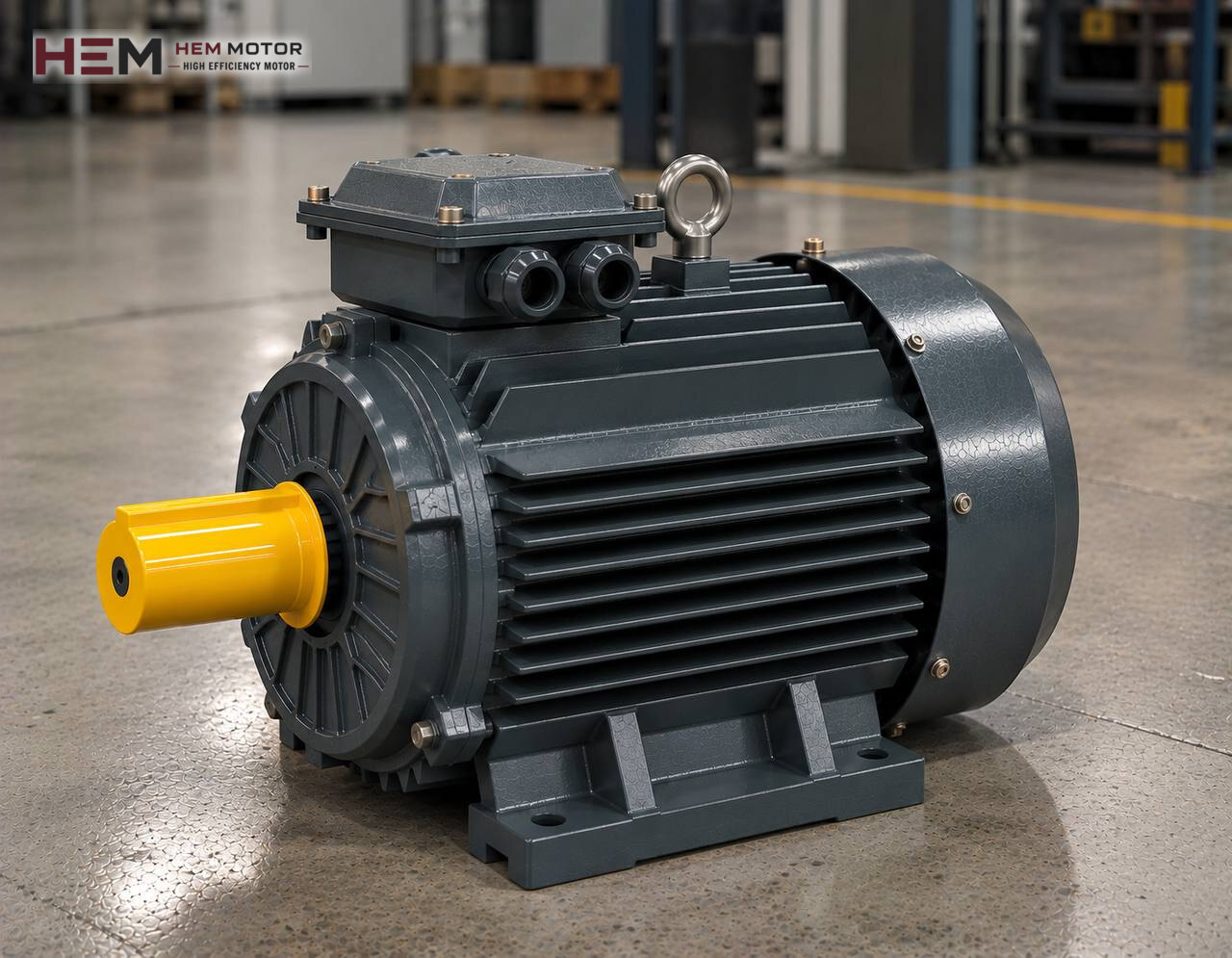
In free-stall dairy barns, manure in the walking alleys is pushed into a channel or pit by a scraper blade that moves slowly along the floor. The only source of motion in this system is the electric motor working in the drive unit in one corner of the barn. This page describes that drive motor and its heavy, damp environment; for other drives in the barn and on the farm, see the agricultural machinery electric motors page.

How does the scraper system move?
A V-shaped or straight blade lies on the alley floor. The blade is attached to a steel rope, synthetic rope or chain, and this pulling element runs over pulleys at both ends of the alley to the drive unit. The motor in the unit, together with a gearbox, turns the drum or chain sprocket; the blade travels along the alley at a very low speed, on the order of a few hundred metres per hour.
Going one way the blade opens its wings and pushes manure ahead; on the return it folds its wings and slides over the manure. In some layouts a single drive unit pulls two parallel alleys together: one blade goes out while the other comes back. The system runs several times a day on a timer, or continuously.
The motor's load: slow, heavy and two-way
In a scraper the motor tries to drag the manure mass along the floor via the rope or chain. This load changes with manure consistency, the amount piled in front of the blade and floor condition. As the blade approaches the end of the alley, the manure pile in front grows and the pulling force increases. That is why the drive unit has a current or force limiter that stops the motor on overload.
Reversing is a normal part of this machine. When the blade reaches the limit switch at the end of the alley, the control panel stops the motor and restarts it in the opposite direction. So the motor starts under load many times a day. Because the gear ratio is very high, inertia on the motor side is small, but starting torque must be sufficient; on frozen or dried manure the blade is slow to break away.
Gearbox and drive unit layout
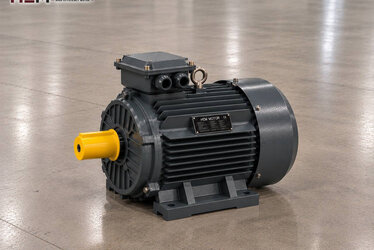
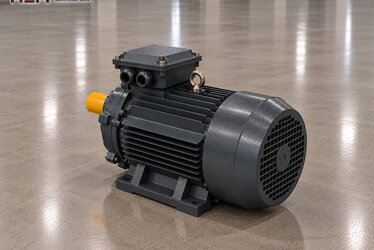
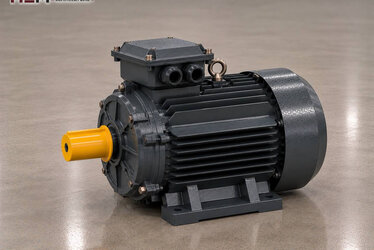
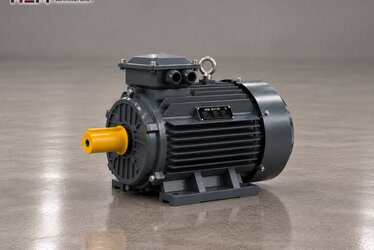
In the drive unit the motor is almost always connected to a gearbox. Because a very high ratio is needed, worm or multi-stage gearboxes are used, and the motor is usually fitted to the gearbox input flange. In this arrangement the flange type and shaft size must match correctly between motor and gearbox. HEM motors are available, depending on frame, in B3, B5, B14, B34 and B35 versions; share the connection dimensions of the existing gearbox in your order. Detailed information on matching is on the electric motors for reducers page.
Some modern systems use a frequency inverter to adjust blade speed to the manure load or to soften starting. Our three-phase series are suitable for inverter operation; if the motor will stay at full load at very low frequency for long periods a separate cooling fan may be required, and a filter is considered if the inverter cable is long. These details should be shared in the order.
The barn environment: ammonia, moisture and cold
The manure scraper drive unit sits in the harshest part of the barn. Ammonia and other gases released from manure combine with humid air and corrode metal surfaces; in winter, temperatures in open barns drop below zero and condensation and icing appear on the motor frame. Under these conditions the terminal box gasket and cable entries become important.
HEM models on sale are IP55 protected with class F insulation. The motor should be kept away from manure splashes and direct water jets, preferably under the unit's protective cover. A standard IP55 motor is not designed to be buried in manure, submerged or pressure-washed; if the drive unit is in such a position, a protective measure by the machine manufacturer or a special motor is needed and this must be stated in the order. For motors that stand idle for long periods, an anti-condensation heater is an order option.
Points to watch during maintenance
In the drive unit, besides the motor, the gearbox oil, rope wear and pulley rotation are checked regularly. A rope that has lost tension makes the blade move jerkily and causes sudden spikes in motor current. A layer of dry manure and dust on top of the motor frame reduces cooling; during cleaning, water should not be aimed directly at the motor. Those who want to monitor winding temperature can add a PTC sensor as an order option.
Example HEM models and selection table
In a small single-alley system, the 1.1 kW aluminium 90S-4 delivers 7.27 Nm at 1,445 rpm. For longer alleys or a unit pulling two blades together, the 1.5 kW cast iron 90L-4 (1,445 rpm, 9.91 Nm) can be considered. On heavy systems where a low gearbox input speed is wanted, the 6-pole 2.2 kW cast iron 112M-6 produces 22 Nm at 955 rpm.
| Scraper layout | Nature of the load | To state in the order | Example HEM model |
|---|---|---|---|
| Single alley, short run | Low speed, two-way starts | Gearbox flange, shaft size | 90S-4, 1.1 kW |
| Double alley, shared unit | Pulls two blades together | Alley length, start frequency | 90L-4, 1.5 kW |
| Long alley with heavy manure | High pulling force | Number of poles, gear ratio | 112M-6, 2.2 kW |
| Inverter speed control | Long operation at low frequency | External fan, cable length | 90L-4, 1.5 kW |
The models listed are examples only; the right motor is determined by the amount of manure pulled, alley length, gearbox arrangement and barn conditions together.
Information needed for an order
Tell us the make of the scraper system and the number and length of the alleys. Contact us with the nameplate power (kW), speed (rpm), the barn's supply voltage, mounting type (flanged to the gearbox or foot-mounted), gearbox type and quantity. A nameplate photo of the existing motor is the quickest way to find the right equivalent.
Current prices and all models are in the shop; to reach us by WhatsApp or phone, use the contact page.
Frequently Asked Questions
Why can't the scraper motor start on winter mornings?
Manure that freezes overnight sticks the blade to the floor and increases the force needed for the first movement. Running the system at intervals during the night or softening the start with an inverter reduces this problem.
Can the motor be placed above the manure channel?
This area, where gas and moisture are most concentrated, is not suitable for the motor. The drive unit should be placed in a sheltered spot away from the channel; if there is no other option, state this in the order.
Does reversing wear out the scraper motor?
As long as reversing is done after the motor has stopped, it is normal operation. If the control panel switches the motor to the opposite direction before it has fully stopped, this setting should be corrected.
Can I fit a motor with a different speed in place of the old one?
If the speed differs, blade speed changes too. A faster blade can splash manure into the channel, while a slower one may not clear the alley in time; so the same speed is preferred.