English
 Français
 Türkçe
 Español
 Русский

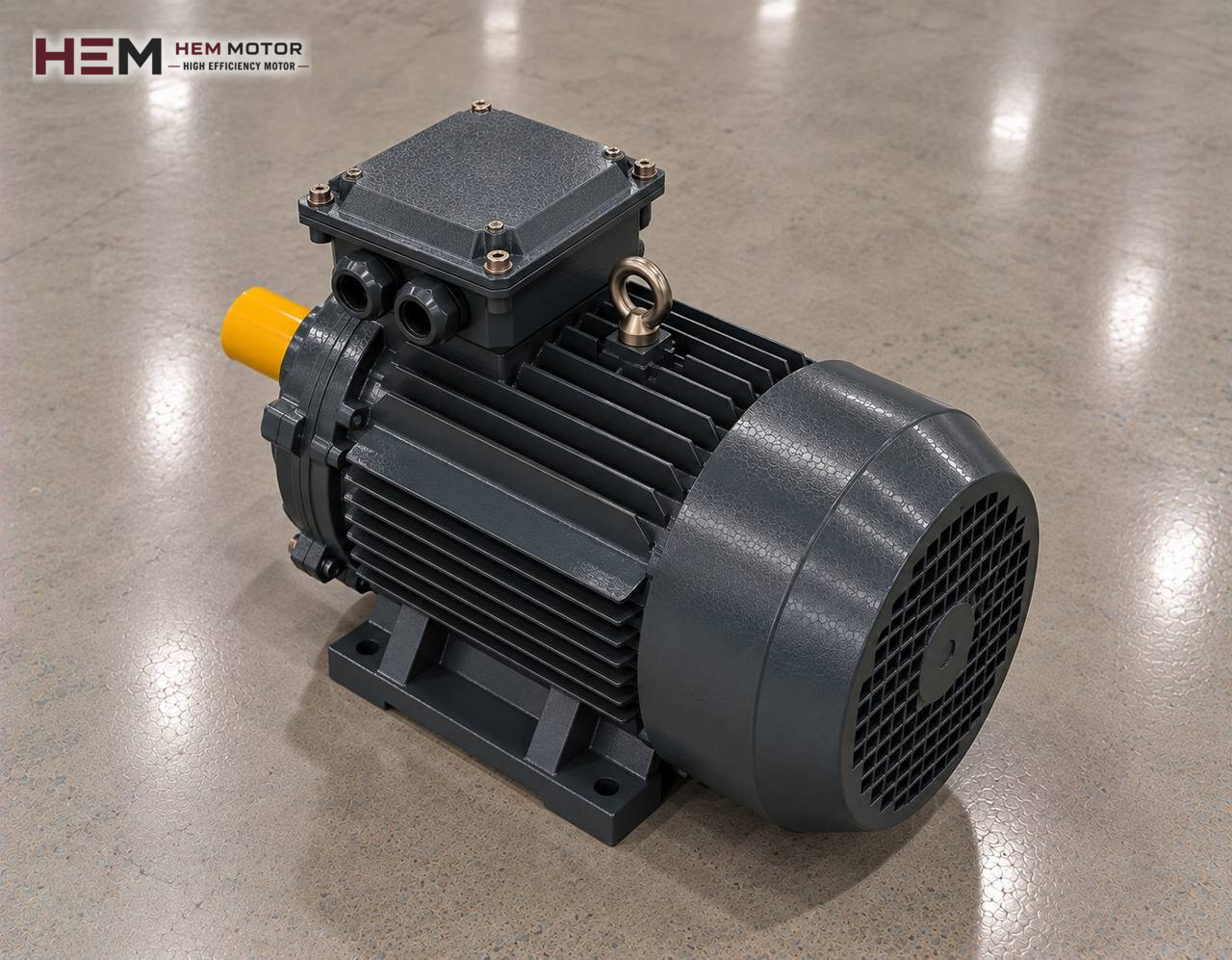
In a milk cooling tank the compressor produces the cold, but whether every part of the milk cools evenly depends on the paddle shaft inside the tank slowly turning the milk. This page deals only with the small electric motor that drives that agitator. For the motors of the other machines used on the farm, the agricultural machinery electric motors page is the starting point.

Why the Agitator Is Indispensable in the Tank
Milk arriving from milking is close to body temperature and fills the tank layer by layer. Cooling takes place only through the evaporator surface in the tank bottom and side walls. If the milk is not moved, the part near the wall cools quickly while the centre stays warm and cream collects on top. The agitator keeps passing the milk over the cold surface, holding the temperature the same everywhere in the tank, and ensures that the sample taken when the collection truck arrives truly represents the tank.
The motor here does not cool the tank; the compressor, condenser fan and discharge pump are separate drives. The agitator's job is to keep the volume uniform, so the motor's power is small while its duty pattern is quite specific.
How the Agitator Drive Is Built
Motor, gearbox and paddle
On closed tanks the motor usually sits upright on the tank lid or top bridge; its shaft points down and drives a long agitator shaft through a gearbox. The wide paddle at the end of the shaft turns the milk slowly without whipping it. On open round tanks a similar arrangement sits on a support fixed to the upper rim of the tank.
To make the paddle turn slowly, motor speed is reduced by a large ratio in the gearbox. The motor itself can therefore be a standard four- or six-pole motor; the gearbox provides the low paddle speed. General information on geared arrangements is on the electric motors for reducers page.
Mounting position
The vertical shaft-down position (V1) is the most common arrangement in this application; the motor is joined to the gearbox by a flange. In this vertical layout the top of the motor is exposed to water dripping from the ceiling and to condensation; stating the position in your order makes it easier to choose the right bearing and cover arrangement. Depending on frame size, B5 and B14 flange and V1, V3, V5, V6, V15 vertical positions can be prepared; flange size and shaft diameter are confirmed against the gearbox input.
Intermittent Duty and Frequent Starts
The agitator's operating pattern differs between milking and storage. While milk is entering the tank, the agitator usually runs continuously together with cooling. Once the milk has reached the target temperature and the holding period begins, the tank controller runs the agitator for a few minutes at set intervals. Over a day this means dozens of starts and short runs for the motor.
Because the paddle's inertia is small, each start is easy; even so, very frequent starts heat the winding. Considering that in summer the motor works under the hot ceiling of a milk room, a PTC sensor (order option) can be considered to monitor winding temperature. If the agitator shares controls with the cooling circuit, the motor's protective relay must be set to the correct current; the 400 V rated current on HEM product pages is the reference for this setting.
Milk Room Conditions and the Motor's Limits
A milk room is washed every day. The inside of the tank is cleaned by an automatic washing system, while the outside and the floor are mostly hosed down. Our motors are in protection class IP55; however, direct hose spray, pressure washing or permanently wet conditions are outside this class. If the motor is on the tank lid it is usually covered by a hood; this arrangement is made by the tank manufacturer. If you need different protection, tell us in your order.
The motor does not touch the milk; the parts that do are the agitator shaft and paddle, and their food-grade material is the tank manufacturer's concern. To keep dust and dirt on top of the motor from falling into the milk, make sure the covers fit properly and the area around the motor is kept clean. A motor close to the cold tank surface may show condensation during night stoppages; an anti-condensation heater is an option in that case.
Example HEM Models for the Agitator Motor
| Tank layout | Motor load | Key selection point | Example HEM model |
|---|---|---|---|
| Small closed tank, single agitator | Light, intermittent | Gearbox flange, V1 position | 0.25 kW, 1,340 rpm, 71M1-4 aluminium |
| Medium-size closed tank | Light, frequent starts | Protective relay setting, PTC | 0.37 kW, 1,340 rpm, 71M2-4 aluminium |
| Large tank, long agitator shaft | Wider paddle, continuous filling | Gear ratio, bearing load | 0.55 kW, 1,400 rpm, 80M1-4 aluminium |
| Gearbox with low input speed | Light, slow paddle | Preference for a six-pole motor | 0.25 kW, 855 rpm, 71M2-6 aluminium |
These models are examples; the final choice is determined by tank volume, paddle size, gearbox input speed and mounting position. If you are replacing a motor, the power and speed on the current motor's nameplate are the most reliable reference.
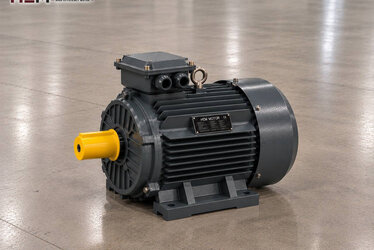
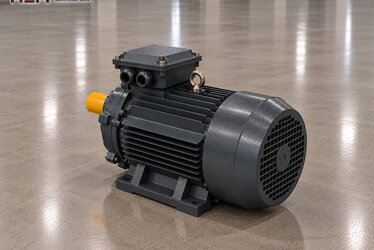
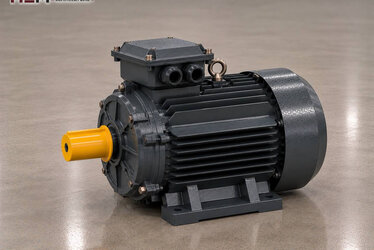
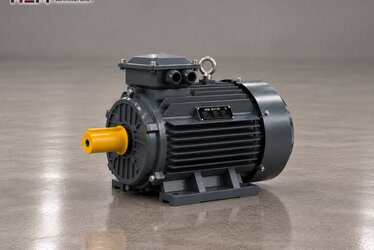
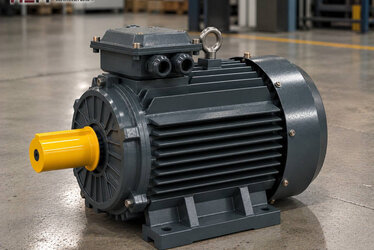
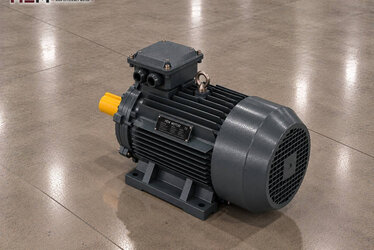
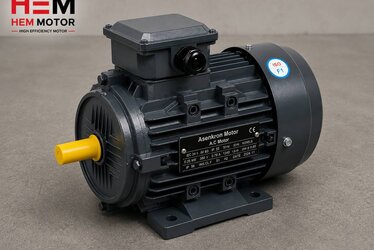
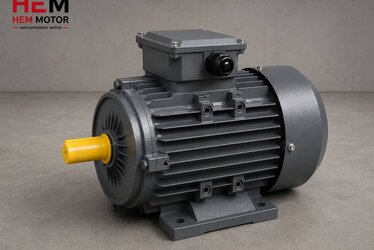
Most agitator motors are small, around 0.25–0.55 kW; the smallest model in our three-phase series is 0.25 kW. For tanks with a single-phase supply, the single-phase electric motor series starts at 0.18 kW and extends to 5.5 kW, covering this small power. Thanks to their light, corrosion-resistant frame, aluminium frame motors are the natural choice in this application.
Preparing an Order for a Tank Motor
So that we can prepare a quotation, please send: the machine (tank type and volume, number of agitators), motor power, speed, supply voltage (230 V single-phase or 400 V three-phase), mounting position and flange type, and the quantity required. If you send a photo of the failed motor's nameplate, an equivalent is found faster.
You can reach the product list from the buy electric motors page and see prices on the relevant product pages. For questions, contact us by WhatsApp or phone; the details are on our contact page.
Frequently Asked Questions
Why does milk spoil when the agitator motor stops?
Without agitation, the centre of the tank cannot reach the cold wall and stays warm; cream rises to the surface and the tank sensor may read the wrong temperature. Even a short failure slows the cooling of the first milking. That is why keeping a spare motor makes sense for many farms.
Can I replace the motor without changing the gearbox?
Yes; if flange type, flange diameter, shaft diameter and key size match the gearbox input and the speed is the same, the motor alone is replaced. These dimensions are verified in the order together with the nameplate and a photo of the flange.
What happens if I fit a four-pole motor instead of a six-pole one?
The paddle turns roughly proportionally faster; the milk may be whipped and foam may form, and the gearbox and paddle shaft are stressed more. The number of poles must be considered together with the gear ratio, and the existing speed should be kept.
Is it possible to run the agitator with speed control?
Our three-phase motors can be driven by a frequency inverter and the paddle speed adjusted accordingly. If the motor is to stay at very low frequency for long periods, we check whether its own fan is sufficient; with a long cable a filter may be needed. Please state these points in your order.