English
 Français
 Türkçe
 Español
 Русский

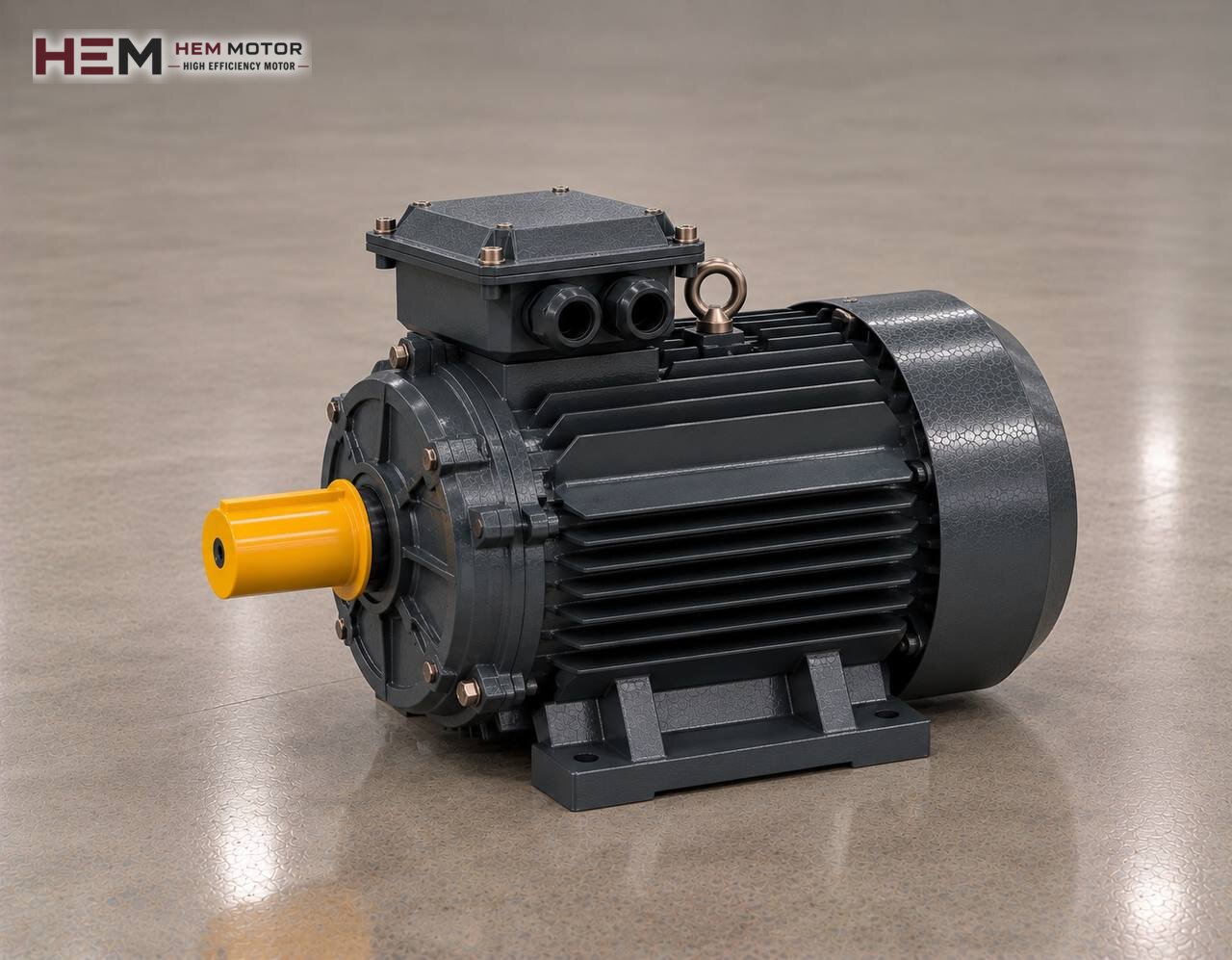
Maize, paddy rice or wheat coming from the harvest is often too wet to store; a grain dryer removes the excess water by passing hot air through the grain mass. Several different electric motors work inside the machine, and each has its own kind of load. Here we describe the motors that drive the dryer's fan, discharge mechanism and loading equipment; other farm and agricultural machines are covered on the agricultural machinery electric motors page.

Tower, batch and recirculating dryers
In continuous-flow tower dryers the grain trickles slowly from top to bottom; hot air enters from one side of the tower and moist air is exhausted from the other. The discharge mechanism at the bottom determines how long the grain stays in the tower. In batch dryers a set quantity of grain is loaded, dried, cooled and unloaded. In recirculating models a vertical auger or elevator keeps lifting the grain and dropping it again throughout the drying time.
Whatever the type, the largest motor is on the fan that moves the air. Next come the discharge drive that controls grain flow and the conveying equipment that feeds the dryer. The burner's combustion air fan is a separate subject; for that, see the burner fan electric motor page.
Drying fan: steady load, variable air
The drying fan pushes heated air against the resistance of the grain layer. This resistance changes with grain type, tower filling and dust build-up; small grains such as rice or rapeseed resist air more than large maize kernels. The power drawn by the fan rises roughly with the cube of speed, though the real figure depends on system resistance. During the drying season the fan often runs non-stop for days.
The fan impeller is large and heavy, so starting takes a few seconds for the motor to reach rated speed. Star-delta, soft starters or inverters are preferred on large fans. An inverter is also used to adjust the air volume to grain moisture; HEM three-phase series are suitable for this kind of drive. However, if the fan will run at very low speed for long periods, motor cooling must be assessed separately, and the cable distance between inverter and motor should be stated in the order.
The fan motor and hot air
The fan motor usually sits outside the hot air stream, on the suction side or on a separate base with a belt drive. The motor should not be placed in the hot air duct: standard motors are designed for an ambient temperature limit and carry no approval for operation in a high-temperature air stream. If the dryer layout puts the motor close to the hot zone, state the ambient temperature in the order; a PTC or PT100 winding sensor can be added as an order option.
On direct-coupled fans the impeller sits on the motor shaft; the motor bearing carries both the impeller weight and the force from any imbalance. On belt-driven fans, pulley diameter and belt tension determine the side load on the bearing. In both cases dust build-up on the impeller creates imbalance; cleaning the impeller at the start of the season extends bearing life.
Discharge drive: slow but continuous
The discharge mechanism at the bottom of a tower dryer usually works with rotary cell valves, an oscillating gate or a slowly turning drum. This drive is low-power but turns slowly and continuously; the motor is almost always connected through a gearbox. Because the grain's residence time in the dryer is set by the speed of this drive, inverters are common here.
The discharge point is dusty and close to surfaces in contact with hot grain. IP55 protection keeps most dust out; bran and husk packed between the frame fins should be cleaned regularly. If the drying plant has an area classified because of dust explosion risk, a standard IP55 motor is not designed for that zone; the machine manufacturer determines the appropriate measure and this must be clearly stated in the order.
Example HEM models and selection table
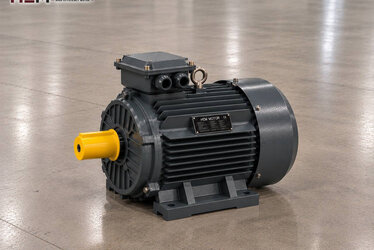
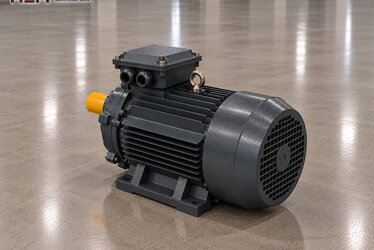
On a direct-coupled high-speed fan, the 11 kW cast iron 160M1-2 delivers 35.7 Nm at 2,945 rpm. For a medium tower fan the 15 kW cast iron 160L-4 (1,465 rpm, 97.8 Nm), and for larger dryers the 22 kW cast iron 180L-4 (1,470 rpm, 142.9 Nm) are models worth looking at. At the input of the discharge gearbox, the 1.1 kW aluminium 90S-4 produces 7.27 Nm at 1,445 rpm.
| Dryer section | How the motor works | To state in the order | Example HEM model |
|---|---|---|---|
| Direct-coupled drying fan | High speed, long periods | Impeller weight, ambient temperature | 160M1-2, 11 kW |
| Belt-driven tower fan | High-inertia start, steady load | Pulley diameter, starting method | 160L-4, 15 kW |
| Large-capacity tower fan | Air adjusted by inverter | Cable length, PTC sensor | 180L-4, 22 kW |
| Discharge drum or valve | Slow, continuous, geared | Gearbox input, flange type | 90S-4, 1.1 kW |
The models in the table are examples; the final choice depends on machine load, required speed, mounting and operating conditions.
Send us this for a dryer motor
State the make and type of the dryer (tower, batch, recirculating) and which section the motor works in. Then add the motor power (kW), speed (rpm), plant voltage, mounting type (foot, flange, foot-and-flange), starting method and the quantity required. A nameplate photo of the motor to be replaced is often enough on its own.
Large frames are listed under cast iron frame motors, and all models and prices are in the shop. To reach us by WhatsApp or phone, use the contact page.
Frequently Asked Questions
Why does the drying fan motor heat up in mid-season?
The most common reason is dust and husk building up on the impeller and frame fins; cooling weakens and the impeller balance is upset. Clean the motor and impeller and compare the current with the nameplate value.
Can the fan motor be placed inside the hot air duct?
A standard motor is not designed to run in a high-temperature air stream. The motor should stay outside the air flow; if it is close by, state the ambient temperature in the order.
Is an inverter needed on the discharge drive?
Because the grain's residence time in the dryer depends on the speed of this drive, most modern dryers use an inverter. On older fixed-speed models the time can also be set with a timer.
Can I replace a 2-pole fan motor with a 4-pole one?
On a direct-coupled fan the speed halves and air volume drops sharply. Such a change should only be made with the dryer manufacturer's approval, with an impeller change if needed.