English
 Français
 Türkçe
 Español
 Русский

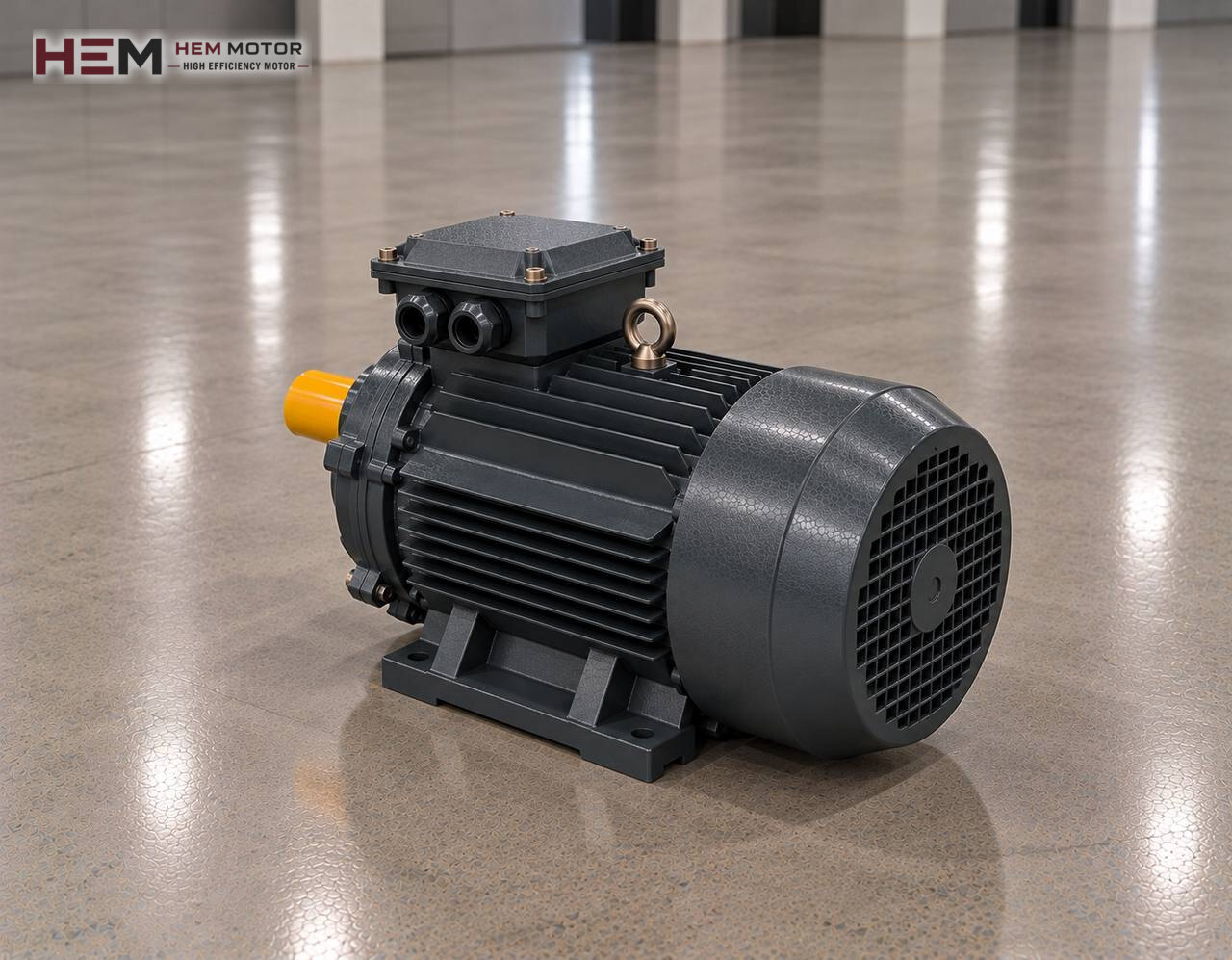
In a broiler or layer house, feed travels from the outdoor silo to the feeders through several separate drive chains, and every link in that chain is turned by a small electric motor. This page covers the motors that run the automatic feeding line inside the poultry house; for the other machines on the farm, see the agricultural machinery electric motors page.

How does feed get from the silo to the feeder?
The first link is the transfer line under the silo. Feed taken from the silo's conical outlet is carried by a flexible auger spinning inside a tube, or by a rigid screw, to a hopper on the house wall. When the hopper is full a level switch stops the transfer motor and restarts it as the level drops.
The second link is the distribution lines inside the house. Pan feeder lines are common in broiler houses: an auger inside a tube hung from the ceiling drops feed into pans spaced along the line. Breeder houses and some layer houses use a chain feeder that runs along a long trough. In caged layer systems feed is often distributed by a feed trolley that travels back and forth above the cage rows.
The load on auger lines
A tube auger pushes feed by friction, so the load depends on tube length, number of bends and the type of feed. Pelleted feed usually flows easily, while mash or high-fat compound feed clings more to the tube wall. Every added bend or extra length of tube increases the current the motor draws.
On pan lines the motor usually sits at the far end of the line, above the last pan. That last pan is a control pan: when its sensor is covered with feed, the motor switches off. The line therefore starts and stops many times a day at short intervals. On every start the motor must set the packed feed inside the tube in motion, so starts are almost always under load.
Chain feeders and feed trolleys: a different motion
In a chain feeder, a corner drive unit pulls the flat chain that drags feed along the trough. The motor works with a gearbox and the chain speed is set by the gear ratio. Chain stretch, worn corner sprockets and foreign objects falling into the trough cause sudden load peaks, which is why these units often have a shear pin or slip coupling.
The feed trolley in cage systems runs back and forth on a rail and reverses at the turning points. In this motion the motor frequently starts in the opposite direction. Reversing is done with two contactors in the machine's control panel, and the motor is expected to behave the same in both directions. For matching a gearbox and motor, the electric motors for reducers page can help.
The poultry house environment: ammonia, dust and washing between flocks
Poultry house air carries feed dust, feather particles and ammonia rising from the litter. A thin layer of fine dust on the motor frame reduces cooling, and humid air with ammonia speeds up corrosion on the terminal box and outer surfaces. HEM models on sale are IP55 protected with class F insulation; the cooling fins and fan cover should be cleaned at every flock change.
Between two flocks the house is usually washed with pressurised water and disinfected. A standard IP55 motor is not designed for a pressurised water jet; during washing the motor should be covered, or the water should not be aimed directly at the frame. If this condition is permanent, extra protection or a special motor is needed and must be stated in the order. In an unheated house in winter, condensation can form in an idle motor; an anti-condensation heater and PTC winding sensor are order options.
Three-phase or single-phase?
In large commercial farms feeding lines are mostly supplied from a three-phase network, and line motors are in the small power class. If a rural farm only has a single phase, the single-phase electric motor series in the 0.18–5.5 kW range can be considered for small lines. The starting torque of a single-phase motor depends on its capacitor; on a long, full auger line this point should be checked with the feeding system manufacturer.
Some new lines use a frequency inverter to adjust the feeding rate. Our three-phase series can be run on an inverter; if the motor will turn at low speed under full load for long periods its own fan may not be enough, and such operation and the cable distance between inverter and motor should be stated in the order.
Example HEM models and selection table
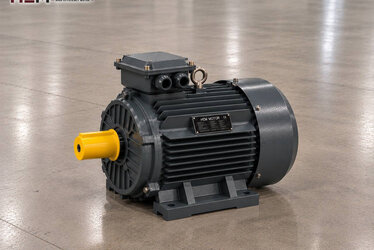
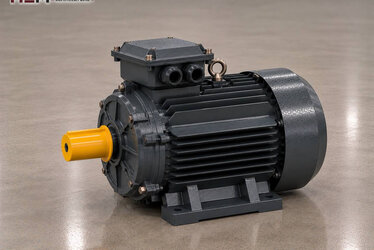
On a short pan line, the 0.55 kW aluminium 80M1-4 delivers 3.75 Nm at 1,400 rpm. For a longer line or a chain feeder unit, the 0.75 kW aluminium 80M2-4 (1,420 rpm, 5.04 Nm) is a model worth looking at. On a long transfer line from the silo to the house, the 1.5 kW aluminium 90L-4 produces 9.91 Nm at 1,445 rpm.
| Line section | Type of motion | To state in the order | Example HEM model |
|---|---|---|---|
| Pan distribution line | Frequent sensor-controlled starts, full tube | Line length, flange type | 80M1-4, 0.55 kW |
| Chain feeder corner unit | Continuous pull through a gearbox | Gearbox input, shaft size | 80M2-4, 0.75 kW |
| Feed trolley | Two directions, short travel | Reversing, mounting position | 80M2-4, 0.75 kW |
| Silo transfer line | Long auger, level controlled | Tube length, number of bends | 90L-4, 1.5 kW |
These pairings are for guidance only; the actual motor depends on line length, feed type, drive arrangement and house conditions.
What we need for a quotation
Tell us the make of the feeding system and in which section (transfer, pan line, chain feeder, trolley) the motor will be replaced. The existing motor's power (kW), speed (rpm), the farm's supply voltage (single or three phase), mounting type and the quantity needed speed up the quotation. The easiest way is to send a photo of the old motor's nameplate.
All models and current prices are on the shop page. For WhatsApp and phone details, use the contact page.
Frequently Asked Questions
Why does the pan line motor start and stop dozens of times a day?
When the control pan at the end of the line fills, the sensor switches the motor off, and restarts it when the level drops as the birds eat. This is normal operation; frequent starts and a full tube should be considered when choosing the motor.
If I extend the line, will the same motor be enough?
Not always. As the tube gets longer and bends are added, auger friction rises. Measure the motor current after the change; if it approaches the nameplate value, consult the feeding system manufacturer.
Do I need to remove the motor when washing the house?
Removal is not necessary, but the motor should be covered or the water jet kept away from the frame. IP55 protection is not designed for pressure washing.
Can the feed trolley motor run in both directions?
Yes, the direction of an asynchronous motor is reversed by swapping two phases. The reversing contactors in the machine's panel do this; no extra change is needed on the motor itself.