English
 Français
 Türkçe
 Español
 Русский

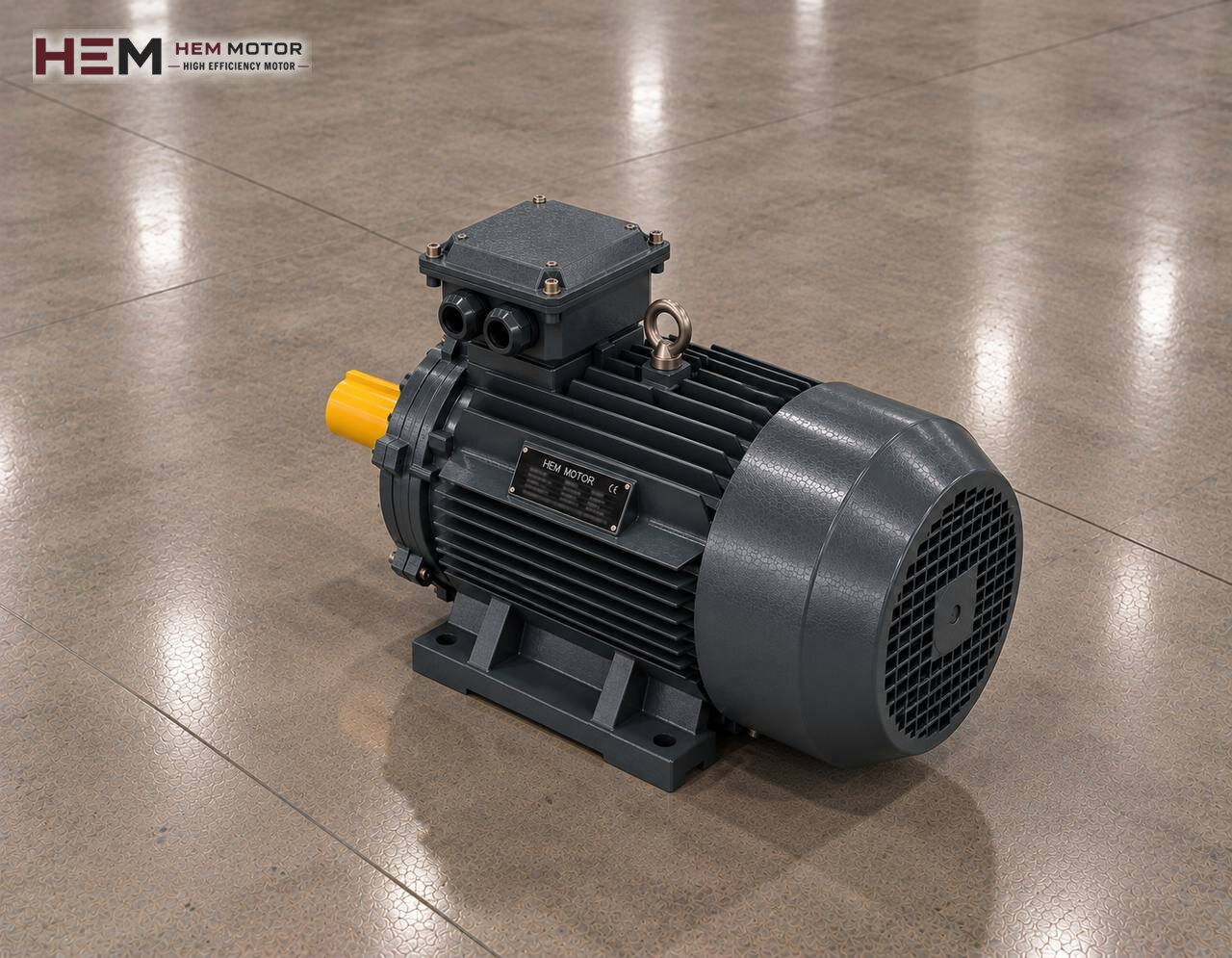
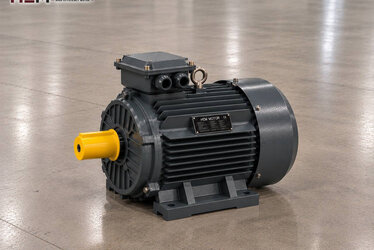
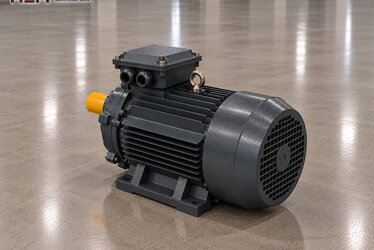
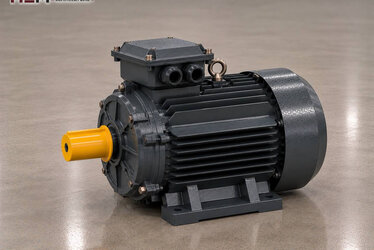
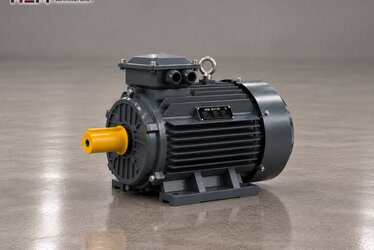
In a milking system the clusters, pulsators and milk hoses contain no motor at all; only two parts need power: the vacuum pump that creates suction and the milk pump that sends the collected milk to the tank. This page covers the electric motor that turns these two pumps; for the other machines on the farm see our agricultural machinery electric motors page.

What the Motor Really Does in the Milking Line
Milking works with a controlled vacuum applied to the teat. The pulsator opens and closes this vacuum at a set rhythm, but the vacuum itself is produced by the pump that keeps drawing air from the line. If the pump stops or the vacuum level drops, clusters fall off and milking is interrupted. The vacuum pump motor is therefore a load that must not pause for a moment during milking.
The second consumer is the milk pump. Milked milk first fills a collecting vessel (receiver); when the level reaches a set point, the pump starts and pushes the milk to the cooling tank. On mobile single-cluster or bucket machines there is often no milk pump, and the motor turns only the vacuum pump.
Vacuum Pump Motor: Long, Steady Running
How does the load behave?
Milking parlours mostly use rotary vane pumps, while large farms use lobe (roots type) pumps. Both types need roughly constant torque as long as the speed stays constant. During morning and evening milking the motor runs for one to several hours without a break, depending on herd size, and may continue through the cleaning program. So this is not a short, frequent load but a long continuous run repeated two or three times a day.
Belt drive or direct coupling?
On small pumps the motor is coupled directly or the pump sits on the motor flange; four-pole motors in the 1,400–1,450 rpm class are common here. Larger pumps use a belt and pulleys, and pump speed is set by the pulley ratio. With a belt drive the motor usually sits on a tensioning rail with a foot-mounted frame; a directly coupled pump favours a flange-mounted frame.
Managing Vacuum Level Through Speed
In a traditional system the pump runs at full speed and surplus suction is balanced by a regulator valve letting air in. Newer installations increasingly use frequency inverters that change pump motor speed according to the vacuum sensor signal: speed rises when a cluster is attached or falls off, and drops when the line is calm. The vacuum stays more even and the motor does not run faster than needed.
Our three-phase motors can be run on an inverter. Because the motor is cooled by the fan on its own shaft, check whether a separately powered fan is needed if the pump will be kept very slow for long periods; if the cable from the panel to the motor is long, an output filter is considered to protect the winding. Simply pass this information on with your order. For details see the inverter compatible electric motors page.
Milk Pump: Frequent Starts, Short Runs
Unlike the vacuum pump, the milk pump runs and stops at short intervals. During one milking a level float or electrode may switch the pump on dozens of times. For the motor the key point is not power but the winding heat caused by frequent starts. In contactor-controlled systems with many starts, monitoring motor temperature with a PTC winding sensor (an order option) makes sense. Some new systems also drive the milk pump with speed control so the milk is transferred more slowly, without foaming.
The pump housing touches the milk; the motor does not. The food-grade material and sealing of the pump are the pump manufacturer's responsibility. General motor information on pumps is on the pump electric motors page.
Parlour Conditions and Protection
A milking parlour is humid, contains ammonia and is hosed down after each milking. Our motors are IP55 protected; however, spraying water directly onto the motor or washing it with pressurised water is beyond what this protection class covers. Most farms place the vacuum unit in a separate machine room, which is also the healthiest location for the motor. If the motor stays in the washing area, a protective cover or special motor is needed; please state this in your order.
In machine rooms that are cold in winter and hot in summer, the motor may suffer condensation while stopped; a winding anti-condensation heater is an order option. Oil mist and dust from a vane pump build up on the motor's cooling fins, and regular cleaning keeps cooling effective. On a belt-driven pump, belt tension and pulley alignment belong on the seasonal maintenance list.
Example HEM Motors for Milking Systems
| Milking setup | Motor's job | Point to check | Example HEM model |
|---|---|---|---|
| Small farm, mobile unit | Rotary vane vacuum pump | Single-phase or three-phase supply | 0.75 kW, 1,420 rpm, 80M2-4 aluminium |
| Medium-size parlour | Belt-driven vacuum pump | Pulley ratio, tensioning rail | 2.2 kW, 1,450 rpm, 100L1-4 aluminium |
| Large parlour, lobe pump | Speed-controlled vacuum generation | Cooling at low inverter speed | 4 kW, 1,450 rpm, 112M-4 aluminium |
| Receiver outlet | Milk transfer pump | Number of starts, winding temperature | 1.5 kW, 1,445 rpm, 90L-4 aluminium |
The models in the table are for guidance; the actual choice is made by considering pump flow, the speed required by the manufacturer, the connection type and ambient conditions together. The best starting point is the nameplate of the motor being replaced.
Three-phase motors are prepared in foot-mounted (B3), flange (B5, B14), foot-and-flange (B34, B35) and vertical versions depending on frame size; we confirm flange diameter and shaft end against your pump when you order. On small farms without a three-phase supply, our 220 V single-phase electric motor series is an option in the 0.18–5.5 kW range.
Information Needed for a Milking Motor Request
So that we can quickly suggest the right motor, share the machine (vacuum pump or milk pump, pump brand and type), the power and speed of the current motor, the farm's voltage (single-phase 230 V or three-phase 400 V), the mounting type and the quantity you need. Sending a photo of the motor nameplate is often enough on its own.
All models are listed on the aluminium frame motors and buy electric motors pages; the current price is on each product's own page. To reach us by WhatsApp or phone, use the contact page.
Frequently Asked Questions
Why does the vacuum pump motor trip in the middle of milking?
The most common causes are belt slip or excessive tension, reduced pump lubrication, a clogged air filter and low mains voltage. All of these raise motor current. Comparing the motor's rated current with its running current is the easiest way to tell whether the problem lies in the pump or the motor.
Can I replace my single-phase motor with a three-phase one?
Yes, if the farm has a three-phase supply; as long as shaft, flange and speed match, the pump works the same way. The control panel and protective devices must also suit three-phase operation. Without three phases, an equivalent rating is chosen from the single-phase series.
If I use an inverter, do I need a larger pump motor?
Usually not; the motor keeps the same rated power. However, if the pump is held at low speed for long periods, the motor's own fan may not supply enough air. In that case a separate fan option is discussed; the pump's speed range decides.
Does the milk pump motor have to be suitable for food contact?
It is the pump housing and impeller that touch the milk; the motor stays outside. Still, if the motor sits where washing water can reach it, a standard IP55 motor is not designed for that; the pump manufacturer's protective arrangement is required.