English
 Français
 Türkçe
 Español
 Русский
 العربية


A fire pump set spends most of the year waiting in silence; the moment pressure drops in the network, it is expected to run at full power on the very first attempt. This page covers the electric motor that turns the pumps inside the set: what the motor does in each pump, starting and supply conditions, test runs and the documents that must be clarified before ordering. For an overview of pump types, see our main Pump Electric Motors page.
Parts of the Pump Set and Where the Motor Fits
A fire water station for a building or a plant is not a single pump. Several pumps are arranged around a common baseframe, header, valve group and control panel; each has its own task.
Jockey pump
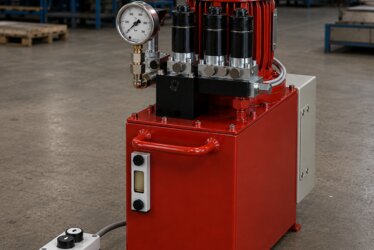
This small pump makes up for minor leaks in the line and keeps the network at standby pressure. It switches on and off for short periods many times a day. Its motor is small, yet it is the motor that starts most often, so the winding and the contactor are assessed for frequent switching. In vertical multistage types the motor sits on top of the pump with a flange; our flange-mounted motor options help with this connection.
Electric main pump
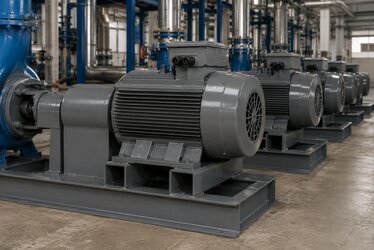
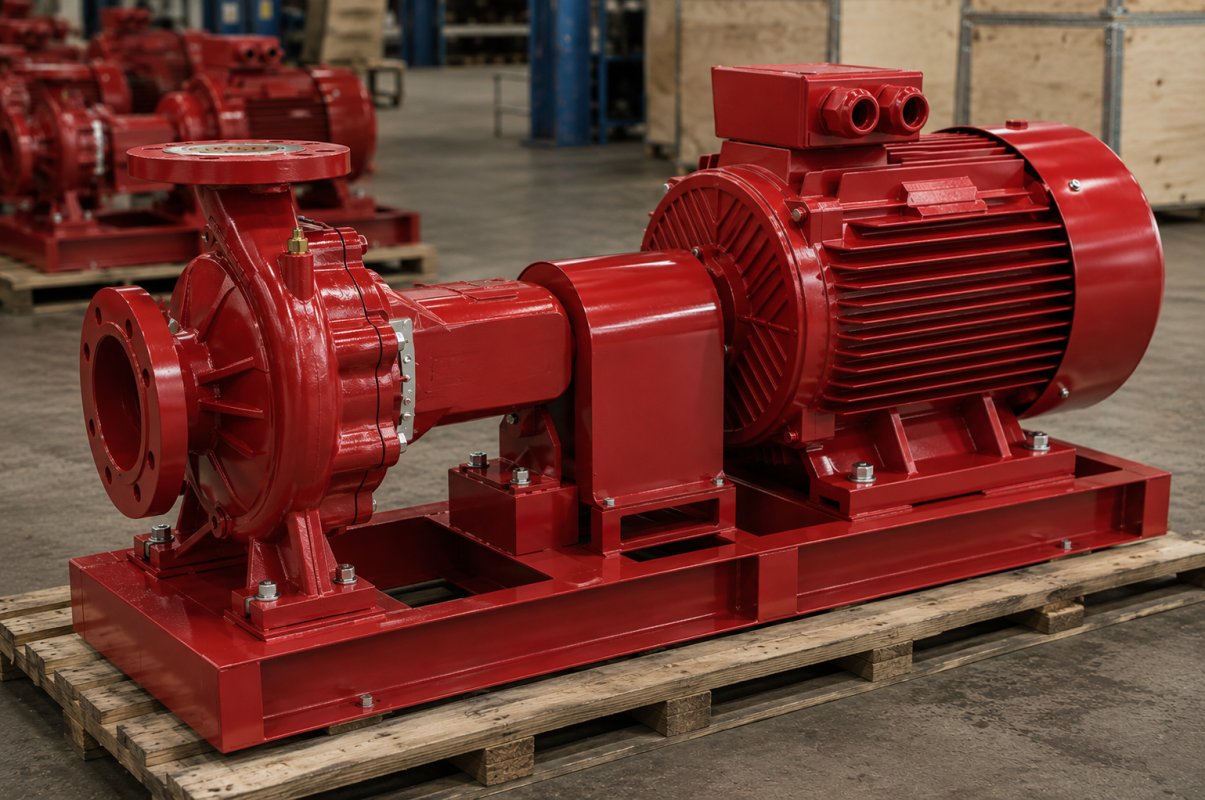
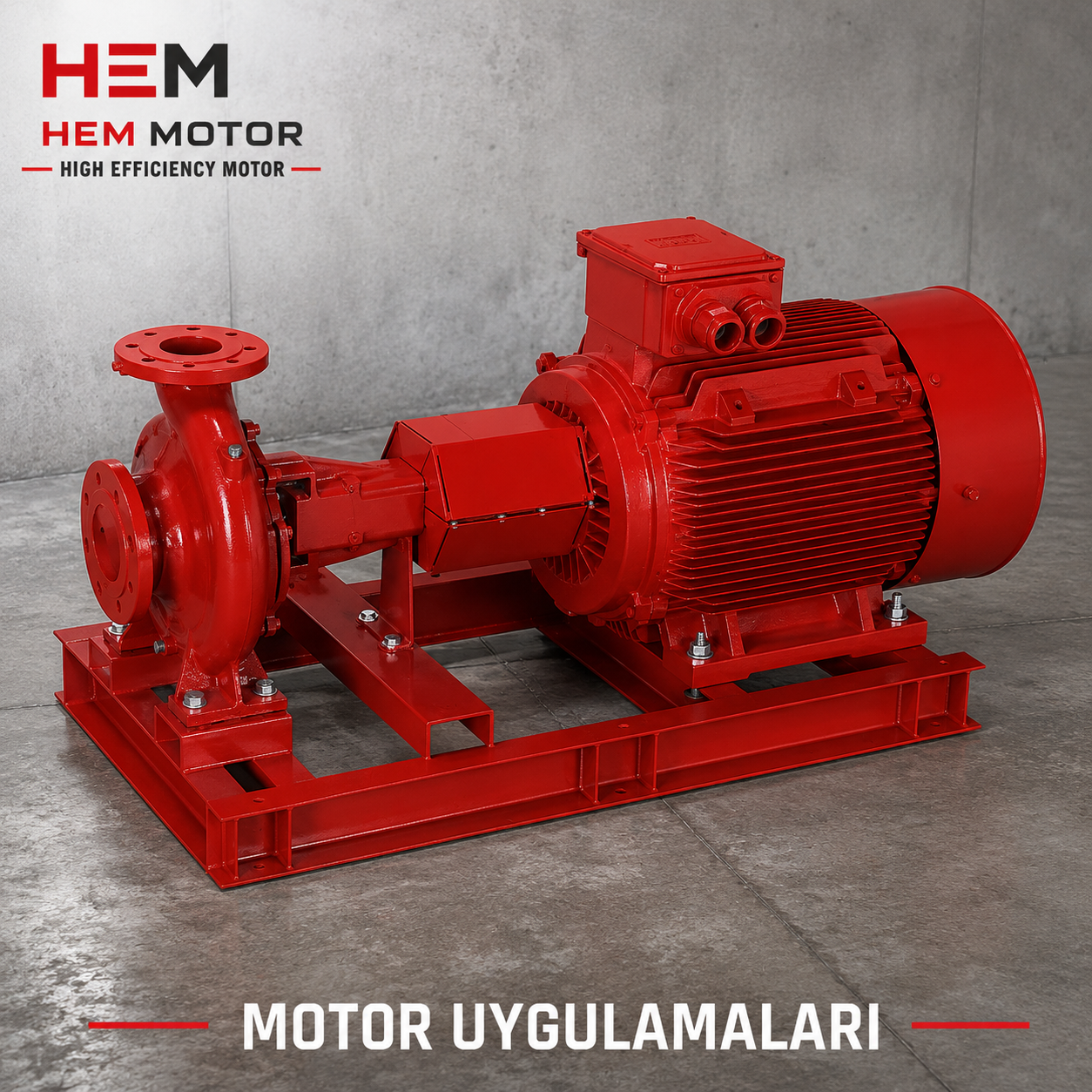
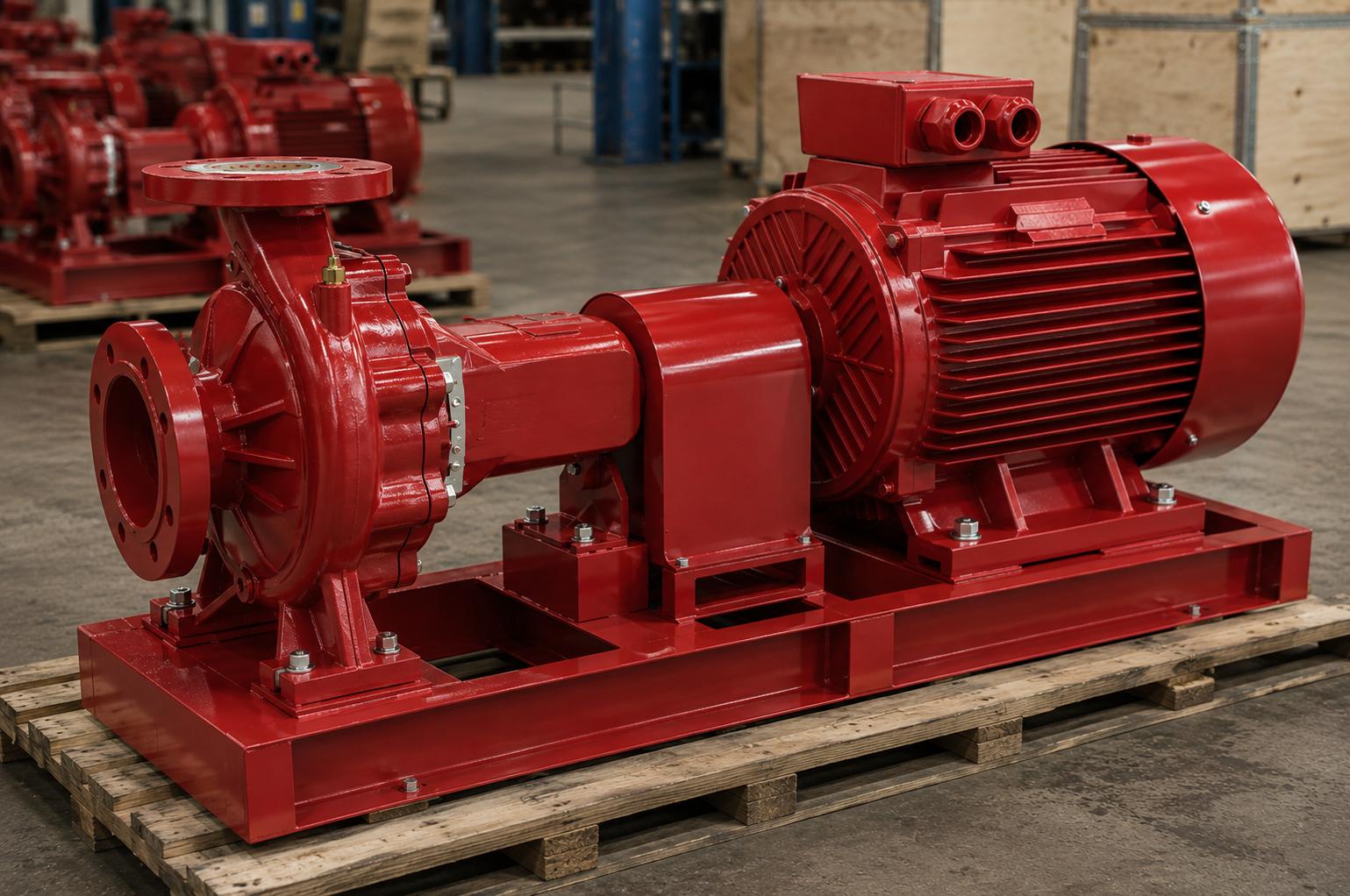
When a sprinkler or hose cabinet opens and pressure falls further than the jockey pump can cover, the main pump starts and delivers the flow set out in the design. Most often an end-suction centrifugal pump is used; for very large flows a split case pump is preferred. Motor and pump are joined on a common base with a flexible coupling.
Standby pump
If the main pump cannot start, the standby pump takes over. The standby may be a second electric pump on a separate supply or a diesel-driven pump. The diesel arrangement is not the subject of this page; here we only cover the three-phase motors that drive the electric pumps.
Long Idle Periods and Sudden Full Load: The Double Strain on the Motor
A fire pump motor stands still for weeks, then goes to full load with no warm-up time at all. These two extremes affect both selection and maintenance.
Idle period: The pump room is often a damp, cool basement space. In a motor that has not turned for a long time, condensation in the winding and bearing grease settling in one spot can occur. A PTC or PT100 sensor fitted in the winding and an anti-condensation heater that keeps the winding warm at standstill can be added on order; in damp rooms the heater deserves a separate discussion.
Starting moment: Even with full pipes, the pump may operate at different points on its curve depending on how many outlets are open. As flow rises, the shaft power of a centrifugal pump rises too. The motor rating must be set by the design to cover this heaviest point; the power value given by the pump manufacturer is the basis.
Continuous running: In a real fire the motor may run for hours without stopping. Our models of 75 kW and above carry SF 1.15 on the nameplate; this margin is a safeguard for long, demanding operation and should not be used to step the motor down a size.
Starting Method and the Supply Side
How the main pump motor is started depends not only on the motor but also on the building's electrical infrastructure. Direct-on-line starting is common at small and medium ratings; at larger ratings star-delta, a soft starter or another method may be used to limit starting current. Which method is accepted is decided by the system design and local regulations, together with the panel builder and the designer.
On the supply side, check whether the transformer and any generator can handle the sudden starting current, the voltage drop on a long cable run and the distance between panel and motor. Our electric motor current table is a practical start for comparing nameplate currents. Our smaller ratings come with a 230/400 V winding connection and larger ones with 400/690 V; if star-delta starting is planned, check from the outset that the winding voltage suits the network.
Reading the Motor During Periodic Test Runs
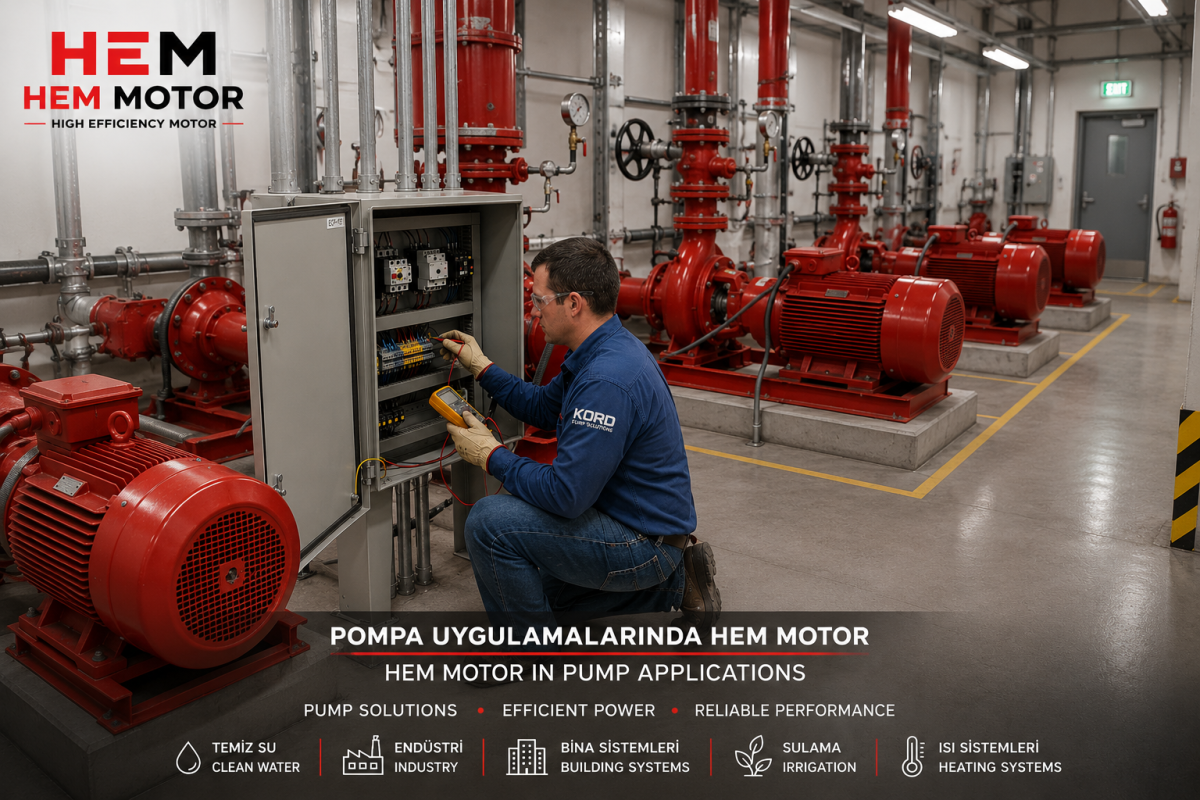
Fire pump sets are run for testing at regular intervals; frequency and duration follow the site's maintenance plan and regulations.
- At every test, note phase currents, frame temperature and bearing noise; the change from test to test means more than any single reading.
- Check coupling alignment and base bolts; rising vibration often starts here.
- Always confirm the direction of rotation after maintenance or panel work; a centrifugal pump turning backwards produces no pressure.
For the steps to follow at the first start after installation, our motor commissioning checklist is useful.
Confirming Design, Regulation and Document Requirements on Order
In fire pump systems, the motor is selected according to local regulations and the requirements of the system designer; any required document or approval is confirmed at the order stage. Some projects, especially those prepared to a foreign insurer's or engineering specification, may require the pump set as a whole to be listed or approved to a particular standard. Since this requirement concerns the complete set, it should be handled together with the pump set manufacturer.
We therefore recommend listing every motor-related document requested in the specification (test report, nameplate data, origin information, etc.) and sending it to us before you request a quote. Requested documents are agreed before the order; nothing unclear is settled by assumption.
Motor Selection Table by Pump Set Component
| Pump set component | Job of the motor | Watch in selection | State on order |
|---|---|---|---|
| Jockey pump | Keep the line at standby pressure | Frequent starts, flanged vertical connection | Power, speed, flange type, vertical mounting |
| Electric main pump (end suction) | Deliver the design flow without interruption | Heaviest point on the pump curve, coupling alignment | Pump power data, starting method, voltage |
| High-flow main pump (split case) | Move large flows at low speed | Direction of rotation, base, starting current | Rotation, 400/690 V connection, network capacity |
| Electric standby pump | Take over while the main pump is out | Separate supply, long idle periods | Supply arrangement, anti-condensation heater |
| Link to the control panel | Start reliably on the panel signal | Need for winding sensors, cable length | PTC/PT100 request, project documents |
The table is a checklist; the final decision is made by reading the pump manufacturer's data, the project requirements and the pump room conditions together.
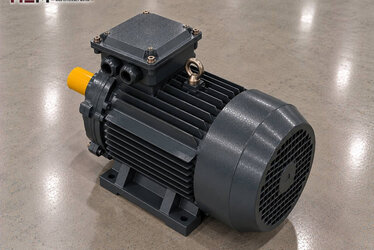
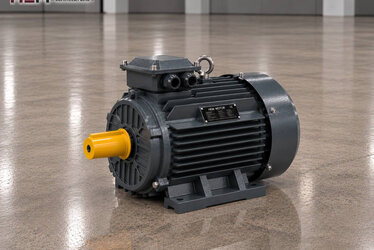
Example models: on the jockey side 3 kW, 100L-2 cast iron; for the main pump 30 kW, 200L1-2 (2,960 rpm), for large low-speed pumps 55 kW, 250M-4 (1,485 rpm) and for bigger stations 75 kW, 280S-2. These are given only as a guide; the actual motor is determined by the pump load, required speed, mounting and operating conditions. For arrangements that combine feet and flange, see our B34/B35 motors page.
Information to Prepare for a Quote
For a quick and accurate match, send us: the machine or pump the motor will drive (jockey, main, standby), the power (kW) and speed (rpm) the pump needs, the site voltage and starting method, mounting type, quantity and the documents required by the project. Depending on frame size, foot-mounted B3, flanged B5 and B14, combined B34 and B35, and vertical V1, V3, V5, V6, V15 arrangements are available; flange and shaft dimensions are checked separately at the order stage. If you are replacing an existing motor, sending a photo of its nameplate is a good start.
You can find all models on the buy electric motors page and see each motor's current price on its own product page. Motors delivered from stock ship from our warehouse in Turkey. Send project-specific questions through our contact channels.
Frequently Asked Questions
Can the jockey pump motor and the main pump motor come from the same series?
Yes, both can be standard three-phase induction motors; the difference lies in power and mounting. The jockey pump motor is small and starts often, the main pump motor starts rarely but at full load. Each is selected from its own pump's data.
Does HEM Motor issue conformity certificates for fire pump standards?
This page makes no claim of standard conformity or approval. State the documents your project requires at the quotation stage; what can be supplied is confirmed before the order.
How is a fire pump motor that rarely runs protected?
Regular test runs, a dry and ventilated pump room and, where needed, an anti-condensation heater are the basic measures. Recording current, temperature and noise during tests reveals faults early.
Should the main pump use a 2-pole or a 4-pole motor?
The pump decides the speed. Most end-suction pumps run in the 3,000 rpm class, while large split case pumps mostly run in the 1,500 rpm class. The speed on the pump nameplate should be the reference.
Does this page apply if the standby pump is diesel-driven?
A diesel-driven pump is a separate drive system and is outside the scope of this page. What is described here applies to the electric main pump and jockey pump motors in the same station.