English
 Français
 Türkçe
 Español
 Русский
 العربية

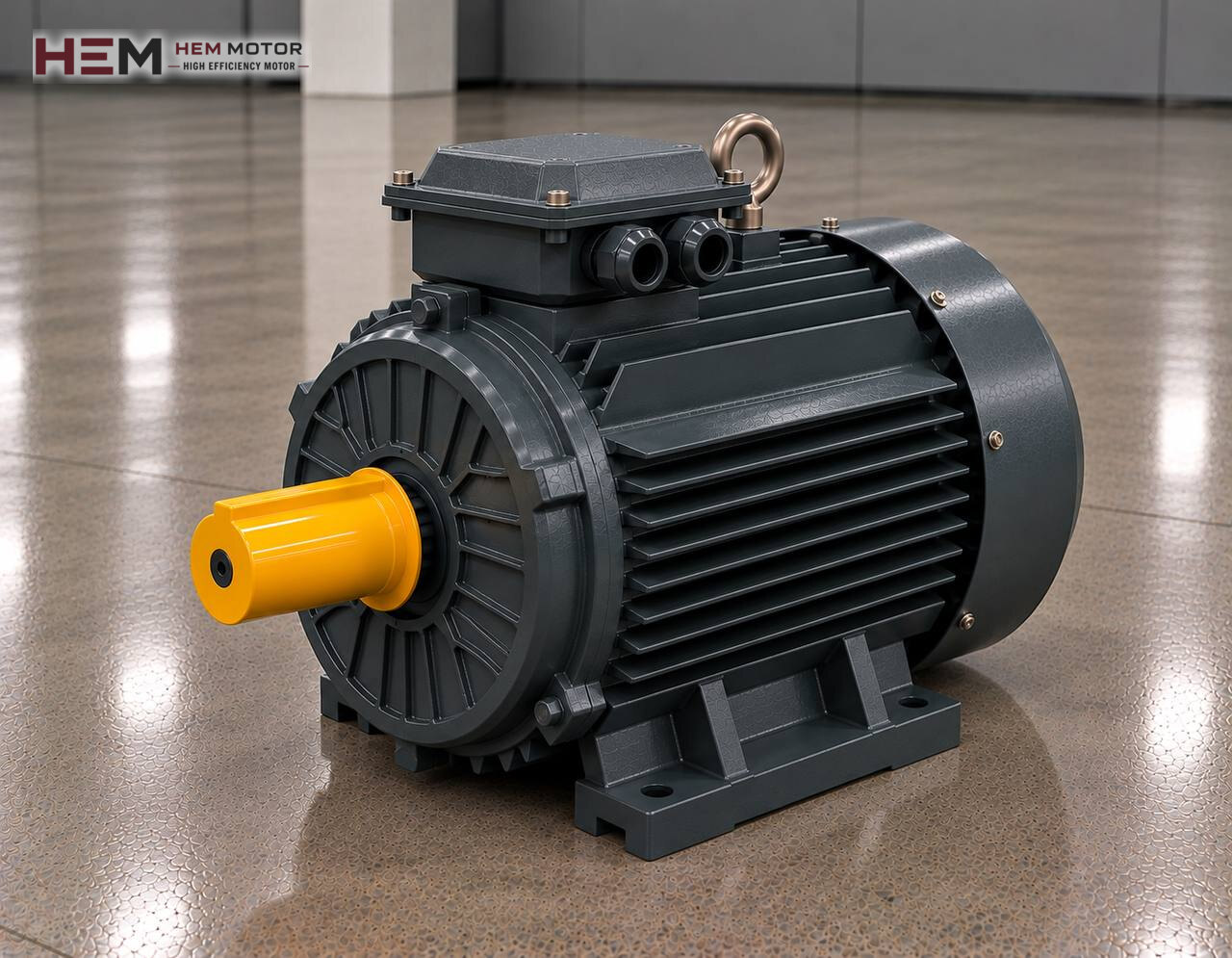
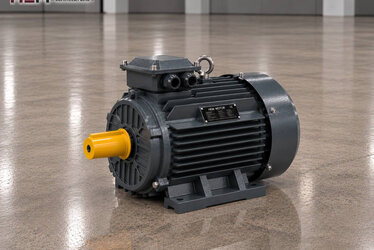
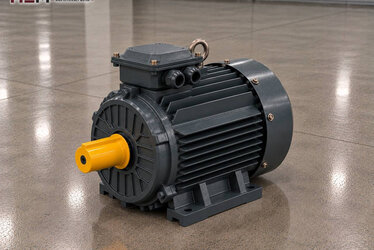
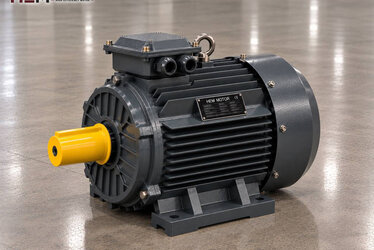
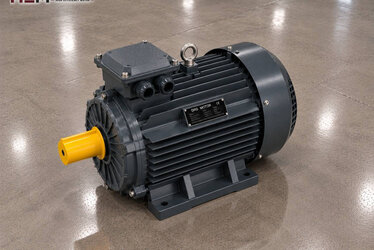
A circulation pump does not carry water from one place to another; it turns the same water round and round in a closed circuit. In a heating installation from the boiler to the radiators, in a cooling system from the chiller to the fan coils, in a process from the heat exchanger to the machine, the water always travels in the same loop. This page describes the standard three-phase motor that drives dry-rotor circulation pumps; all pump types can be reached from our Pump Electric Motors page.

What Does the Pump Work Against in a Closed Circuit?
In an open system the pump spends energy lifting water to a height. In a closed circuit, the flow and return lines meet at the same level, so the height difference cancels out; the pump only overcomes friction losses in pipes, valves, heat exchangers and terminal units. That is why circulation pumps deliver large flows at a relatively low head.
For the motor this has two consequences. First, the load changes very little during the day; the pump runs at almost the same point for months. Second, as the valves in the circuit close, flow decreases and the power of the centrifugal pump falls too; in other words, closing thermostatic valves does not strain the motor but relieves it. What determines motor life is not overload but the heat and bearing fatigue that come with uninterrupted operation.
Wet-Rotor Circulators versus Dry-Rotor Pumps
Most of the small circulators found in homes and small boiler rooms are wet-rotor types: the rotor turns in the water, motor and pump are a single unit, and no separate standard motor is fitted. Such special circulator motors are not included in HEM Motor's 2026 catalogue.
In large buildings, district heating, industrial cooling and process circuits, dry-rotor pumps are used instead. These have a mechanical seal between pump and motor; the motor is a standard asynchronous motor with an IEC frame and can be replaced several times over the life of the pump. In-line, end-suction and close-coupled designs belong to this group. What we supply is the motor of these dry-rotor pumps.
Hot Pump Casing, Hot Room
The water circulating in a heating circuit is hot and the pump casing carries this temperature. Heat passes through the lantern and flange to the motor's front end shield and from there to the bearing. Boiler rooms themselves are often hot and poorly ventilated. When these two heat sources combine, the motor finds it harder to cool down.
What can be done is simple: keep the space in front of the motor's fan cover clear, do not block the boiler room's ventilation openings, and let us know at the quotation stage if the ambient temperature is high. Our motors have Class F insulation and IP55 protection. In chilled water circuits the situation is reversed: pump and pipes are cold and condensation may appear on the motor surface; in these plants an anti-condensation heater can be added as an order option.
Twin Pumps, Duty-Standby Arrangement and Speed Control
If heating and cooling circuits stop, the building or production line is affected. Circulation pumps are therefore mostly installed in pairs: in a twin-head pump two motors share the same casing, while in a separate-pump arrangement one is duty and the other standby. The control swaps the two motors at set intervals, so the standby motor does not stand still for long and develop bearing problems. Having the standby motor at the same power, speed and flange ensures it comes in without hesitation in the event of a fault.
In circuits whose flow varies with the season and the load, a frequency inverter working with a differential pressure sensor is used. Our three-phase motors are suitable for speed control with an inverter; if there is a long motor cable or long operation at very low speed, we assess the need for a dv/dt filter and an external fan before the order. For more, see the inverter-compatible electric motors page.
Points to Watch When Replacing the Motor
On dry-rotor circulation pumps the motor is usually replaced without draining the installation: the motor is separated from the lantern and the pump casing stays in the line. When choosing a new motor, the following must match the old one:
- Frame size and flange type (B5 or B14), as well as shaft diameter and key;
- Number of poles, and therefore speed class: a 2-pole pump cannot deliver its design flow with a 4-pole motor;
- Mounting position: horizontal, vertical shaft down or shaft up.
After connection, the direction of rotation is checked against the arrow on the pump casing with a short run. Flange-mounted motor options are on the B5 and B14 flange-mounted motors page. For other building services motors, the HVAC sector motors page will guide you.
Example Motors by Circuit Type
| Circulation circuit | Operating pattern | Point to watch | Example HEM model |
|---|---|---|---|
| Small boiler room heating circuit | Uninterrupted throughout winter | Hot room, flange heat | 0.37 kW 71M2-4 (1,340 rpm) |
| Building main heating circuit | Duty-standby pair | Standby motor of identical size | 1.5 kW 90L-4 (1,445 rpm) |
| Chiller chilled water circuit | Inverter, differential pressure control | Condensation, drive cable | 7.5 kW 132M-4 (1,460 rpm) |
| Process cooling or district heating | Continuous all year | Bearing life, coupling alignment | 22 kW 180L-4 cast iron (1,470 rpm) |
The models are examples; the final choice is made with the pump's nameplate power, the required speed, the mounting arrangement and the conditions of the boiler room or plant.
Write to Us About a Circulation Pump Motor
For a quotation, share the machine or circuit the pump is connected to (heating, chiller, process), the motor power (kW) and speed (rpm), the supply voltage, the mounting arrangement and flange, whether there is a twin or duty-standby arrangement, and the quantity. A nameplate photo of the existing motor is the fastest start.
Model prices are shown in our shop; you can pass on your bulk needs for a boiler room or plant to us by WhatsApp or phone.
Frequently Asked Questions
Can I replace the motor of the small circulator in my combi boiler?
These circulators are mostly wet-rotor types and the motor is integral with the pump; a standard motor cannot be fitted. Our motors are for dry-rotor pumps with a flange or coupling.
Why does the circulation pump motor run in summer as well?
Even if heating is off, domestic hot water or a cooling circuit may be supplied from the same pump room. Check which circuit runs with which pump on the installation diagram.
Why is the standby motor run at regular intervals?
In a motor that stands still for a long time, bearing grease collects at one point and the seal can stick. A short periodic run prevents this and shows that the standby is ready.
What information should I give if the boiler room is very hot?
Write the maximum ambient temperature and how the motor's ventilation is provided in your quotation request; the selection is assessed accordingly.