English
 Français
 Türkçe
 Español
 Русский

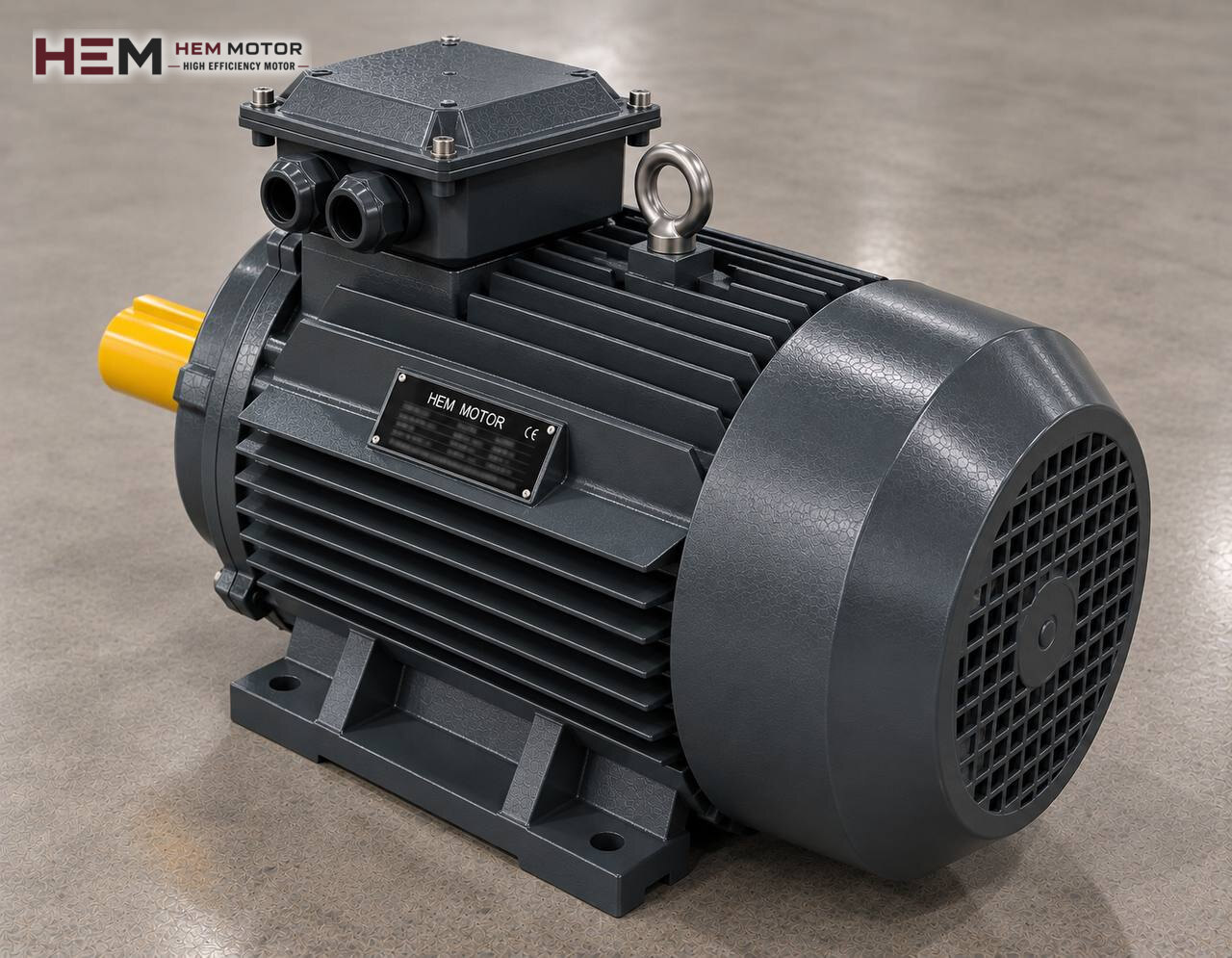
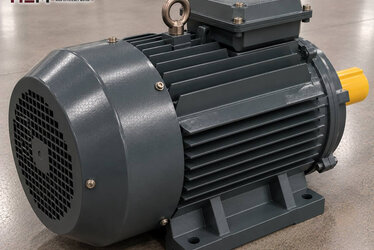
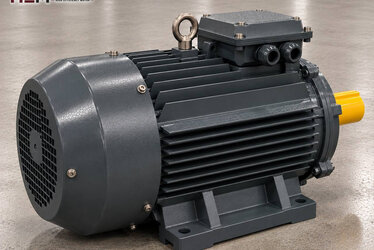
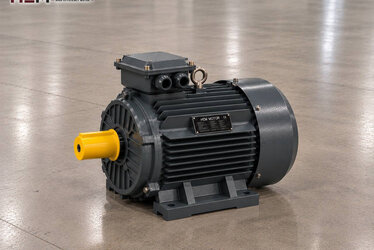
In a food plant the product travels from the point where raw material is received to the machine that closes the pack on a chain of short conveyors joined end to end. This page covers the three-phase motor that drives those conveyors; for the other machines in the same sector you can return to the electric motors for food processing and preparation machines page.

Which Conveyors Run on a Food Line?
There is no single conveyor type on a food line. Modular belts built from interlocking plastic modules and driven by sprockets, flat belts with a polyurethane or PVC surface, stainless wire mesh belts in baking and drying sections, slat chain lines that carry bottles and jars in single file, Z-type incline bucket conveyors that lift product from one level to another, and spiral conveyors in cooling or freezing tunnels can all be found side by side in the same factory.
A modular belt is driven positively by sprockets; it does not slip, but the belt's own weight and the friction on the return side create a constant load. A flat belt is pulled by friction between drum and belt; if tension drops the drum slips and the motor can heat up without doing useful work. On a slat chain line the load comes from chain friction on the guides and changes with the state of lubrication.
The Motor's Load: Light but Uninterrupted
Most food conveyors are low-power drives. The real challenge is to run without stopping for two or three shifts a day and to keep pace with the other machines on the line. Speed is usually set by the bottleneck of the line – the filler, the packer or the oven – and the conveyor follows it.
The spiral conveyor is the exception to this rule. A long belt making dozens of turns around a drum is set in motion with its whole mass at every start and turns while rubbing against the drum. Power and starting torque for a spiral drive are therefore clearly higher than for flat belts; take the value from the spiral manufacturer's data. On a Z-type incline conveyor the motor lifts the product; if the line stops full and restarts, the whole load comes onto the motor at once.
Speed Matching, Frequency Inverter and Stop-Start
The speeds of the conveyors on a line depend on one another. When product passes from one belt to the next, gaps or overlapping products are not wanted. That is why most food conveyors are driven by a frequency inverter and the speed is set from the line control; when the recipe changes, belt speed may change too.
When a motor runs at full load for long periods at low inverter frequency, the shaft-mounted fan slows down and cooling weakens; if such operation is expected, a separately powered cooling fan should be considered. If the motor is far from the panel, a dv/dt or sine filter at the inverter output comes into question. Mention both conditions in your order; the subject is covered in detail on the inverter-compatible motors page.
Checkweighers, metal detectors and accumulation belts at the packer infeed stop and start frequently. In zones with a high number of starts per hour, a PTC or PT100 sensor that monitors winding temperature can be requested as an order option.
Connecting the Reducer and the Motor
Because food belts move at somewhere between a few metres and a few tens of metres per minute, a reducer almost always sits between motor and drum. The most common arrangement on food conveyors is a hollow-shaft worm or bevel-helical reducer slipped directly onto the drum or sprocket shaft; the motor sits on that reducer's input flange. The small B14 or large B5 flange size and the shaft diameter must match the reducer input exactly.
Depending on frame size, foot-mounted B3, the combined foot-and-flange B34 and B35, and the vertical V1, V3, V5, V6, V15 positions can also be supplied; we finalise flange and shaft dimensions together with you at the order stage. For the motor side see electric motors for gear reducers; for the general picture of long handling belts outside the food sector the conveyor belt electric motors page is a guide.
Washdown, Cold Tunnels and the Oven Area
Food lines are cleaned at the end of every shift or every day. The IP55 protection of HEM motors is against dust and water splashed from any direction; it is not intended for pressure-water or foam washing, food contact or hygienic design. Keeping the motor outside the product zone – beside the belt rather than under it, behind a protective cover – is a design decision of the machine builder. If the motor will remain in the washed area, a protective measure by the machine builder or a special motor is needed; state this in your order.
In cooling and freezing tunnels the motor is usually placed outside the cold chamber. If it stays inside, condensation forms on the frame during stoppages; an anti-condensation heater is an order option. On oven conveyors the motor should be away from the hot zone, in a place where it can draw air, and the front of the fan cover must not be blocked.
Small Lines and Single-Phase Supply
Small production workshops, patisseries or table-top packing belts may have no three-phase supply. HEM Motor's single-phase series covers 0.18–5.5 kW; details are on the single-phase 220 V electric motor page. On factory lines that need speed adjustment, a three-phase motor with an inverter offers a more flexible solution.
Example HEM Models for Food Conveyors
| Conveyor | Motor's task | Value to check when ordering | Example HEM model |
|---|---|---|---|
| Short table-top product belt | Light, continuous rotation | Belt speed, supply voltage | 0.37 kW 71M2-4 aluminium (1,340 rpm) |
| Modular plastic belt | Slip-free drive by sprockets | Reducer input flange | 0.75 kW 80M2-4 aluminium (1,420 rpm) |
| Z-type incline bucket conveyor | Lifting product, starting full | Lift height, anti-runback measure | 1.5 kW 90L-4 aluminium (1,445 rpm) |
| Stainless wire mesh oven belt | Long belt in a hot zone | Motor location, air flow | 2.2 kW 100L1-4 aluminium (1,450 rpm) |
| Spiral cooling or freezing conveyor | Long belt, heavy start | Starting torque, condensation | 4 kW 112M-4 aluminium (1,450 rpm) |
These models were chosen only as a guide; the final decision depends on the conveyor's actual load, the required belt speed, the reducer connection and the ambient conditions of the line. The values on the conveyor manufacturer's motor nameplate are the starting point.
What to Send When Requesting a Quote
Tell us which machine the motor will drive (modular belt, spiral, incline bucket conveyor, oven belt), the power (kW) and speed (rpm) on the old motor's nameplate, the supply voltage at the plant, the mounting type and reducer flange, and how many motors you need. If the line runs on an inverter, add the lowest operating speed as well. If you have a nameplate photo of the motor to be replaced, adding it is the shortest way to find the equivalent.
Current prices for all models are in our electric motor shop. Our WhatsApp and phone details are on the contact page.
Frequently Asked Questions
Why are belt motors on food lines mostly driven by an inverter?
For product to pass smoothly from one belt to the next, belt speeds have to be matched to each other and to the slowest machine on the line. The inverter makes this adjustment possible from the control system and softens the start.
Product slides back when the incline conveyor stops; what should be done?
An anti-runback reducer arrangement or a brake may be needed. Decide this together with the machine builder; if a brake motor is required, state it in your order.
Can the motor of a spiral freezer stay inside the cold chamber?
Where possible the motor is moved outside the chamber. If it must stay inside, an anti-condensation heater can be requested against condensation during stoppages; state the ambient temperature in your order.
Can I hose down the modular belt motor?
It is not recommended. A standard IP55 frame withstands splashing water; pressure-jet or foam cleaning is outside the scope of this protection. Switch off or cover the motor during cleaning; if washdown cannot be avoided, state it in your order.