English
 Français
 Türkçe
 Español
 Русский

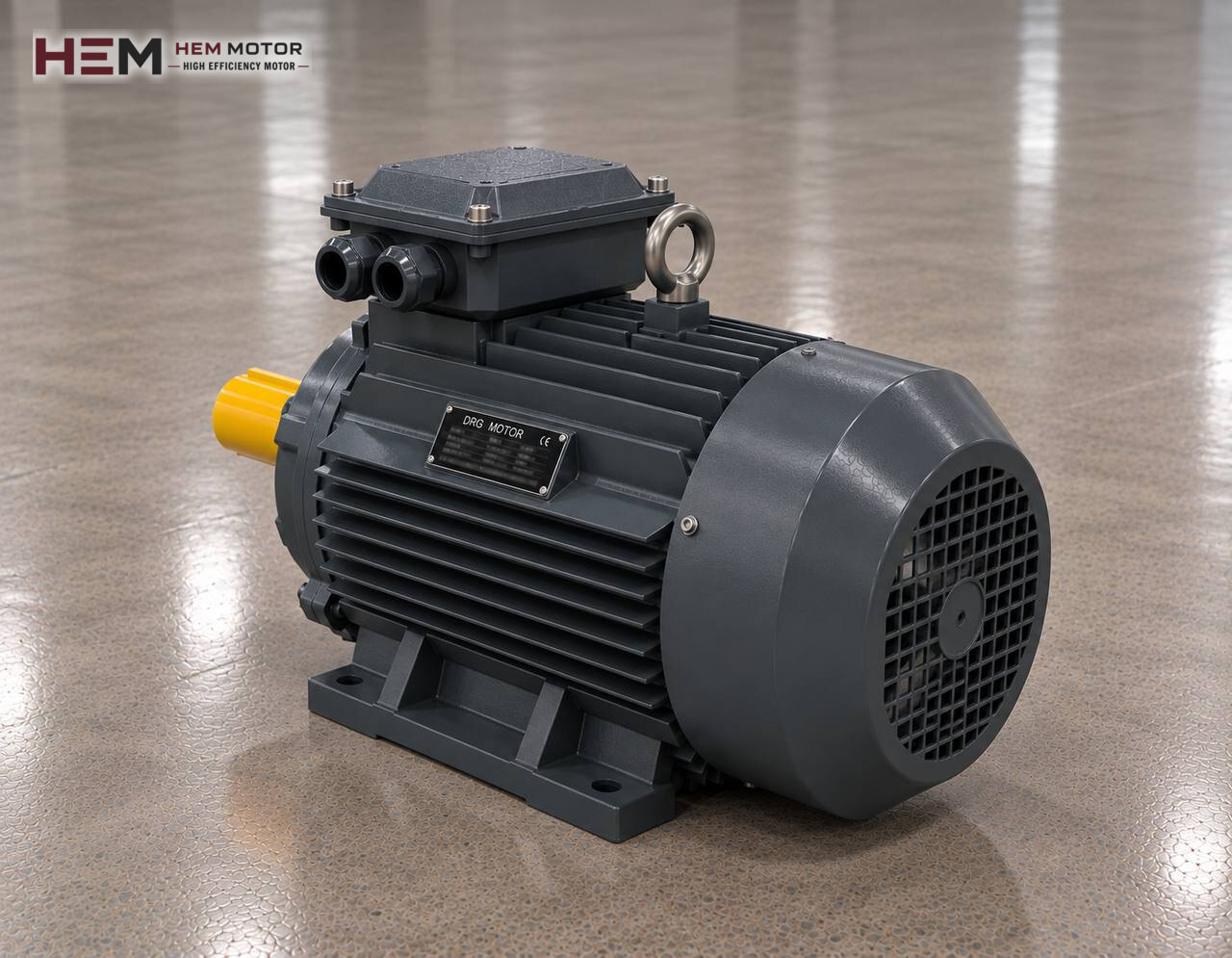
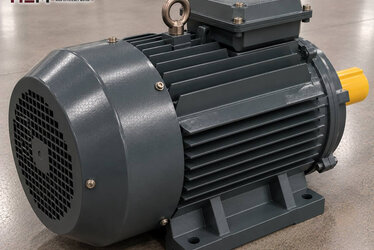
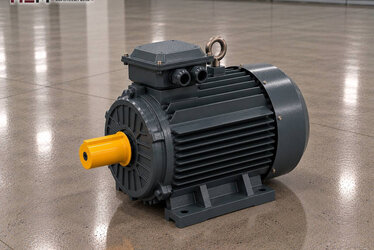
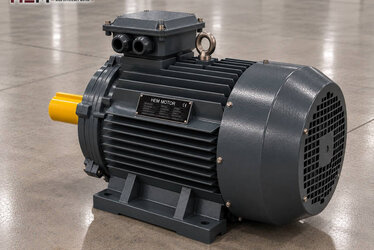
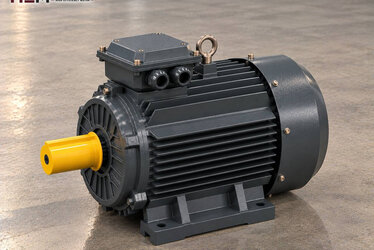
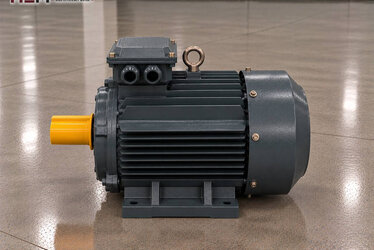
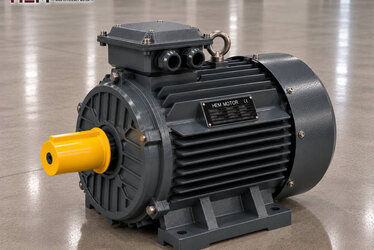
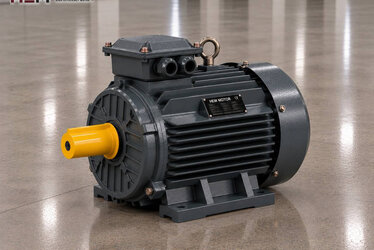
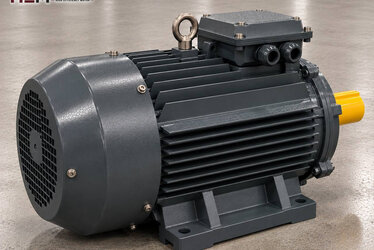
A dough sheeter thins kneaded dough by passing it again and again through the gap between two counter-rotating rollers; puff pastry, baklava sheets, pizza bases and croissant layers are all made this way. This article is a sub-topic of our main page on electric motors for food processing and preparation machines and focuses only on the electric motor that drives this machine.

Rollers, belts and the single-motor layout
A floor-standing bakery sheeter has two rollers in the middle, with a gap set by a lever, and conveyor belts on folding tables on either side. The operator places the dough on one table, the belt pushes it into the rollers and the sheet leaving the rollers moves onto the opposite table. The direction is then reversed and the dough comes back through a slightly narrower gap; each pass makes it a little thinner.
In most machines a single motor turns both the rollers and the two belts together via a chain or belt. Larger line-type layouts may split the rollers and belts between separate motors. Belt speed must match the peripheral speed of the rollers; if it does not, the dough piles up at the inlet or stretches and tears at the outlet. This matching is set by the machine builder's sprocket and pulley ratios, and those ratios are left untouched when the motor is replaced.
The load the motor sees: squeezing resistance and frequent reversing
As the roller gap narrows, the force needed to squeeze the dough rises. Dough just taken out of the cold cabinet, laminated with fat or kneaded stiff loads the motor noticeably more than soft dough at room temperature. If the operator closes the gap too far in one step, the current rises for a short time; power is chosen with these peak moments in mind.
The second source of load is reversing. The machine stops and starts in the opposite direction at every pass, hundreds of times per shift. An asynchronous motor draws several times its rated current for a short time at each start, and this current heats the winding. On machines that reverse often, motor cooling, contactor life and thermal relay setting should be considered together. For those who want to monitor winding temperature directly, a PTC or PT100 sensor is an order option.
Speed, transmission parts and speed control
The rollers turn slowly; the motor's speed in the 1,500 rpm class is reduced by a chain sprocket, belt and pulley or a small gearbox. That is why a 4-pole motor is the most common choice on dough sheeters; a 6-pole motor can also be used if the transmission ratio is built for it. In geared layouts the motor flange and shaft must fit the gearbox input; our page on electric motors for gearboxes explains this matching.
On some newer machines belt speed and reversing are handled by a frequency inverter. Compared with hard reversing through contactors, the inverter treats the dough more gently and reduces shock in the chain. HEM's three-phase motors can be driven by an inverter; if the motor will stay at low speed and full load for long periods its own fan may not be enough and a separate fan is considered, and if the cable between inverter and motor is long a dv/dt or sine filter comes into play. Please state these conditions in your order; details are on the inverter-compatible electric motors page.
Flour dust, moisture and cleaning: the limits of an IP55 motor
The air in a bakery always carries flour dust. This dust collects on the fan cover grille and on the cooling fins of the frame, makes it harder to get rid of heat, and the motor runs hotter than normal. Cleaning the fan cover and frame regularly with a dry brush or low-pressure air is especially important on a machine that reverses often.
HEM motors are rated IP55: protected against dust and against water splashed from any direction. However, a standard IP55 motor is not designed for washing with pressurised water or foam, direct food contact or hygienic design requirements. If the machine is hosed down, or if the motor sits close to where the dough passes, the machine builder's protective measure (enclosed motor compartment, shield) or a special motor is required; please state this in your order. In warm, humid corners next to the oven, an anti-condensation heater can be requested as an order option against condensation during night stops.
Mounting arrangement and the single-phase option
The motor is usually fitted in the lower compartment of the machine body, either foot-mounted on a base plate or flange-mounted directly to a gearbox. HEM motors are offered, depending on frame size, in B3, B5, B14, B34, B35 and vertical V1, V3, V5, V6 and V15 arrangements; flange and shaft dimensions are confirmed with the order. For flange connections see the B5 and B14 flange-mounted motors page.
In small bakeries and pastry shops without a three-phase supply the machine has to run on the 230 V mains. In that case HEM's single-phase electric motor series in the 0.18–5.5 kW range is considered. The starting behaviour of a single-phase motor and its suitability for frequent reversing should be checked together with the machine's reversing switch.
Example HEM motors for dough sheeters
| Machine layout | Job of the motor | Value to check when selecting | Example HEM model |
|---|---|---|---|
| Small benchtop machine | Turns the rollers and both belts on its own | kW and speed on the existing nameplate; 230 V or 400 V supply | 0.37 kW 71M2-4 (1,340 rpm) |
| Floor-standing bakery machine | Rollers and reversing belts | Number of reversals per hour, thermal relay setting | 0.55 kW 80M1-4 (1,400 rpm) |
| Wide-roller machine for filo and baklava sheets | Squeezing stiff dough in a narrow gap | Current at peak load, chain or belt ratio | 0.75 kW 80M2-4 (1,420 rpm) |
| Line layout with a separate roller motor | Roller drive through a gearbox | Gearbox input flange and shaft diameter | 1.1 kW 90S-4 (1,445 rpm) |
The models in the table are examples; the final selection depends on the machine load, required speed, mounting and operating conditions.
What should you send us for a motor replacement or a new machine?
If you are replacing an old motor, the quickest route is to send a clear photo of the motor nameplate; how to do this is explained on the find an equivalent motor from the nameplate page. If the nameplate cannot be read, the following is enough: machine type and brand, motor power (kW), speed (rpm), supply voltage (230 V single-phase or 400 V three-phase), mounting type (foot, flange, attached to a gearbox), shaft diameter and required quantity. If you are a machine builder, please add your annual quantity as well.
Current prices are shown in the electric motor shop and on the product pages. For technical questions and quotations you can reach us by WhatsApp or phone via our contact page.
Frequently Asked Questions
The motor of my dough sheeter gets very hot; what could be the reason?
The most common causes are frequent reversing, flour dust built up on the fins, an overly tight roller setting and low supply voltage. First clean the frame and measure the voltage; if the problem continues, consult us with the nameplate data to check whether the motor power suits this duty.
Can I convert a single-phase machine to a three-phase motor?
It is possible if the workshop has a three-phase supply, but not only the motor changes; the control circuit (reversing switch, contactors) changes too. The conversion should be done by an electrician who knows the machine's wiring diagram.
Can I wash the motor with pressurised water?
No. An IP55 motor is protected against water splashes but is not designed for pressure washing. Cover the motor during cleaning or use dry methods; if washing is unavoidable, state this in your order.
My old motor is 6-pole; can I fit a 4-pole one instead?
If you do, roller and belt speed rise by about one and a half times, which affects both dough quality and operator safety. If the transmission ratio is not changed, choose a motor with the same number of poles.