English
 Français
 Türkçe
 Español
 Русский

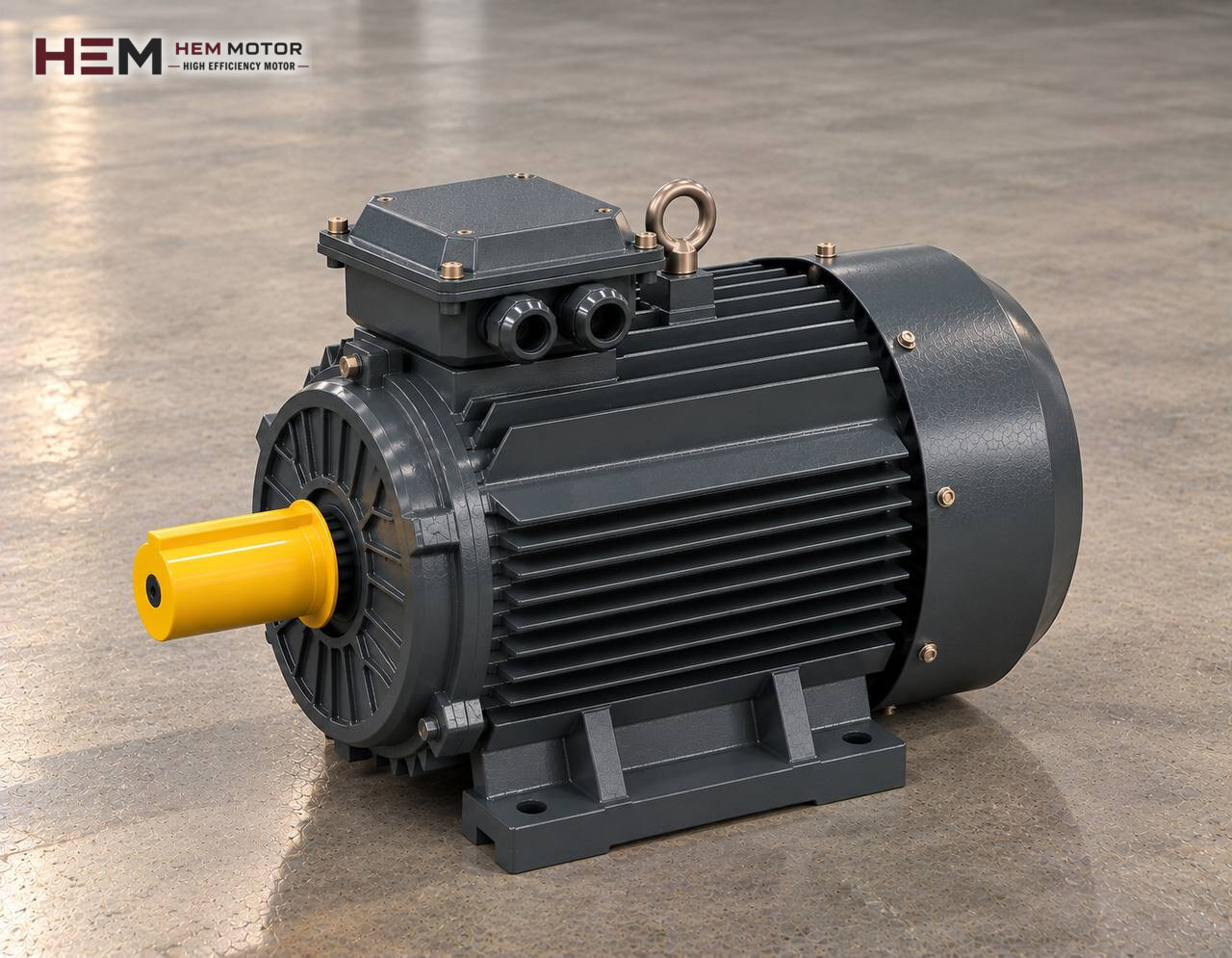
In a line that extracts juice from apples, pomegranates, grapes or carrots the press never works alone: first a mill crushes the fruit, then the press squeezes the mash, and then a pump transfers the juice to a tank. This page sits under the page where we cover motors for food processing machines as a whole, and looks at the electric motor that drives a fruit juice press and how the press type changes motor selection.

Three press types, three different motor tasks
Most fruit juice presses on the market fall into three groups, and the work the motor faces differs in each:
- Belt press: The crushed fruit is spread between two filter-cloth belts; as the belts pass over a series of rollers they are squeezed more and more and the juice drains off. The motor runs the belts at a steady low speed and may also turn the cloth-cleaning brush. The load is smooth and continuous.
- Screw (auger) press: A conical screw pushes the mash forward inside a screened cage, and the volume narrowing towards the outlet separates the juice. The motor turns the screw slowly and with high torque through a gearbox; if the mash is dry and fibrous the load increases.
- Hydraulic pack press: The mash is stacked in cloth packs and a cylinder compresses them. Here the electric motor does not produce the pressing force itself; it only turns the hydraulic pump, and the pressure and force are created by the hydraulic system. Motor selection is based on pump flow, working pressure and cycle time; this topic is covered separately on our hydraulic pump electric motors page.
In older mechanical presses with a flywheel, the motor accelerates a flywheel and the energy stored in it is spent at the moment of pressing. In this arrangement start-up takes a long time and the motor needs enough starting torque to accelerate the inertia load.
The mill in front of the press and the pump behind it
The fruit mill (crusher) usually carries the most powerful motor in the line. A rotating rotor or bladed disc breaks the fruit by throwing it against a fixed screen or a serrated ring. The rotor is mostly coupled directly to the motor shaft or driven by a belt, so the motor speed directly determines how fine the crushing is. Hard apples and soft grapes draw different current in the same mill, and a sudden filling of the feed hopper also creates a short peak load.
The juice leaving the press is usually transferred by a small centrifugal or positive displacement pump to a settling or pasteurisation tank. This pump's motor has low power but does not stop as long as the line runs. General information on pump drives can be found on the pump electric motors page.
Speed, gearbox and starting
On screw and belt presses the working shaft turns from a few to a few tens of revolutions per minute. The motor's speed in the 1,500 rpm class is brought down to this level by a gearbox; the ratio is set by the machine builder and kept the same when the motor is replaced. The motor flange and shaft diameter must suit the gearbox input; our page on motors connected to gearboxes details this fit.
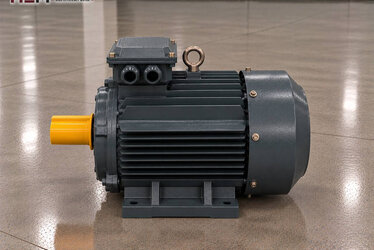
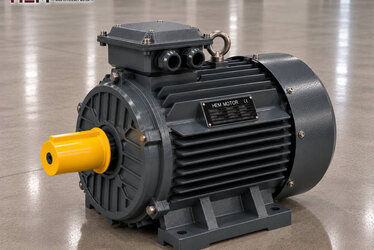
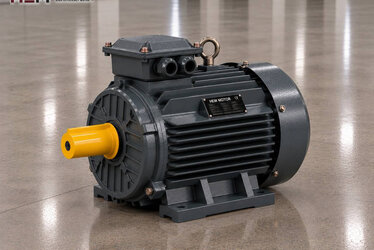
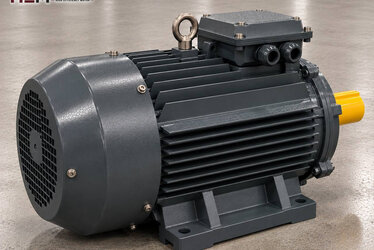
On a screw press, starting becomes difficult if the screw is full: compacted mash brakes the screw. For this reason many builders start the screw empty and then open the feed. Because the load varies, a frequency inverter is often used; adjusting screw speed to the fruit balances juice yield and dryness of the pomace. HEM's three-phase motors are suitable for inverter drive. For a motor that will turn at low speed with full torque for long periods, adding a separate cooling fan is considered, and when the cable between motor and inverter is long a dv/dt or sine filter is considered; please pass these details to us with your order. The subject is also covered on the motors used with inverters page.
Fruit acid, sugar and wash water
The press area is a wet environment. Fruit juice is acidic and contains sugar; when it splashes onto the motor frame and dries it leaves a sticky layer and clogs the fan cover. At the end of the shift the press, belts and floor are washed down with plenty of water.
The IP55 protection of HEM motors is against dust ingress and water splashes. Direct washing with a hose or pressurised water, foaming chemical cleaning, food contact and hygienic surface requirements are outside the design scope of this standard motor. If the motor stays in a wet area, we recommend that the machine builder takes a protective measure (moving the motor out of the splash zone, an enclosed cabinet, a shield) or that a special motor is used; write this condition in your order. In press buildings that cool down overnight, an anti-condensation heater against moisture build-up in the winding, and a PTC or PT100 sensor for monitoring winding temperature, can be added as order options.
Mounting and seasonal operation
Mill motors usually sit foot-mounted (B3) on a base and are belt-coupled; on screw and belt drives the motor is flange-connected (B5 or B14) to the gearbox. HEM motors are supplied, depending on frame, with B3, B5, B14, B34, B35 and vertical V1, V3, V5, V6, V15 options; we confirm the flange and shaft dimensions together with you at the order stage.
In most businesses juice production is seasonal: a few months of intensive work followed by a long stop. Before a long stop it is good practice to keep the motor in a dry place or covered, and at the start of the season to measure the winding insulation and listen to the bearings. For small farm presses without a three-phase supply our 220 V single-phase motor series in the 0.18–5.5 kW range can be considered.
Example HEM models for a fruit juice line
| Line section | Motor load | Point to check | Example HEM model |
|---|---|---|---|
| Belt press travel drive | Smooth, continuous, low speed | Gearbox ratio and flange fit | 1.5 kW 90L-4 (1,445 rpm) |
| Pump of the hydraulic pack press | Pressure-dependent, cyclic | Pump flow, working pressure, cycle time | 2.2 kW 100L1-4 (1,450 rpm) |
| Screw (auger) press | Variable, high torque | Starting with a full screw, inverter use | 3 kW 100L2-4 (1,450 rpm) |
| Fruit mill (medium capacity) | Impact load, peak when hopper fills | Rotor coupling and speed | 5.5 kW 132S-4 (1,460 rpm) |
| Fruit mill (high capacity) | Impact load, long shifts | Cast iron frame, belt tension | 7.5 kW 132M-4 cast iron (1,460 rpm) |
These models are given only as examples; the final selection is made by assessing the press load, the required speed, mounting and operating conditions together.
Information to prepare when requesting a quotation
If the nameplate of the motor you are replacing is still there, sending a photo of it is usually enough; our article on finding an equivalent from a nameplate photo explains this step. If the nameplate is worn off, please tell us: which machine (mill, belt, screw or hydraulic press), motor power in kW, speed in rpm, mains voltage, mounting type (foot, flange, attached to a gearbox), shaft diameter and how many units are needed. If you are thinking of a spare motor before the season, mention that too.
All models and current prices are listed in our shop. For questions and quotation requests you can reach us by WhatsApp or phone; the numbers are on the contact page.
Frequently Asked Questions
If I replace the motor of my hydraulic press with a more powerful one, will the pressing force increase?
No. The pressing force is determined by the pressure setting of the hydraulic system and the cylinder diameter. A more powerful motor only allows the pump to run at a higher flow or pressure, and this must stay within the limits allowed by the pump and the relief valve.
The screw press trips the thermal relay at the first start in the morning; why?
Mash left in the screw overnight dries and hardens and loads the motor at start-up. Emptying or washing the screw before shutting down usually solves the problem; if it continues, soft starting with an inverter can be considered.
Should I choose a 2-pole or a 4-pole motor for the mill?
If the rotor is coupled directly to the motor, stay at the speed the machine was designed for; changing the speed affects crushing fineness and rotor safety. In a belt-driven layout a different pole number is possible if the pulley ratio is recalculated.
How should I store the motor outside the season?
Clean the motor and keep it in a dry, ventilated place; if possible turn the shaft by hand from time to time. At the start of the season have the winding insulation measured before running it.