English
 Français
 Türkçe
 Español
 Русский

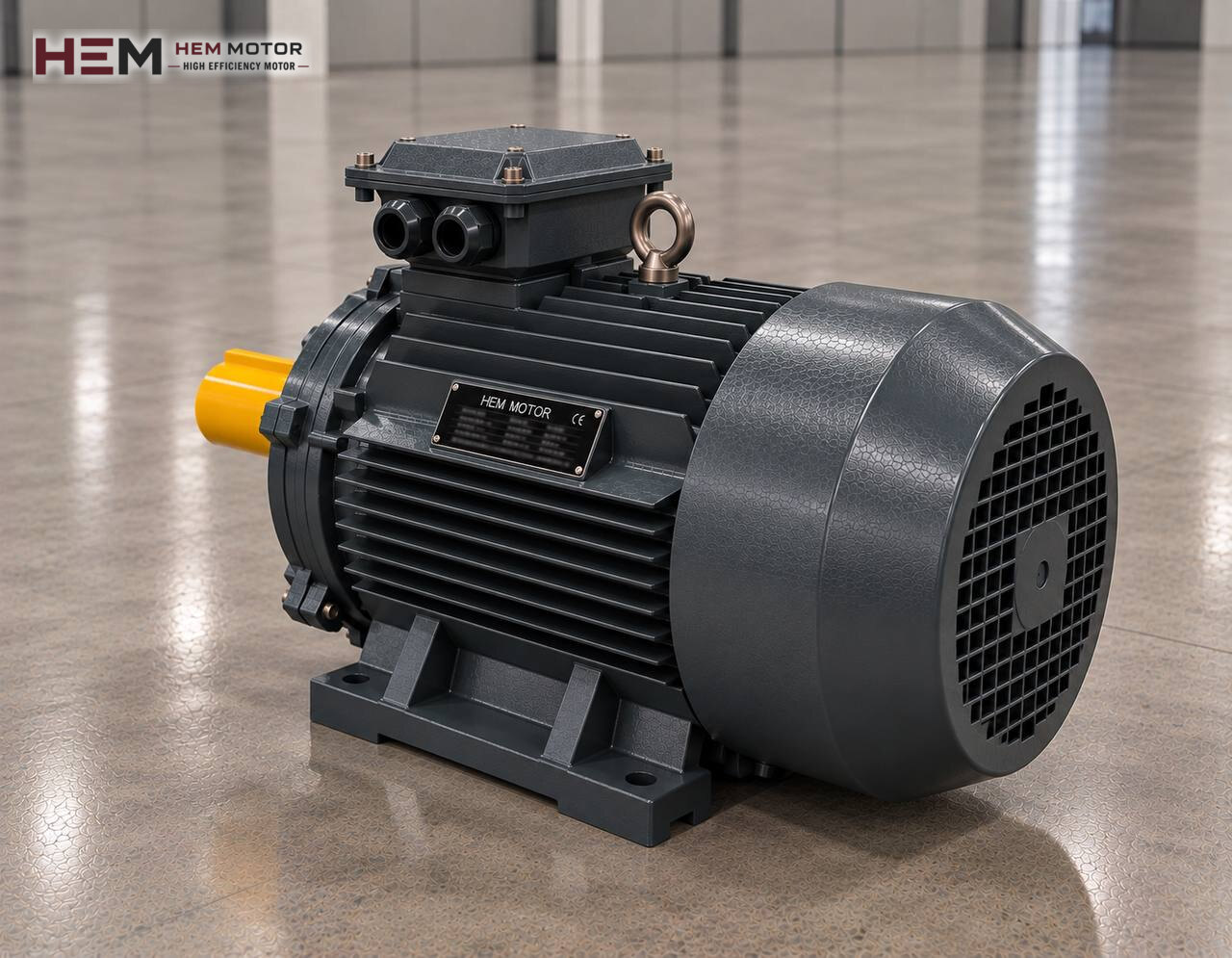
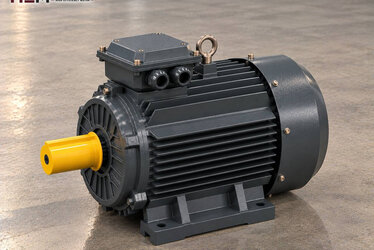
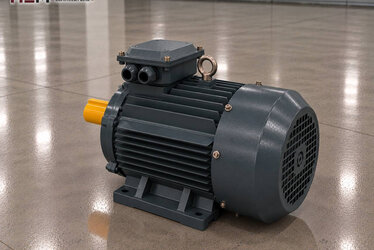
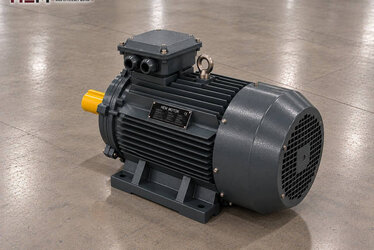
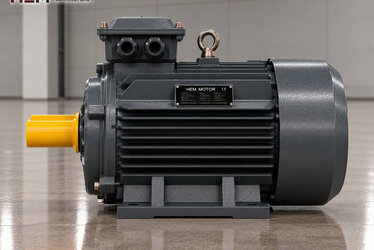
Fruit and vegetable markets, dairy and meat plants, bakeries and logistics centres reuse plastic crates, trays and pallet carriers many times; after every trip they pass through a tunnel-type washing machine. This page covers the three-phase motors that turn the transport chain, the wash pumps and the drying fans of a crate and pallet washer; the other machines of the food sector are on the electric motors for food processing and preparation machines page.

Sections of a Tunnel Crate Washer
A crate washer is a long, enclosed tunnel. At the entry the crate is placed upside down on a transport chain or a plastic modular belt and passes in turn through the pre-wash, detergent main wash, rinse and final rinse zones. Each zone has its own water tank and its own pump underneath. At the end of the tunnel there are air knives that strip water from the crate, or a drying section.
In large plants a destacker that separates stacked crates one by one is added in front of the washer, and a stacker that re-stacks the clean crates behind it. Turners that invert the crate are used, and pallet washers use heavy chains with guides that hold the pallet upright. So six or seven motors carrying very different loads come together in a single machine.
Transport Chain: Heavy Pallet, Light Crate
In a crate washer the load on the transport chain is small; an empty plastic crate is light and the tunnel fills at short intervals. The motor here is mostly a low-power geared drive, but it turns non-stop for several shifts a day. In a pallet washer the situation changes: a wooden or plastic pallet is heavy, the chain rubs more in the guides and wet pallets strain the chain more. On this drive, starting torque and reducer ratio become more decisive.
Transport speed determines how long the crate stays in each zone. Operators who want to adjust speed for crates with different levels of soiling drive the chain with a frequency inverter. If the drive is to run with a heavy load at low speed for long periods, the motor's shaft-mounted fan may be insufficient; an externally powered cooling fan may be needed, and an output filter if the cable is long. Let us know these conditions in your order; the framework is explained on the inverter-compatible motors page.
Wash Pumps: Flow and Pressure
The main energy consumers of a crate washer are the zone pumps. Pre-wash and main wash pumps send water at high flow to every face of the crate; where sticky fruit residue or dough is involved, some machines add a separate high-pressure pump. These pumps run at constant load throughout the shift and two-pole motors are common. The pump motor's power comes from the pump's operating point; for details see the pump electric motors page.
A clogged tank filter disturbs the pump's suction and causes fluctuations in motor current. That is why a pump motor fault should often be sought not in the motor but in the maintenance of the tank filter.
Drying Fans and Air Knives
A dry crate at the outlet matters, especially on lines where the crate is filled with product straight away. At the end of the tunnel one or more fans send pressurised air to narrow air knives. These fans run at high speed, continuously and at full load; on large machines the fan motor can reach the same power class as the pumps. Because fan power changes approximately with the cube of speed, raising fan speed quickly overloads the motor; make this adjustment according to the fan manufacturer's data.
The fan motor is usually on top of the tunnel, where hot humid air rises. A position should be chosen where the motor can draw air and wash vapour does not come straight onto it.
Wet Environment, Detergent and Protection
In the crate washing area the floor is constantly wet, hot vapour escapes when the tunnel covers are opened and the outside of the machine is often cleaned with a hose. The IP55 protection of HEM motors is designed for dust and splashing water – not for pressure-water or foam washing, direct exposure to detergent or hygienic design requirements. Keeping the motors under a protective cover or on the dry side of the machine is the washer builder's measure. If a layout where the motor gets wet cannot be avoided, a protective measure by the machine builder or a special motor is needed; state this in your order.
On machines that stand idle overnight or at weekends, moisture can collect in the motor frame; an anti-condensation heater is an order option that can be requested in this case. On frequently starting drives such as destackers and stackers, a PTC or PT100 sensor for winding temperature can also be added at the order stage.
Destacker, Stacker and Connection Type
Crate destackers and stackers perform lifting and pushing movements that start and stop once for every crate. These mechanisms can be hydraulic, pneumatic or driven by a geared motor; if a motor is used, the number of starts per hour is the main input for motor selection. On machines with a hydraulic unit the motor drives the hydraulic pump; in that case the hydraulic pump electric motors page is a guide.
On chain and stacking drives the motor connects to the reducer flange; on pumps it connects to the pump in a close-coupled design or with a coupling on a baseplate. HEM Motor offers B3, B5, B14, B34, B35 and V1, V3, V5, V6, V15 mounting options depending on the frame; flange and shaft dimensions are verified at the order stage. For reducer matching take a look at the electric motors for gear reducers page.
Example HEM Models for Crate and Pallet Washers
| Drive | Motor's task | Value to check when ordering | Example HEM model |
|---|---|---|---|
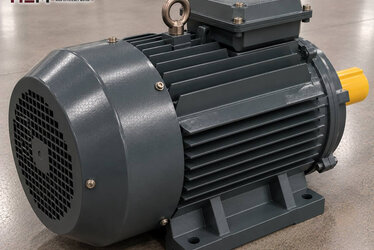
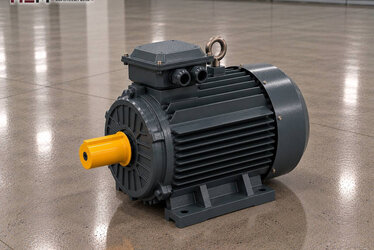
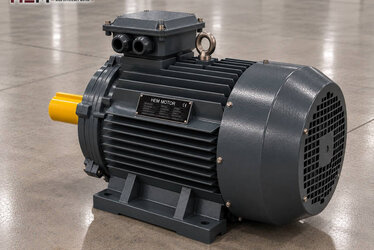
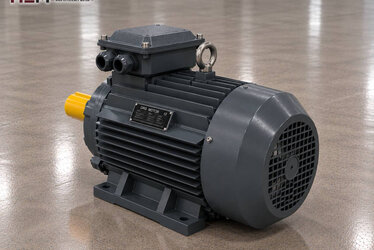
| Crate transport chain | Light, continuous, geared | Transport speed, reducer flange | 1.1 kW 90S-4 aluminium (1,445 rpm) |
| Crate destacker and stacker | Frequent stop-start | Starts per hour, PTC | 1.5 kW 90L-4 cast iron (1,445 rpm) |
| Zone wash pump | Constant flow, long running | Pump operating point | 3 kW 100L-2 cast iron (2,895 rpm) |
| Air knife drying fan | High speed, full load | Fan speed, motor position | 7.5 kW 132S2-2 cast iron (2,930 rpm) |
| Heavy pallet washer chain | Wet, heavy load, starting full | Starting torque, inverter | 7.5 kW 132M-4 cast iron (1,460 rpm) |
The motors listed are given as a starting point. The actual selection is made by looking at the load carried by the washer, the required speed or pump operating point, the connection type and the environment in which the machine is installed.
What to Send Us When Requesting a Quote
Write which machine section the motor will drive (transport chain, wash pump, drying fan, destacker, stacker), the power (kW) and speed (rpm) on the nameplate, the supply voltage, the mounting type and the quantity you need. Adding whether the motor is inside the tunnel, on top of it or on the dry side clarifies the selection. If you have a nameplate photo of the motor to be replaced, send that too.
You can find current prices of the models in our electric motor shop. WhatsApp and phone details for quotes are on the contact page.
Frequently Asked Questions
Why does the pump motor of a crate washer heat up?
Most often the cause is a clogged tank filter or labels and residue caught on the pump impeller. Clean the filter and suction first; then compare the current drawn by the motor with the nameplate value.
If I increase the speed of the drying fan, will the crates dry better?
Air flow increases, but the power the fan demands rises very quickly with speed and the motor can be overloaded. Change the speed according to the fan manufacturer's data and choose a more powerful motor if necessary.
The pallet washer chain struggles to start when loaded; what can be done?
Soft starting with an inverter, checking the reducer ratio and cleaning the chain guides are the first steps. If motor power is insufficient, consult us with the existing nameplate values.
Can a single-phase motor be used on a small crate washing machine?
In small businesses without three-phase supply the 0.18–5.5 kW single-phase series can be considered; information on the series is on the single-phase 220 V electric motor page.