English
 Français
 Türkçe
 Español
 Русский

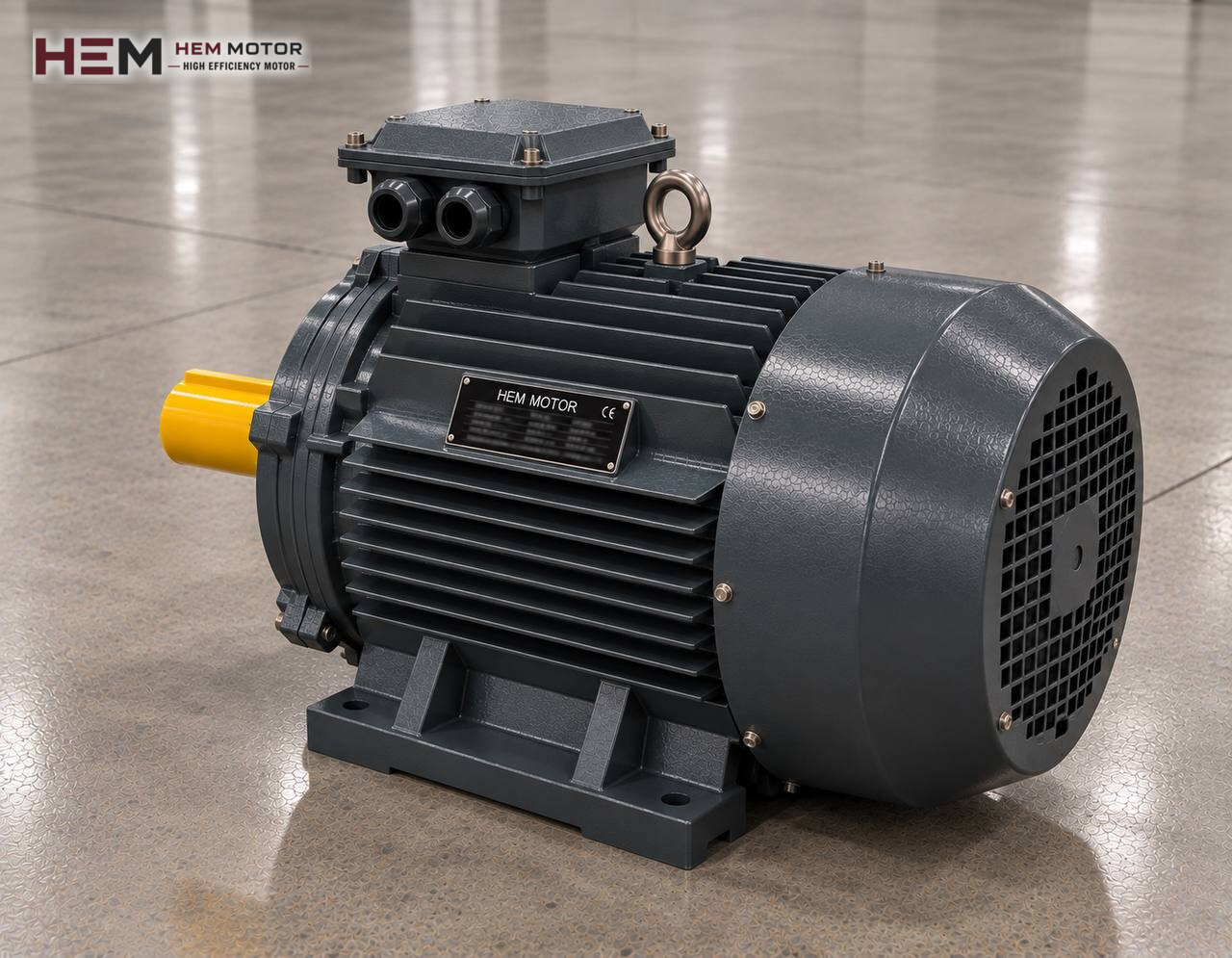
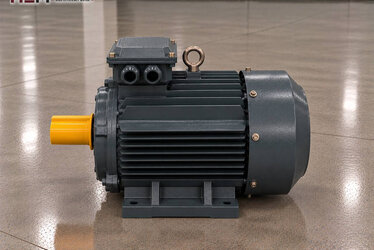
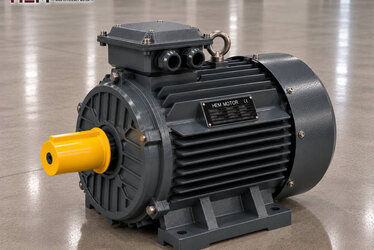
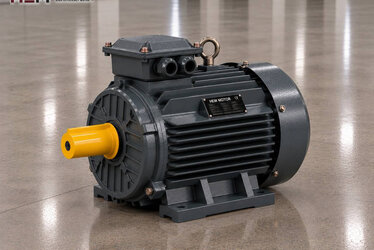
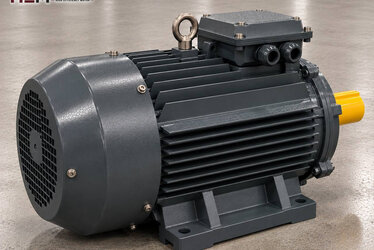
A small peeler in a restaurant kitchen and a long peeling line in a crisp factory do the same job on different scales: they wear away the potato skin by friction. The movement that creates that friction comes from an electric motor. This article deals only with that motor; for other food machines you can return to the main page Electric Motors for Food Processing and Preparation Machines.

Batch and continuous peelers: two different motor layouts
Batch (drum) peeler
At the bottom of the cylindrical drum there is a disc coated with abrasive grit. As the disc turns, potatoes are thrown against the rough wall of the drum and rub against each other and the wall. Water sprayed from above carries peel residue to the drain below. After a few minutes the side door opens and the rotating disc throws the peeled product out. A single motor turns the disc; it usually stands upright under the drum with its shaft pointing up.
Continuous (roller) peeler
On industrial lines potatoes pass over a row of abrasive or brush rollers. The rollers turn in the same direction and roll the product, while a screw or paddle shaft above moves it from one end to the other. There is a main drive turning the roller group and a separate drive for the advancing mechanism. Motors for the infeed belt at the start of the line and the discharge conveyor at the end are counted separately.
Full drum, water and starch: features of the load
In a drum peeler the motor starts with a full drum every cycle. While the mass of potatoes sits still on the disc, resistance on the first turn is high; once the product starts to tumble, the load settles. Overfilling the drum both makes starting harder and reduces peeling quality.
During peeling the load is fairly even. The real variable is the product itself: large, knobbly potatoes create a different load from small, regular ones. The abrasive layer on the disc wears over time; peeling takes longer and the motor runs longer for the same job.
In roller machines the main drive turns continuously for hours. A small stone or hard piece jammed between rollers can cause a sudden torque rise. On such lines, correctly setting the motor protection relay and monitoring winding temperature are important.
Speed, belt and gearbox
In drum peelers the disc is driven straight from the motor shaft or by belt and pulley. Disc speed determines how hard the potato is thrown against the wall; the machine builder chooses this speed according to disc diameter. When replacing the motor, keeping the same number of poles as the old one is the easiest way not to upset the machine's setting. Most machines use a 4-pole (1,500 rpm synchronous) motor.
In roller peelers the rollers turn more slowly; a gearbox or chain-and-sprocket drive is common on the main drive. For geared layouts, the motors coupled to gearboxes page gives details. Plants that want to adjust roller speed for different potato varieties can use a frequency inverter. Our three-phase series are suitable for inverter drive; if the motor will carry full load at low speed for long periods, an extra cooling fan is considered, and a dv/dt or sine filter if the line between drive and motor is long. Please pass this information on in your order.
Sample HEM motors by peeler type
| Peeler | Part turned by the motor | Point to note | Sample motor |
|---|---|---|---|
| Small kitchen drum peeler | Abrasive bottom disc | Vertical mounting, single-phase need | 0.55 kW 1,500 rpm 80M1-4 (aluminium) |
| Large drum peeler | Disc, via belt and pulley | Starting with a full drum | 1.1 kW 1,500 rpm 90S-4 (aluminium) |
| Continuous roller peeler | Roller group, through a gearbox | Continuous duty, jamming moments | 1.5 kW 1,500 rpm 90L-4 (cast iron) |
| Brush washing-peeling line | Brush shafts and advancing screw | Water splash, roller speed | 3 kW 1,500 rpm 100L2-4 (aluminium) |
The models in these rows are examples only; the right motor for a peeler is chosen by examining together the machine's real load, the required speed, the way it is connected and the working environment. The nameplate of the motor already in the machine is always the first reference.
According to catalogue values, the 80M1-4 gives 3.75 Nm at a nominal 1,400 rpm, the 90S-4 7.27 Nm at 1,445 rpm, and the 100L2-4 19.8 Nm at 1,450 rpm, drawing 6.02 A at 400 V.
A motor in the wet zone: protection and placement
The potato peeler is one of the wettest food machines. Water flows constantly during peeling, forming a starchy slurry full of peel particles. In drum machines the motor sits right under the drum where this water runs. If the drum seal or shaft seal leaks, water drips onto the motor.
All our models on sale are IP55. This protects against dust and low-pressure water splashes; it is not designed for immersion, pressure washing, food contact or hygienic design expectations. The screen, drip shield and drain arrangement that separate the motor from drum water are the machine builder's protective measures; if a washdown or stainless special motor is needed, state it in your order.
In vertical mounting it is important that water does not collect on the top cover of a motor whose shaft points up. Vertical versions are offered as V1, V3, V5, V6 and V15, horizontal ones as B3, B5, B14, B34 and B35 depending on frame; we confirm shaft and flange dimensions at the order stage. A condensation heater for motors standing in humid rooms and PTC/PT100 sensors for monitoring the winding are order options.
Single-phase motors in restaurants
In restaurant, hotel and catering kitchens, small peelers usually run from a 230 V socket. In this power range our separate single-phase series covering 0.18–5.5 kW is an option; information is on the single-phase electric motor 220V page. In a wet environment it is also important that the capacitor box and cable entry stay sealed.
Plants with a three-phase supply use three-phase motors; industrial options are on the general-purpose industrial motors page.
Information to send for the right motor
Write to us with the machine type (drum or roller peeler), the power (kW) and speed (rpm) of the old motor, the supply voltage (230 V single-phase or 400 V three-phase), the mounting type (vertical, flange, foot) and the quantity you need. For vertically mounted motors, shaft diameter and flange type are especially important.
If you share a photo of the old motor's nameplate, we will quickly identify the equivalent. You can find all models on the buy page; the current price is on the product page. For WhatsApp and phone, see our contact page.
Frequently Asked Questions
The peeler will not run with a full drum but turns when empty; why?
The drum may be overfilled or the belt may be slipping. Check capacity and belt tension; if the problem continues, measure motor current and compare it with the nameplate value.
Will water leaking from the drum damage the motor?
A motor that has water dripping on it for a long time can suffer winding and bearing damage. A standard IP55 motor is not designed to stay under water constantly; replace the seal and protect the motor with a shield.
Peeling takes longer now; has the motor weakened?
Most often the cause is a worn disc or roller surface. Changing the motor without renewing the abrasive coating will not change the result.
Can I fit a three-phase motor to a kitchen peeler?
Yes, if the kitchen has three-phase power; otherwise our single-phase series can be considered. State voltage, mounting and shaft size in your order.