English
 Français
 Türkçe
 Español
 Русский

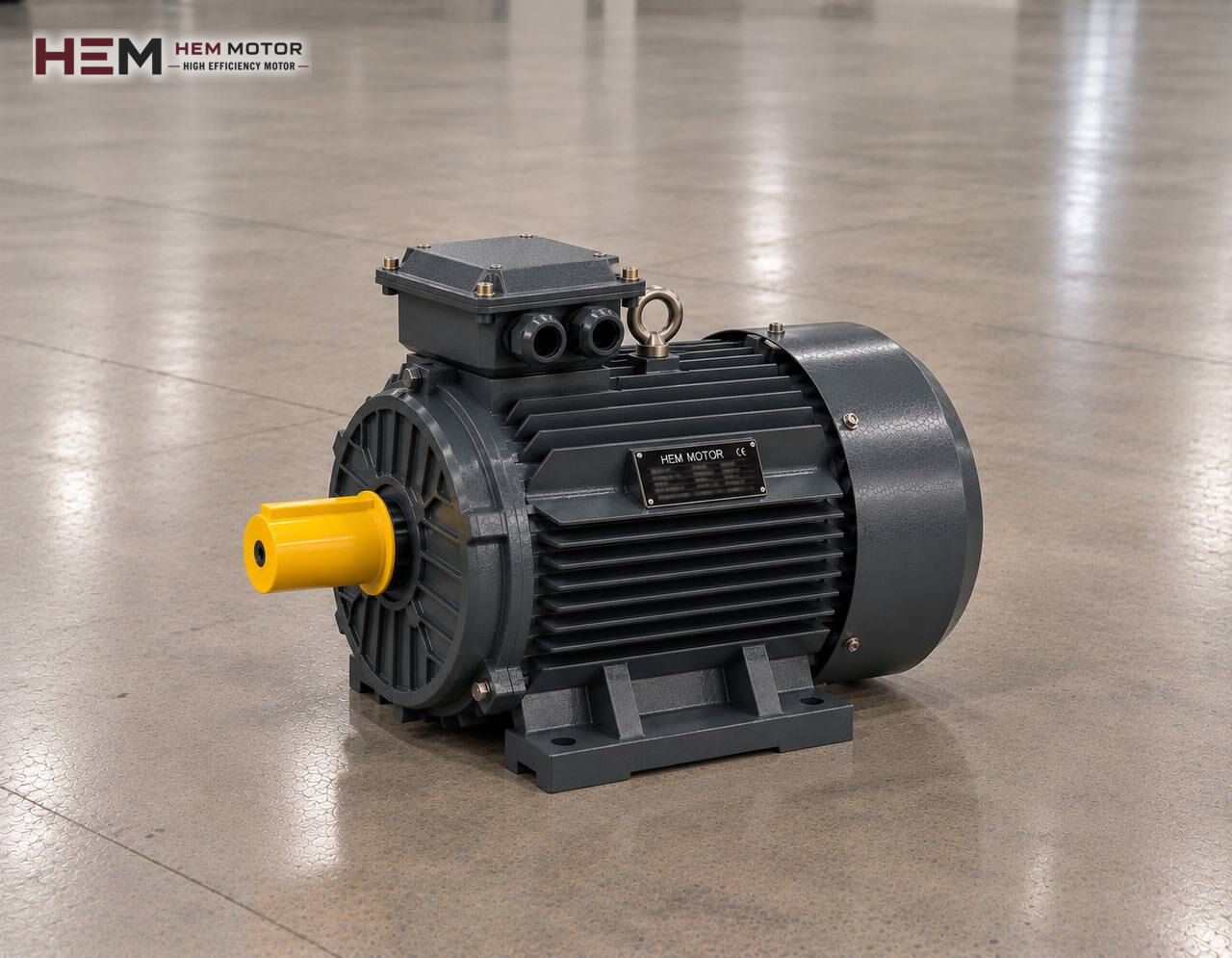
In black tea production, withered green leaf is crushed and twisted in a rolling machine; the leaf cells open, the sap comes to the surface and fermentation starts with this step. This page is one of the sub-topics of the food processing and preparation machine electric motors page; it covers the motors of the rolling machine in a tea factory and of the units next to it.

Orthodox Roller versus CTC Line
In a traditional (orthodox) rolling machine the leaf is filled into an open-topped cylindrical jacket. The jacket moves in a circular, eccentric path over a ribbed table beneath it, driven by a crank mechanism. The leaf rolls as it is pressed onto the table both by its own weight and by a pressure cap lowered from above. These machines, common in Turkish tea factories, work in batches; one charge is rolled for a set time and then discharged.
In CTC (crush-tear-curl) lines the leaf passes continuously between two rollers with toothed surfaces turning at different speeds. The rollers cut the leaf into small granules. In these lines the load is continuous, the speed ratio fixed and the roller gap precise. Many factories also have a rotorvane before the CTC that pre-crushes the leaf.
How the Eccentric Motion Reaches the Motor
The jacket of an orthodox roller accelerates in one direction and slows in the other on every turn. This creates a fluctuating torque on the motor shaft; the load rises and falls periodically. The machine's large flywheel and belt drive smooth this fluctuation. As the pressure cap is lowered, friction between leaf and table grows and motor current rises; a rolling programme usually starts with light pressure, gets harder and eases again at the end.
Stopping and restarting the machine with a full jacket of wet leaf is the hardest moment for the motor. At start-up the flywheel inertia and the resistance of the leaf mass must be overcome together. For this reason, starting torque and starting method of roller motors are considered together with the power rating given by the machine builder.
Belt, Crank and Speed
The crankshaft of a roller turns at a few tens of revolutions per minute. Motor speed is reduced to this value by a belt and pulley set and, on most machines, an extra gear stage. Pulley diameters follow the machine builder's calculation; if a replacement motor of the same synchronous speed is chosen, the pulley arrangement need not be touched. 1500 rpm class motors are common on these machines; on larger, heavier rollers the 1000 rpm class may also be preferred.
On CTC rollers the speed difference between the two rollers determines the cutting effect; this difference is fixed by the gear or belt ratio. If the rollers are driven by separate motors, the speed ratio can be set with frequency inverters. HEM three-phase motors can be used on inverter supply; extra cooling where the motor stays loaded at low speed for long periods, and the need for a filter in panels far from the motor, should be discussed in the order. The inverter compatible electric motors page gives more information.
Other Drives in the Factory
The rolling machine is only one link in the chain. In withering troughs the leaf loses part of its moisture with air blown by large axial fans. After rolling, ball breakers that open the lumped leaf, fermentation belts, the feed belt and hot-air fan of the dryer, and finally grading sieves all run on separate motors. The conveyor belt electric motors page gives details on conveyor and belt drives.
On withering and drying fans the motor load is closely tied to fan speed; as speed falls, the power drawn falls roughly with the cube, but the real value depends on trough or dryer resistance.
Humidity, Leaf Juice and Seasonal Operation
The rolling room is humid and cool; leaf juice seeps onto the table, the bottom of the jacket and the lower part of the machine. The motor should sit where it will not come into direct contact with this liquid, preferably on the upper or side frame of the machine. IP55 protection on HEM motors is designed against dust and water splashes; contact with food, pressure washing of the machine or a hygienic design expectation are not conditions this standard motor meets, and the machine builder's protective measure is needed.
Tea factories work intensively during the leaf harvest and stand still for months in winter. An anti-condensation heater against moisture in the winding during long stops and a PTC or PT100 sensor to monitor winding temperature in the busy season can be requested as order options. Checking bearing noise and belt tension before the season prevents unplanned stoppages.
Mounting Types
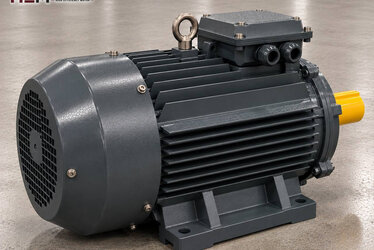
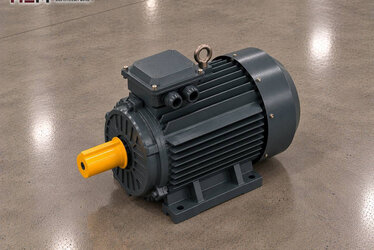
On rollers the motor usually sits foot-mounted on a base beside the machine and drives by belt. Depending on frame size, foot-mounted B3, flange-mounted B5 and B14, combined foot and flange B34 and B35, and vertical V1, V3, V5, V6 and V15 options are offered; shaft and flange dimensions are clarified during ordering.
Example HEM Models for a Tea Factory
| Machine | Motor's task | What to check | Example HEM model |
|---|---|---|---|
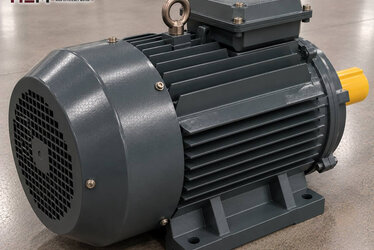
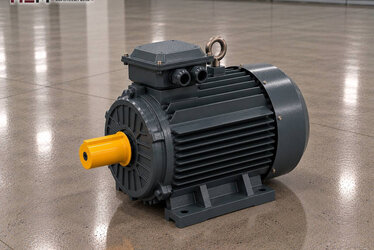
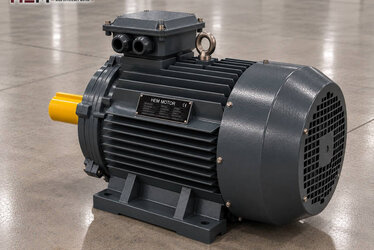
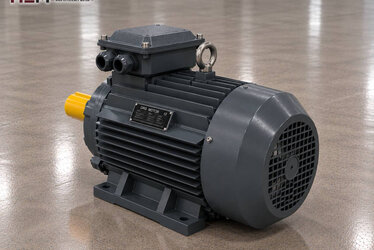
| Orthodox rolling machine | Eccentric jacket motion via crank | Fluctuating torque, full start | 7.5 kW, 1,460 rpm, 132M-4 cast iron |
| CTC roller unit | Turns the toothed rollers continuously | Speed ratio, continuous load | 15 kW, 1,465 rpm, 160L-4 cast iron |
| Ball breaker sieve | Breaks up rolled leaf | Vibration, humid surroundings | 1.5 kW, 1,445 rpm, 90L-4 cast iron |
| Fermentation belt | Moves the belt slowly | Gearbox matching | 1.1 kW, 1,445 rpm, 90S-4 aluminium |
The examples in the table are not a final selection; the decision is made by considering machine load, required speed, transmission, mounting and the humid environment together. The roller builder's data should be the basis for the power rating.
Information to Send When Asking for a Quote
Write the machine type (orthodox roller, CTC, rotorvane, sieve) and which mechanism the motor turns. Add the existing motor's power and speed, your factory voltage, mounting type, whether it connects through pulleys or a gearbox, and the quantity needed. For pre-season replacements, a photo of the motor nameplate speeds things up.
Prices are on the electric motor shop pages. For quotes and questions you can use the numbers on the contact page via WhatsApp or phone.
Frequently Asked Questions
Why does motor current keep rising and falling on the rolling machine?
The eccentric movement of the jacket changes the load on every turn; this regular fluctuation in current is normal. If the fluctuation grows over time, belt tension, crank bearings and the flywheel connection should be checked.
What should I do if the machine does not restart with a full jacket?
First reduce the load by lifting the pressure cap. If it happens often, compare the motor's power and starting method with the machine builder's values and check for low supply voltage.
What do you recommend for motors that stand idle in winter?
Moisture may collect in the winding during a long stop. An anti-condensation heater can be ordered as an option; measuring winding insulation at the start of the season is also good practice.
Can I change the speed ratio of CTC rollers with the motors?
If the rollers turn on separate motors, you can set the ratio by driving each motor with a frequency inverter. On machines with one motor and a gearbox the ratio is mechanical and a gear change is needed.