English
 Français
 Türkçe
 Español
 Русский

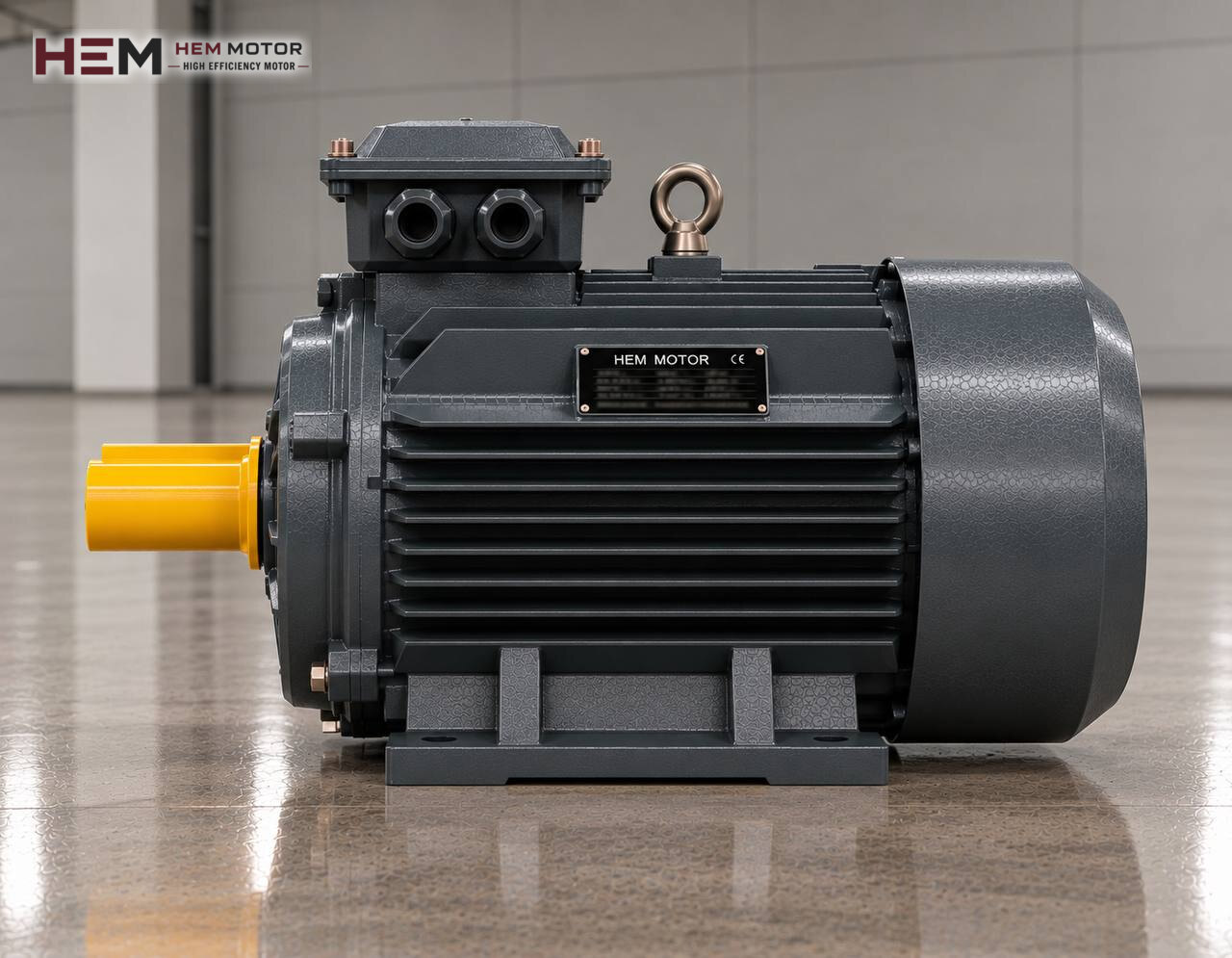
A small planetary mixer whipping cream in a pastry shop and a spiral machine kneading hundreds of kilos of bread dough in a bakery may seem to do the same job, but the load their motors see is very different. As part of the food processing and preparation machine electric motors section, this page covers only the drive motor in mixers and kneading machines.

Three Mixer Types, Three Different Motions
In a planetary mixer the bowl stays still; the tool hanging into it (wire whisk, flat beater or hook) both spins on its own axis and travels around the bowl. This double motion is obtained from a single motor inside a gearbox. It is used for cream, meringue, cake batter and soft doughs.
In a spiral kneader a helical arm and the bowl rotate together; the arm pulls the dough towards the bowl wall and folds it. On most machines the arm and bowl are turned by separate motors, and the arm has two speed steps. In horizontal kneaders (twin-arm or single-shaft), arms on a horizontal shaft rotate inside a closed trough; these are found in large bread factories and biscuit lines.
The Load Kneading Puts on the Motor
Dough resistance does not stay constant during kneading. In the first minutes flour and water are still separate and the load is low. As the gluten network develops, the dough tightens, becomes elastic and the resistance the arm overcomes on each pass increases. Motor current reaches its highest level towards the end of kneading. Dough type matters too: a low-hydration simit or bagel dough loads the motor much more than the same amount of soft bread dough.
Putting in more dough than the bowl capacity makes this load excessive. The maximum dough quantity stated by the machine builder has been calculated to protect the motor and gearbox. If current stays above the nameplate value all the time, dough quantity and water ratio should be reviewed before enlarging the motor.
Starting with a Full Bowl and Speed Steps
A kneading machine is sometimes restarted while full of stiff dough, for example after a power cut. In that case the motor needs high starting torque to set the heavy, stationary dough in motion. This start must also be considered when selecting the motor. On many spiral machines the arm first gathers the dough at low speed and then kneads at high speed; this speed change is provided by a two-speed motor, two separate windings or a frequency converter.
If a special two-speed motor is needed, state it in your order. On converter-driven machines HEM's standard three-phase motors can be used; in a motor that will work heavy dough at low speed for long periods, the cooling from the internal fan drops and a separate fan should be considered. Details of converter applications are on the inverter-compatible electric motors page.
Gears, Belts and Motor Connection
The speed that turns the bowl and arm is quite low; the motor speed is reduced by belt and pulley, chain or gearbox. On spiral machines the arm motor is usually connected by belt and the bowl motor through a small gearbox. On planetary mixers the motor usually sits above the gearbox at the top of the body, with a vertical shaft. On horizontal kneaders a high-power motor turns the arm shaft through a gearbox; for gearbox matching, the electric motors for gearboxes page will guide you.
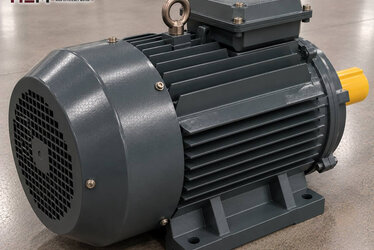
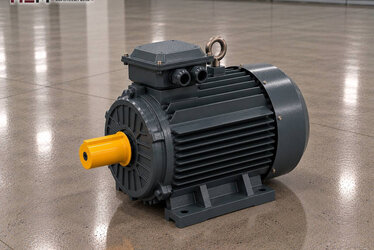
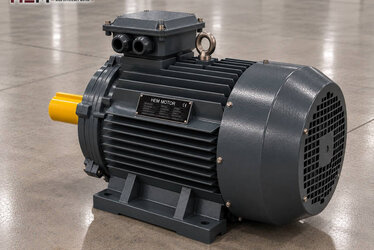
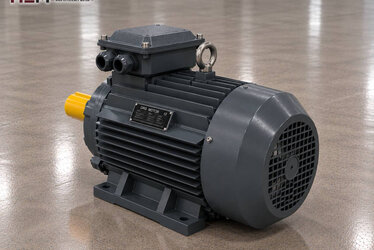
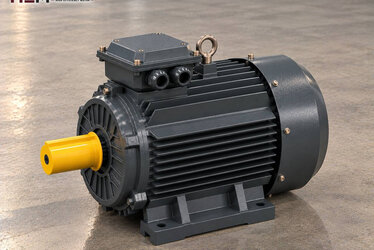
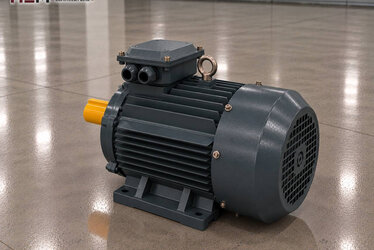
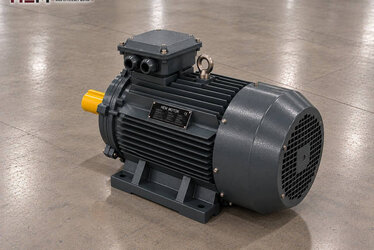
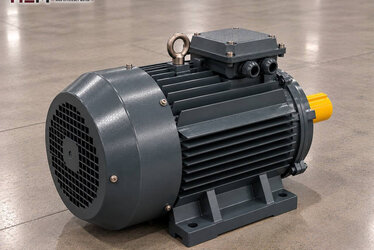
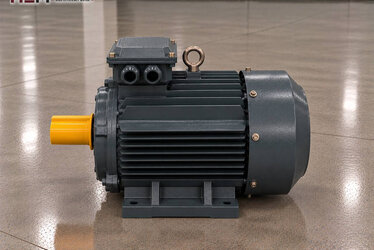
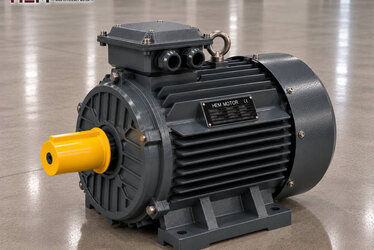
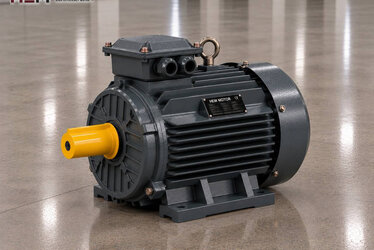
Depending on frame size, motors can be supplied foot-mounted (B3), flange (B5, B14), foot-and-flange (B34, B35) and vertical (V1, V3, V5, V6, V15). The flange diameter and shaft size of the existing motor should be confirmed at the order stage before replacement.
Flour Dust, Humidity and Cleaning
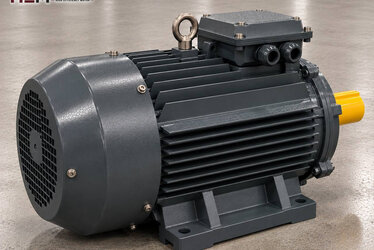
There is always flour in the air of a dough room; it builds up on the motor's fan cover and frame fins and makes cooling harder. The motor compartment inside the mixer body should be cleaned regularly by dry methods. Machines near the proofing room work in warm, humid air; an anti-condensation heater to keep moisture out of the winding of a machine idle at the weekend, and a PTC or PT100 sensor to monitor winding temperature, can be requested as order options.
The IP55 protection of HEM motors covers dust and splashing water. Washing with pressurised water or foam, direct food contact and hygienic design are not conditions this standard motor meets; the motor must be protected inside the machine builder's closed compartment. If different protection is needed, state it in your order.
Small Mixers on a Single-Phase Supply
Counter-top planetary mixers and small spiral machines in pastry shops and cafés usually run from a 230 V socket. For businesses without three-phase power, HEM Motor's single-phase motor series, covering 0.18–5.5 kW, can be considered. Whether the starting torque of a single-phase motor is enough to restart with a full bowl should be checked against the machine's load.
Example HEM Models for Mixers and Kneaders
| Machine | Motor's task | Key selection point | Example HEM model |
|---|---|---|---|
| Medium planetary mixer | Double motion through a gearbox | Vertical mounting, speed adjustment | 0.75 kW, 1,420 rpm, 80M2-4 aluminium |
| Spiral kneader bowl drive | Turns the bowl slowly via a gearbox | Gearbox flange, reversing | 1.1 kW, 1,445 rpm, 90S-4 aluminium |
| Spiral kneader arm drive | Turns the spiral arm by belt | Starting with a full bowl, speed steps | 4 kW, 1,450 rpm, 112M-4 aluminium |
| Industrial horizontal kneader | Turns the arm shaft via a gearbox | High torque, stiff dough, starting method | 22 kW, 1,470 rpm, 180L-4 cast iron |
The table is for guidance only; the final choice evaluates the machine's load, dough type, required speed, mounting and operating environment together. For horizontal kneaders the power value given by the machine builder should be the basis.
What Should You Send Us When Requesting a Motor?
Write the machine type (planetary mixer, spiral kneader, horizontal kneader) and which motion the motor performs (arm, bowl, main shaft). Then add the motor's power and speed, your supply voltage (230 V or 400 V), mounting type, whether two-speed or converter operation is used, and how many units you need. Sending a nameplate photo of the motor to be replaced is the quickest way.
You can find prices on the model pages in our electric motor shop. For questions and quotes, message us by WhatsApp or phone using the numbers on our contact page.
Frequently Asked Questions
My spiral machine will not start with a full bowl. Is the motor too weak?
Not always. A slack belt, a capacitor fault (on a single-phase machine), low voltage or exceeding the bowl capacity give the same symptom. Check these first; if the problem persists, send us the motor nameplate and dough quantity.
Can I replace a two-speed kneader motor with a single-speed one?
If the machine's control circuit is built for two speeds, a direct swap is not possible. To keep the speed steps, either request a special two-speed motor (state it in your order) or drive a single-speed motor with a frequency converter.
Is it a problem to mount a planetary mixer motor vertically?
No; on most mixers the motor runs with a vertical shaft. It is enough to state the vertical mounting form and the shaft direction (up or down) in your order.
The motor gets very hot at the end of kneading. Is that normal?
Load is at its highest in the final stage of kneading and some heating is expected. If the motor approaches its thermal protection limit with every batch, however, dough quantity, water ratio and flour build-up on the frame should be checked.