English
 Français
 Türkçe
 Español
 Русский

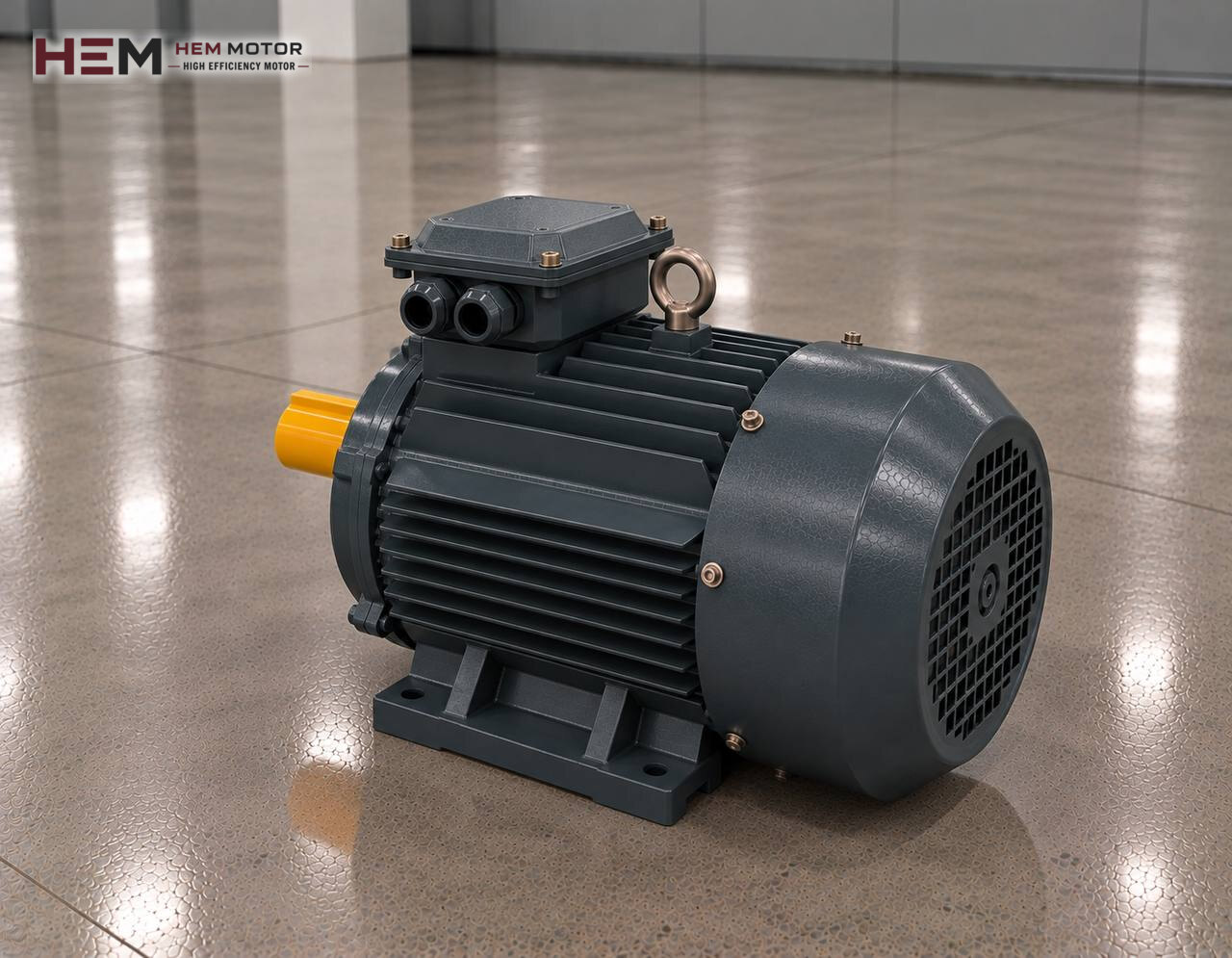
A machine that fills bottles with ayran, oil or fruit juice and a machine that fills pouches with flour, sugar or spices may look similar from the outside, but the motors inside them do quite different jobs. This page is part of the food machinery electric motors section; it explains where a standard three-phase motor works in filling machines and where another type of drive takes over.

How many motors work in a filling machine?
A small semi-automatic machine may have a single motor; on a fully automatic line the number rises above ten. A typical filling line includes the following drives:
- The conveyor that brings the bottle or container to the machine and takes the filled product away,
- On rotary machines, the main drive that turns the filling turret and star wheels together,
- The product pump that sends the liquid from the tank to the filling heads,
- In powder filling, the agitator that stops the product bridging in the hopper and the screw that feeds the hopper,
- Auxiliary units such as the cap feeding elevator, vacuum pump and dust extraction fan.
Most of these drives run on a standard three-phase asynchronous motor. Where the element that measures the dose directly (the piston in piston filling, the dosing auger in powder auger filling) needs precise positioning, most modern machines use a servo or stepper motor; these motor types are not included in HEM Motor's 2026 catalogue.
The motor's job in liquid filling
Liquid filling machines are classified by dosing method: level filling, time-pressure filling, piston (volumetric) filling and flowmeter filling. On level- and time-based machines the dose is set by how long the valves stay open or by the liquid level in the bottle; here the motor turns the product pump at constant speed and runs the turret and conveyor.
The main drive of rotary machines is usually a geared motor; through a gear train it turns the turret, the infeed and outfeed stars and the capping heads in the same rhythm. Because this synchronous relationship is mechanical, what matters is the speed at the gearbox output rather than the motor speed; line speed is mostly set with a frequency inverter. General selection information for the product pump is on our pump electric motors page, and gearbox fit for the main drive on the geared applications page.
With viscous products (honey, tahini, sauces, edible oil) the pump load increases, and on cold days the motor draws more current as the product thickens. When choosing the pump motor, the product's flow behaviour in its coldest state should be considered.
The motor's job in powder filling
Two main methods are used for powders and granules: volumetric cup filling and auger filling. In the cup system, measuring cups on a rotating disc fill with product and empty in turn; the disc is turned by a geared asynchronous motor. In the auger system the dose is measured by the number of turns the auger makes. On older and simpler machines this auger is turned by a continuously running asynchronous motor through a clutch-brake unit; on newer ones servo drive is common.
Flour, milk powder or icing sugar easily bridges in the hopper and cuts off the flow. To prevent this, a slowly rotating agitator sits inside the hopper. This agitator, the feed screw that fills the hopper and the suction fan that collects dust lifted during filling are typical drives running on a standard three-phase motor.
Dust, moisture and cleaning conditions
In the powder filling area fine particles stick to the motor frame and fan cover. When sugar and milk powder meet moisture they form a crust that hardens; this crust impairs cooling and makes the motor heat up. Regular dry cleaning and keeping the fan grille clear protect motor life.
In liquid filling the issue is dripping and washing. The IP55 protection class of HEM motors provides protection against dust and water splashes; however, pressure or foam washing, direct product contact and hygienic design requirements are not intended for this standard motor. If the motor is close to the filling zone or the line is washed frequently, a protective measure from the machine builder (placing the motor in an enclosed compartment under the turret, a drip shield) or a special motor is required; state this in your order. A PTC or PT100 sensor for monitoring winding temperature and, on lines near cold stores, an anti-condensation heater are order options.
Mounting, speed and speed control
Because space is tight on filling machines, motors are usually flange-connected (B5 or B14) to a gearbox or placed vertically under the turret. HEM motors are offered, depending on frame size, as B3, B5, B14, B34, B35 and vertical V1, V3, V5, V6, V15; flange and shaft dimensions are confirmed with the order. For flanged types you can look at the B5 and B14 flange-mounted motors page.
Since conveyor, turret and pump speeds have to be changed according to the product and bottle size, a frequency inverter is almost standard on these machines. HEM's three-phase motors are suitable for speed control with an inverter. If the motor will run at low speed with full torque for long periods a separate fan may be needed; if the cable between the panel and the motor is long, a dv/dt or sine filter is considered. Pass these conditions on with your order; details are on the inverter-compatible motors page. For small tabletop filling machines running on a single-phase supply, our single-phase motor series in the 0.18–5.5 kW range can also be considered.
Example HEM motors for a filling line
| Drive | Operating pattern | Point to watch when selecting | Example HEM model |
|---|---|---|---|
| Powder hopper agitator | Slow, continuous, geared | Gearbox flange, dust build-up | 0.37 kW 71M2-4 (1,340 rpm) |
| Infeed and outfeed conveyor | Continuous, speed set by inverter | Line speed range, cooling at low speed | 0.55 kW 80M1-4 (1,400 rpm) |
| Liquid product pump | Continuous, depends on product viscosity | Pump speed, coldest product condition | 0.55 kW 71M2-2 (2,750 rpm) |
| Main drive of a rotary machine | Continuous, synchronised via gear train | Gearbox output speed, turret inertia at start | 2.2 kW 100L1-4 (1,450 rpm) |
The models in the table are examples; the final selection depends on the machine load, required speed, mounting and operating conditions.
What to send us before ordering
A nameplate photo of the failed or to-be-replaced motor is the fastest way to find an equivalent; for this you can use our send a motor nameplate page. If there is no nameplate, write the machine type (liquid or powder, rotary or linear), which drive the motor is on, power (kW), speed (rpm), mains voltage, mounting type (flange, foot, vertical), shaft diameter and quantity. Machine builders setting up lines can send all the motors of one machine in a single list.
You can find current prices of the models on the buy electric motors page. Our WhatsApp and phone numbers for quotations and technical questions are on the contact page. For other machines on the packaging side, see also the packaging machinery motors page.
Frequently Asked Questions
The dosing motor of my auger powder filler is a servo; can I fit a standard motor instead?
Not directly. On a servo-driven machine the dose is measured by the motor's position control; a standard asynchronous motor does not provide this control. This motor type is not included in HEM Motor's 2026 catalogue; for the other drives such as the agitator, feed screw and conveyor a standard motor can be used.
The liquid filling pump motor runs hotter in winter; why?
The cooled product thickens and the pump needs more torque. Heating the product tank, lowering the pump speed or reviewing the motor power can be solutions; consult us with the existing nameplate data.
Does the direction of rotation matter on a filling machine?
Yes. Augers, pumps and star wheels are designed for a specific direction. After a motor is replaced, the direction must be checked at the first start and, if necessary, two phases swapped.
Can I use aluminium and cast iron frame motors together on the same line?
Yes. On filling lines the light aluminium frame is common for low-power drives; mounting dimensions are the same according to the IEC frame size. You can choose the frame material according to the ambient conditions.